
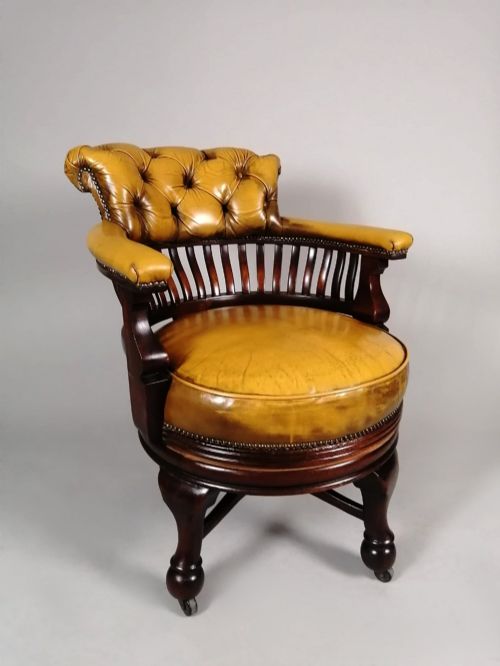
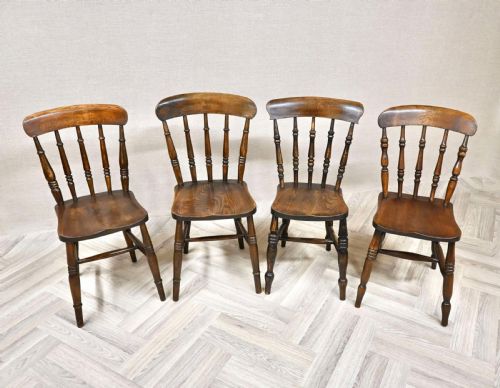
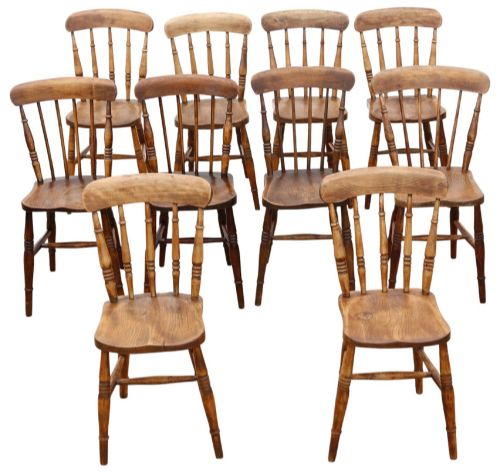


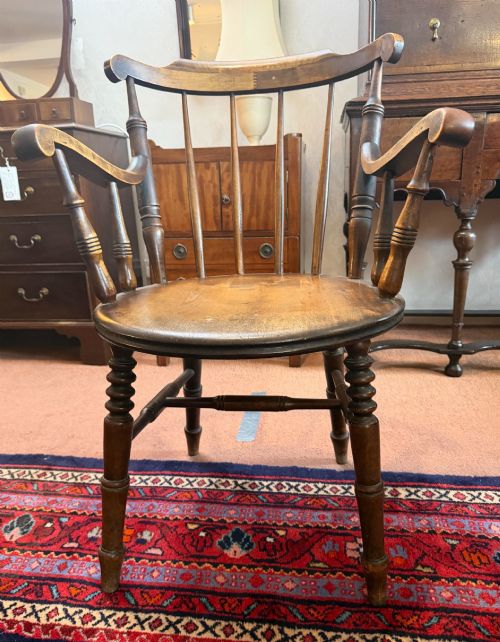
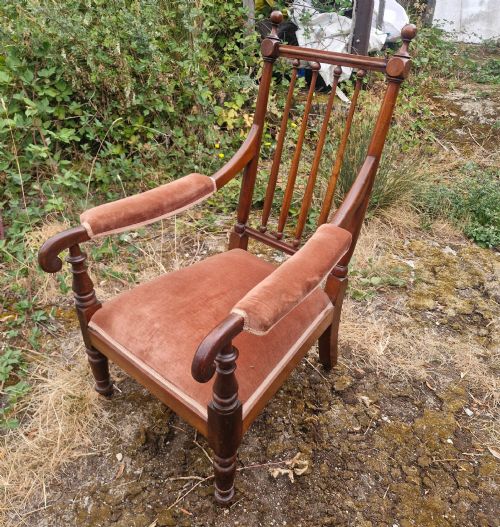
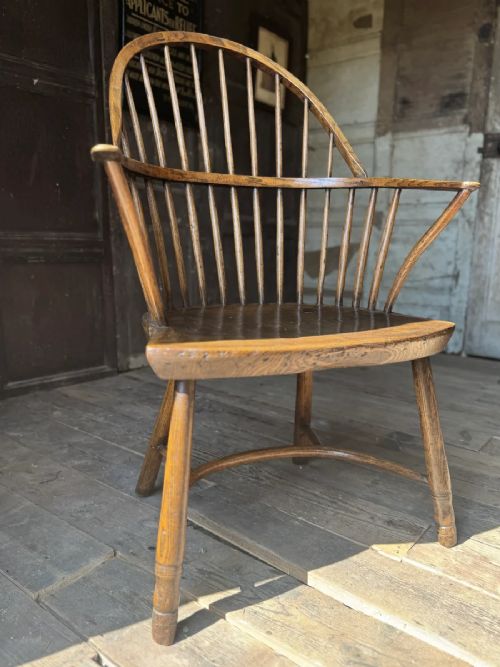
Brown Spindle Back Chairs
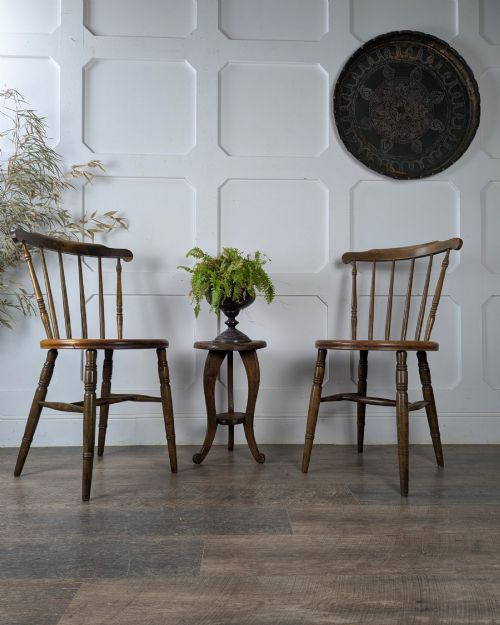
Brown spindle back chairs are honest country seating built from sturdy timbers, prized for adding organic character and dependable charm to everyday rooms.
Brown Spindle Back Chairs
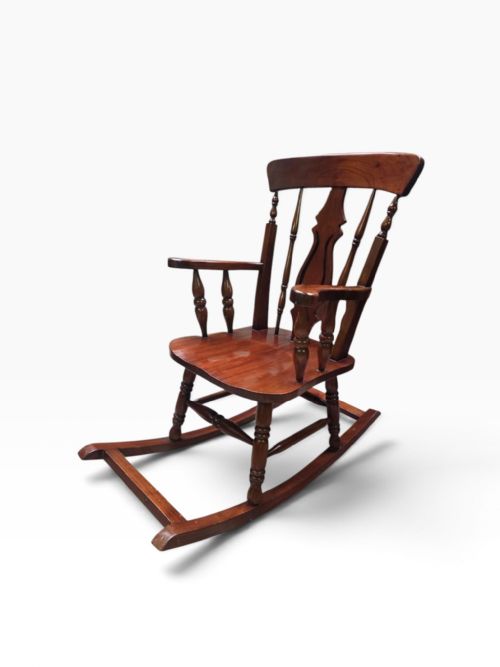
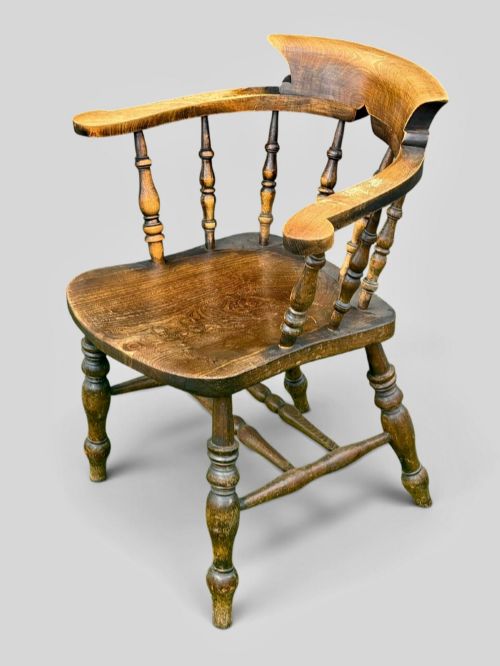
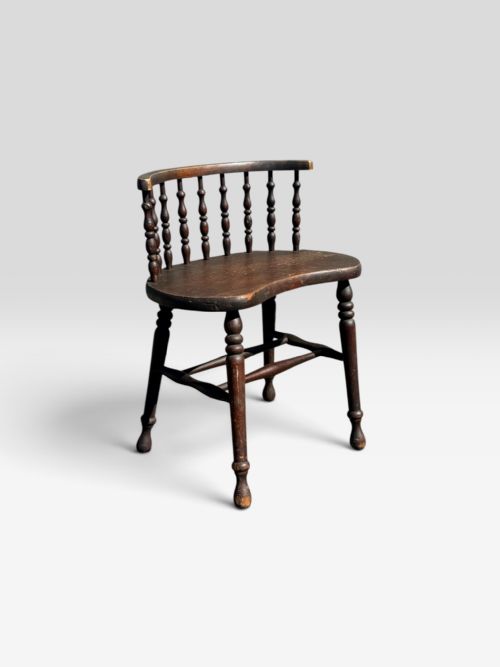
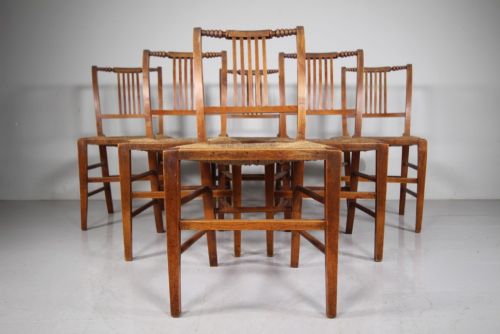
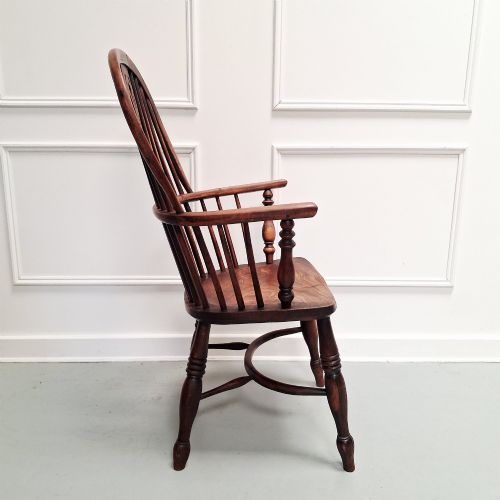
When you examine brown spindle back chairs, you encounter robust seating shaped by vernacular traditions across the eighteenth, nineteenth, and early twentieth centuries. These pieces appear predominantly as kitchen dining chairs, country armchairs, and rocking chairs designed for domestic utility.
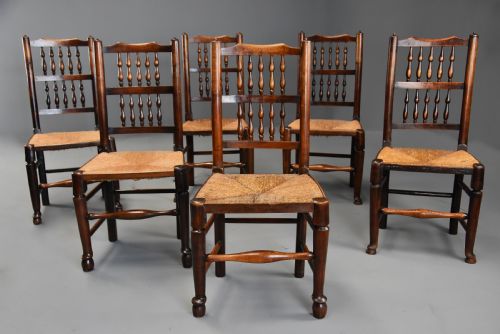
The varieties on this page stem from periods spanning Georgian vernacular to Victorian country styles. You will frequently meet examples fashioned with curved backs, rush seats, and sturdy wooden frames suited to daily living.
Materials and construction methods
Craftsmen built brown spindle back chairs using native hardwoods such as elm, ash, and beech, often combining multiple timbers within a single frame for structural resilience. Elm commonly formed the solid saddle seats, whilst ash and beech provided flexible strength for the turned spindles and steam-bent components.
Makers utilised traditional joinery techniques, pegging legs directly into thick wooden seats and securing back rails with wedged tenons. This straightforward construction produced durable furniture without relying on metal fixings.
The listings on this page span the eighteenth, nineteenth, and early twentieth centuries, featuring elm, ash, beech, and rush materials.
Assessments of quality
The standard of brown spindle back chairs rests upon the harmony of the timber selection and the retention of original surface patination. Examples displaying rich, untouched grain movement and deep colour achieved through decades of use command greater appreciation.
Proportion and structural integrity distinguish finer specimens from ordinary utilitarian seating. Well-balanced armchairs with crisply turned stretchers and minimal replacement parts represent the height of regional vernacular craftsmanship.
J Spencer·Codina
The Brown Spindle Back Chairs Glossary
- Spindle back
- A chair back constructed from a series of slender, turned wooden rods arranged vertically between the top rail and the seat. These components provided lightweight support while maintaining structural strength.
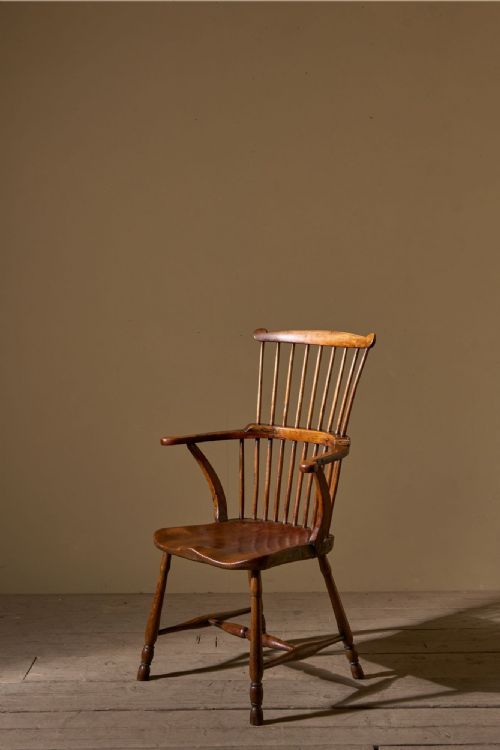
- Comb back
- A Windsor chair design where the top rail resembles the teeth of a comb, featuring vertical spindles rising through a horizontal arm bow. This form originated during the eighteenth century in rural workshops.
- Crinoline stretcher
- An arched or curved wooden brace connecting the legs of a chair near the floor, often resembling a hoop skirt. It added vital rigidity to early provincial seating.
- Vernacular furniture
- Domestic objects made by local craftsmen following regional traditions rather than high-style metropolitan fashions. These pieces prioritized practical function and local material availability.
Brown Spindle Back Chairs: Frequently Asked Questions
How were these chairs used historically?
These chairs served as practical seating around farmhouse dining tables, beside hearths, and within country studies. Their robust construction allowed them to withstand heavy daily use by families.
Rocking variants provided comfort for nurseries and sitting rooms, whilst simpler side chairs accommodated communal dining spaces.
How do I live with antique wooden chairs?
Living with these chairs involves placing them away from direct heat sources and sudden humidity changes to protect the timber. Regular dusting with a soft cloth preserves the natural finish without building up heavy chemical residues.
They integrate smoothly into modern dining spaces or study areas, bringing texture and historical character to contemporary interiors.
How can I tell different periods apart?
Earlier eighteenth-century examples often display simpler comb-back forms and heavier proportions shaped by regional vernacular traditions. Nineteenth-century pieces frequently incorporate steam-bent components and more refined turning on the legs and spindles.
Examining the tool marks, timber shrinkage, and assembly methods helps determine whether a chair dates from the Georgian era or the later Victorian period.