

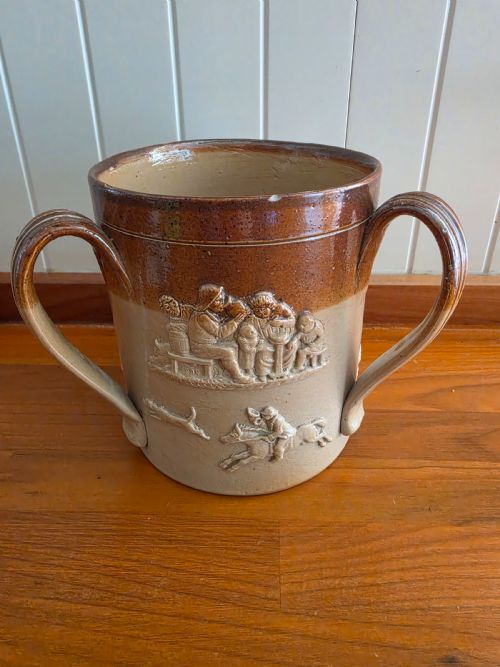


Brown Salt Glaze
Brown salt glaze pieces are dense, heavily textured vessels and troughs built to withstand daily utility, prized for their earthy pebble-dash surfaces.
Brown Salt Glaze
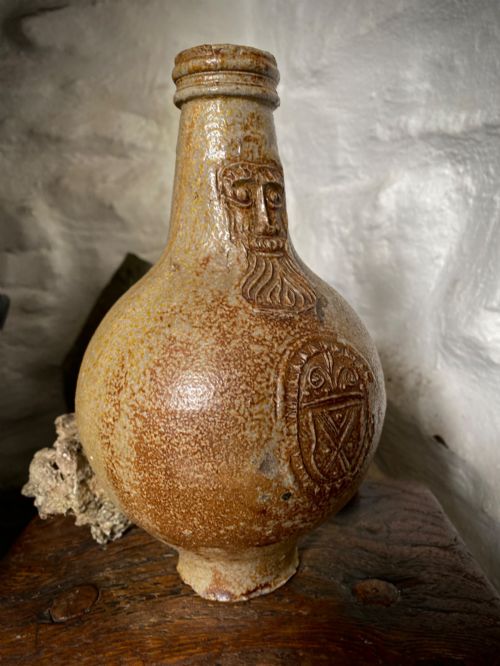
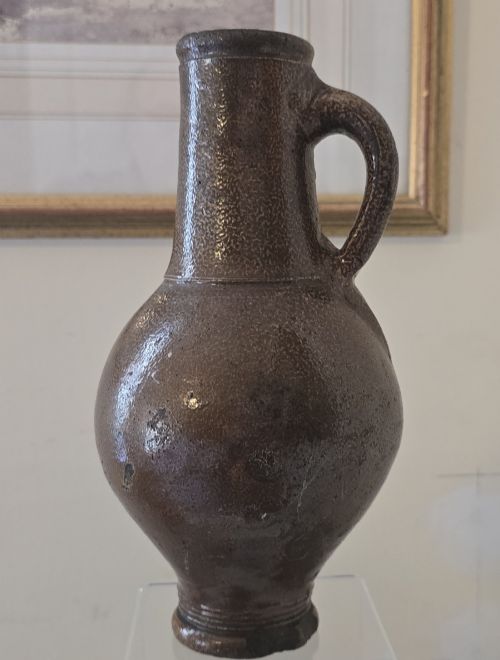
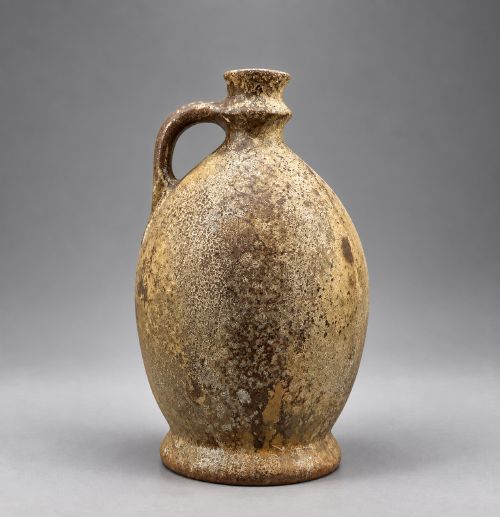
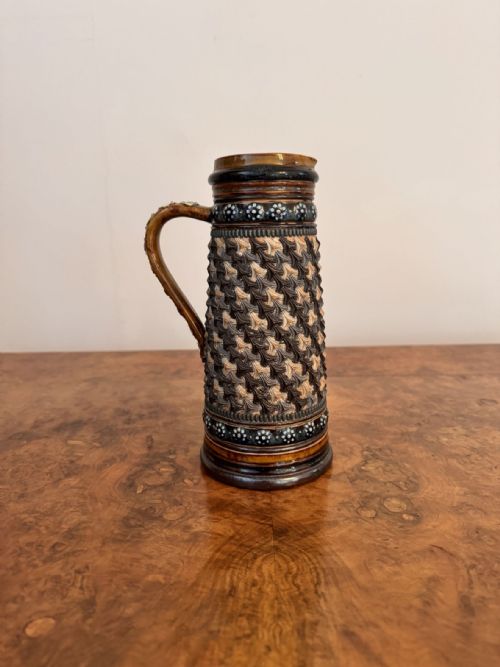
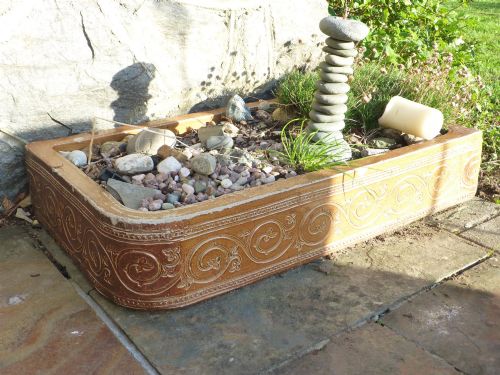
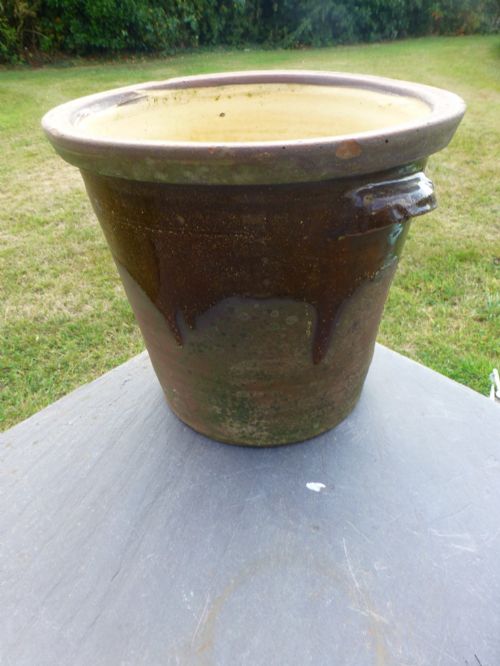
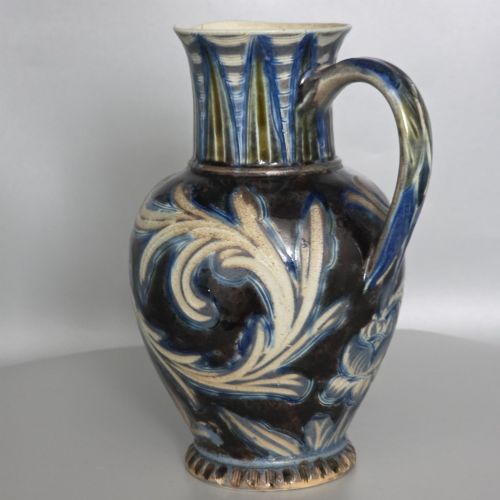
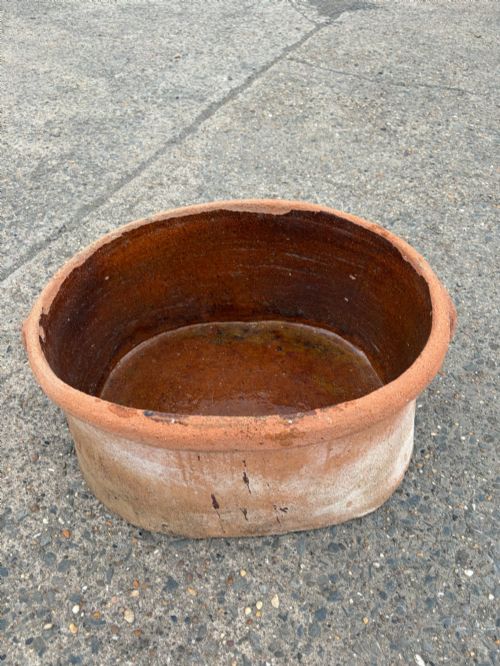
When searching for brown salt glaze, collectors encounter durable utilitarian stoneware formed into flagons, jugs, bottles, and agricultural planters. These objects originate largely from the nineteenth century, though earlier examples surface from German and English kilns.
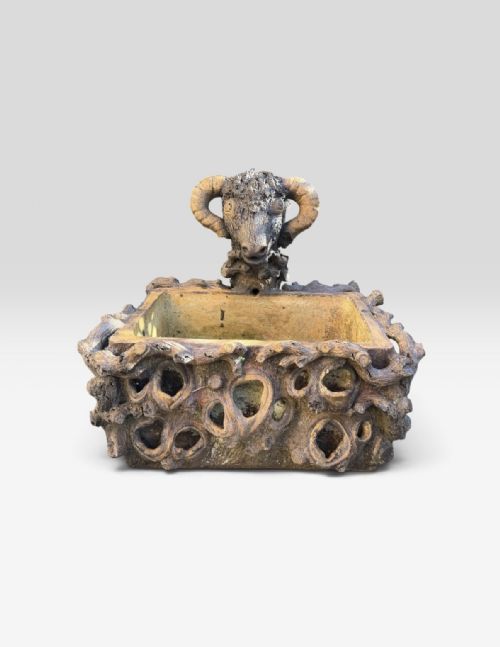
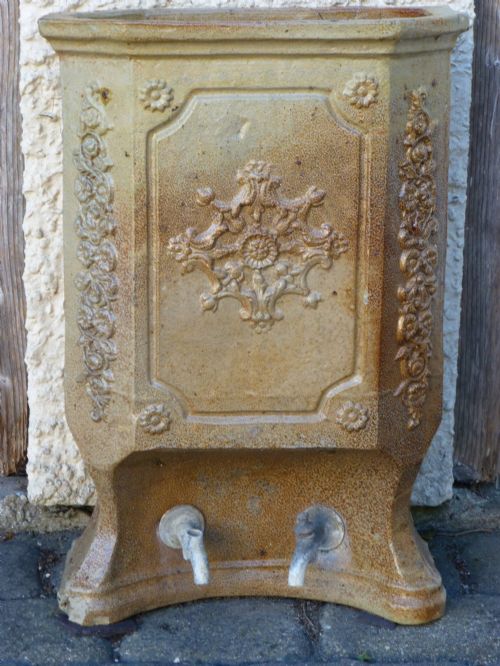
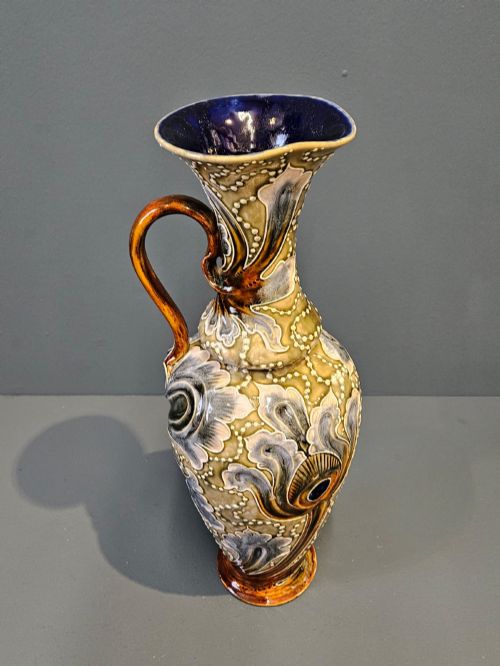
The domestic and industrial kitchen dominates the forms on this page, with large storage vessels, harvest jugs, and water filtration urns appearing frequently. Alongside these utility wares, Victorian decorative troughs and vases show how functional materials transitioned into parlour ornaments.
How they were made
Potters threw dense clay bodies on a wheel or pressed them into moulds, using durable stoneware and terracotta that could hold liquids safely. Artisans then threw common salt into the hot kiln during firing, causing sodium to react with the silica in the clay and form a characteristic pitted glaze.
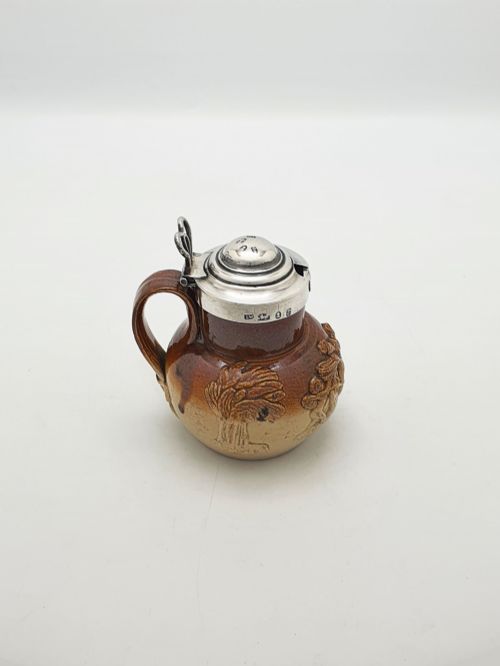
Makers occasionally added sterling silver collars, hinged lids, or silver-plated mounts to upgrade plain vessels for formal dining. Incised decoration, applied sprigs, and faux bois textures often ornament the finished stoneware body.
Brown Salt Glaze Retail Price Guide 2026
Typical asking prices for brown salt glaze among the pieces listed under this phrase on Sellingantiques today, from the lower quarter to the upper quarter. They describe what is for sale here now, not the wider market.
Listings feature robust stoneware and terracotta forms spanning from the seventeenth century through the Victorian era.
What varies in quality
Quality rests in the crispness of the incised ornament and the uniformity of the pebbled orange-peel texture across the stoneware body. Pieces decorated by named studio artists or finished with substantial silver rims stand above standard utilitarian containers.
The clarity of stamped factory marks and the proportional balance of handles and spouts distinguish superior potting from straightforward commercial output.
John Dwight Fulham Pottery·Doulton Lambeth·Emma Shute·Emily Stormer·Florence Barlow·C and A Painter
The Brown Salt Glaze Glossary
- Salt glaze
- A vitreous coating formed by throwing salt into the kiln at peak temperature, producing an orange-peel texture on stoneware. This chemical reaction seals the clay body completely.
- Stoneware
- A robust, non-porous ceramic fired at high temperatures until the clay vitrefies. It resists acids and holds liquids without needing an internal lead glaze.
- Tyg
- A large drinking vessel featuring three or more handles designed for communal passing around a table. These multi-handled pots date back to the seventeenth century.
- Faux bois
- An artistic technique mimicking wood grain modelled directly into clay or terracotta. Garden planters frequently utilise this naturalistic style.
- Flagon
- A large vessel with a handle and narrow neck used for holding liquids such as ale or wine. Metal rims often protect the pouring lip from chips.
Brown Salt Glaze: Frequently Asked Questions
What were salt glazed bottles used for?
These sturdy stoneware containers stored household liquids including beer, wine, oil, and vinegar securely over long periods.
Their chemical resistance ensured the contents remained uncontaminated in damp cellars or during transit.
How do I date a salt glaze jug?
Form, weight, and potting technique help place pieces across the eighteenth and nineteenth centuries. Stamped factory ciphers or hallmarks on attached silver mounts provide exact chronological markers.
Early German flagons often show distinct mask decorations, whereas Victorian pieces display crisper machine-pressed handles and incised foliage.
Can I use these planters outdoors?
Durable stoneware and terracotta troughs tolerate garden use well when placed in protected positions. Heavy frost can occasionally crack saturated historic bodies.
Many buyers choose to line them carefully or bring them indoors during freezing winter months.