





Brown Rush Seat Armchair
A brown rush seat armchair brings tactile warmth and vernacular strength to a room, offering honest craft rooted in centuries of rural seating tradition.
Brown Rush Seat Armchair
When you search for a brown rush seat armchair, you encounter vernacular seating shaped by English, Scottish, and regional country traditions spanning the eighteenth, nineteenth, and early twentieth centuries. These chairs combine timber frames with woven river reed seating, created for domestic comfort in farmhouses, cottages, and provincial homes.
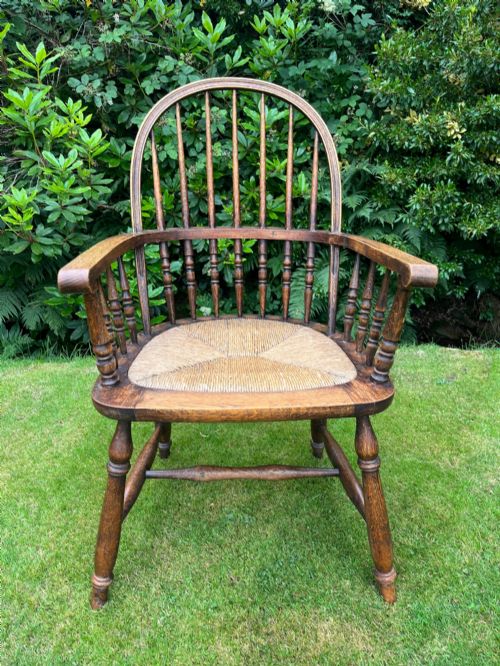
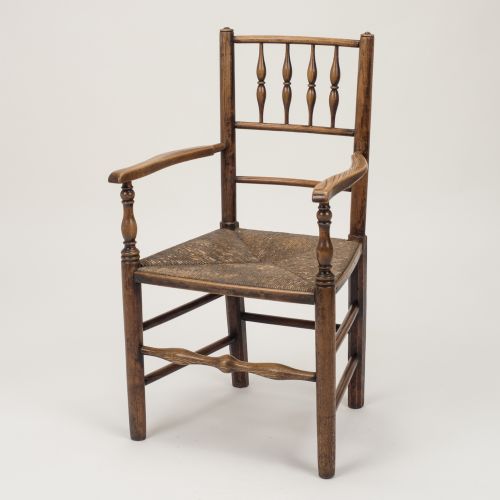
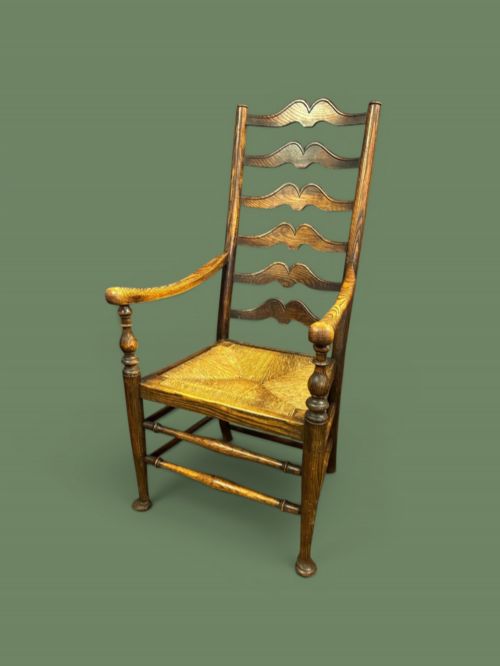
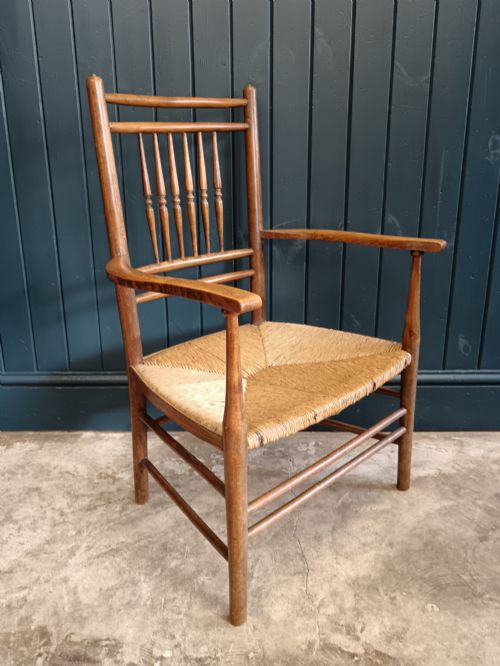
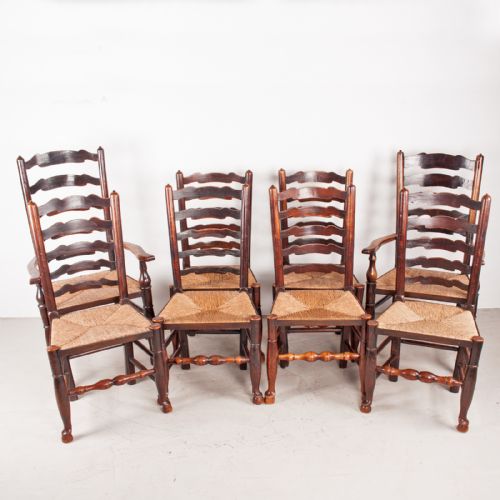
The most common examples on this page date from the nineteenth century and the Arts and Crafts movement, utilising native woods like elm, ash, and oak. You will find ladder-back, spindle-back, and Windsor forms, alongside regional variants such as Lancashire, Cheshire, and Scottish vernacular chairs.
Makers ranged from rural village bodgers and regional workshops to renowned commercial firms like Morris and Co. and Liberty. Their shared output prioritises sturdy utility and natural materials over formal courtly display, resulting in durable seating with deep patination.
What varies in quality
Quality rests upon the integrity of the timber frame, the tightness of the rush weave, and the harmony of original patination. Superior pieces retain their early or original surfaces, whereas lesser examples suffer from inappropriate stripping, heavy modern varnishes, or replaced structural components.
Proportion and turning detail elevate regional country chairs from utilitarian seating to masterworks of vernacular design. The crispness of spindle turnings and the balanced weight of ladder-back tiers distinguish standard workshop production from exceptional vernacular artistry.
Some provincial rush seats hide generations of polished elbow grease inside their woven corners.
Liberty Morris And Co·E W Godwin·Dicon Nance St Ives Studio
The Brown Rush Seat Armchair Glossary
- Rush
- Dried marsh sedge used for weaving chair seats. This pliable material creates a durable, textured surface that gains a warm amber tone as it ages.
- Ladder-back
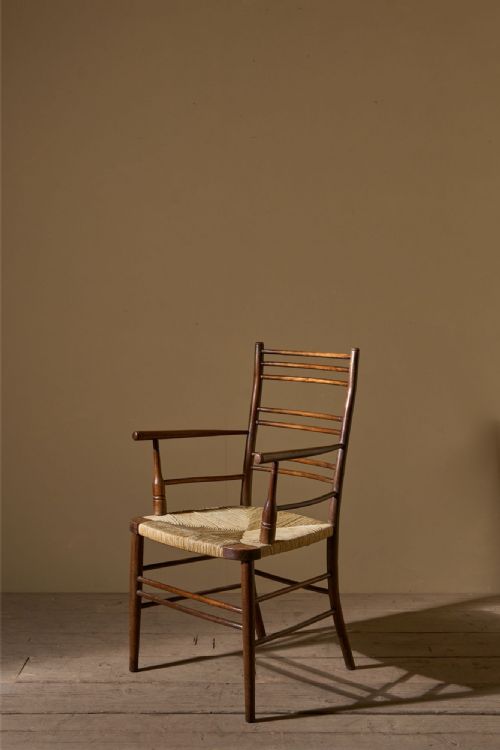
- A chair back featuring horizontal arched wooden slats between upright posts. This traditional form provides strong lumbar support.
- Spindle-back
- A chair featuring a series of thin, turned wooden uprights supporting the backrest. This construction lightens the frame while maintaining strength.
- Vernacular
- Architecture and craft rooted in local traditions, materials, and needs rather than academic or metropolitan styles. These pieces reflect regional working methods.
- Carver
- An armchair, particularly one designed for use at the head of a dining table. These chairs match or complement sets of side dining chairs.
Brown Rush Seat Armchair: Frequently Asked Questions
How do I care for a rush seat?
Keep rush seating away from excessive moisture and direct heat sources, which can cause the natural fibres to dry out and snap.
Clean the woven surface gently with a soft brush and avoid soaking the reed with water during routine maintenance.
Are these chairs comfortable for daily use?
Country rush seat armchairs were designed for everyday domestic life, offering supportive upright seating and accommodating wooden armrests.
The woven rush yields slightly to the body, making them practical for reading or dining over extended periods.
How can I date an ash and elm armchair?
Examine the tool marks, construction methods, and timber wear to determine the likely period of manufacture.
Hand-turned spindles, pegged joints, and deep wax patination typically indicate nineteenth-century or earlier vernacular production.
What is an Orkney chair?
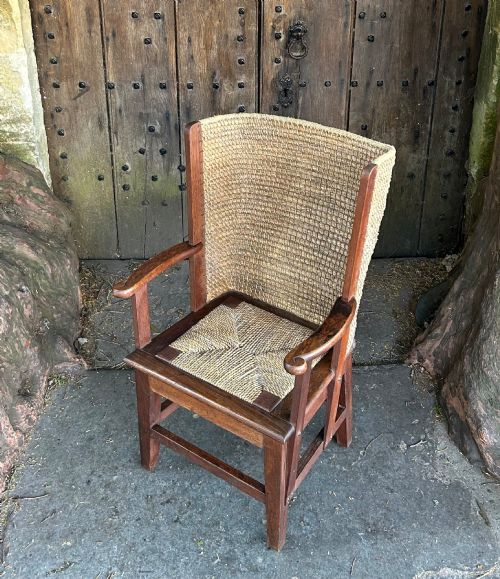
An Orkney chair is a distinctive regional seating form featuring a high, rounded back woven from oat straw.
Developed to shield sitters from coastal drafts, these pieces pair tightly bound straw with sturdy wooden frames.