



Brown Rosewood Sofa Table
A brown rosewood sofa table is a versatile nineteenth-century centrepiece, designed to sit behind a sofa or stand freely in a room.
Brown Rosewood Sofa Table
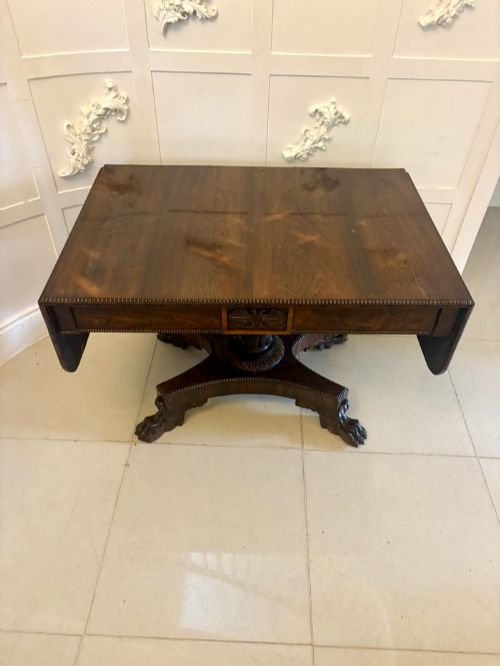
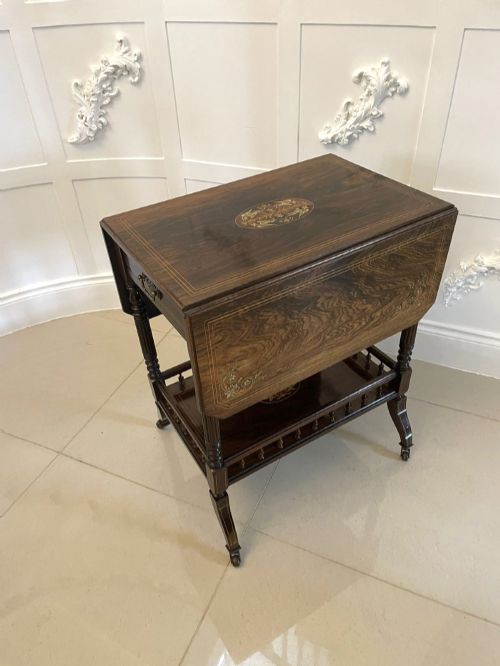
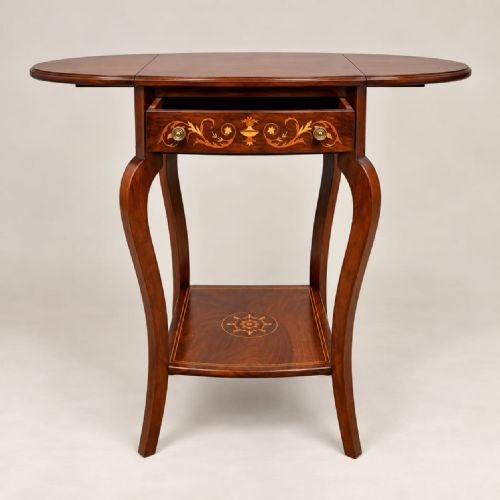
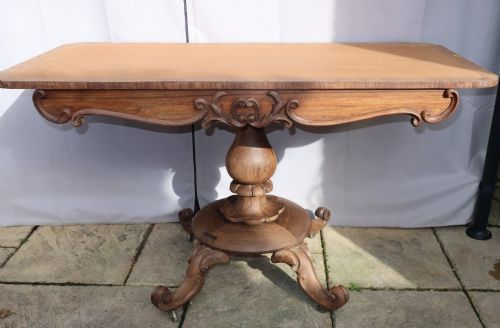
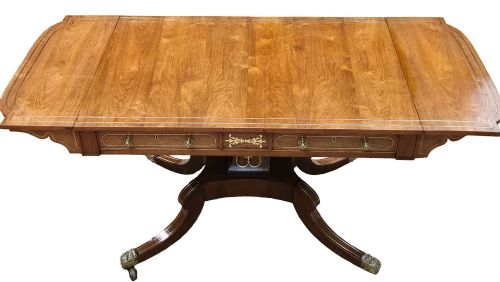
A brown rosewood sofa table is a distinctive nineteenth-century form, most often appearing from the Regency and Victorian periods. These pieces typically feature drop leaves on either side and drawers fitted to the frieze, originally intended for needlework or correspondence.
The selections recorded here span the Regency, William IV, George IV, and Victorian eras, alongside related types such as library tables and occasional tables. The Regency examples display the characteristic architectural restraint and balanced proportions of the early nineteenth century.
Makers such as Gillows and William Trotter produced notable variations of these tables, employing rich timbers and precise joinery. While the inventory includes various side and centre tables, the true brown rosewood sofa table remains central to the selection.
How they were made
Makers utilised timber veneer over solid secondary woods, applying rosewood for its dense grain and deep colour. Brass inlay frequently accentuates the top and drawer fronts, while satinwood and other contrasting timbers appear in finer stringing.
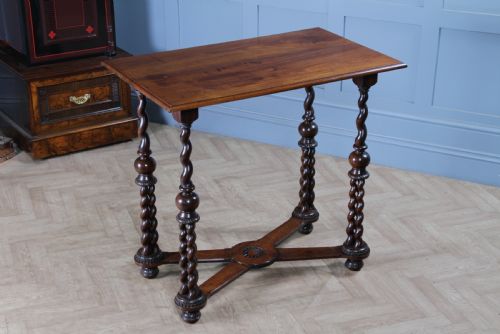
Structural elements rely on traditional joinery, with turned pedestals, sabre legs, or barley twist supports carrying the weight. Drop leaves are supported by pivoting wooden brackets known as rule joints or fly brackets.
Secondary materials include leather for writing surfaces and brass castors fitted to the feet for mobility. Construction methods reflect the prevailing cabinet-making standards of the Georgian and Victorian workshops.
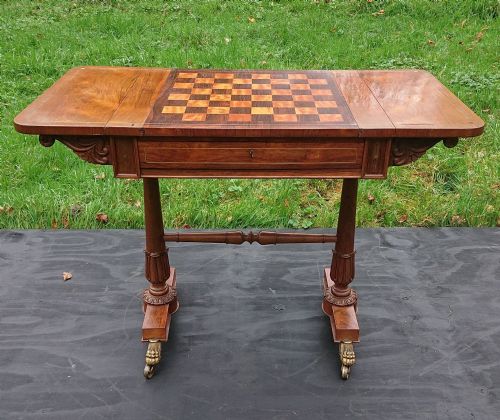
Some nineteenth-century tables hide removable chess and backgammon boards inside for impromptu parlour games.
What varies in quality
The distinction between ordinary and exceptional pieces lies in the selection of the rosewood veneer and the precision of the brass inlay. Superior examples demonstrate matched grain patterns across the leaves and drawer faces, creating a coherent visual surface.
Hardware and internal construction also separate the grades, with solid mahogany drawer linings and original brass locks indicating higher workshop standards. The crispness of carved details on pedestals and feet reveals the hand of a skilled cabinet-maker rather than mass production.
Gillows·William Trotter·Gillows of Lancaster
The Brown Rosewood Sofa Table Glossary
- Sofa table
- A rectangular table with drop leaves on opposite sides, originally designed to stand in front of a sofa. They typically feature two drawers and stand on twin pillars or a central pedestal.
- Drop leaf
- A hinged flap attached to the main table top that can be raised to extend the surface area. It rests on a pivoting bracket when in use.
- Frieze
- The horizontal band beneath the table top that houses the drawers. In better pieces, this section incorporates decorative brass inlay or stringing.
Brown Rosewood Sofa Table: Frequently Asked Questions
Where did sofa tables stand?
These pieces traditionally stood directly behind a sofa in the middle of a drawing room. Because both sides are finished, they look correct from any angle.
They also function effectively as freestanding writing desks or centre tables in larger hallways and libraries.
How do I tell Regency from Victorian?
Regency pieces, dating from the early nineteenth century, generally exhibit cleaner architectural lines, brass stringing, and lighter proportions. They often use sabre legs or pillar supports.
Victorian examples from later in the century tend to be heavier in build, occasionally featuring intricate turning, barley twists, or elaborate marquetry.
Are the drop leaves sturdy?
The drop leaves are supported by pivoting wooden arms or brackets that swing out from beneath the top. When properly engaged, they provide adequate support for lamps, books, or writing.
Users should avoid placing excessive weight on the outer edges of the extended leaves to protect the hinges.
What is goncalo Alves?
Goncalo Alves is an exotic dense hardwood occasionally recorded in nineteenth-century table construction. It possesses similar weight and strength properties to rosewood.
The timber displays a pronounced striped brown figure that distinguishes it from standard rosewood surfaces.