




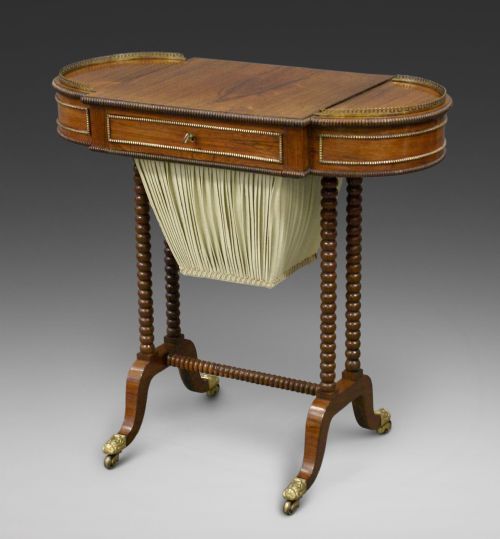
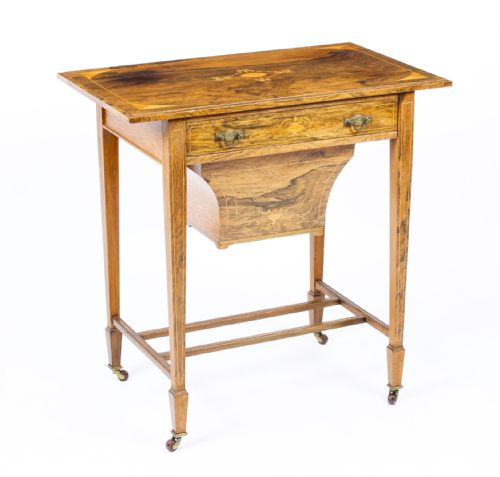

Brown Rosewood Sewing Table
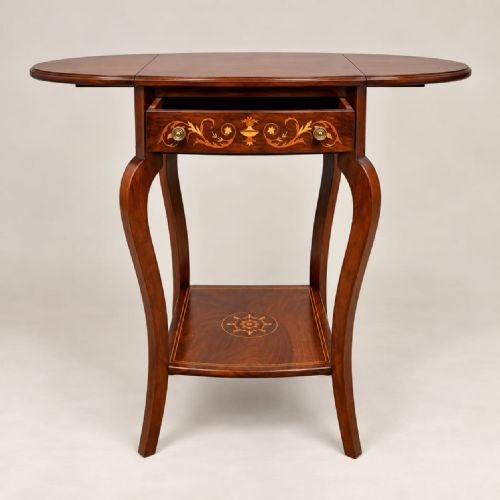
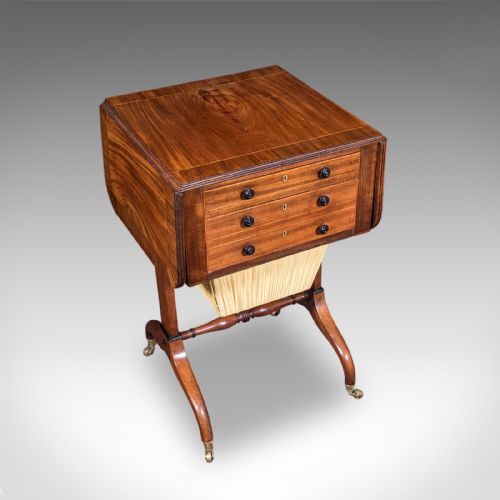
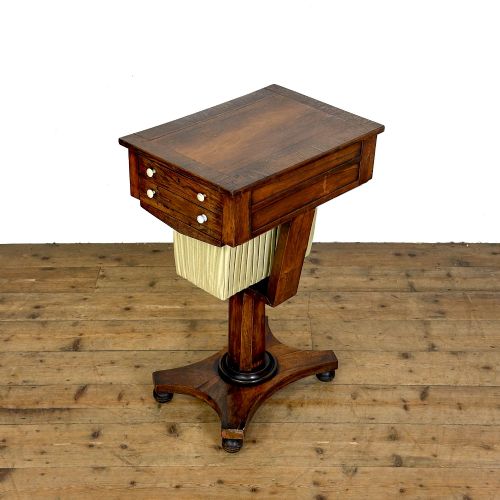
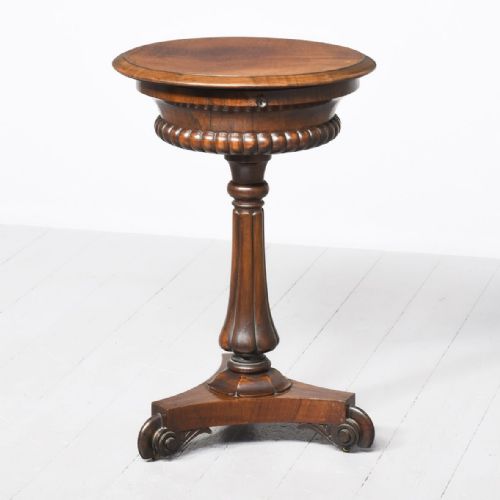
A brown rosewood sewing table is a fitted piece for domestic needlework, offering compartments and drop leaves to anchor a period room.
Brown Rosewood Sewing Table
A brown rosewood sewing table combines storage for threads and needles with a small work surface for the lap, appearing across Regency, Victorian, and Edwardian periods. These pieces often feature drop leaves or folding tops that expand the surface area when needed in a parlour or sitting room.
The form frequently overlaps with work tables, writing tables, and occasional tables, sometimes housing fitted compartments beneath the top. Most examples on this page date from the nineteenth century, reflecting the popularity of needlework during the Regency and Victorian eras.
Makers such as Gillows produced refined variants in rosewood, whilst Anglo-Indian and Napoleon III workshops contributed distinct regional marquetry and decorative schemes. Buyers encounter simpler drop-leaf formats alongside elaborately fitted writing and reading combinations.
Materials and construction
Rosewood forms the primary timber, complemented by secondary woods like mahogany and satinwood, occasionally inlaid with brass or detailed marquetry. Artisans constructed these tables with sturdy drop leaves supported by gatelegs or pivoting brackets, housing hanging fabric bags or wooden compartments below.
Metal components include brass fittings, gilt bronze mounts, and castors that allowed the small tables to move easily around a room. Velvet and other fabrics lined the interior compartments and work bags, though these textile elements often show later replacement.
Listings feature rosewood, mahogany, satinwood, and kingwood across Regency, Victorian, and Edwardian periods.
Distinguishing quality in construction and design
The integration of internal fittings separates standard work tables from exceptional pieces, particularly when drawers conceal specialised writing slides or reading ledges. Gillows and similar cabinetmakers demonstrated superior joinery in the execution of secret compartments and stable drop-leaf mechanisms.
The grain configuration and depth of colour in the rosewood veneer dictate visual success, alongside the precision of brass inlay and marquetry details. Superior examples maintain crisp carving and original structural hardware without relying on heavy restoration.
Gillows of Lancaster
The Brown Rosewood Sewing Table Glossary
- Rosewood
- A dense, dark timber featuring pronounced grain patterns, widely utilised for high-status nineteenth-century cabinet furniture.
- Drop Leaf
- A hinged flap on the side of a table that folds down to save space or lifts up to extend the surface.
- Work Table
- A multi-purpose piece of domestic furniture containing storage and fabric bags for sewing and needlecraft.
- Marquetry
- Decorative patterns formed by laying contrasting veneers onto the structural surface of a wooden table.
- Regency
- An English design period spanning the early nineteenth century characterised by classical restraint and elegance.
Brown Rosewood Sewing Table: Frequently Asked Questions
What is a brown rosewood sewing table used for?
These tables served primarily for storing sewing implements, threads, and unfinished needlework in nineteenth-century sitting rooms. The drop leaves and top surfaces also provided a convenient area for writing, reading, or playing games.
Today, they function well as compact side tables or decorative occasional pieces in period and modern interiors alike. The internal compartments remain useful for storing small household items.
How do I date a brown rosewood sewing table?
Dating relies on stylistic markers, timber characteristics, and hardware associated with periods such as Regency, William IV, and Victorian. Regency examples often display classical lines, whereas Victorian versions tend to be heavier with elaborate turning.
Examining the secondary woods inside the drawers and the construction of the drop-leaf hinges also helps establish the approximate decade of manufacture. Maker stamps, when present, provide a direct link to specific workshops.
Did Gillows make sewing tables?
Gillows of Lancaster and London produced fitted work tables in rosewood during the Regency and William IV periods. These pieces are recognised by their refined joinery and clever internal compartments for writing and reading.
Such signed or attributed tables represent the upper tier of nineteenth-century cabinetmaking. They command strong interest from collectors focusing on documented English furniture makers.
Are the fabric bags original?
The hanging silk or velvet work bags suspended beneath the tables were subject to heavy wear and tear over the centuries. Consequently, the fabric linings and bags on many surviving examples are later replacements.
Restorers typically choose period-appropriate textiles to match the style of the rosewood frame. Buyers should expect that internal fabrics have often been renewed during the life of the table.