



Brown Rosewood Caddy
These brown rosewood caddy pieces are timber storage boxes designed to safeguard precious tea leaves, offering rich grain and period craftsmanship for the home.
Brown Rosewood Caddy
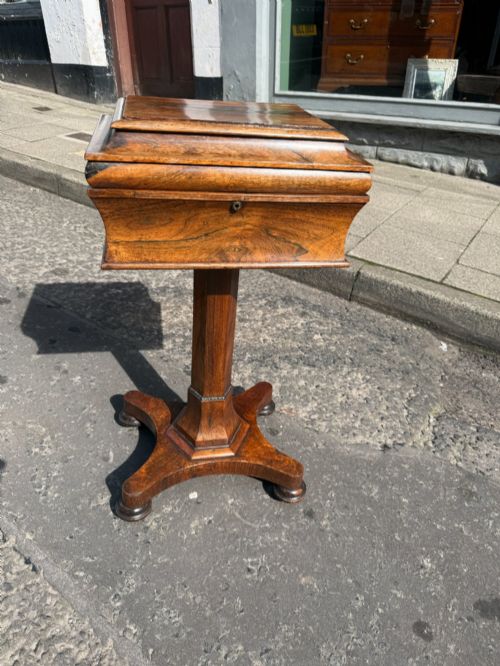
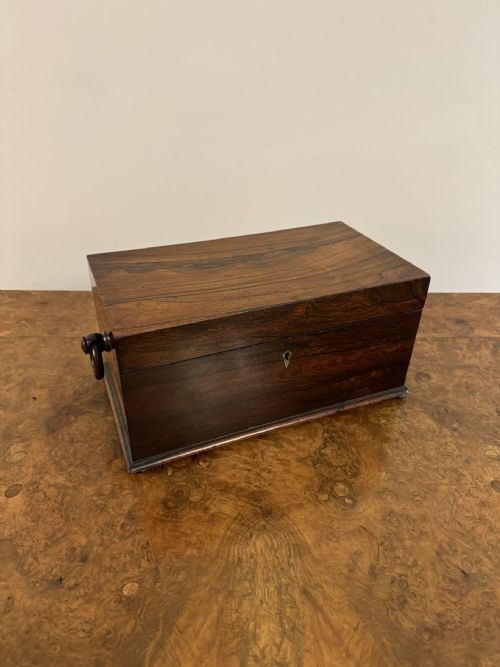
A brown rosewood caddy represents a period storage vessel designed primarily for tea, alongside related forms like teapoys, sewing boxes, and jewellery boxes. Buyers searching this phrase encounter examples spanning the Georgian, Regency, William IV, and Victorian eras, including specialised pieces finished with Tunbridge Ware.
The most common form on this page is the sarcophagus-shaped box, often resting upon bun feet or plinth bases, alongside oblong tapered profiles and domed lids. These containers frequently retain internal compartments or loose leaf cases intended for holding black and green teas securely.
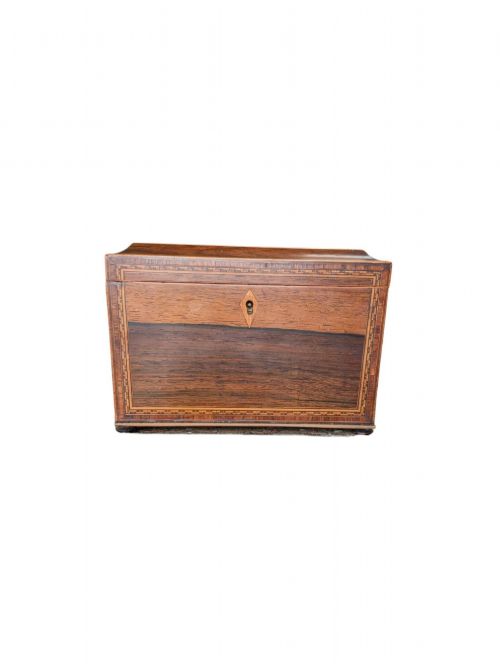
Origins stretch across nineteenth-century English workshops, utilising dark tropical timbers paired with contrasting stringing and decorative inlays. Such items functioned as drawing room showpieces during a time when tea was an expensive household commodity.
Factors determining quality
Quality rests upon the crispness of the brass inlay, the precision of the Tunbridge Ware mosaic work, and the structural integrity of the rosewood veneer. Superior examples preserve their original internal mixing bowls, foil linings, and working locks with matching keys.
Proportion and form separate standard production pieces from finer items, particularly where sarcophagus contours are balanced by well-turned feet and clean internal carpentry. The depth of colour in the rosewood grain and the retention of complete internal canisters also influence the character of each box.
Brown Rosewood Caddy Retail Price Guide 2026
Typical asking prices for brown rosewood caddy among the pieces listed under this phrase on Sellingantiques today, from the lower quarter to the upper quarter. They describe what is for sale here now, not the wider market.
Object types recorded across current inventory include standard tea caddies, larger teapoys, sewing boxes, and jewellery caskets.
Henry Hollamby
The Brown Rosewood Caddy Glossary
- Sarcophagus caddy
- A tea container shaped like a stone coffin with a domed or sloping lid, popular during the Regency and William IV periods. These boxes typically feature pedestal bases or carved feet.
- Teapoy
- A larger stand or table mounted on a pillar and claw base, supporting a tea caddy and internal storage compartments. They functioned as central tea-serving stations in drawing rooms.
- Tunbridge Ware
- Wood mosaic decoration created from thousands of tiny tinted wood blocks to form geometric or pictorial views. This technique originated in the Kent town of Tunbridge Wells.
- Stringing
- Fine inlaid lines of contrasting timber, such as boxwood, used to edge panels and lids on Regency and Georgian boxes. It provides a crisp linear boundary to the darker rosewood background.
- Loose leaf case
- An internal lidded compartment designed to keep different tea varieties separate and airtight. These removable containers protect delicate leaves from moisture and loss of aroma.
Brown Rosewood Caddy: Frequently Asked Questions
What is a brown rosewood caddy used for?
These boxes were originally manufactured to store expensive loose tea leaves safely under lock and key in the formal rooms of the house. Today they serve as decorative receptacles for small keepsakes, jewellery, and letters.
Their divided interiors make them practical for organising desktop items while adding period character to a modern interior surface.
How do I identify a Regency period caddy?
Regency examples frequently display architectural proportions, sarcophagus silhouettes, and precise brass stringing or inlay. They often rest upon ball feet and date from the early decades of the nineteenth century.
Construction details such as hand-cut dovetails on internal canisters help confirm the period of manufacture.
What is Tunbridge Ware decoration?
Tunbridge Ware involves mosaic woodwork made from small tesserae of naturally coloured woods assembled to form geometric or pictorial designs. These mosaic panels are inlaid directly into the rosewood surface of the box.
Craftsmen in Kent specialised in this meticulous technique during the Victorian era.
How should I care for a rosewood box?
Keep the wood away from direct sunlight and steady heat sources to prevent the rosewood veneer from drying or splitting. Maintain a stable indoor humidity level to protect the old polish and internal fittings.
Dust gently with a dry, soft cloth and avoid applying modern liquid polishes or silicone sprays.