

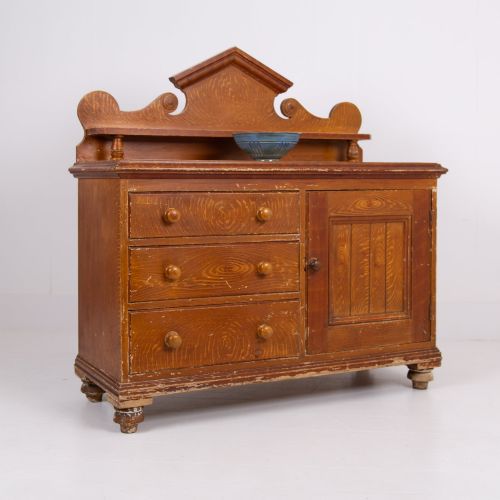
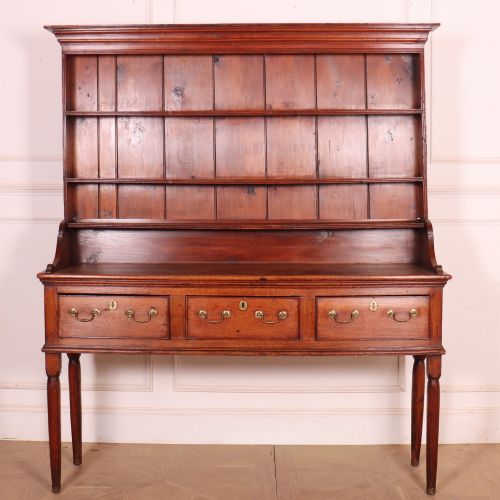
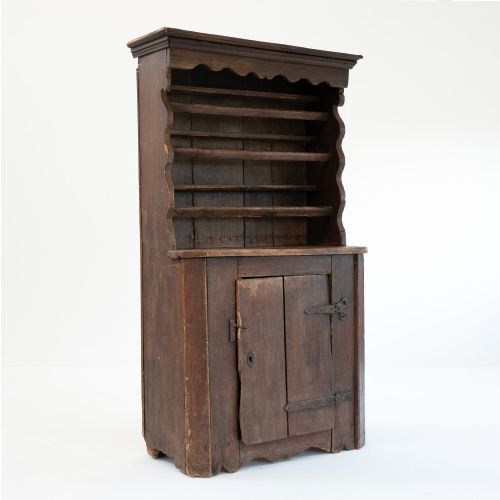
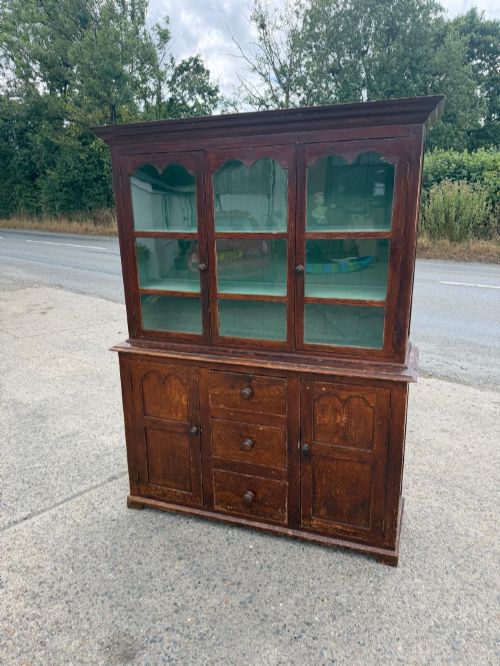


Brown Pine Kitchen Dresser
A brown pine kitchen dresser brings honest utility and warmth to a room, offering generous storage for daily provisions and tableware.
Brown Pine Kitchen Dresser
A brown pine kitchen dresser is a practical storage furniture piece typically comprising a lower base of cupboards and drawers, often surmounted by plate racks or a glazed top. These items emerge from various periods, including the eighteenth century and the Victorian era, reflecting regional traditions across England, Ireland, Scotland, and Wales.
The versions most commonly met on this page span English country, Irish country, and Victorian country styles, alongside vernacular forms like the Welsh dresser and the Talwrn dresser. You will encounter both complete dressers with upper display sections and standalone dresser bases or food cupboards.
Makers designed these hard-working pieces for domestic service in farmhouses and cottages, utilising robust timbers suited to heavy daily use. Their forms range from simple boarded constructions to sophisticated breakfront drawer arrangements and scumble painted finishes.
Materials and construction methods
Makers constructed these pieces primarily using pine, sometimes supplemented with oak, mahogany, brass hardware, metal mesh, and wrought iron for hinges and pulls. Surfaces were frequently left as bare timber, decorated with paint, or finished with scumble paint to simulate finer woods.
Joinery techniques relied on traditional hand-tool methods appropriate for vernacular furniture, creating sturdy carcases designed to withstand decades of culinary activity. Glazed doors and open plate racks were integrated into the upper sections to display earthenware and glassware.
Brown Pine Kitchen Dresser Retail Price Guide 2026
Typical asking prices for brown pine kitchen dresser among the pieces listed under this phrase on Sellingantiques today, from the lower quarter to the upper quarter. They describe what is for sale here now, not the wider market.
Materials recorded across the inventory include pine, oak, mahogany, glass, metal mesh, brass, wrought iron, and paint.
Understanding quality differences
Quality in these domestic pieces rests upon the integrity of the original timber, the survival of early or original paint finishes, and the proportion of the design. Examples retaining untouched scumble paint or early surfaces command greater interest from collectors than those stripped down to raw wood.
Construction details also dictate distinction, such as the presence of breakfront drawers, fine brass or iron fittings, and well-proportioned cornices. Vernacular regional characteristics, from specific Welsh or Irish construction traits to untouched Scottish surfaces, elevate a piece above standard utility furniture.
The Brown Pine Kitchen Dresser Glossary
- Scumble painted
- A decorative painting technique involving the manipulation of a translucent glaze over a lighter base coat to imitate the grain of more expensive hardwoods like oak or mahogany.
- Dresser base
- The lower section of a kitchen dresser, functioning as a standalone sideboard or cabinet with drawers and lower cupboards without an upper plate rack.
- Breakfront
- A cabinet design where the central section projects forward slightly from the flanking sections, adding architectural depth to the drawer arrangement.
- Food cupboard
- A specialised freestanding storage cabinet, often ventilated with metal mesh or pierced panels, designed for the preservation and protection of perishable stores.
- Talwrn dresser
- A distinct vernacular form of Welsh dresser originating from specific regional cabinet-making traditions and workshop practices.
Brown Pine Kitchen Dresser: Frequently Asked Questions
How were these dressers used historically?
Historically, families used these pieces to store everyday tableware, serving dishes, and cooking provisions in farmhouse and cottage kitchens. The open plate racks allowed ceramic plates to dry and remain easily accessible for daily meals.
Enclosed lower cupboards and drawers kept heavier pots, dry goods, and linens protected from dust and pests in busy domestic environments.
How do I care for a pine kitchen dresser?
Living with these pieces involves maintaining stable indoor humidity levels to prevent the natural pine timber from expanding or contracting excessively. Regular dusting with a soft, dry cloth preserves the wood and any historic painted surfaces.
Avoid placing antique pine furniture near direct heat sources or in strong sunlight, which can dry out the timber and fade original decorative finishes.
How can I tell the age of a dresser?
Dating these items relies on examining construction methods, timber characteristics, tool marks, and hardware styles. Eighteenth-century examples often display hand-sawn boards and vernacular joinery differing from later Victorian production.
Surface finishes also provide clues, as surviving scumble paint or early patination point toward specific nineteenth-century periods like the Victorian era or around eighteen-eighty.