
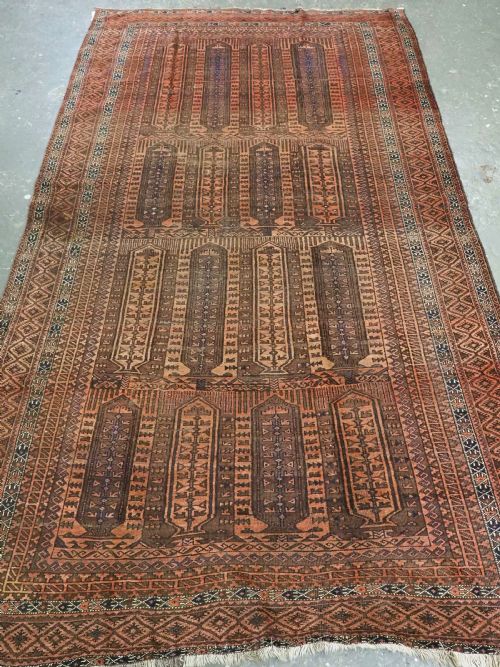
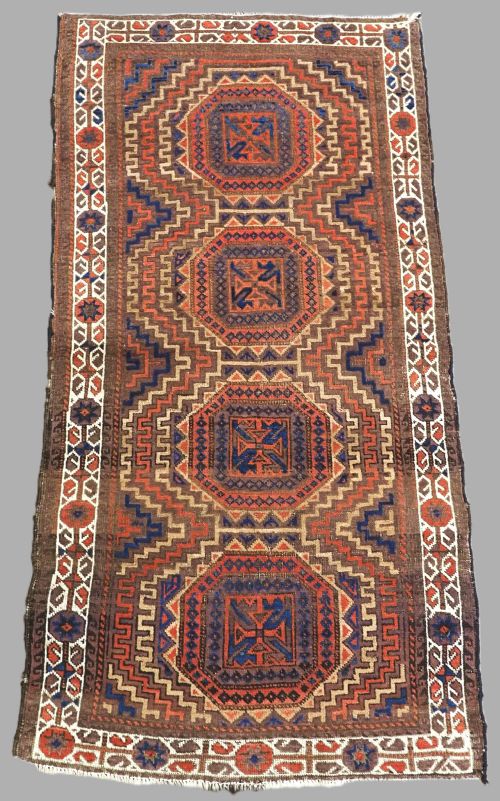
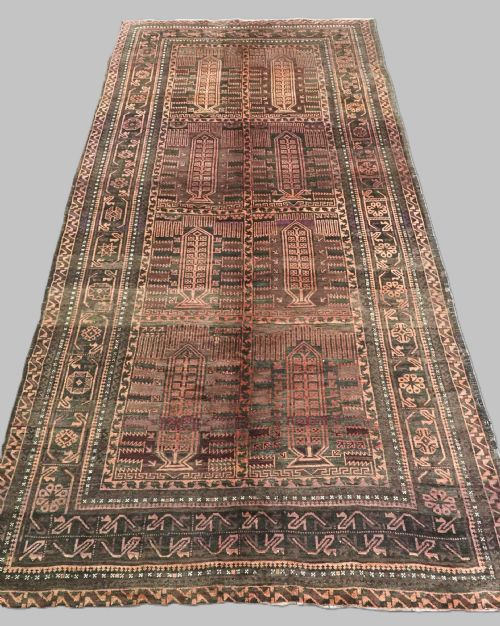
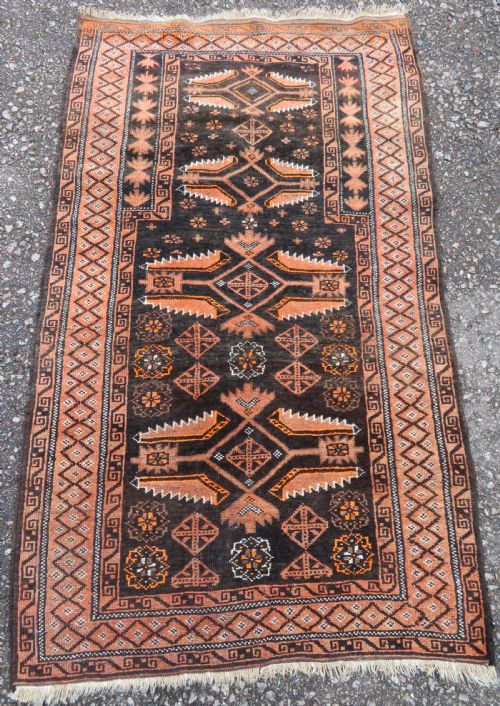


Brown Persian Rug
When you handle a brown persian rug, you touch the deep, earthy traditions of tribal weavers working across nineteenth and early twentieth century borderlands.
Brown Persian Rug
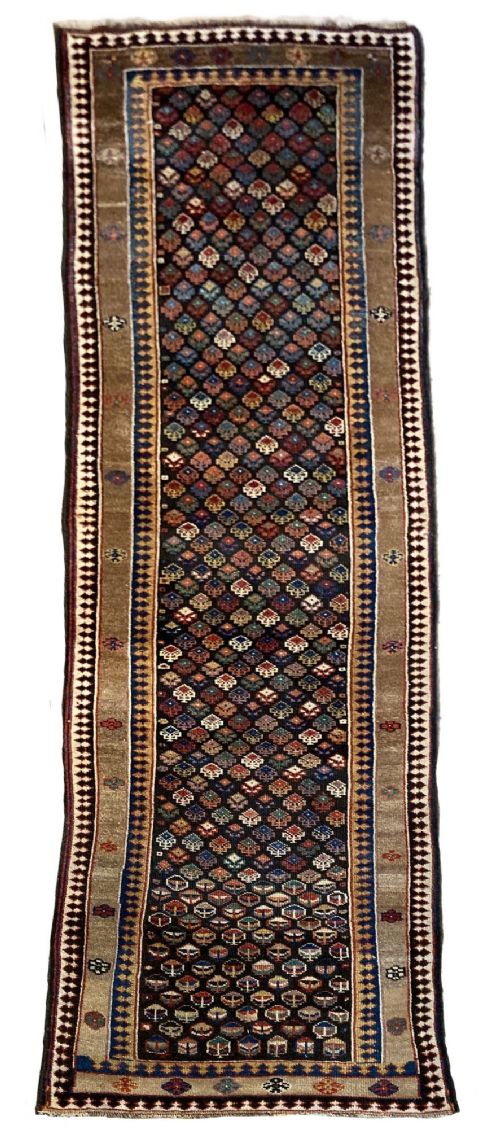
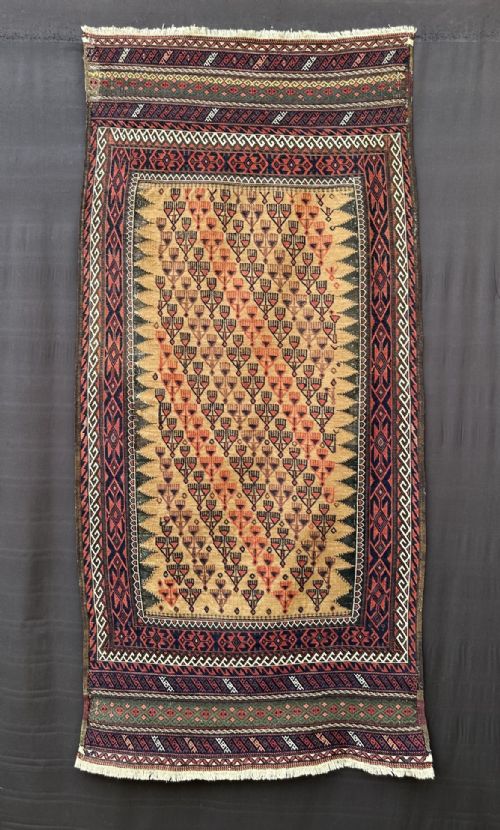
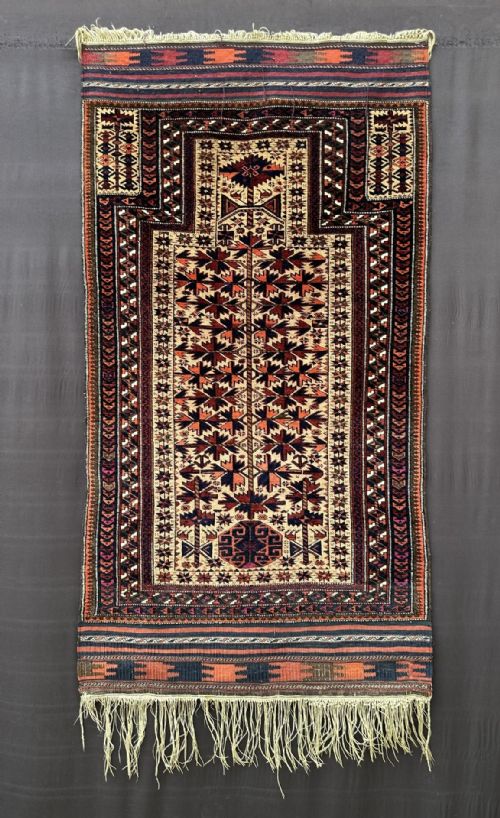
A brown persian rug encompasses tribal and nomadic textiles originating from regions like Khorasan, Fars, and the broader borderlands of Persia and Afghanistan. These pieces range from small prayer rugs and storage bags to long runners and larger carpets woven by groups such as the Baluch, Kurdish, and Timuri tribes.
The aesthetic centres on dark, natural earthen palettes dominated by rich browns, deep reds, and muted accent tones. Buyers searching for a brown persian rug will frequently encounter nineteenth-century Baluch tribal work or twentieth-century village weaving featuring geometric guls, prayer mihrabs, and traditional lattice motifs.
How they were made
Weavers constructed these textiles using hand-spun wool and cotton foundations, occasionally incorporating goat hair or camel hair for added durability in heavy-wear areas like runners and storage bags. Natural dyes provided the deep, stable brown tones and contrasting motifs that define the visual weight of each piece.
Nomadic and village workshops relied on vertical and horizontal looms to produce flatweaves, kilims, and pile rugs. The density of the knotting and the quality of the wool preparation directly dictate the structural resilience seen across these antique textiles.
Some Baluch weavers tucked small woolen amulets into the fringes to ward off the evil eye.
What varies in quality
The distinction between average utility pieces and exceptional examples rests on the fineness of the spin, the saturation of the natural dyes, and the integrity of the original borders and selvedges. Superior pieces maintain crisp geometric clarity in designs such as guls or prayer arches without distortion across the field.
Handling reveals the tactile depth of the wool; finer examples feel substantial and supple due to careful carding and traditional dyeing methods. Preservation of the original structure, including complete ends and backs on bags and runners, elevates the standing of an individual rug.
The Brown Persian Rug Glossary
- Gul
- A medallion or repeated octagonal motif frequently found in tribal and nomadic weaving. These designs often indicate the specific tribe or regional sub-group that produced the textile.
- Prayer Rug
- A small format rug featuring a mihrab or arch design at one end, traditionally used for daily prayer. The orientation directs the user toward Mecca during ritual use.
- Sofreh
- A flatwoven spread or cloth used for sharing meals, kneading bread, or serving food within nomadic households. These functional textiles display striking geometric compositions and utilitarian durability.
- Kilim
- A tapestry-woven carpet or flatweave produced without a pile. The lack of pile creates a lightweight, reversible textile with sharp, angular pattern transitions.
- Pushti
- A small mat or tribal rug intended for use as a cushion or small floor covering. These compact pieces often share the intricate design vocabulary of larger main carpets.
Brown Persian Rug: Frequently Asked Questions
How do I identify a tribal rug?
Tribal rugs typically display geometric patterns, asymmetry, and rich, saturated natural dyes rather than the formal court designs seen in city carpets. Look closely at the abrash, or natural variations in wool colour, which reveal hand-dyed working methods.
Nomadic pieces often incorporate distinctive motifs specific to regional groups like the Baluch or Kurdish tribes. The presence of camel hair or goat hair in the foundation further points towards authentic tribal production.
How should I care for antique wool?
Protect antique textiles by avoiding direct, harsh sunlight that can fade natural dyes over time. Vacuum gently with a suction-only attachment without using a rotating brush roll.
Allow air circulation beneath the rug and avoid placing heavy furniture directly on delicate edges or fringe. Professional cleaning should only be undertaken by specialists experienced in antique vegetable-dyed wool.
What does a prayer design mean?
The prominent arch shape, known as a mihrab, signifies a sacred architectural space used for personal devotion. When placed on the floor, the apex traditionally points toward Mecca during prayer.
Over time, weavers adapted these religious symbols into domestic floor coverings while retaining the symbolic directional format. These rugs serve as intimate examples of utilitarian tribal artistry.