




Brown Paper Landscape Art
Brown paper landscape art captures the moody tones and textured backgrounds of historic works on tinted supports.
Brown Paper Landscape Art
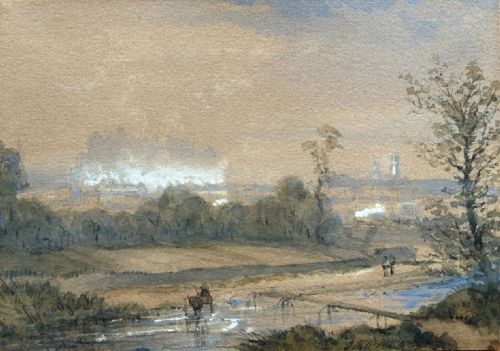
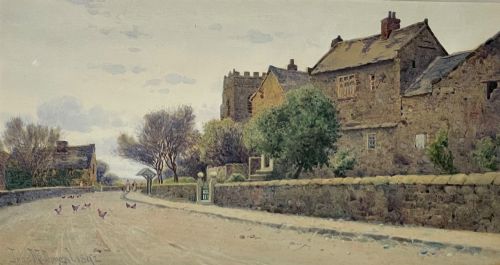
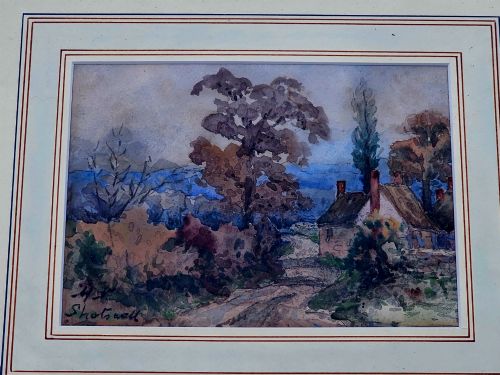
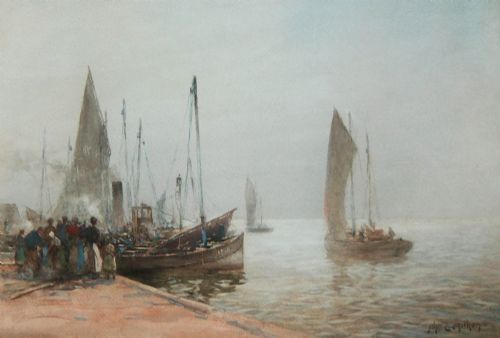
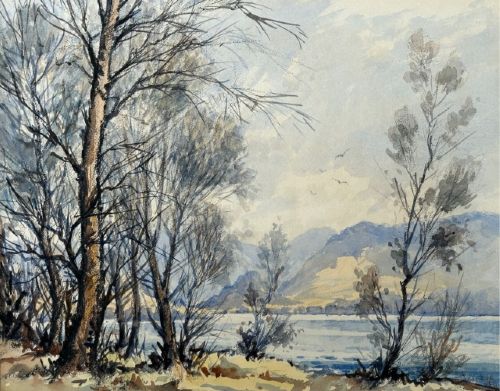
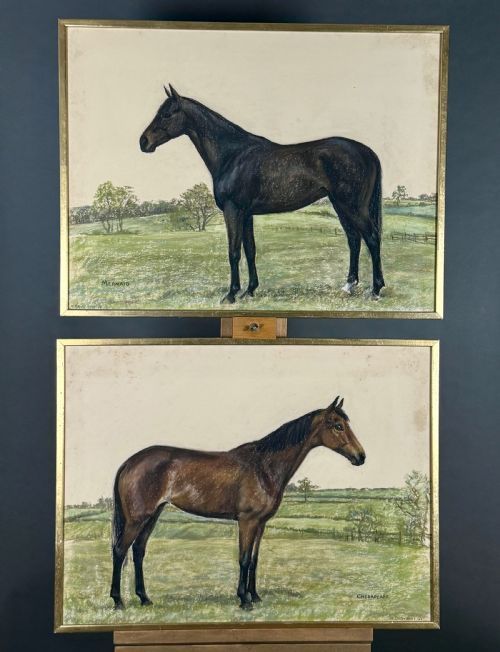
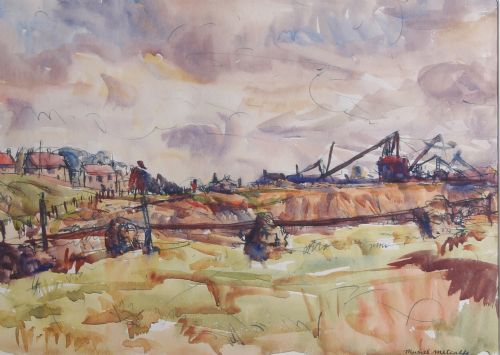
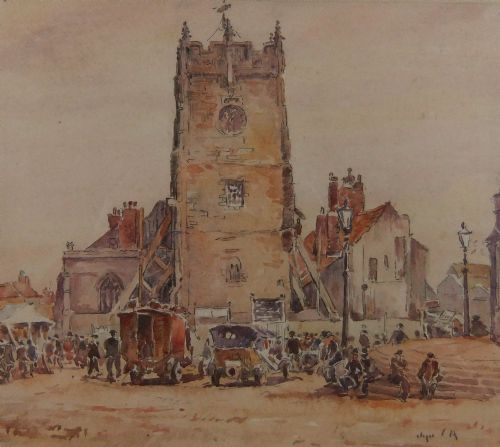
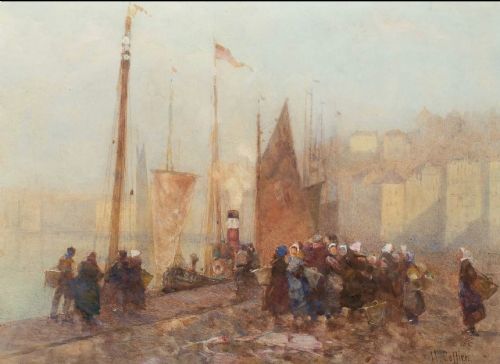
When searching for brown paper landscape art, buyers encounter original watercolours, pastels, and gouache studies set against toned or fibrous supports. These pieces range from Victorian pastoral scenes to mid-century British impressions, capturing rural views, coastal harbours, and domestic farmyards.
The most common examples on this page date from the late nineteenth century through to the mid-twentieth century. Artists utilised the warm undertone of the paper to unify their compositions, often leaving areas of the raw backing exposed to act as highlights or mid-tones in the sky and soil.
Materials and construction
These works rely on water-soluble pigments, bodycolour, and ink applied directly to tinted paper or card. The absorbent nature of the paper stock required confident, deliberate brushstrokes because alterations risked muddying the fibres.
Framed behind glass in wood or gilt mouldings, the fragile paper supports were protected from airborne moisture. Many retain their original backing boards and period mounts, which help to date the assembly accurately.
Several artists clearly grabbed whatever scrap of brown parcel paper was to hand when inspiration struck in the middle of a muddy field.
Judging the quality
Quality rests upon the artist's ability to let the tone of the paper work for the composition rather than fighting against it. The finest examples use the exposed brown surface strategically to suggest shadows, evening light, or cloud cover.
Condition plays a central role, as untreated paper is vulnerable to acid burn, foxing spots, and fading from sunlight. Stronger pieces retain their vibrant pigment saturation and show minimal discolouration around the margins.
James Orrock·John R Prentice·John McDougal·David Roberts·Thomas Bush Hardy
The Brown Paper Landscape Art Glossary
- Gouache
- An opaque watercolour paint mixed with a white pigment to create a heavier, denser finish. It allows artists to lay bright highlights over dark brown paper supports.
- Foxing
- Small brownish spots caused by chemical reactions in the paper over time. It appears frequently in historic works kept in damp conditions.
- Pastel
- A dry drawing medium made of powdered pigment and a binder, pressed into sticks. It adheres well to the rough tooth of coloured papers.
- Support
- The physical material upon which the artwork is created. In this category, it consists primarily of tinted paper or card rather than primed canvas.
Brown Paper Landscape Art: Frequently Asked Questions
How should I frame brown paper landscape art?
These works require framing behind glass with acid-free mount board to prevent the paper from touching the glazing. Keeping them away from direct sunlight preserves the fugitive pigments often found in period watercolours.
Ensure the original backing is preserved where possible, as historic framing notes and labels often provide vital provenance for the piece.
Why use brown paper instead of white?
A toned background provides an immediate mid-tone, allowing artists to build up dark shadows and bright highlights rapidly. This technique saves time and creates a unified atmospheric mood across the entire composition.
The natural warmth of the paper also softens harsh contrasts, suiting overcast rural scenes and dramatic coastal skies.
How do I identify the age of the paper?
Watermarks, paper thickness, and discoloration patterns offer clear clues to the manufacturing date of the support. Nineteenth-century papers often feature heavier rag content and distinct textural irregularities compared to modern machine-made sheets.
Accompanying handwriting on the reverse or period framing materials help confirm the era of execution.
Can I hang these works in bright rooms?
Watercolours and pastels on paper fade quickly when exposed to direct, strong sunlight. It is best to place them on interior walls away from windows or utilise UV-filtering conservation glass.
Rotating the display or keeping ambient lighting moderate ensures the delicate pigments remain stable for decades.