


Brown Painted Wooden Coffer
A brown painted wooden coffer is a robust storage piece that brings centuries of utility and regional character into a home.
Brown Painted Wooden Coffer
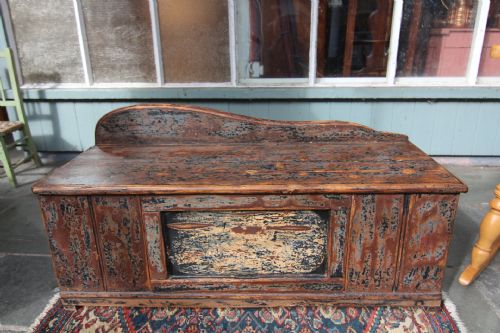
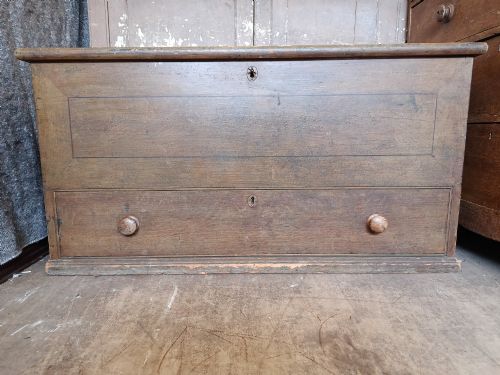
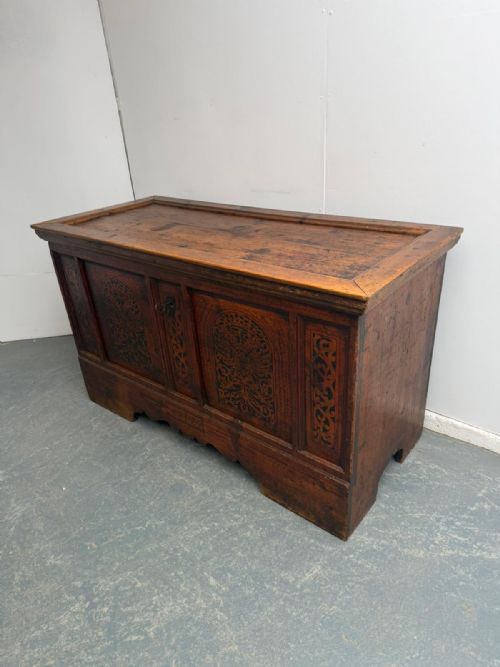
When you search for a brown painted wooden coffer, you are looking at substantial storage trunks and blanket boxes that bridge domestic utility and folk art. The pieces gathered here span the nineteenth century through the early twentieth century, showing regional European and British country traditions.
Most examples you will encounter are constructed from pine and finished with original or scumbled paint surfaces that have aged over decades. They appear in various forms including mule chests, strong boxes, and barge box seats, often retaining internal compartments or bracket feet.
Materials and construction
Makers relied on durable local timbers such as pine and oak for the primary carcase, joining thick boards with dovetail corners or sturdy iron and wrought iron strapwork. These boxes were built to withstand heavy daily use and frequent transport.
Surfaces were frequently treated with hand-applied paint, graining, or scumble glazes to mimic more expensive hardwoods or to provide decorative folk motifs. Iron drop handles, brass escutcheons, and metal bindings added both structural reinforcement and visual contrast.
Object types on this page span blanket boxes, strong boxes, mule chests, and specialised travelling trunks.
Assessing quality and character
Quality in these pieces rests in the survival of an untouched painted surface and the integrity of the original timber construction. A coffer that retains its authentic scumbled finish or regional folk decoration carries far greater visual weight than one stripped or heavily restored.
The sophistication of the joinery and the presence of period hardware also distinguish standard utility boxes from finer vernacular examples. Well-proportioned feet, original interior tills, and robust iron bindings elevate an ordinary storage chest into a striking decorative object.
The Brown Painted Wooden Coffer Glossary
- Mule chest
- A traditional storage chest featuring one or more drawers beneath the main lift-top compartment, combining the functions of a coffer and a chest of drawers.
- Scumble
- A decorative painting technique where a translucent glaze is dragged or brushed over a lighter base coat to simulate the rich grain of figured wood.
- Masonic pine chest
- A specialised storage box associated with fraternal lodges, constructed from pine and frequently bearing symbolic painted or carved motifs.
- Bracket feet
- Small architectural supports projecting from the bottom corners of a case piece, elevating the body slightly off the floor.
- Strong box
- A heavy-duty reinforced chest secured with iron strapwork and complex locking mechanisms, designed for safeguarding valuables and documents.
Brown Painted Wooden Coffer: Frequently Asked Questions
Where were these coffers made?
The pieces originate from various domestic and continental workshops, encompassing British regional vernacular as well as Scandinavian, Hungarian, and wider European folk traditions.
Makers utilised locally available timber and distinct regional painting styles, resulting in varied aesthetic outcomes ranging from simple rural utility to elaborate folk art.
How do I clean a painted surface?
Painted wooden coffers require minimal intervention to preserve their historic finishes. Dusting gently with a dry microfiber cloth is usually sufficient for routine maintenance.
Avoid chemical solvents, abrasive cleaners, or excess water, as these can easily strip or damage fragile nineteenth-century paint layers and scumble glazes.
Can I use a coffer as a coffee table?
Many people adapt these sturdy trunks for modern living by placing them centrally in a room to serve dual purposes as storage and surface space.
Their flat lids and robust wooden construction make them well-suited for holding books and objects, provided the height and proportions fit your seating arrangement.
What is a scumbled finish?
Scumbling involves applying a darker translucent glaze over a lighter painted base and manipulating it with brushes or rags to create faux wood grain patterns.
This technique allowed nineteenth-century makers to give humble pine furniture the rich appearance of more expensive timber like oak or mahogany.