





Brown Oil Painting Interior
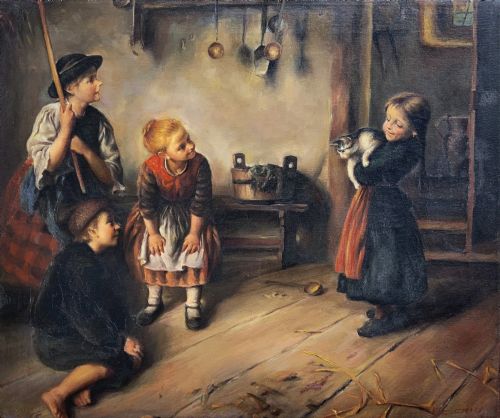
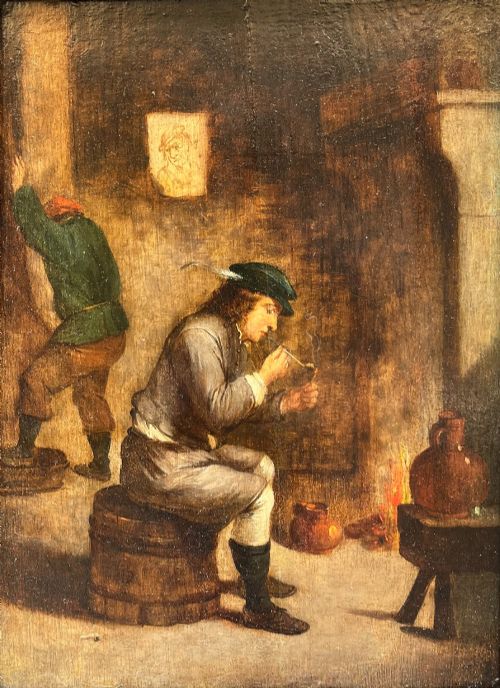
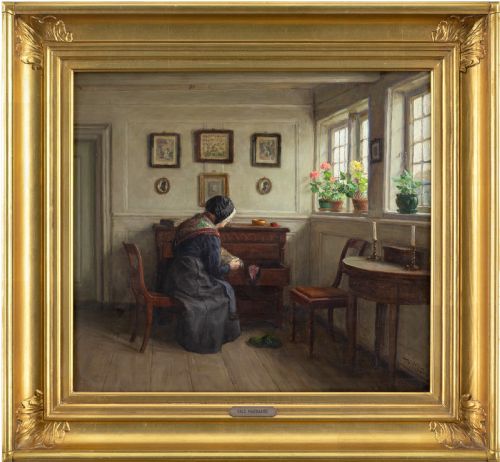
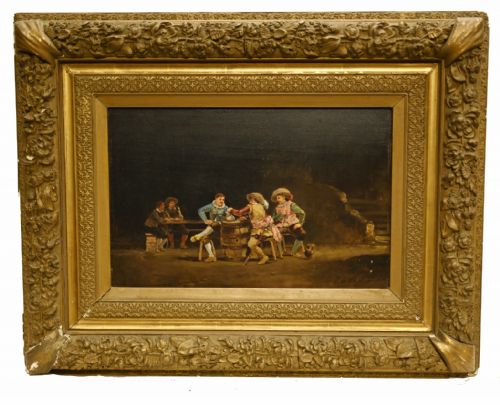
When you search for a brown oil painting interior, you are looking at domestic and tavern scenes rendered in rich, deep tones.
Brown Oil Painting Interior
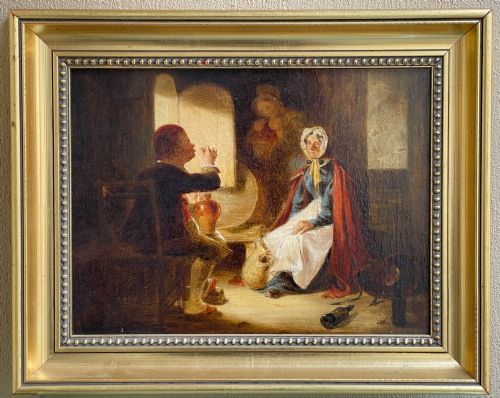
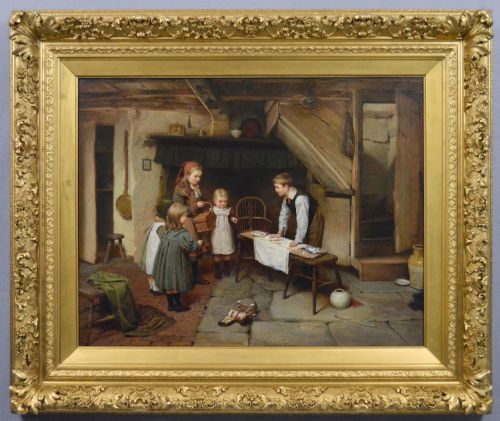
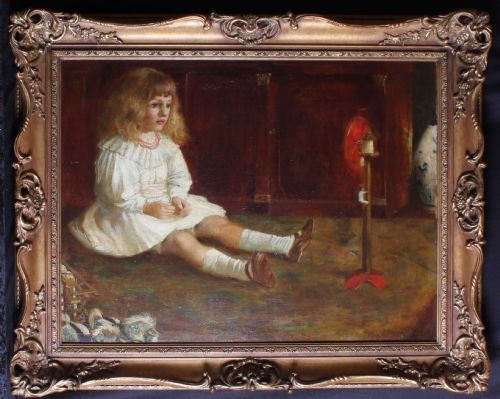
A brown oil painting interior captures domestic, tavern, and barn scenes through deep, sombre palettes that define the genre. These works span from the seventeenth century through to the mid-twentieth century, encompassing Dutch school traditions and Victorian genre realisms.
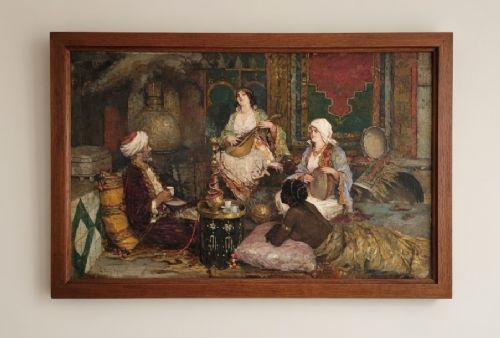
The subjects range from quiet family moments and domestic domestic rituals to card players and tavern patrons. Many pieces portray figures gathered indoors, illuminated by subtle sources of light that pierce the dark, earthy backgrounds.
You will encounter works attributed to various European schools, including French, British, and Dutch artists. The supports vary from traditional canvas to wooden panels and tin, each carrying the marks of their respective periods.
How they were made
Artists built these compositions using oil paint applied to stretched canvas, wooden panels, or tin sheets. The ground layers often provided a dark base that supported the heavy use of umbers and ochres.
Techniques such as chiaroscuro directed the viewer's eye through dramatic contrasts between deep shadows and warm highlights. Painters utilised fine brushes to render facial expressions and interior details within the confines of a restrained colour scheme.
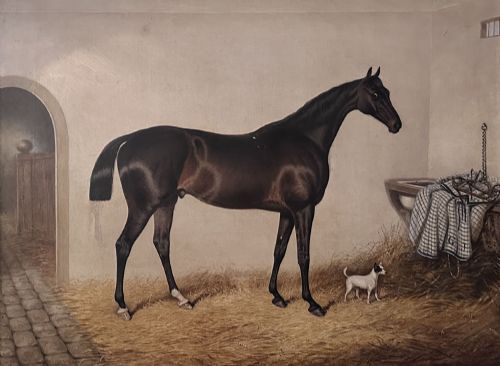
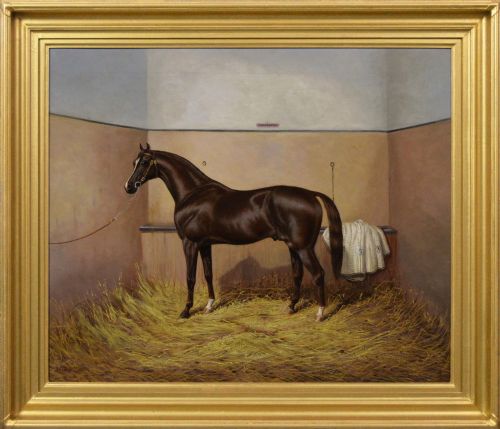
Cats, dogs, and horses frequently share the domestic stage with their human counterparts.
What varies in quality
The sophistication of the brushwork and the handling of light separate the finer works from more rudimentary examples. Superior pieces demonstrate a confident control over shadow and depth, creating realistic textures in fabrics and wooden furniture.
Compositional balance and the psychological depth of the figures also determine the standing of a piece. Works by recognised academic painters or followers of established European schools generally display greater anatomical accuracy and narrative cohesion.
David Teniers The Younger·Valdemar Magaard·Harry Brooker·Johann Hamza·Albert Clark·John Watkins Chapman·Gabriel Puig Roda·James Kyd·Edwin Thomas Roberts·Edwin Hughes·Benjamin Cam Norton·Hans Temple·Roland Batchelor·Charles Bilger Spalding·Théophile Emmanuel Duverger·Rolinda Sharples·Gustav Goemans·Ruth Prowse·John Percy Cooke
The Brown Oil Painting Interior Glossary
- Chiaroscuro
- A technique employing strong contrasts between light and dark to give a sense of volume to figures and objects. This method is central to the moody atmosphere of many darkened interior scenes.
- Genre painting
- The pictorial representation of scenes from everyday life, such as domestic interiors or tavern gatherings. These works depict ordinary people engaged in common activities rather than historical or mythological subjects.
- Panel painting
- A painting executed on a flat piece of wood rather than canvas. Oak and other sturdy timbers served as stable supports for artists from the seventeenth century onwards.
- Oil on board
- A painting created by applying oil paint directly onto a rigid cardboard or composition board support. This format became increasingly common in the nineteenth and twentieth centuries.
- Dutch School
- A collective term for the stylistic approaches of artists working in the Netherlands during the seventeenth century and their later followers. These painters focused on meticulous domestic interiors and dramatic lighting effects.
Brown Oil Painting Interior: Frequently Asked Questions
What is a brown oil painting interior?
These works are oil paintings that depict indoor settings using a predominantly dark, earthy palette of browns, ochres, and deep shadows.
They often capture everyday moments, social gatherings, or quiet domestic scenes from past centuries.
How were these paintings displayed?
Historically, these artworks hung in domestic parlours, galleries, and studies, often housed within heavy wooden or giltwood frames.
The sombre tones suited the subdued lighting of period interiors.
Today, they are typically hung in well-lit rooms where their dark canvases can contrast against neutral walls.
How can I tell the period of a painting?
The period is often indicated by the style of clothing worn by the figures, the construction of the interior furniture, and the type of support used, such as oak panels or stretched canvas.
Signatures, framing styles, and artist biographies also provide concrete clues to the date of creation.
Are these paintings originals?
The listings include original works painted by period artists, alongside some pieces explicitly noted as being in the manner of or after earlier masters.
Examining the brushwork and the physical support helps determine whether a piece is a primary period work.