
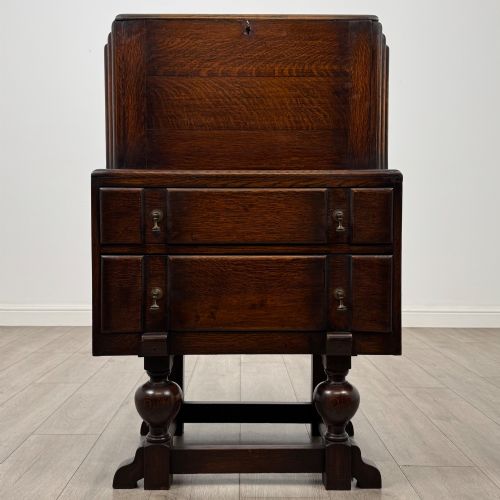
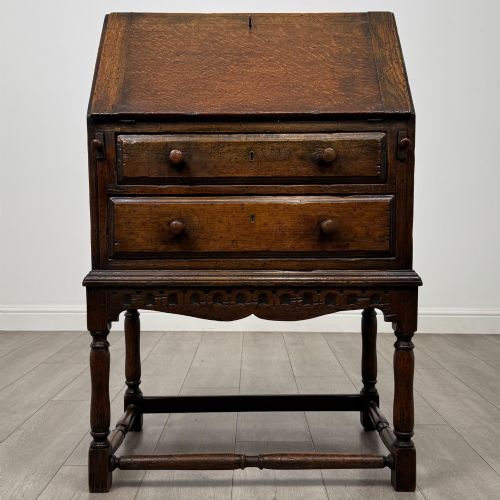
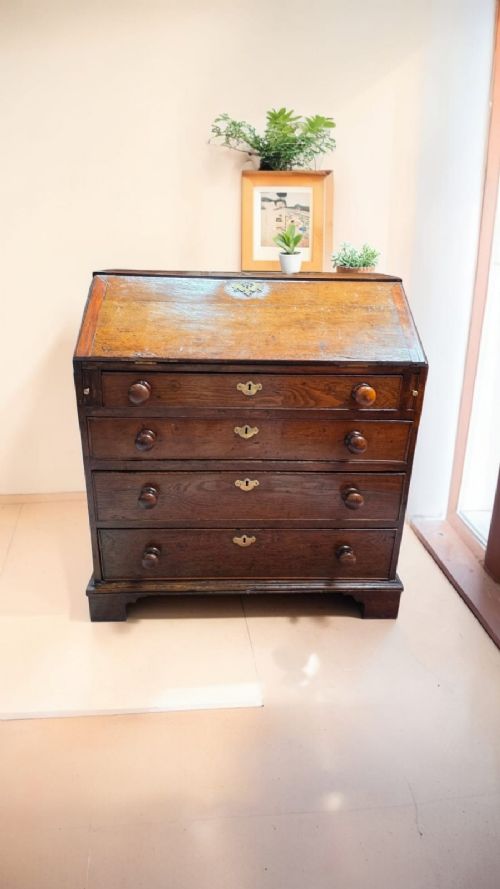
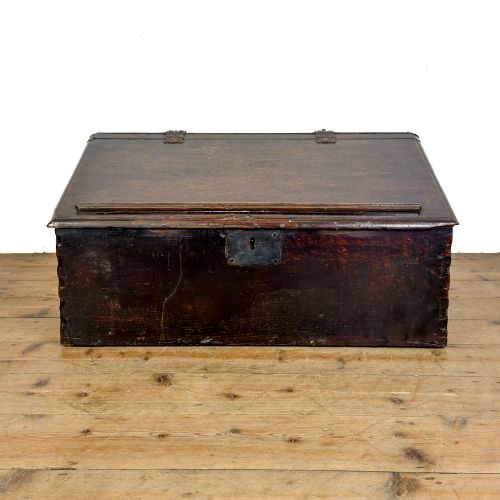
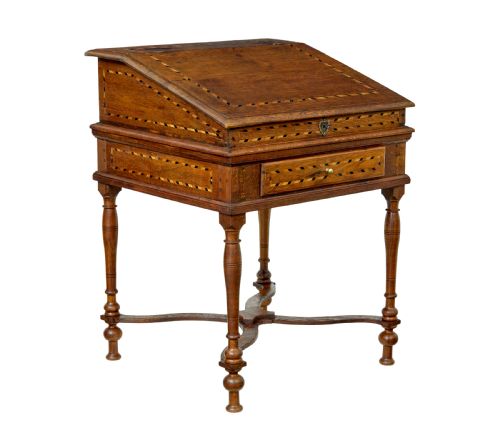
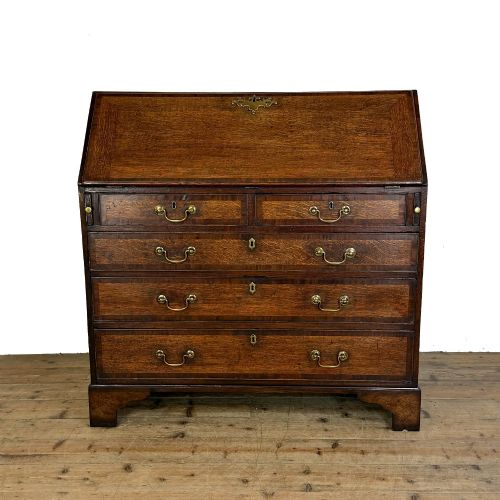

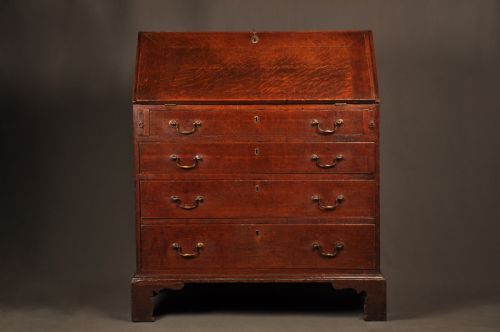


Brown Oak Writing Slope
A brown oak writing slope offers a solid portable surface for correspondence, bringing centuries of practical craftsmanship into modern rooms.
Brown Oak Writing Slope
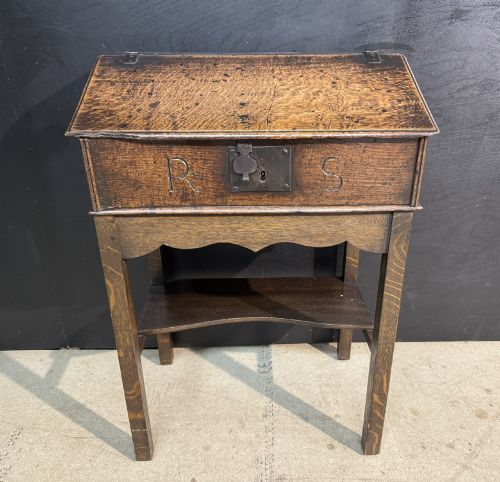
A brown oak writing slope encompasses portable desk boxes, fall-front bureaux and table top pieces designed for correspondence and document storage. These items range from compact 17th century Bible boxes to larger Georgian and Victorian desks.
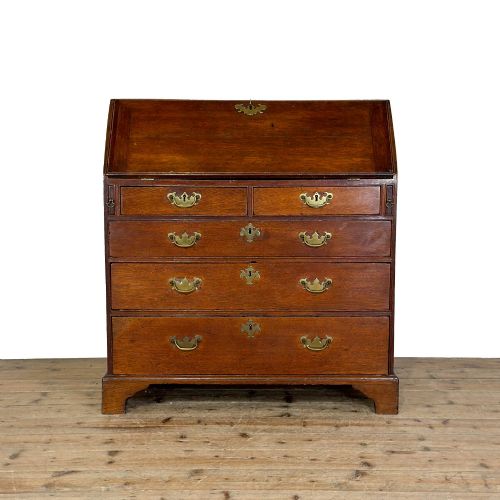
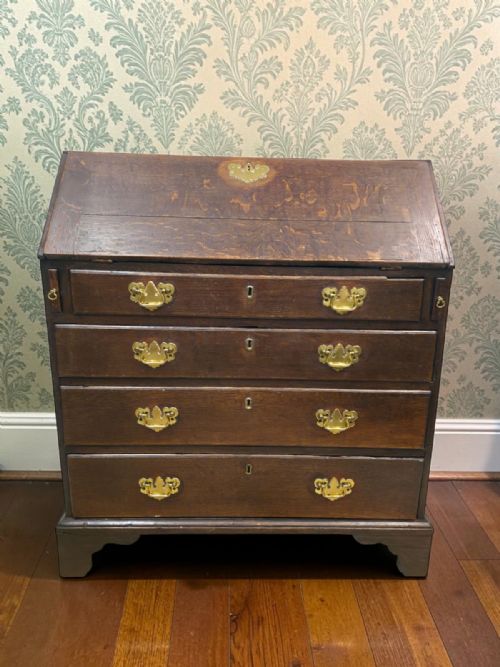
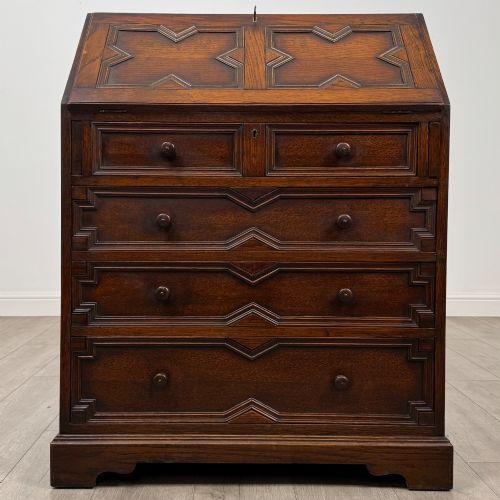
The pieces on this page appear across multiple eras, including the 17th, 18th, 19th and 20th centuries, alongside Georgian, Victorian and Edwardian periods. Bureau forms and slope boxes dominate the selection, often featuring sloping lids intended for writing.
Buyers encounter regional variations such as Dutch inlaid examples and English vernacular pieces. Smaller desk boxes and clerks desks provide alternative formats for desktop use.
How they were made
Makers utilised solid oak, pollard oak and oak veneers, frequently combining secondary timbers like pine and fruitwood for internal partitions and drawer linings. Structural longevity relied on traditional joining methods appropriate to the period.
Hardware played a functional and decorative role, with brass hinges, escutcheons and carrying handles fitted to portable boxes and bureaux. Iron fittings occasionally appear on utility boxes and earlier Bible chests.
Surfaces were frequently finished with leather or leatherette writing inserts inside hinged slopes, while more elaborate pieces incorporated crossbanding and carved detailing.
The selection spans 17th, 18th, 19th and 20th century eras, encompassing Jacobean, Georgian and Victorian styles.
What varies in quality
The standard of internal joinery and configuration dictates the sophistication of a slope, particularly where stepped drawers, secret compartments and fitted stationery compartments are present. Simpler utility boxes contrast with elaborate bureaux possessing fully articulated interiors.
Timber selection and figure govern visual appeal, distinguishing plain vernacular panels from pollard oak veneers or crossbanded surfaces. The integrity of the original hardware and the survival of fitted leather writing surfaces further influence the standing of an individual piece.
The Brown Oak Writing Slope Glossary
- Writing slope
- A portable box with an angled lid designed to hold paper and provide a slanted writing surface. These boxes open to reveal inkwell compartments and storage wells.
- Bureau
- A desk featuring a sloping fall-front flap that lowers to create a writing surface over a set of drawers. Inside, small drawers and pigeonholes organise correspondence.
- Bible box
- A small wooden chest historically used to store religious texts or important household documents. They frequently double as desk tops or early writing boxes.
- Crossbanding
- A decorative border technique where strips of veneer are laid across the grain of the primary wood. This frames the main panel of a bureau flap or box lid.
- Pollard oak
- Timber taken from trees that have been pollarded, producing a highly figured, mottled grain pattern. It appears on mid 19th century Davenport desks and specialised furniture.
Brown Oak Writing Slope: Frequently Asked Questions
What is the difference between a writing slope and a bureau?
A writing slope is typically a portable box placed upon a table, featuring a hinged lid that angles upward for writing. It lacks the integral drawer base associated with full-size furniture.
A bureau stands on its own legs or base, combining a sloping fall-front writing flap with a chest of drawers beneath. These larger forms are designed for permanent placement in a room rather than travel.
How do I use a slope box today?
These boxes function well on modern desks as storage containers for stationery, notebooks and pens. The internal compartments and small drawers keep modern writing tools organised.
The slanted lid also provides a convenient stand for displaying open books or holding a tablet. Portable versions can be moved easily between rooms depending on where you prefer to write.
What are secret drawers?
Secret drawers are concealed compartments built into the stepped interiors of bureaux and writing slopes. Makers hid them behind removable partitions, dummy panels or sliding mechanisms.
Historically, owners used these hidden spaces to secure currency, jewellery and confidential letters. Discovering them requires examining the internal pigeonholes and sliding the wooden stops.
How do I date an oak writing slope?
Dating relies on construction methods, timber preparation and hardware styles observed across different centuries. Early pieces from the 17th century often display vernacular hand-carved elements and simpler panel construction.
Later Georgian and Victorian examples introduce more refined dovetailing, brass escutcheons and crossbanded veneers. Comparing the interior layout and secondary woods helps place the object within its specific era.