
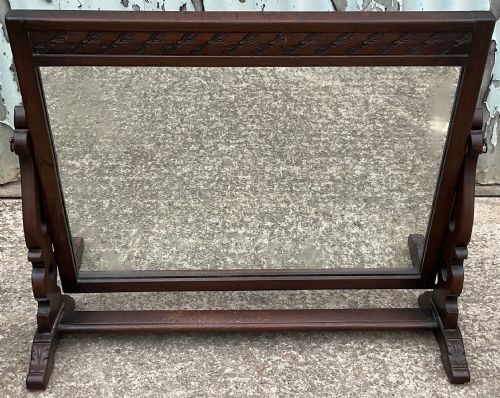
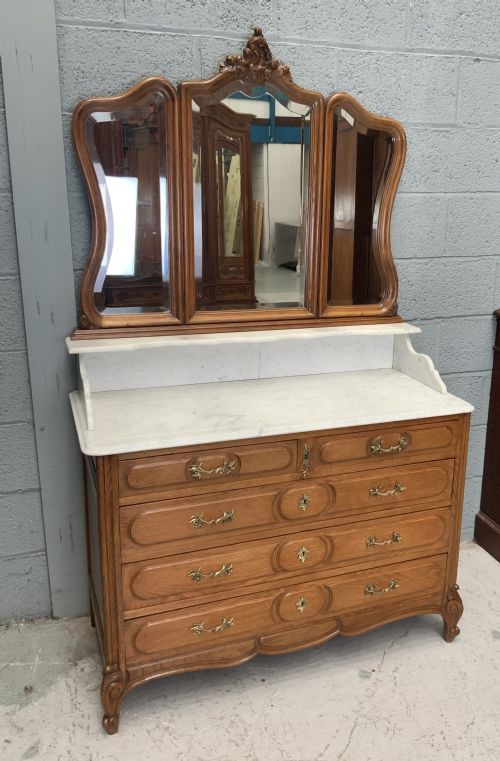


Brown Oak Vanity Mirror
A brown oak vanity mirror brings warm timber tones and practical reflection to a dressing space, spanning styles from Victorian revival to Art Deco.
Brown Oak Vanity Mirror
When you search for a brown oak vanity mirror, you encounter pieces designed for grooming and dressing, including adjustable toilet mirrors, shaving stands, and dressing table attachments. These objects typically combine sturdy timber frames with pivoting or wall-hung glass plates.
The versions most commonly met on this page date from the nineteenth and early twentieth centuries, encompassing Victorian, Edwardian, and Art Deco periods. They appear both as standalone table items and as integral components of larger dressing chests and washstands.
Makers often utilised solid timber and veneers to achieve rich grain patterns, sometimes incorporating brass fittings or carved details. Forms range from simple rectangular plates to ornate carved oval mirrors reflecting Arts and Crafts or Rococo revival influences.
How they were made
Makers constructed these pieces primarily using oak timber, selected for its durable qualities and pronounced grain, alongside mirrored glass plates. Brass and iron brackets, screws, and adjustable pins were frequently employed to secure the pivoting mirror frames.
Construction techniques involved traditional joinery such as mortise and tenon frames, alongside turned supports and applied carvings. Some examples feature stencilled decoration or inlaid details reflecting Arts and Crafts traditions.
Listings feature oak vanity mirrors spanning the nineteenth century through the Art Deco period of nineteen-thirty, incorporating brass and mirrored glass.
What varies in quality
The quality of a piece often depends on the depth and crispness of the timber carving and the selection of the oak grain. Superior examples display careful joinery and well-balanced proportions that support the mirror plate securely.
Hardware choice also distinguishes finer pieces, with substantial brass brackets and original fixings indicating higher production standards. The clarity and preservation of the mirrored glass contribute significantly to the overall integrity of the object.
James Shoolbred·Wright and Hunter of Belfast·Harris Lebus of London·Heals
The Brown Oak Vanity Mirror Glossary
- Toilet mirror
- A small mirror designed to sit on top of a table or chest, often featuring an adjustable pivoting frame. These were commonly placed on dressing tables for close-up grooming.
- Shaving stand
- A specialist piece of furniture incorporating a mirror, often adjustable, alongside a small surface or drawer for shaving implements. They were typical of gentlemen's dressing rooms in the Edwardian period.
- Arts and Crafts
- A design movement valuing handcraftsmanship, simple forms, and honest materials over mass production. Pieces from this style often feature minimal decoration that highlights the natural grain of the oak.
- Carolean style
- A revival style drawing on seventeenth-century British furniture design, characterised by rich carving and scrolled details. It frequently appears in nineteenth-century oak wall and vanity mirrors.
- Kneehole pedestal
- A configuration where drawers flank a central recess for the legs, often found beneath dressing tables that support a vanity mirror. This arrangement maximises storage while providing a comfortable seating space.
Brown Oak Vanity Mirror: Frequently Asked Questions
Where should I place a brown oak vanity mirror?
These mirrors sit comfortably upon dressing tables, chests of drawers, or dedicated washstands in a bedroom or dressing room. They require a stable surface and adequate clearance to allow the pivoting frame to tilt.
Positioning the piece near natural light enhances its practical use for grooming while highlighting the warm tones of the oak timber.
How do I adjust a pivoting mirror?
Most table mirrors feature side screws or brass thumbscrews set into the supporting upright arms. Tightening or loosening these fittings regulates the tension that holds the glass plate at your preferred angle.
Take care to support the glass with one hand while adjusting the fixings to prevent sudden movement or strain on the wooden frame.
Can I hang a table mirror on the wall?
Most pieces designed as vanity or toilet mirrors are built with a weighted base or supporting frame intended for tabletop use rather than wall suspension. Converting them requires specialist hardware and secure fixings to bear the weight safely.
If you prefer wall hanging, look for items explicitly catalogued as wall mirrors or those featuring factory-fitted hanging loops on the reverse.
How do I care for antique oak timber?
Maintain the finish by dusting regularly with a soft, dry cloth and avoiding silicone-based polishes that build up over time. Applying occasional quality beeswax helps nourish the wood and preserves the lustre of the grain.
Keep the piece away from direct heat sources and strong sunlight to prevent the oak from drying out or warping.