



Brown Oak Slope Desk
Brown oak slope desks span centuries of cabinetmaking, offering timber figure and practical writing compartments that draw collectors to their historic surfaces.
Brown Oak Slope Desk
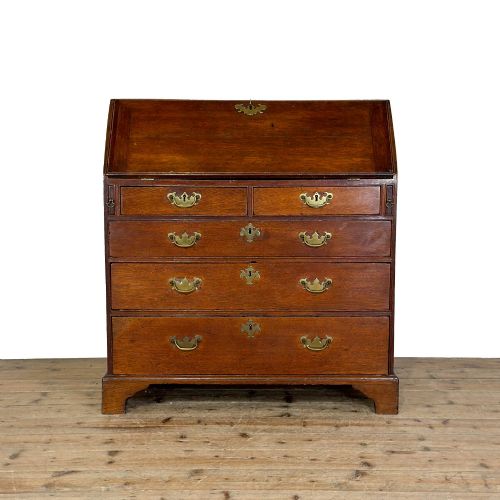
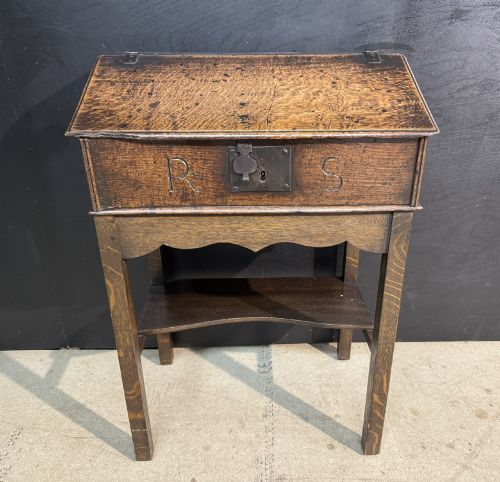
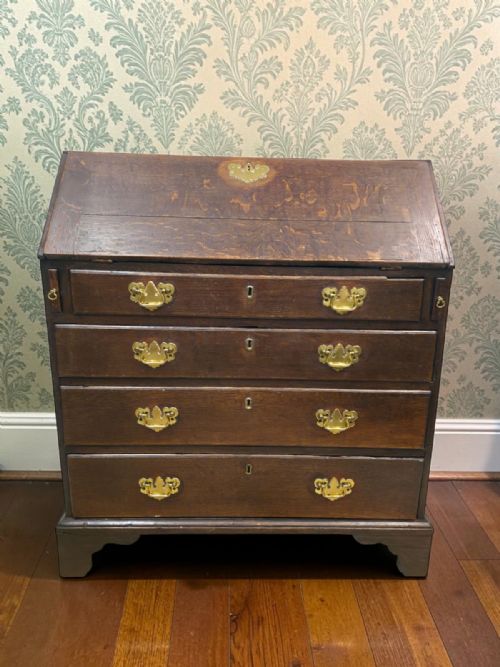
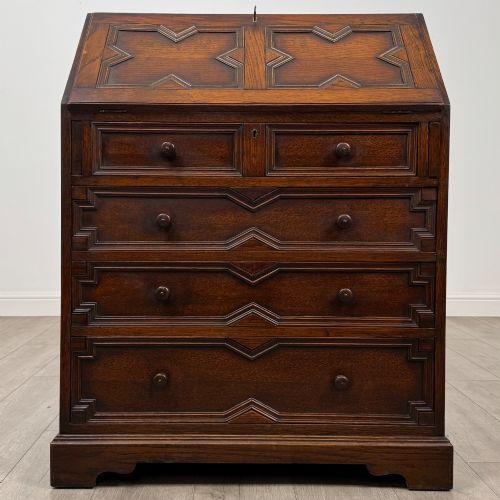
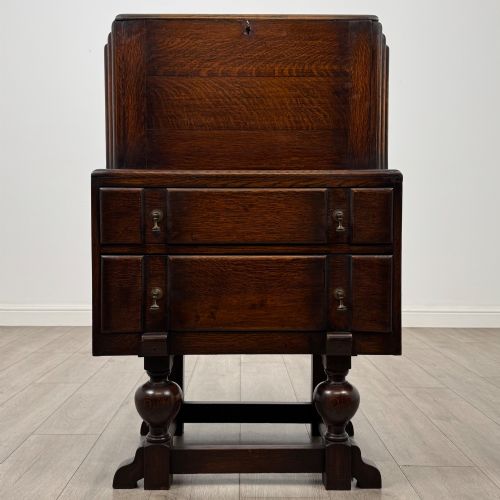
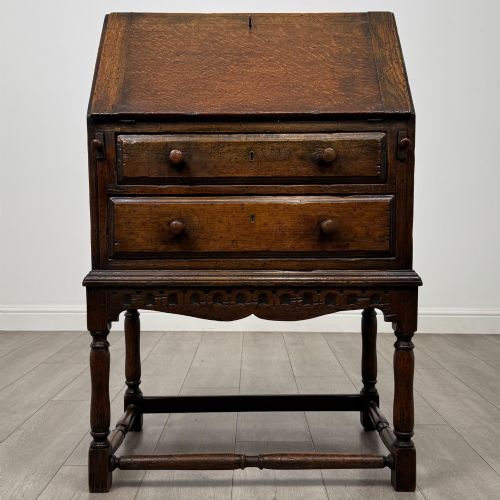
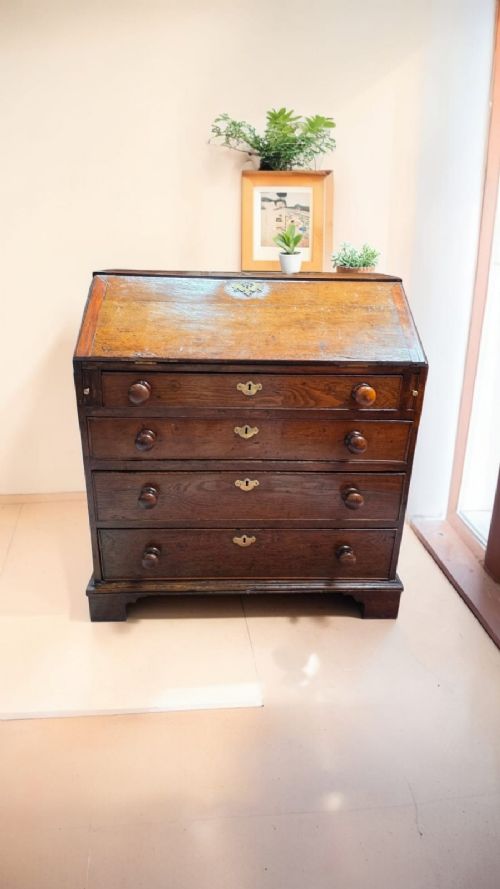
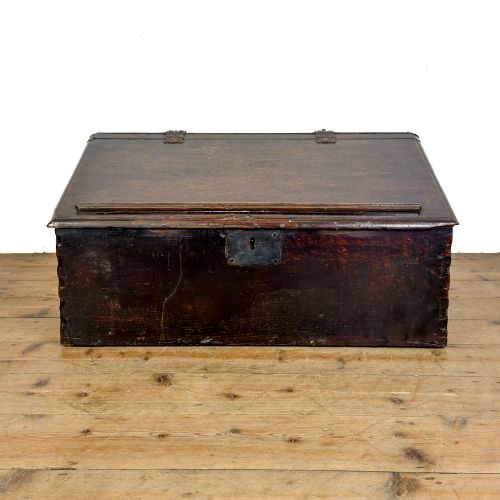
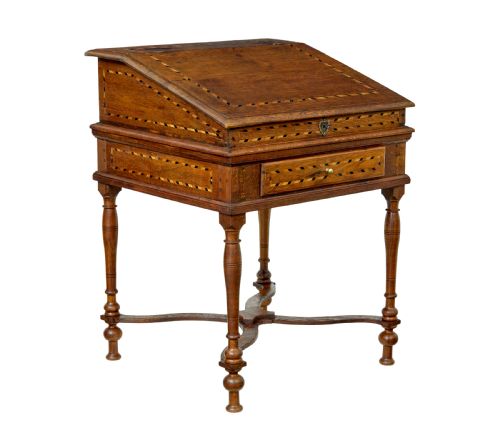
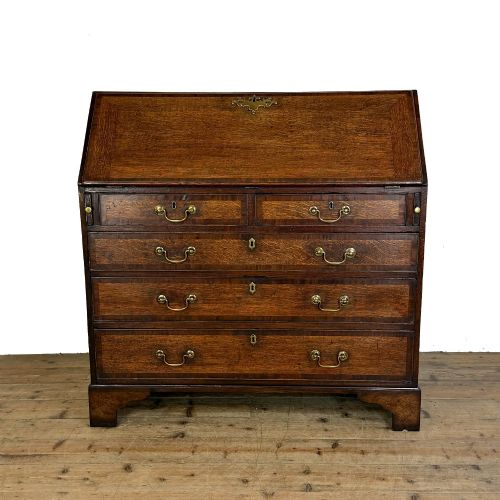
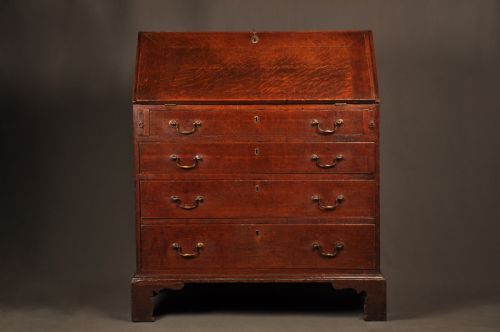
A brown oak slope desk takes the form of fall front writing bureaux, slope boxes, Bible boxes, and Davenport desks spanning the seventeenth, eighteenth, and nineteenth centuries. These pieces function as compact writing surfaces where the sloped lid lowers to reveal fitted interiors with drawers and pigeonholes.
Buyers encounter substantial Georgian and eighteenth-century oak bureaux alongside earlier seventeenth-century desk boxes and later Victorian or Edwardian iterations. The surviving forms reflect centuries of domestic and ecclesiastical writing habits across English workshops.
How they were made
Cabinetmakers utilised solid oak and pollard oak timber, often enhanced with fruitwood or crossbanding, supported by structural pine and secondary woods internally. Joinery relied on traditional framing methods, dovetails for drawer construction, and pegged joints on earlier examples.
Hardware consists of brass handles, escutcheons, and iron locks, while writing surfaces frequently feature fitted leather or leatherette inserts. Interiors incorporate stepped compartments and secret drawers constructed with fine carpentry.
Current listings feature oak writing furniture across the seventeenth, eighteenth, nineteenth, and twentieth centuries, incorporating brass, iron, leather, and fruitwood.
What varies in quality
Timber selection governs the visual weight of each piece, distinguishing plain boards from richly figured pollard oak or crossbanded surfaces. The depth of internal configuration, such as stepped drawer arrangements and hidden compartments, elevates the ambition of the original cabinetmaker.
The crispness of carved details, the integrity of original brass hardware, and the survival of early stands or fall-front supports determine the scholarly standing of an individual desk.
The Brown Oak Slope Desk Glossary
- Bureau
- A desk featuring a sloping hinged lid that opens to form a writing surface above a chest of drawers. These pieces evolved from simple table top boxes into substantial floor-standing furniture.
- Writing slope
- A portable box with an angled lid designed to hold writing materials and provide an inclined surface for correspondence. They often sit on tables or desks.
- Bible box
- A small lidded wooden box traditionally used for storing religious texts and household documents. Many early examples date to the seventeenth and eighteenth centuries.
- Crossbanding
- A decorative border technique where thin strips of veneer are laid across the grain of the primary wood. This frames the fall front or drawer faces.
- Pollard oak
- Timber taken from trees that were pollarded, producing dense, highly figured grain patterns. Cabinetmakers utilised this wood for decorative drawer fronts and elite surfaces.
Brown Oak Slope Desk: Frequently Asked Questions
What is a slope desk?
A slope desk is a writing furniture form featuring an inclined writing surface, appearing as portable boxes, table top cabinets, or full-sized floor bureaux.
These pieces provide dedicated storage for paper and ink while offering an ergonomic angle for handwriting.
How do I date an oak bureau?
Dating relies on construction methods, timber grain, handle styles, and internal drawer configuration across periods from the seventeenth century onward.
Earlier pieces show pegged joinery and vernacular carving, whereas Georgian and Victorian examples incorporate refined dovetails and different brass hardware.
Where were these desks used?
These desks served in domestic parlours, studies, and ecclesiastical settings for personal correspondence, account keeping, and record management.
Portable boxes allowed writers to move their workspace between rooms or travel with their writing materials.
What is pollard oak?
Pollard oak is a highly figured timber harvested from trees cut back at trunk height to promote dense, swirling branch growth.
Cabinetmakers prized this wood for its decorative optical movement on nineteenth-century surfaces.