

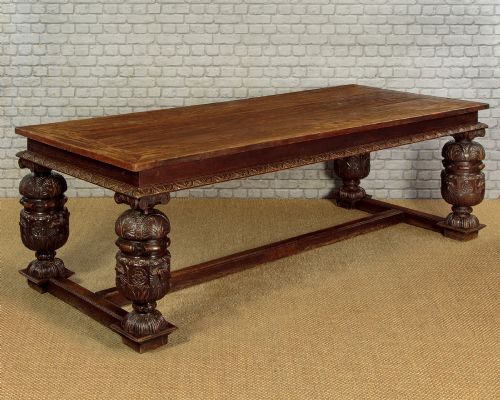


Brown Oak Monastery Table
A brown oak monastery table is a robust timber dining surface built to last generations, bringing historical weight and daily utility to a room.
Brown Oak Monastery Table
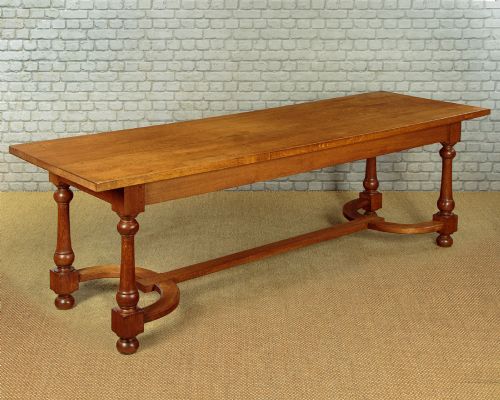
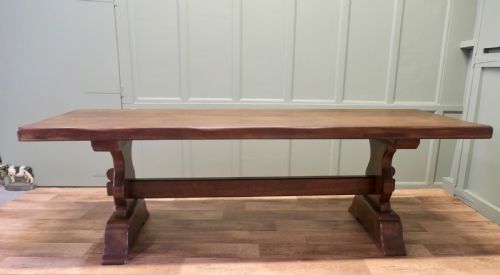
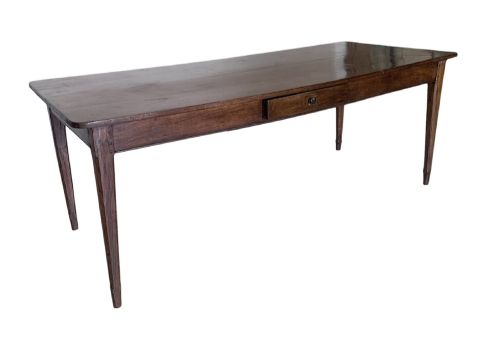
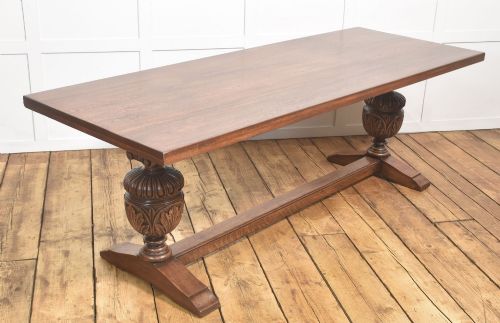
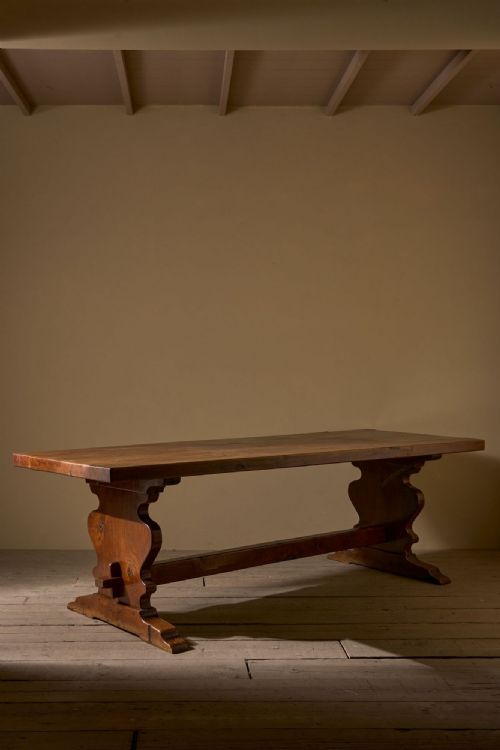
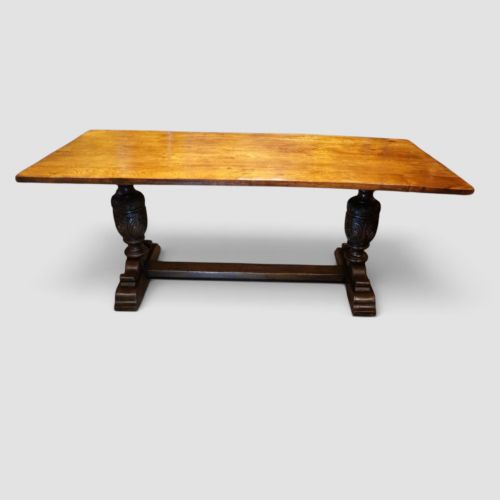
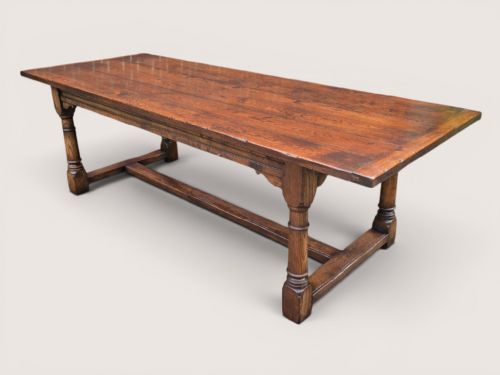
When searching for a brown oak monastery table, a buyer encounters substantial dining surfaces spanning multiple centuries, from seventeenth-century origins through to twentieth-century revivals. The listings here show heavy refectory and trestle forms designed primarily for communal dining, constructed from solid timber.
The most frequent examples appearing on this page belong to the nineteenth and early twentieth centuries, often adopting Jacobean revival, rustic farmhouse or French provincial styles. These later interpretations draw directly upon earlier refectory traditions, utilising thick wooden planks and sturdy underframes.
Early periods are represented by pieces dating back to the seventeenth century and the seventeen-fifties, featuring original construction methods and timber showing deep patination. Buyers also find hybrid pieces combining eighteenth-century elements with later elm and oak components.
How they were made
Makers constructed these tables predominantly from solid oak, occasionally combining elm for secondary structural elements or table tops. Selected boards were joined together in multi-plank configurations, sometimes restricted to two or three wide planks forming the primary surface.
Underframes frequently incorporated trestle bases, sturdy legs and stretcher rails to support the heavy timber tops without excessive sway. Where metal hardware appears, iron and brass fastenings or brackets provide additional structural reinforcement.
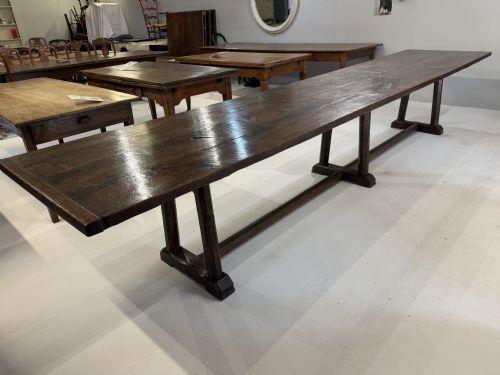
One notably hospitable table on this site accommodates twelve diners without elbow disputes.
What varies in quality
The integrity of the timber and the retention of original components dictate the standing of each piece within its period. Tables retaining their original top-to-base relationships and untouched surface patination command greater interest than those assembled from disparate elements over time.
Proportion and scale also define the work, ranging from modest six-seat country kitchen versions to large formats capable of seating twelve people comfortably. The quality of the joinery and the selection of figured oak boards separate standard utilitarian examples from more ambitious revival pieces.
The Brown Oak Monastery Table Glossary
- Refectory table
- A long, narrow dining table originally designed for monastic dining halls. These surfaces provide substantial length and character for large rooms.
- Trestle base
- A support structure where the table top rests on two or more vertical frames connected by a horizontal stretcher. This design maximises legroom along the length of the table.
- Plank top
- A table surface constructed from multiple parallel boards joined edge to edge. Historic examples often display two or three wide planks rather than numerous narrow strips.
- Jacobean revival
- A decorative style popular in the nineteenth and early twentieth centuries that imitates the heavy, carved furniture of the early seventeenth century. It utilises dark oak and geometric ornamentation.
Brown Oak Monastery Table: Frequently Asked Questions
What is a brown oak monastery table?
A brown oak monastery table is a heavy, long dining table modelled on historic refectory designs. They are typically built from solid oak with sturdy stretcher bases.
These pieces range from seventeenth-century originals to twentieth-century revival interpretations influenced by French provincial and English country traditions.
How were these tables used?
Historically, these large tables served communal dining purposes in monastic refectories, great houses and large farmhouses. They provided ample surface area for large households to gather for meals.
Today, buyers utilise them as principal dining room tables or large kitchen work surfaces that accommodate numerous guests.
How do I seat guests comfortably?
Many examples are explicitly described as seating six to twelve people depending on their overall length. The absence of corner legs in trestle designs helps maximise seating capacity along the sides.
Matching the table length with appropriate chair widths ensures diners have sufficient elbow room during meals.
How can I tell the periods apart?
Earlier periods from the seventeenth century exhibit hand-worked timber surfaces, pegged joints and deep patination acquired over centuries of use. Later revival pieces from the nineteenth and twentieth centuries often feature machine-sawn elements alongside period-style carving.
Examining the underside of the top and the construction of the base reveals whether components are contemporary with one another or altered later.