

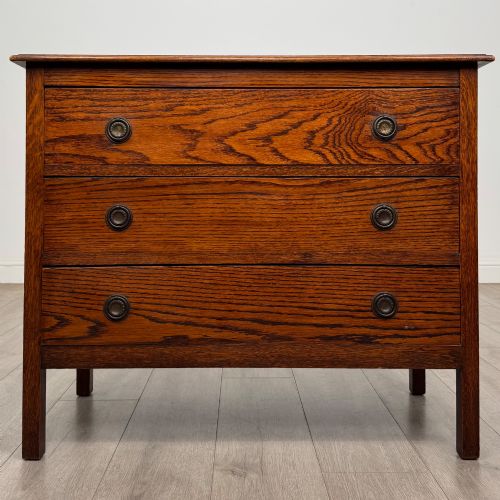
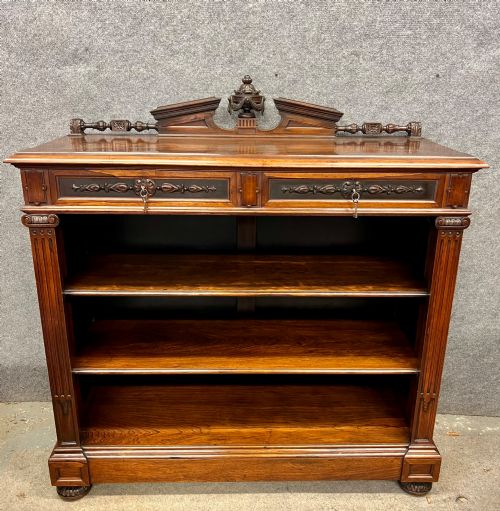
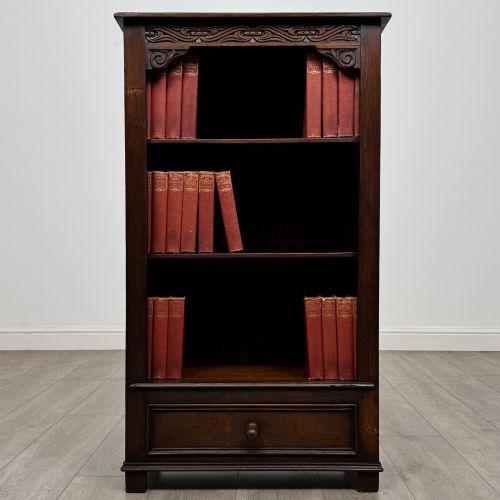

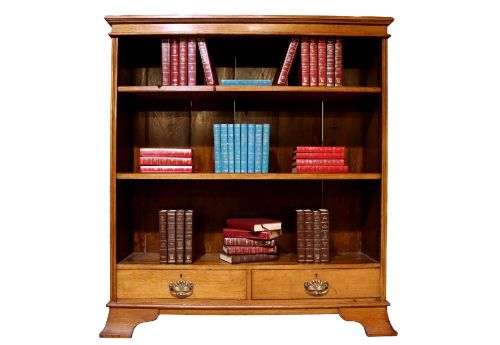
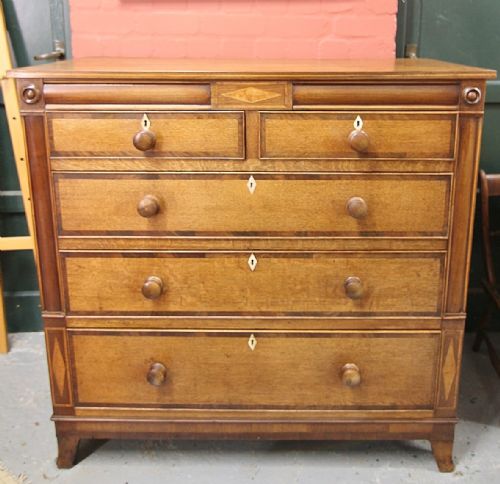
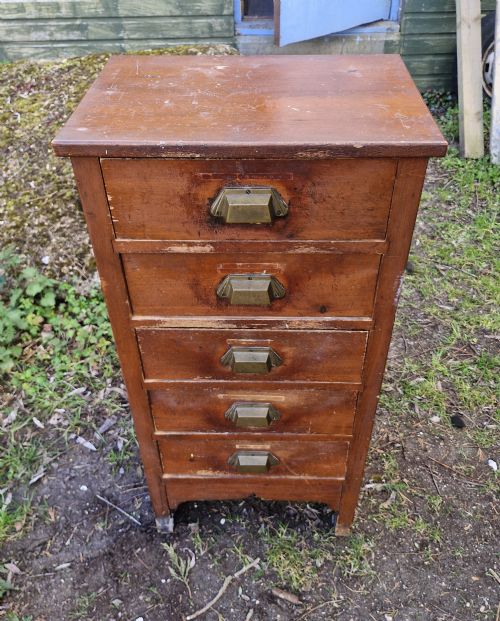


Brown Oak Drawer Unit
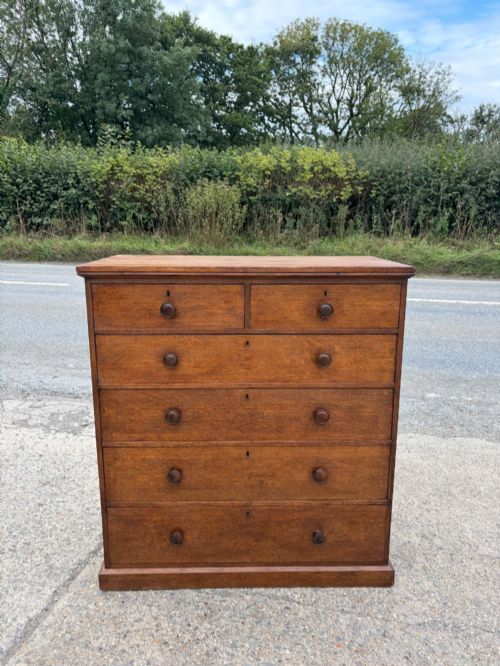
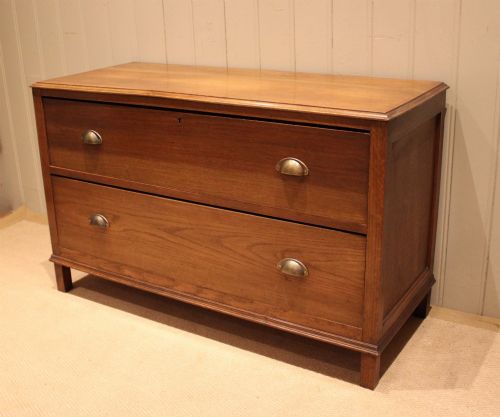
A brown oak drawer unit brings rich grain and sturdy storage to a room, spanning periods from the seventeenth century to the nineteen-thirties.
Brown Oak Drawer Unit
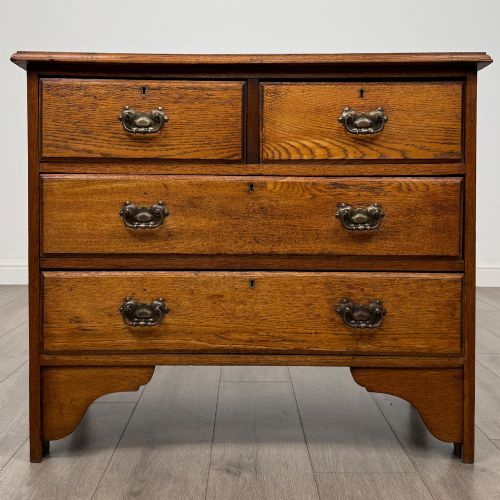
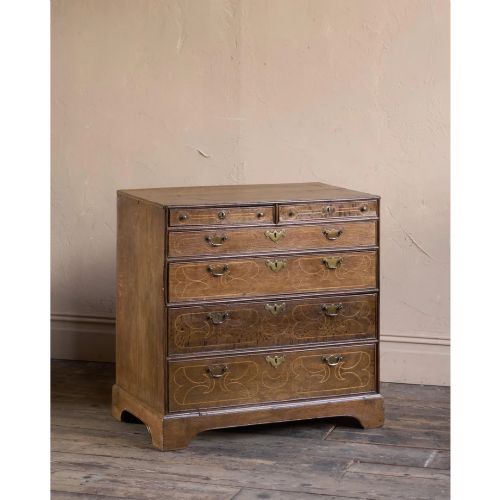
A brown oak drawer unit encompasses practical storage forms such as chests of drawers, filing cabinets, and bedside cabinets fashioned primarily from oak. The selection ranges from compact Edwardian pieces and nineteenth-century examples to earlier Georgian and seventeenth-century variants.
Buyers will most frequently encounter Edwardian and nineteenth-century chests of drawers alongside office filing cabinets and dressing tables. These pieces utilise the deep tones and distinctive figuring characteristic of brown oak.
Forms vary from narrow splayed foot chests and office filing drawers to small low chests and standing cupboards. Each item demonstrates the utility and enduring appeal of oak construction across different eras.
Materials and Construction
Makers built these drawer units using solid oak, occasionally incorporating secondary timbers like mahogany, walnut, or fruitwood inlay. Brass and metal fittings, including handles and patent mechanisms, complete the construction.
Cabinetmakers employed traditional joinery techniques suited to the period, creating robust drawer boxes and sturdy carcases designed for daily domestic or office use. The natural grain of the oak received finishes that enhanced its characteristic colour.
Listings feature brown oak drawer units spanning the seventeenth, eighteenth, nineteenth, and twentieth centuries, executed in oak, mahogany, walnut, and fruitwood.
Distinctions in Quality
Quality in a brown oak drawer unit depends upon the selection of timber, the crispness of any inlaid details, and the integrity of the original brass or metal hardware. Finer examples display superior figuring in the oak and precise joinery that withstands centuries of use.
The sophistication of the mechanism, whether simple drawer runners or patent office filing systems, also marks the distinction between standard utility pieces and higher-grade workshop production.
Harris Lebus of London·Amberg·Shannon·Simpson Halifax
The Brown Oak Drawer Unit Glossary
- Brown oak
- Timber harvested from ordinary oak trees that has developed a rich, dark brown coloration through natural fungal action in the living tree. This wood is highly prized for its decorative grain.
- Tambour front
- A flexible door constructed from narrow strips of wood glued to a canvas backing, allowing it to slide smoothly around a curve in office filing cabinets.
- Wellington chest
- A tall, narrow chest of drawers secured by a locking hinged side bar that fastens over the drawer edges. This form became popular during the nineteenth century.
- Geometric moulding
- Raised ornamental framing applied to drawer fronts in repeating patterns, characteristic of seventeenth-century joinery.
Brown Oak Drawer Unit: Frequently Asked Questions
How do I date an oak drawer unit?
Dating relies on observing construction methods, timber choice, and hardware styles such as brass handles and locks. Secondary woods and tool marks inside the drawers offer further clues to the period.
Comparing the piece to documented examples from eras like the Georgian or Edwardian periods helps narrow down the decade of manufacture.
Were filing cabinets made of oak?
Office filing cabinets were frequently constructed from oak during the late nineteenth and early twentieth centuries. Manufacturers produced robust modular units to serve growing businesses.
These pieces combined heavy oak carcases with metal hardware and patent locking mechanisms for secure document storage.
How do I care for brown oak furniture?
Maintain brown oak by keeping it away from direct heat sources and strong sunlight, which can dry out the timber and fade the finish. Regular dusting with a soft, dry cloth preserves the surface.
Applying a traditional beeswax occasionally will nourish the wood and maintain its subtle sheen without building up excessive residue.