





Brown Oak Coat Tree
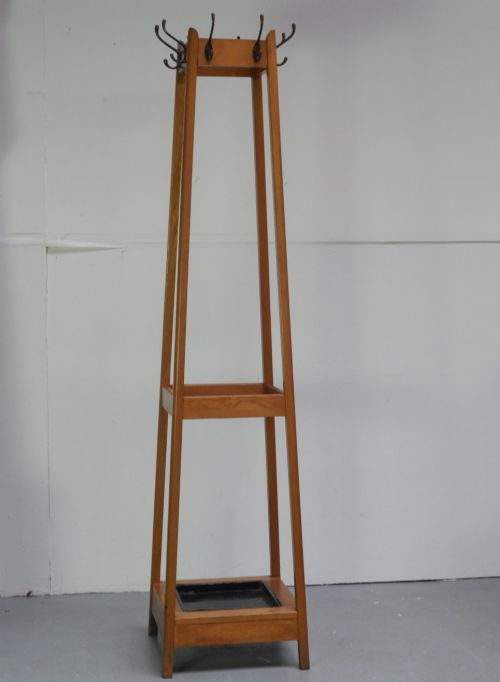
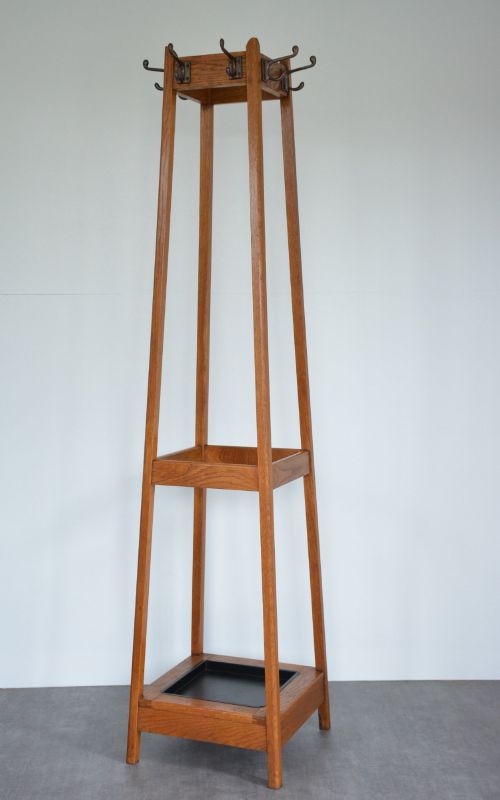
A brown oak coat tree brings sturdy timber utility and practical hallway storage into your home, uniting hats, coats and umbrellas in one upright piece.
Brown Oak Coat Tree
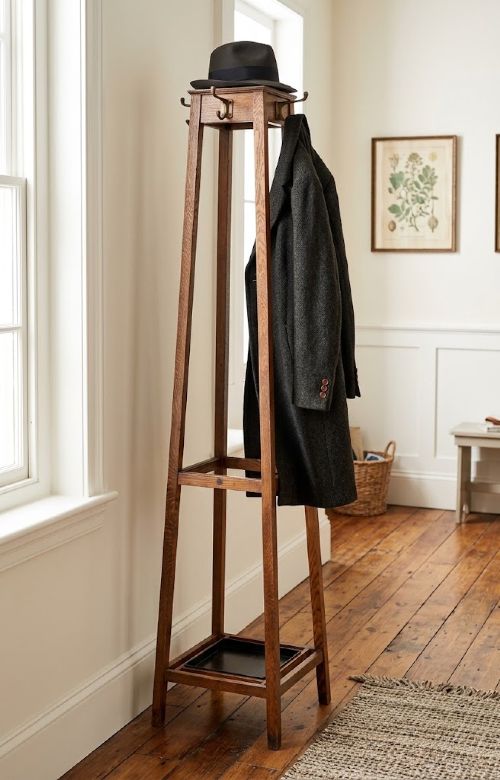
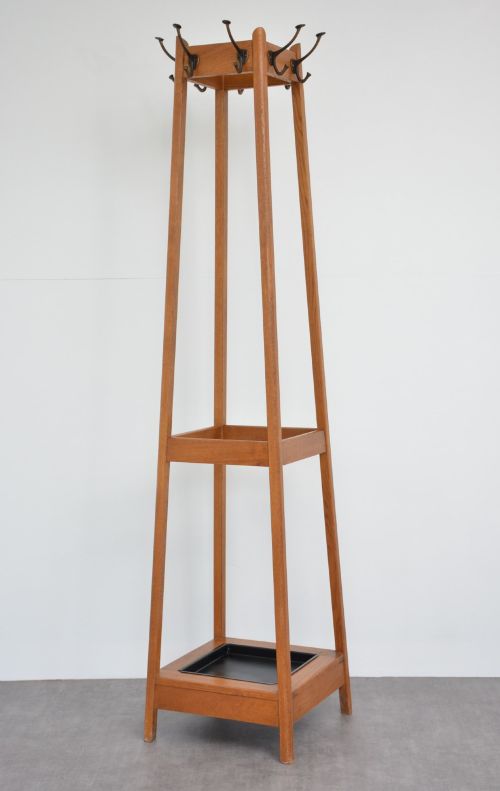
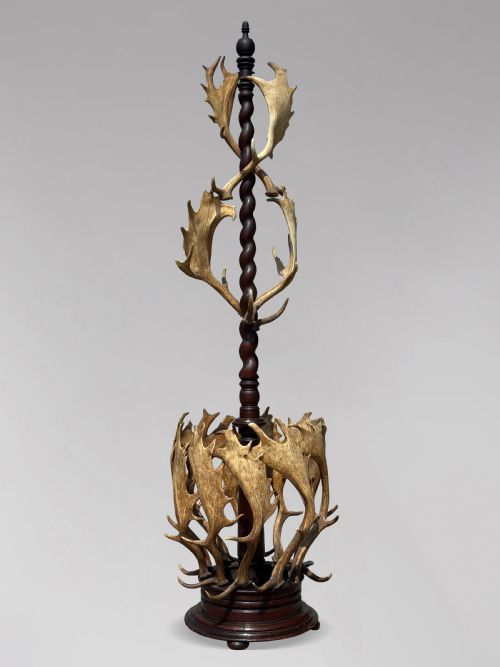
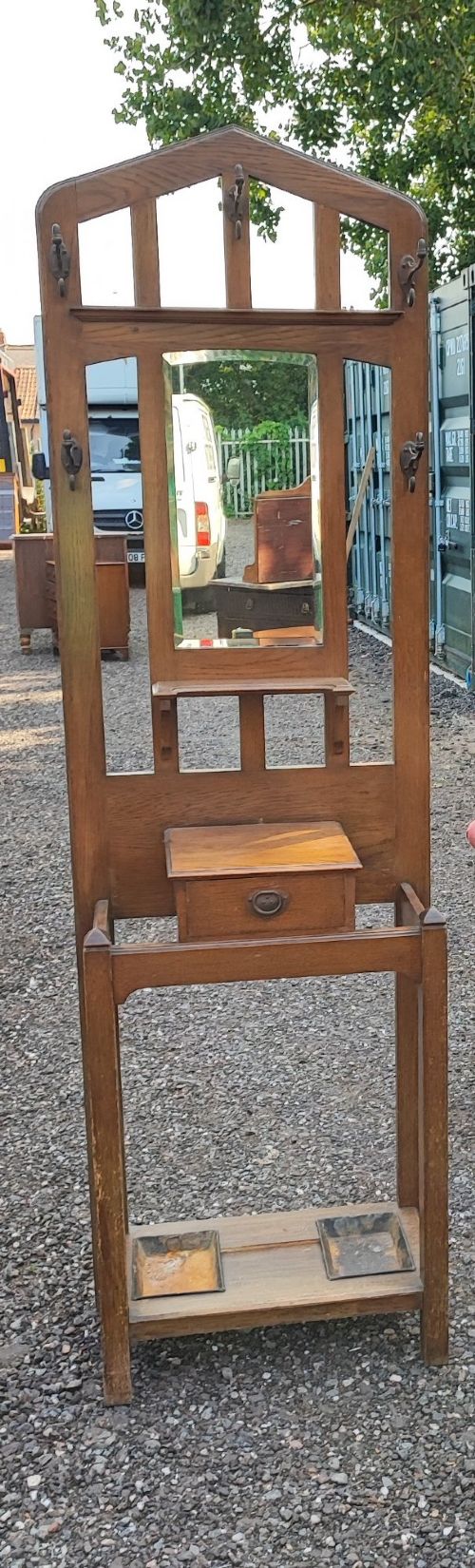
A brown oak coat tree provides a practical household station for hats, coats and umbrellas, frequently integrating upright timber posts with metal hooks and umbrella wells. You encounter these practical stands shaped by Victorian, Edwardian and mid-century movements, spanning the nineteenth and twentieth centuries.
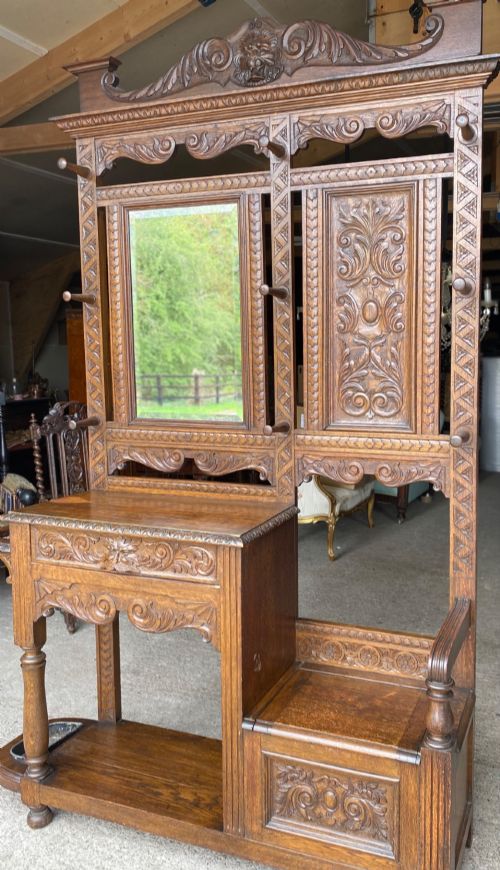
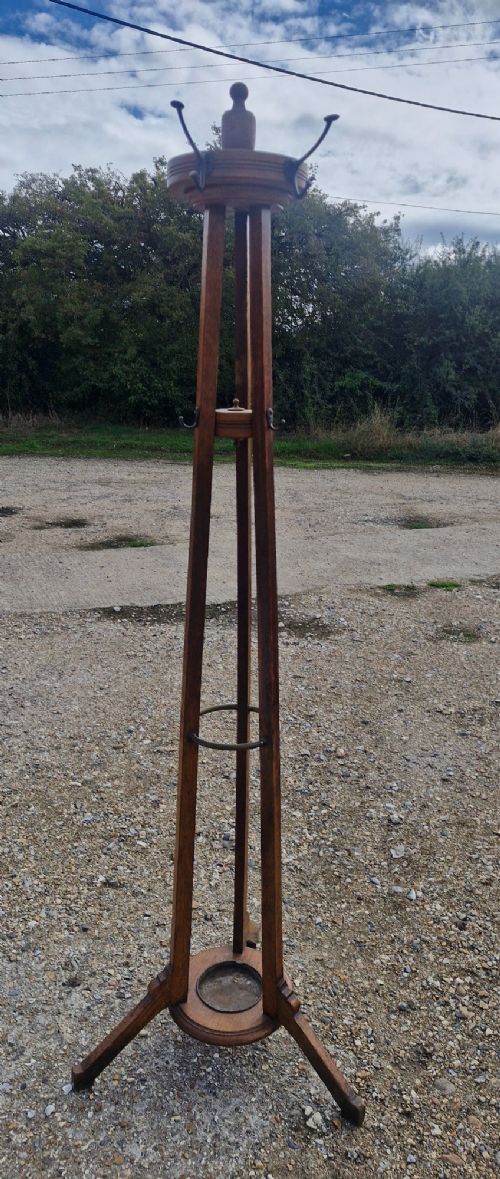
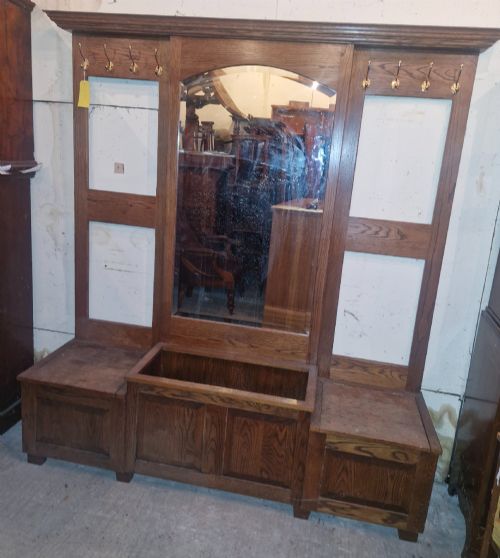
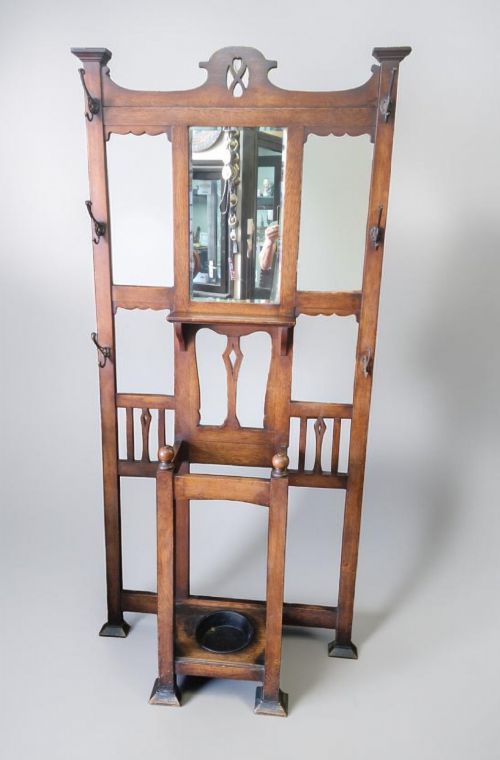
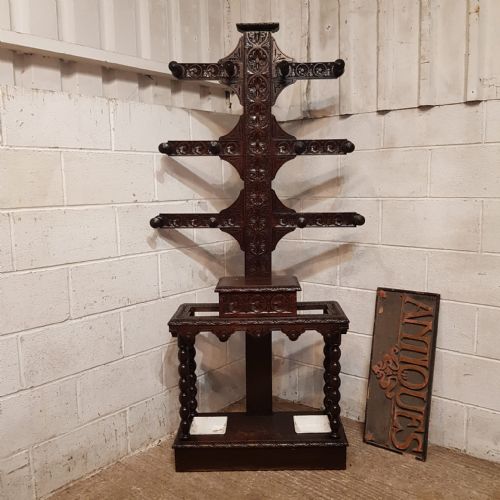
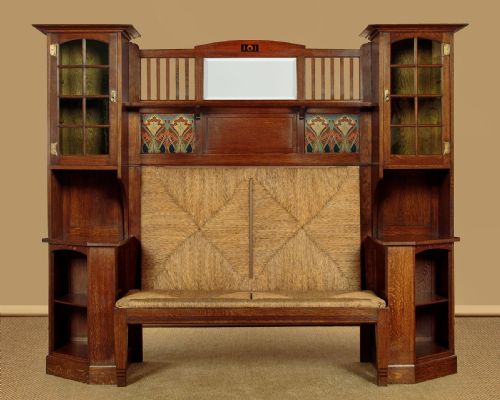
The versions most common here include upright hall stands and revolving hat and coat stands made from solid oak. Many examples combine bench seating, carved panels or drip trays to serve multiple hallway functions.
Originating largely from British workshops and European makers, these pieces reflect domestic design shifts from elaborate Victorian carving to clean Arts and Crafts utility.
Assessing Craftsmanship
Quality reveals itself in the depth of timber carving, the choice of well-figured brown oak and the robustness of the structural joints. Superior examples feature integrated elements like cast iron drip trays and solid brass hooks that remain firmly fixed to the timber.
Simpler production pieces rely on plain turned posts and minimal detailing, whereas exhibition-grade items showcase intricate figurative carvings, such as Greenman motifs or Black Forest animal forms, executed with precision.
Brown Oak Coat Tree Retail Price Guide 2026
Typical asking prices for brown oak coat tree among the pieces listed under this phrase on Sellingantiques today, from the lower quarter to the upper quarter. They describe what is for sale here now, not the wider market.
Listings feature oak construction accompanied by materials such as brass, iron, glass, horn and mirror across Victorian to 1960s periods.
J. Parker Of Woodstock·Astrola
The Brown Oak Coat Tree Glossary
- Hall stand
- A combined hallway furniture piece incorporating coat hooks, a mirror, umbrella holders and often a small bench or glove box. These items anchored the entranceway of period homes.
- Drip tray
- A metal or ceramic basin positioned at the base of a coat stand to catch rainwater from wet umbrellas. It protects the surrounding oak timber from moisture damage.
- Black Forest
- A regional style of heavily carved wooden furniture originating in Switzerland and Germany, often featuring naturalistic animal forms and foliage. Bears and woodland motifs are characteristic.
- Greenman
- A sculptural architectural ornament depicting a human face emerging from or entwined with foliage. This motif frequently decorates Victorian and Edwardian carved oak panels.
- Revolving
- A rotating top section fitted to certain coat stands to allow easy access to hats and coats without moving the entire heavy timber base.
Brown Oak Coat Tree: Frequently Asked Questions
What is a brown oak coat tree?
A brown oak coat tree is a tall freestanding hallway furniture piece designed to hold coats, hats and umbrellas. These items organise entrance spaces by gathering outerwear onto hooks arranged around a central wooden shaft.
They often include integrated drip trays, mirrors and small benches to provide comprehensive utility right by the front door.
How were these stands used historically?
In period homes, visitors and residents placed wet coats, hats and walking sticks onto the stand immediately upon entering the house. The inclusion of umbrella holders and drip trays kept wet weather outside the main living rooms.
Mirrors allowed a quick appearance check before heading out, while built-in seats offered a convenient place to change footwear.
How do I date a hall stand?
Dating relies on stylistic clues, timber characteristics and manufacturing techniques visible across the piece. Victorian examples often display heavy, elaborate carvings and Greenman motifs.
Later Edwardian and Arts and Crafts versions tend to exhibit cleaner geometric lines, while mid-century industrial designs utilise simpler forms and exposed metal brackets.
How do I maintain oak hall furniture?
Maintain the oak timber by applying occasional wax polish to nourish the grain and protect the surface from dry air. Ensure that metal drip trays are emptied and dried regularly to prevent moisture damage to the wooden base.
Position the stand away from direct heat sources to keep the solid timber from warping or splitting over time.