
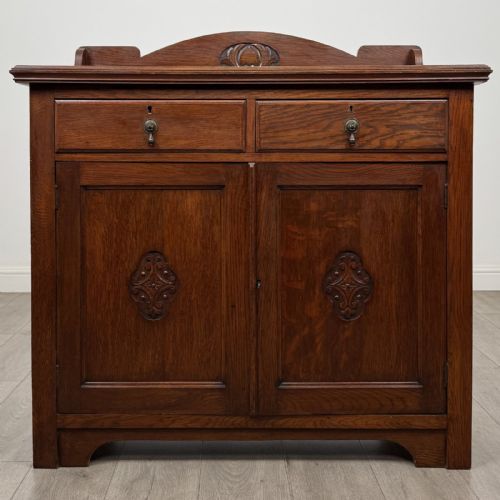
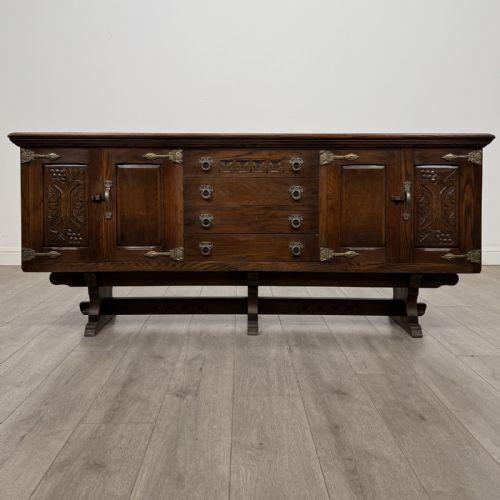
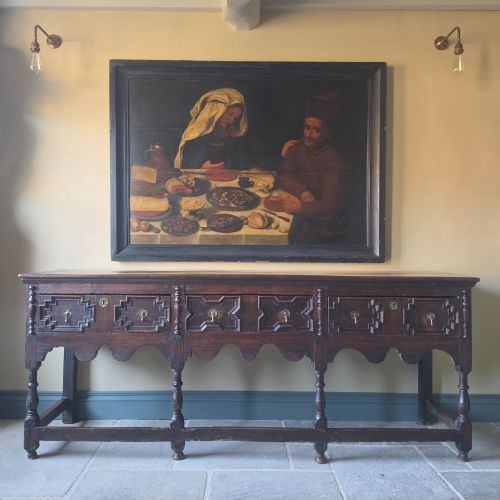
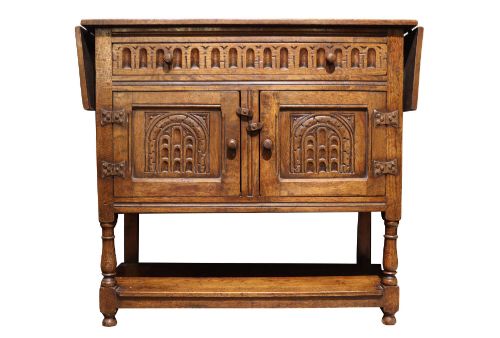
Brown Oak Buffet Server
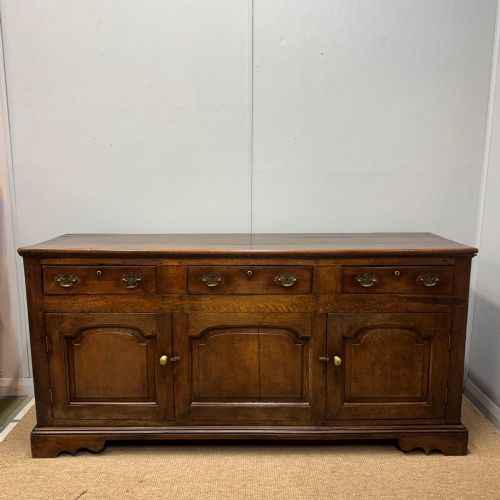
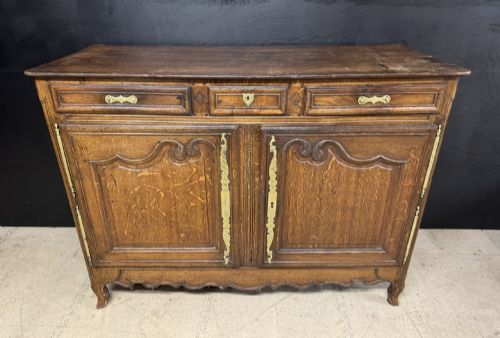
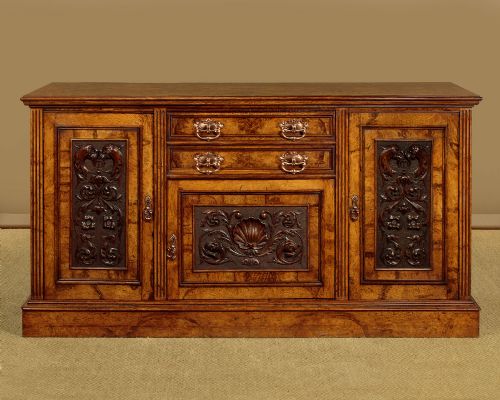
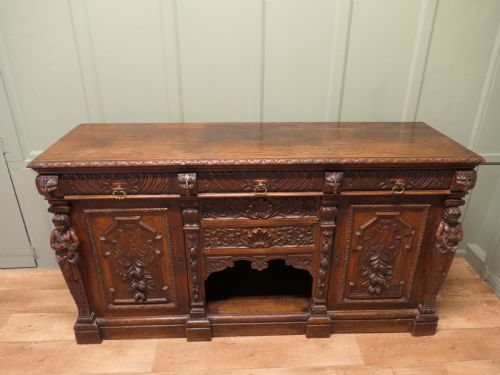
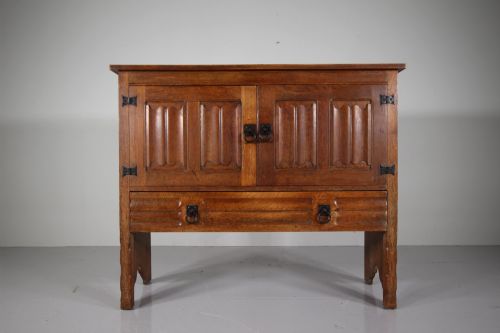
A brown oak buffet server brings solid timber utility and generous storage to a dining room.
Brown Oak Buffet Server
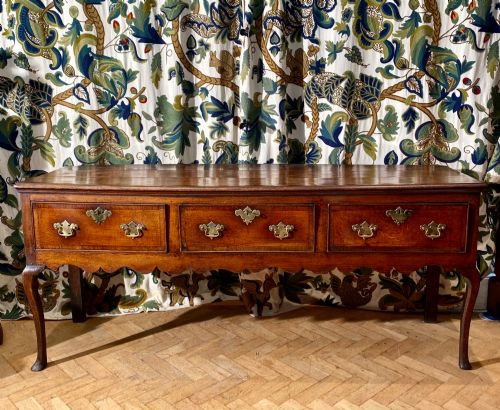
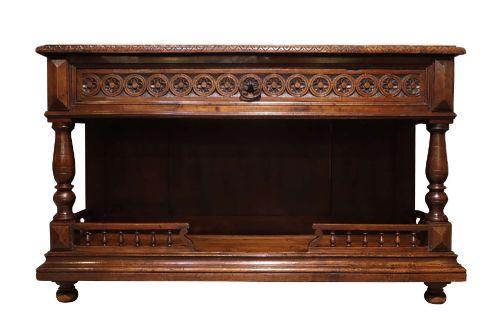
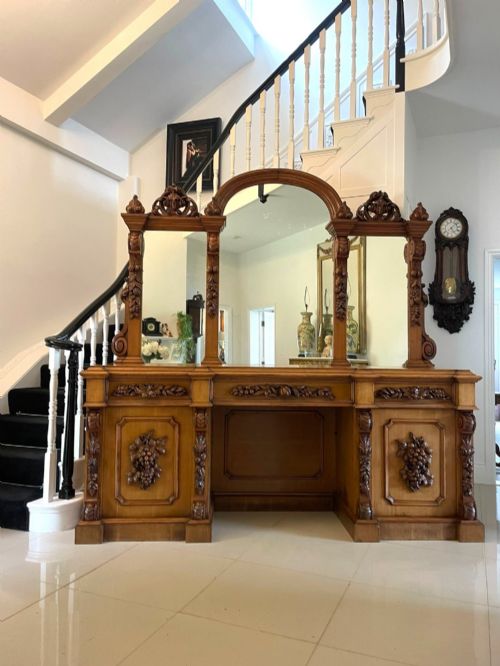
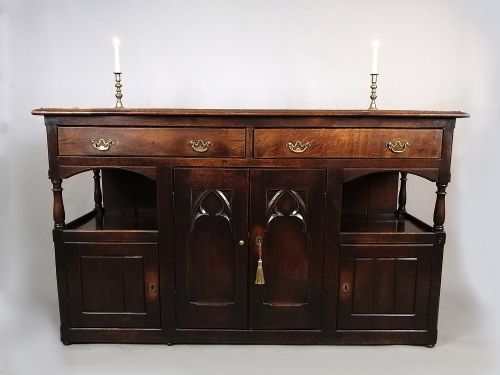
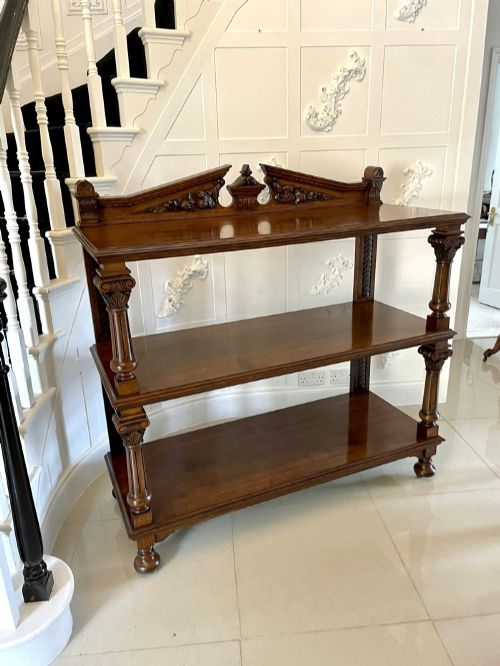
A brown oak buffet server encompasses sturdy sideboards, dresser bases, and serving tables originating from the eighteenth, nineteenth, and early twentieth centuries. These pieces appear primarily in traditional British styles, alongside regional variations from Scotland and France.
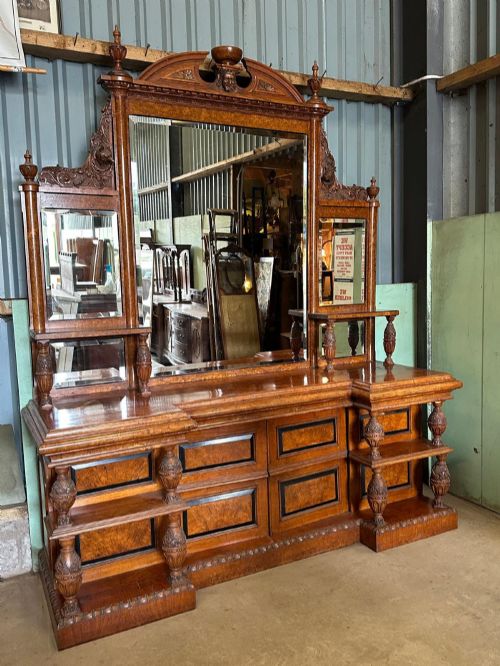
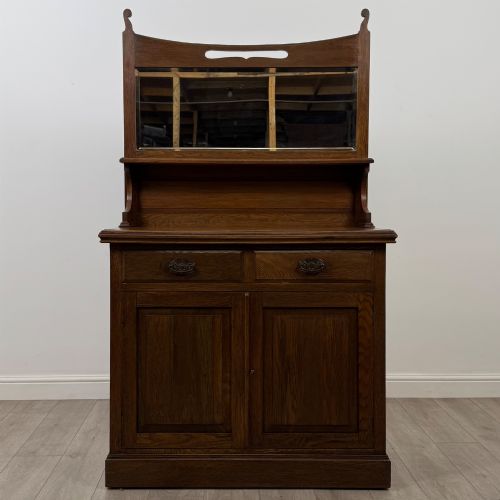
The buyer encounters frequent examples of Georgian and Victorian construction, often featuring potboards, drawers, and cabinet doors designed for household service. Edwardian interpretations also emerge, alongside revival pieces adopting Jacobean and Arts and Crafts aesthetics.
Object designations span sideboards, buffets, and servers, reflecting the overlapping terminology used for heavy timber dining furniture over successive centuries.
Judging the work
Quality rests in the depth of the timber figuring, particularly in pollard oak selections, and the crispness of hand-carved ornamentation on panels and drawer fronts. Superior pieces exhibit balanced proportions, well-fitted drawers, and robust internal framing that withstands centuries of use.
Later revival pieces show varying standards of execution, ranging from straightforward utilitarian execution to detailed cabinetwork designed by prominent firms for retail houses.
Early housemaids relied on these sturdy oak cupboards to store heavy linens away from soot and drafts.
Ambrose Heal·Heal and Son·Leonard Wyburd·Shapland and Petter
The Brown Oak Buffet Server Glossary
- Dresser base
- A low wooden unit featuring drawers and sometimes a lower shelf, historically used for food preparation and serving in domestic kitchens.
- Potboard
- An open slatted or solid lower shelf positioned beneath a dresser base or sideboard, originally intended for storing earthenware pots.
- Pollard oak
- Timber taken from trees that were pollarded, producing dense wood marked by distinctive clustered growth rings and decorative swirling patterns.
- Barley-twist
- A turned wooden furniture leg or support carved in a continuous spiral resembling a twisted rope, common in seventeenth-century and revival furniture.
- Pot cupboard
- An enclosed cabinet built into dining furniture to store chamber pots or dining accessories discreetly out of sight.
Brown Oak Buffet Server: Frequently Asked Questions
What is a brown oak buffet server used for?
These large timber units served dining rooms for food presentation, serving meals, and storing tableware or linens. Their flat tops provided ample space for laying out dishes during large gatherings.
Lower shelves and drawers held pots, cutlery, and serving vessels, keeping dining spaces orderly and functional.
How do I date an antique oak sideboard?
Dating relies on observing construction methods, timber selection, and stylistic details such as mouldings, handles, and leg shapes. Eighteenth-century pieces often display hand-cut joinery and simpler functional lines.
Later Victorian and Edwardian examples incorporate heavy carved decoration, machine-cut elements, or distinct revival motifs associated with specific decades.
What is the difference between a sideboard and a dresser base?
A dresser base traditionally originated in the kitchen or scullery as a practical workspace featuring drawers and a potboard. Sideboards evolved primarily for the dining room as formal furniture for serving food.
Over time, makers adopted both terms interchangeably for heavy timber storage units fitted with doors and drawers.
How do I care for solid oak furniture?
Solid oak requires stable indoor humidity away from direct heat sources to prevent timber splitting or warping. Regular dusting with a dry cloth keeps the surface clean without moisture damage.
Applying occasional natural wax helps nourish the grain and maintain the natural lustre of older wood finishes.