


Brown Oak Box Chair
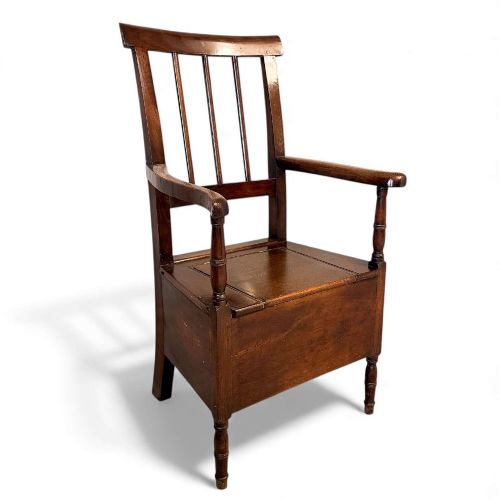
A brown oak box chair offers solid timber construction and hidden storage, making it a robust and practical seat for daily use.
Brown Oak Box Chair
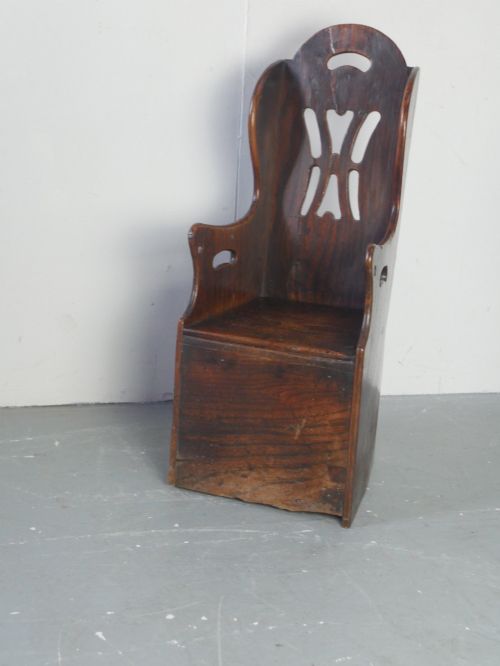
When searching for a brown oak box chair, buyers encounter robust seating forms built with enclosed bases and substantial wooden frames. These pieces span from the sixteenth century to the nineteenth century, encompassing styles such as Elizabethan, Jacobean, and Georgian vernacular.
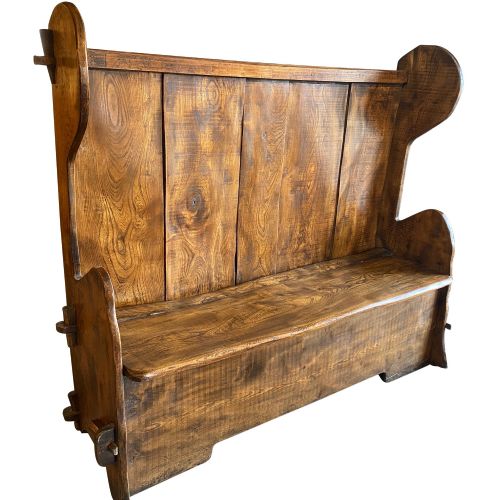
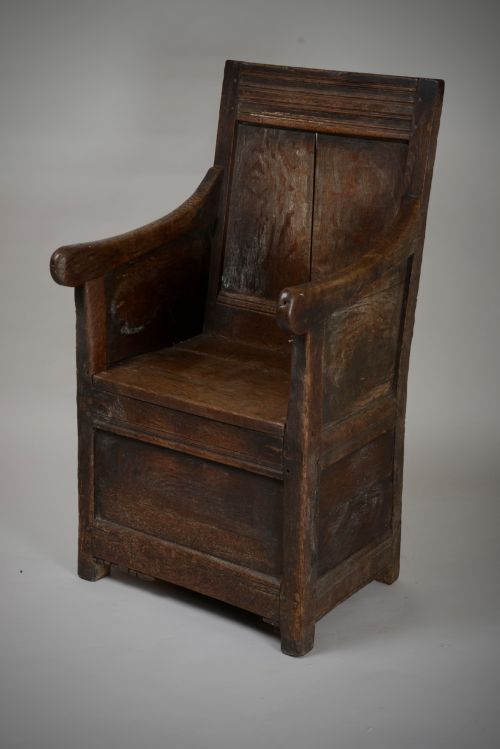
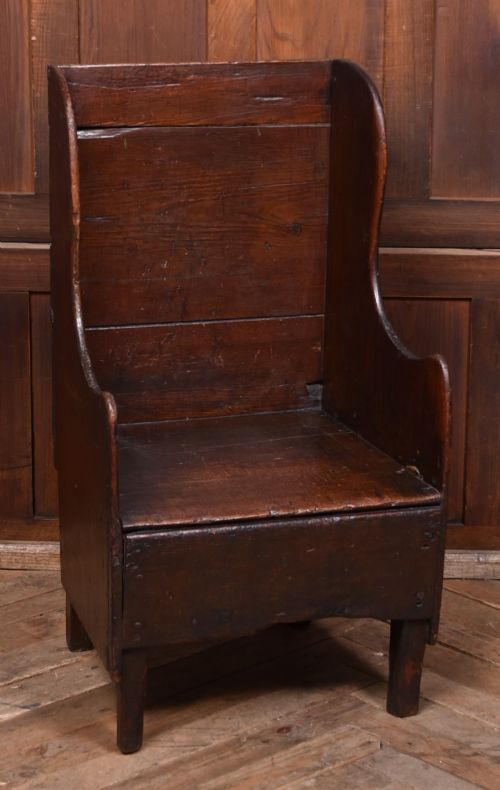
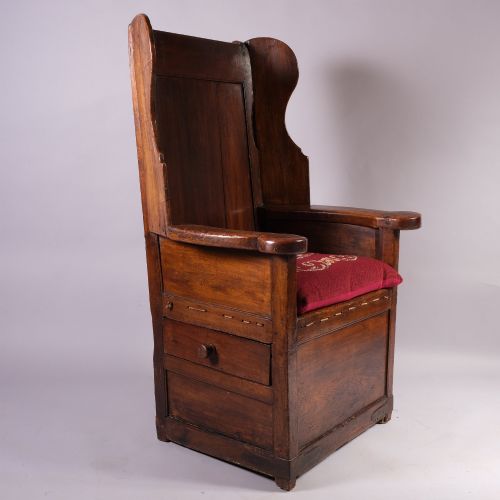
The selection includes childs chairs, solid elm box settles with storage, lambing chairs, and enclosed armchairs. Pieces originate from English country and Welsh workshops, alongside Dutch country examples dating around eighteen hundred.
Early Georgian and seventeenth century examples feature oak and walnut construction, while nineteenth century items utilise solid elm or oak. Many of these seating forms incorporate commode and close stool functions within the box base.
Materials and construction
Craftsmen built these chairs using solid oak, elm, and walnut timber, selected for strength and durability. Frames incorporate pegged joints and heavy board construction to enclose the base storage area.
Iron fixings appear alongside traditional joinery where hinges and structural reinforcement are required. Certain pieces integrate fabric elements or separate upholstery to provide seating comfort within the wooden framework.
Several chairs double as early indoor plumbing, concealing chamber pots beneath dignified wooden seating.
Assessing quality
Quality rests in the integrity of the timber and the retention of original structural components. Chairs that maintain their heavy board construction and uncompromised box bases show superior craftsmanship.
The handling of early styles, such as Elizabethan or seventeenth century vernacular, distinguishes standard regional carpentry from finer architectural execution. Surface patination on oak and walnut also marks the distinction between untouched age and later intervention.
The Brown Oak Box Chair Glossary
- Box settle
- A wooden bench featuring an enclosed storage base beneath the seat and solid panelled backrest. This form provides draught protection in vernacular interiors.
- Lambing chair
- An armchair featuring high winged sides designed to block cold draughts near the hearth. These examples often incorporate enclosed storage beneath the seat.
- Commode chair
- A seating form fitted with a concealed cavity beneath the seat for a chamber pot. Early versions date through the seventeenth and eighteenth centuries.
- Enclosed armchair
- A chair featuring solid wooden panels beneath the armrests rather than open spindles. This design provides privacy and warmth in early domestic settings.
Brown Oak Box Chair: Frequently Asked Questions
What is a brown oak box chair?
It is a heavy wooden seat featuring an enclosed compartment or storage box beneath the seating area. These items date from the sixteenth century onwards.
Craftsmen built them using solid oak, elm, and walnut, often reflecting regional styles like Elizabethan, Jacobean, or Georgian vernacular.
How were box chairs used historically?
They served as principal seating near the hearth, where the enclosed base protected the occupant from cold draughts. Many combined seating with hidden storage for household items.
Some variants incorporated commode functions with internal cavities designed to hold chamber pots securely out of sight.
How do I date a seventeenth century oak chair?
Dating relies on joinery methods, timber species, and stylistic details typical of the period, such as panelled construction and pegged joints. Seventeenth century pieces display heavy framing and early vernacular turning.
Comparing structural proportions and surface wear against documented examples helps confirm whether a piece belongs to the sixteen hundreds or later revival periods.
Where were these chairs made?
Production occurred across English country workshops, Welsh regions, and Dutch domestic environments. Carpenters utilised locally available hardwoods such as oak and elm.
Regional traditions influenced the specific proportions, resulting in distinct forms like Lakeland lambing chairs or Dutch open arm designs.
How do I care for antique oak furniture?
Maintain stable indoor humidity levels and avoid placing wooden furniture near direct heat sources. This prevents the solid oak and elm timbers from splitting.
Apply traditional beeswax occasionally to nourish the surface patination without sealing the pores of the historic wood.