


Antique Oak Close Stool
An antique oak close stool is a piece of historic domestic sanitation converted into solid timber seating.
Antique Oak Close Stool
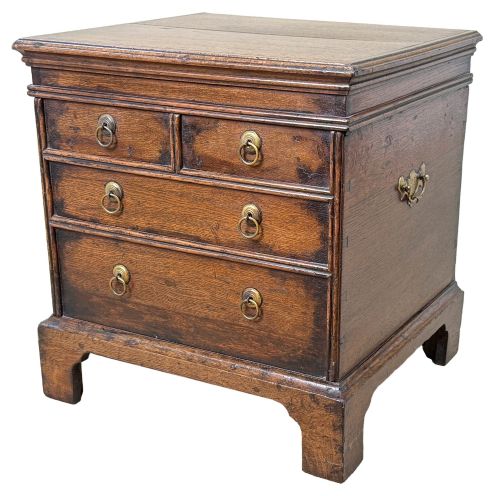
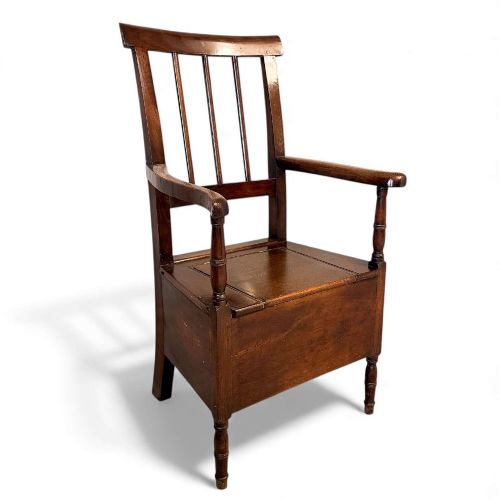
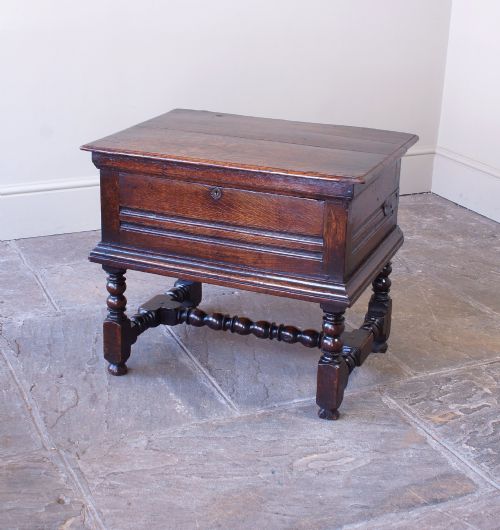
When you search for an antique oak close stool, you find enclosed timber seating designed to contain a chamber pot before indoor plumbing became common. The pieces on this page span the seventeenth and eighteenth centuries, taking the form of armchairs, box stools, and small bedside chests or commodes.
You are most likely to meet eighteenth-century examples in plain oak, often configured as commode chairs or box stools with hinged lids. These domestic items display the utilitarian styles of the Georgian period alongside earlier seventeenth-century survivals.
Many examples disguise their practical purpose behind panelled doors or upholstered chair arms, blending seamlessly with other country furniture of the period. Their forms range from simple lidded boxes to sophisticated armchairs with fitted interior compartments.
Construction and materials
Carpenters built these pieces primarily using solid oak, frequently supplemented with walnut for decorative veneers or brass and iron for hinges, handles, and internal hardware. The timber was worked using traditional joinery methods suited to robust domestic utility.
Surviving examples demonstrate heavy plank construction, pegged joints, and panelled sides designed to withstand daily use. Metal fittings such as drop handles and latch plates secure the compartments and lids.
Several items disguise their private sanitary function behind the polite facade of a charming Georgian bedside chest.
Assessing quality and character
Quality in these pieces depends on the integrity of the original timber framing and the subtlety of the form. Pieces that retain their internal compartments and original hardware stand apart from those altered during later periods.
The degree of decorative carving and the selection of figured timber distinguish standard utilitarian items from finer Georgian and seventeenth-century commissions. Surface patination accumulated through centuries of polishing also defines the visual appeal of each piece.
The Antique Oak Close Stool Glossary
- Commode chair
- An armchair or box seat adapted to house sanitary equipment. The term often overlaps with close stool in eighteenth-century terminology.
- Box stool
- A rigid timber seat with a hollow interior accessed via a lift-up lid. These items served multiple household functions beyond sanitation.
- Joint stool
- A sturdy wooden stool constructed with mortise and tenon joints pegged together. They provide the structural vocabulary for many seventeenth-century examples.
Antique Oak Close Stool: Frequently Asked Questions
What is an antique oak close stool?
It is a lidded wooden seat designed to hide a chamber pot before modern plumbing existed.
Craftsmen built them as armchairs, small chests, or simple boxes using solid oak.
How were close stools used historically?
People placed them in bedchambers for nighttime use before indoor bathrooms became standard in houses.
The hinged seats and panelled doors kept the interior pot concealed from view when not in use.
How do I live with a close stool today?
Many owners use them as bedside cabinets, side tables, or occasional seating in historic hallways.
The internal compartments also serve practical storage functions for modern household items.
How do seventeenth and eighteenth-century pieces differ?
Seventeenth-century examples tend to feature heavier plank construction, joined frames, and simpler box forms.
Eighteenth-century versions frequently adopt the appearance of Georgian armchairs or bedside chests with refined hardware.