





Antique Wooden Commode Chair
These antique wooden commode chair examples combine practical domestic engineering with robust cabinet-making traditions from the seventeenth century to the Victorian era.
Antique Wooden Commode Chair
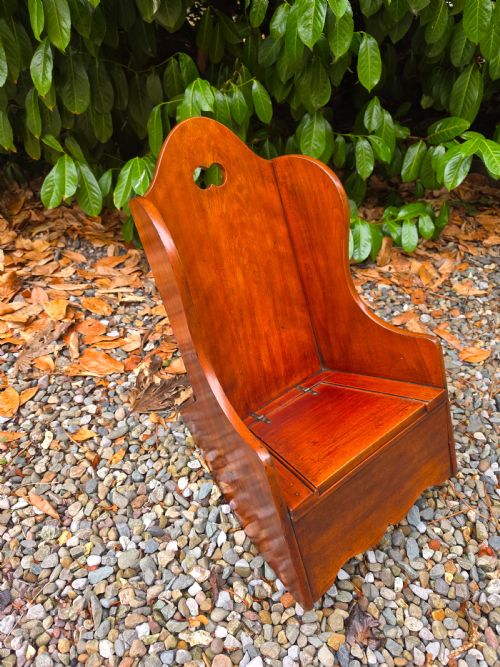
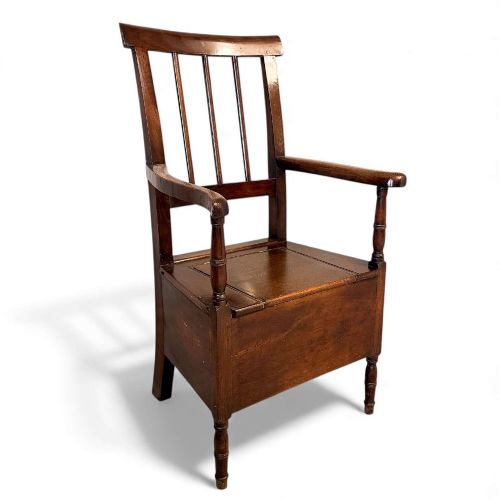
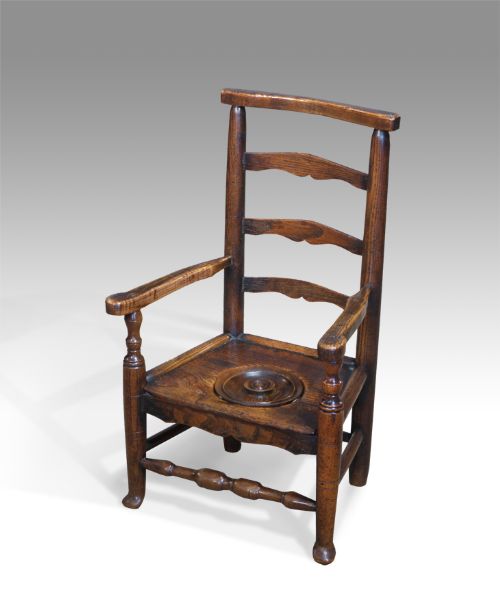
An antique wooden commode chair is a functional seat designed to house a chamber pot discreetly within its frame. You encounter various forms here, ranging from early close stools to Georgian armchairs and smaller children's potty rockers.
The selection draws on domestic periods spanning the seventeenth century through to the Victorian era. Alongside standard armchairs and bedside table commodes, you will find provincial pieces fashioned from local timber.
Makers adapted domestic seating to serve a concealed sanitary purpose without sacrificing the prevailing style of the period. This dual nature defines the category across all regional variations.
How they were made
Cabinet-makers relied heavily on native hardwoods such as oak, mahogany, fruitwood, elm, and walnut for the primary frames. Joinery methods varied from early pegged oak construction to later polished mahogany elbow chairs.
Secondary timbers like pine frequently appeared in internal framing and structural boxing. Brass fittings occasionally provided hinges and handles for access panels, while paint finishes defined continental pieces.
The listings span from the seventeenth century through the Regency and Victorian periods, utilising oak, mahogany, fruitwood, elm, and pine.
What varies in quality
Quality rests upon the selection of timber and the sophistication of the joinery used to conceal the internal mechanism. Early oak close stools display robust, pegged construction, whereas Regency mahogany elbow chairs prioritise refined cabinet work and polished surfaces.
The degree to which the seating retains its original configuration without modern alteration dictates its standing. Pieces featuring secondary timbers that complement the primary wood show greater coherence of design.
The Antique Wooden Commode Chair Glossary
- Close stool
- A box-like seat enclosing a chamber pot, representing the earliest form of sanitary seating before the development of plumbed indoor facilities. These date from the seventeenth century onwards.
- Potty chair
- A smaller chair scaled for children, incorporating a pierced seat and an enclosed base for a potty. These domestic items survive in various regional timbers.
- Elbow chair
- An armchair with defined armrests, often utilised in Regency commodes to maintain the appearance of standard parlour seating. The arms helped conceal the functional interior.
- Commode
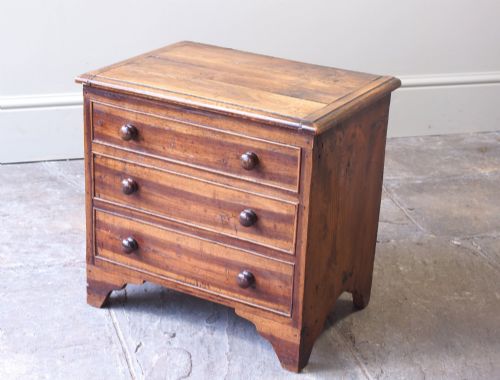
- A piece of furniture designed to house a chamber pot, taking the form of a chair, armchair, or bedside table. The term encompasses both full-sized seating and smaller bedside variants.
Antique Wooden Commode Chair: Frequently Asked Questions
What is an antique wooden commode chair?
An antique wooden commode chair is a piece of seating furniture built with a concealed compartment for a chamber pot. These items served a private domestic function before modern indoor plumbing became standard.
Craftsmen disguised the internal mechanism beneath hinged seats or panelled doors so the furniture resembled standard armchairs or bedside tables when not in use.
How were these chairs used?
Households placed these chairs in bedrooms or dressing rooms for overnight or private personal use. Servants emptied and cleaned the ceramic or metal vessels housed within the wooden frames daily.
Smaller children's versions trained infants, while larger adult armchairs and close stools accommodated individuals requiring bedside assistance.
How do I live with one today?
Many collectors utilise these chairs as decorative hallway accents, bedside tables, or occasional seating in period interiors. The internal chambers are frequently removed or left empty for modern display purposes.
Positioning them away from direct heat sources helps preserve the antique timber and polish over time.