

Brown Oak Accent Seating
Brown oak accent seating brings warmth and character to an interior through rich, deep tones and solid timber construction.
Brown Oak Accent Seating
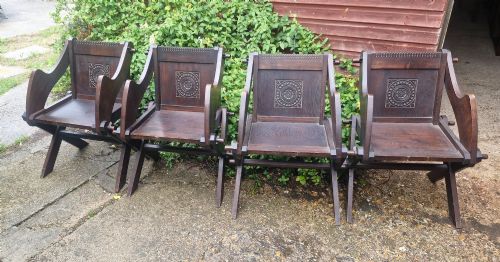
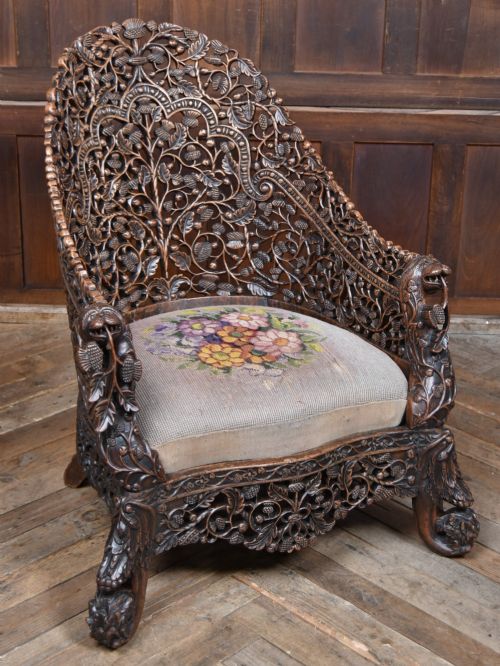
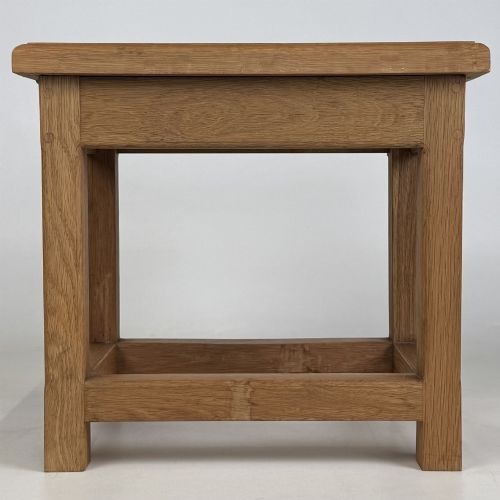
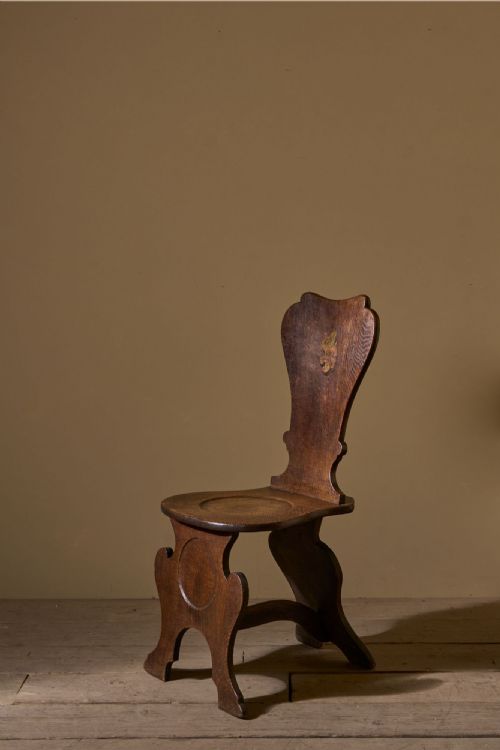
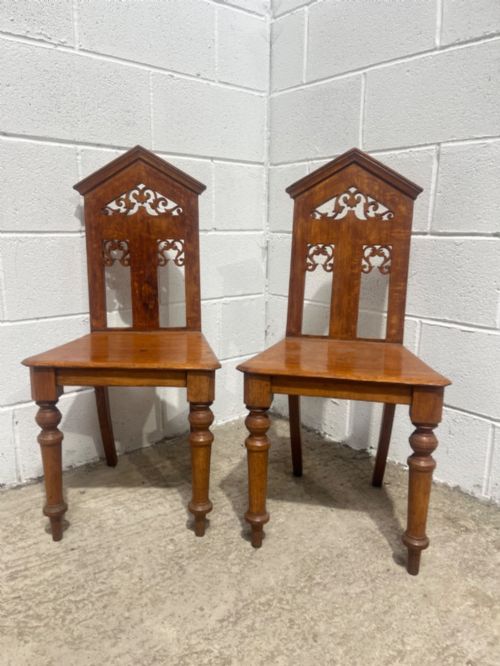
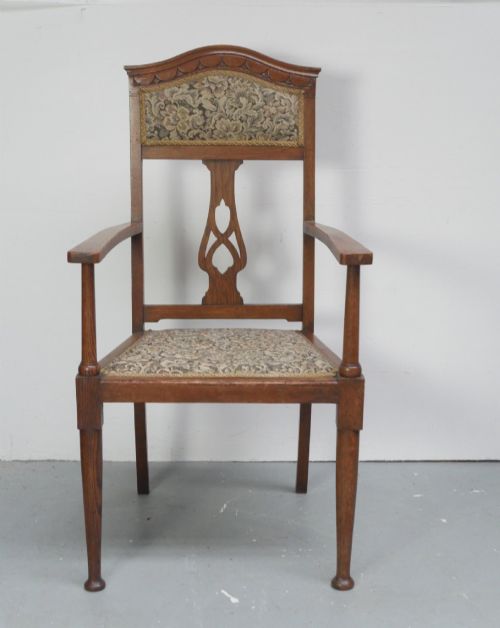
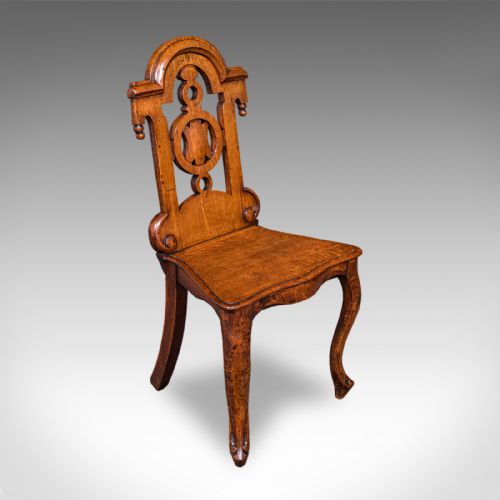
The selection ranges from tall, rigid hall chairs and sturdy joint stools to low armchairs, reception seats, and elaborate Gothic revival library chairs.
Pieces frequently trace back through the nineteenth and eighteenth centuries, incorporating styles from Victorian Gothic and Jacobean revivals to Arts and Crafts designs.
Materials and Construction
Makers utilised solid oak alongside supporting timbers such as elm, beech, and ash, often building frames using traditional joinery methods like pegged mortise and tenon joints.
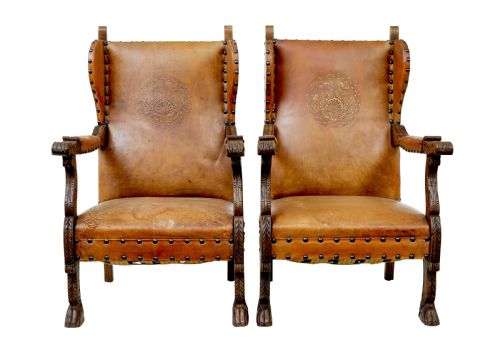
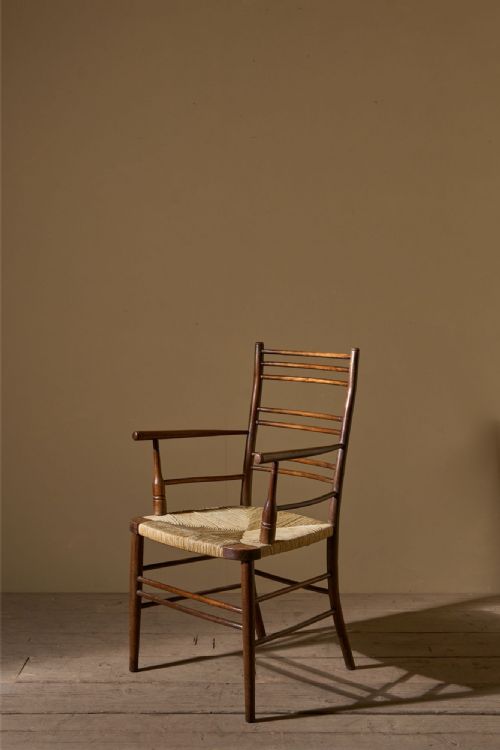
Seating areas incorporate woven rush, natural cane, woven or embossed leather, and upholstered fabric secured with brass detailing or studs.
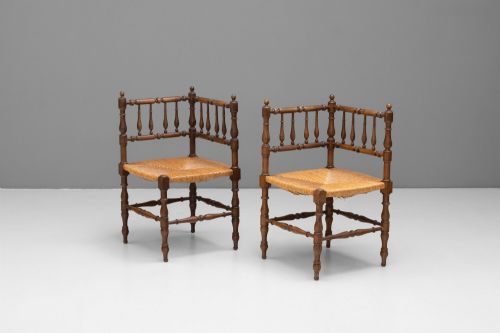
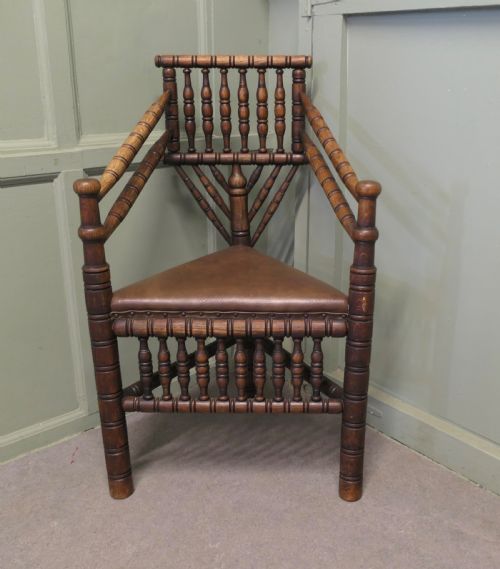
Turned components such as bobbin framing, barley twist legs, and carved architectural motifs define the structural ornamentation of many examples.
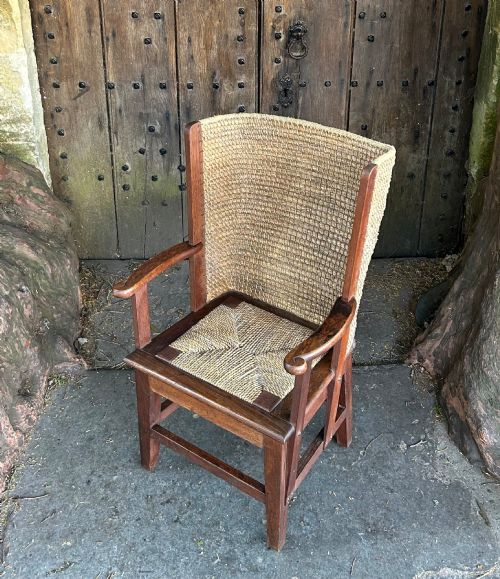
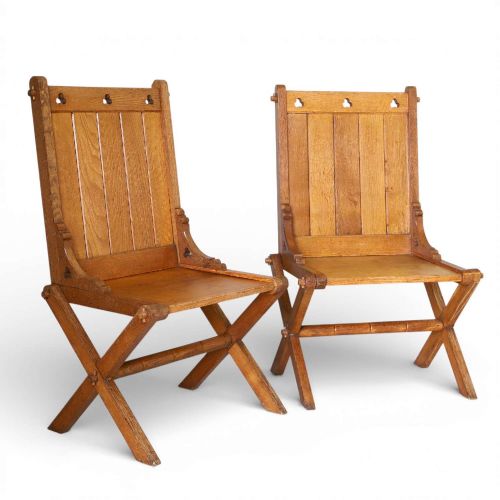
The selection includes specialist seating such as Orkney chairs, Glastonbury chairs, and turner's chairs.
Distinctions in Quality
Quality rests in the depth of natural timber tone, the crispness of hand-carved details, and the structural integrity of the frame.
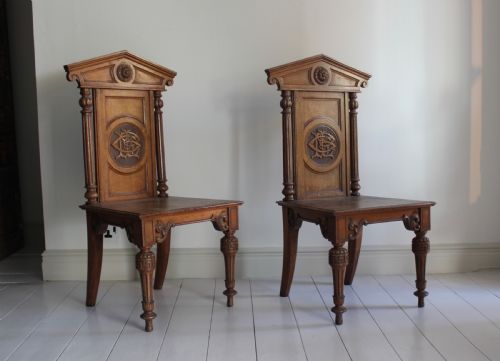
Superior examples display thoughtful proportions and authentic period elements, such as trefoil details on Gothic revival pieces or substantial carved crests on hall chairs.
Liberty Morris & Co·A W N Pugin
The Brown Oak Accent Seating Glossary
- Hall Chair
- A rigid wooden seat traditionally positioned in an entrance hall, often featuring a carved or shield-shaped back.
- Joint Stool
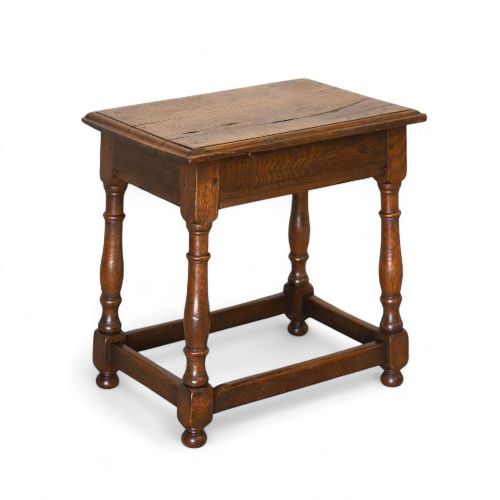
- A sturdy wooden stool constructed with mortise and tenon joints, originating in the domestic spaces of earlier centuries.
- Gothic Revival
- A nineteenth-century design movement drawing inspiration from medieval architecture, featuring pointed arches, trefoils, and heavy carved woodwork.
- Rush Seat
- A seating surface woven from dried marsh grasses, commonly found on Arts and Crafts and vernacular chairs.
- Bobbin Turning
- A method of woodturning that creates a series of rounded, spool-like shapes along the length of a chair leg or stretcher.
Brown Oak Accent Seating: Frequently Asked Questions
Where should I place a hall chair?
Hall chairs work well as sculptural standalone statements in an entryway, narrow corridor, or against an empty wall where floor space is limited.
Because they generally feature upright wooden backs and solid seats rather than deep cushioning, they serve best as occasional accent pieces rather than primary lounging chairs.
How do I care for leather and wood?
Maintain the timber by keeping it away from direct heat sources and applying appropriate natural waxes to nourish the grain over time.
Treat leather upholstery gently with specialised conditioners to preserve suppleness and prevent the material from drying out.
Are these chairs comfortable for daily use?
Many period accent chairs prioritize sturdy timber construction and upright posture over deep, modern cushioning.
Low armchairs, tub chairs, and upholstered variants offer a more relaxed sit, whereas wooden hall chairs and stools are better suited for brief use.