





Brown Miniature Chest
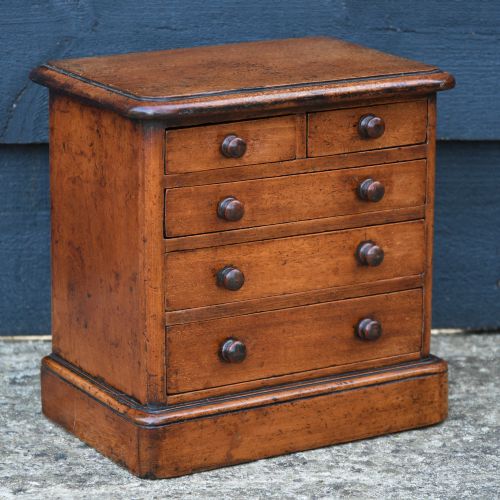
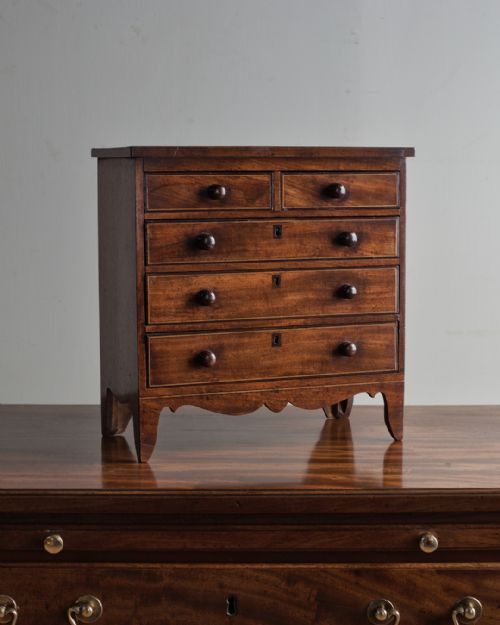
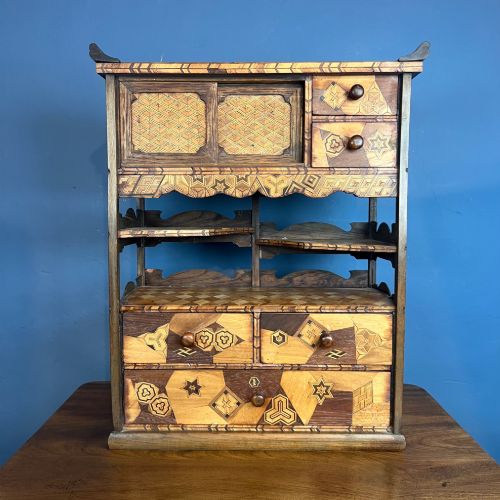
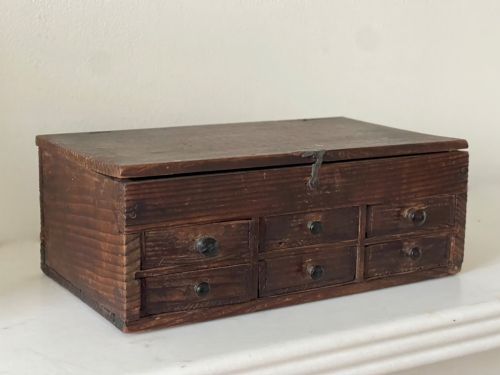
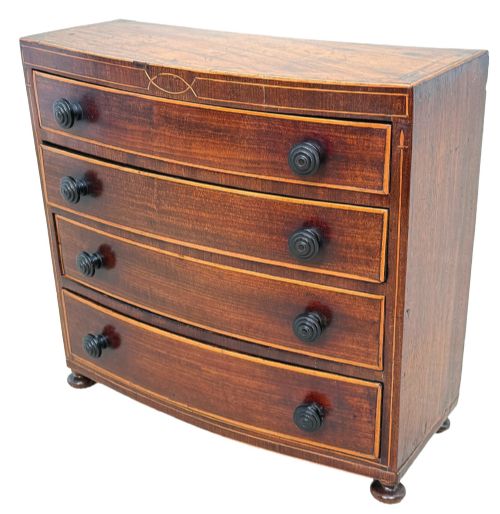
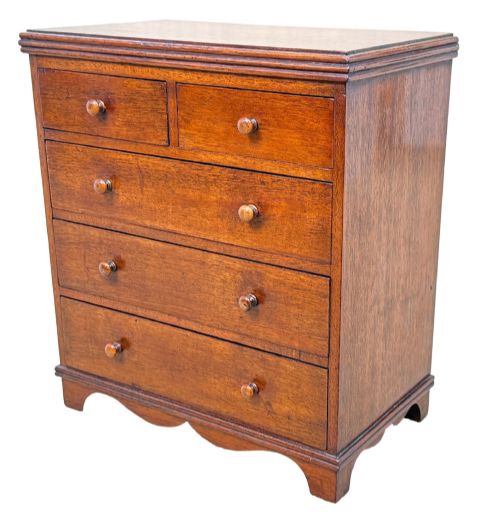
A brown miniature chest is a scale-model cabinet or chest of drawers crafted in miniature proportions, prized by collectors for cabinetmaking skill on a small scale.
Brown Miniature Chest
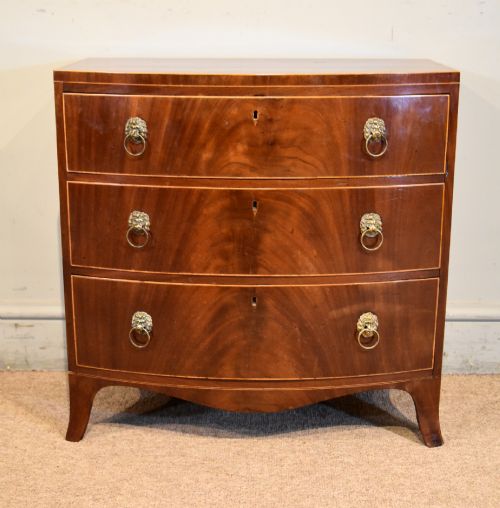
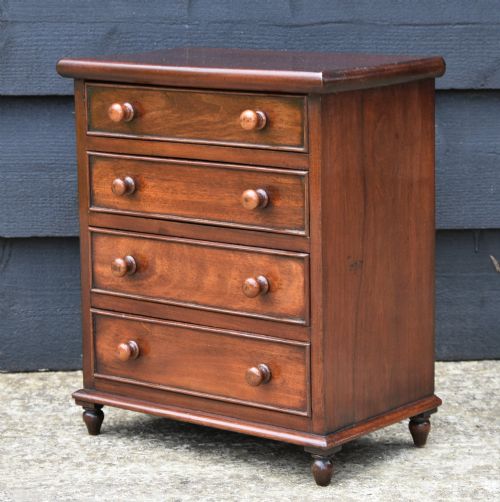
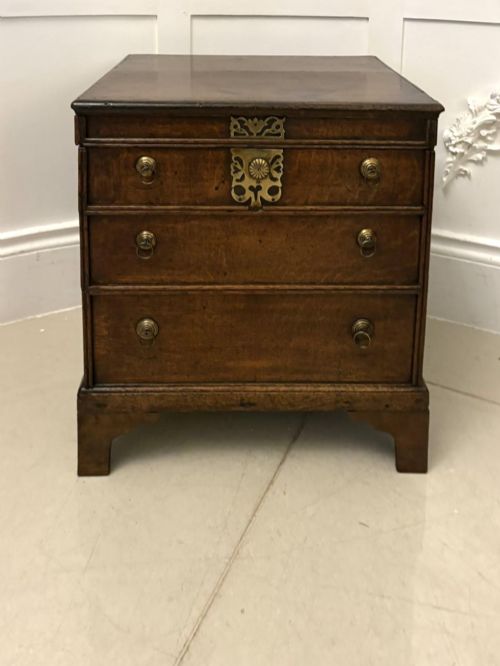
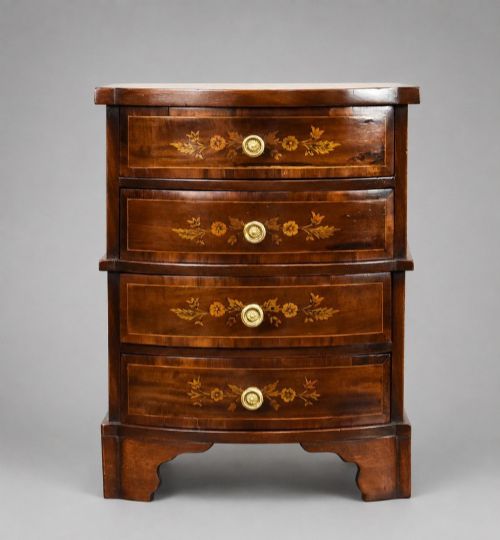
A brown miniature chest encompasses small-scale chests of drawers, spice drawers, and coffer baches originating from the eighteenth and nineteenth centuries. These pieces reflect full-scale furniture designs from the Georgian, Victorian, and Regency periods, executed in compact dimensions for display or training purposes.
The most common examples on this page are mahogany, walnut, and oak miniature chests of drawers from the Victorian and Georgian eras. Alongside these, buyers find vernacular Welsh pieces such as the coffer bach, alongside table-top collectors' cabinets and specialty spice drawers.
How They Were Made
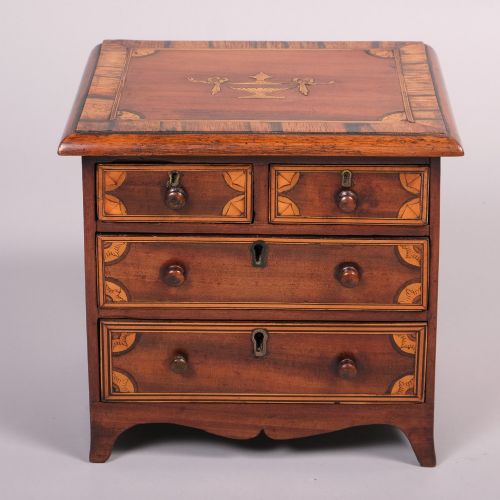
Cabinetmakers constructed these pieces using dense hardwoods like mahogany, walnut, oak, and satinwood, frequently accented with burr veneers, fruitwood, or marquetry inlay. Secondary timbers such as pine appear in drawer linings and carcass backs, matched with small brass drawer pulls, escutcheons, or bone details.
Joinery mirrored full-sized furniture production, utilising dovetailed drawer construction, framed panels, and turned feet. Surfaces were finished with polished beeswax or shellac to reveal the grain patterns of the wood.
Brown Miniature Chest Retail Price Guide 2026
Typical asking prices for brown miniature chest among the pieces listed under this phrase on Sellingantiques today, from the lower quarter to the upper quarter. They describe what is for sale here now, not the wider market.
Object forms include miniature chests of drawers, spice boxes, coffer baches, and collectors' cabinets.
What Varies in Quality
Quality rests on the fidelity of the proportions and the precision of the miniature joinery, where tight dovetails and flush drawer fits distinguish accomplished cabinetwork from simpler vernacular boxes. The selection of timber grain, particularly matched veneers like burr walnut or figured mahogany, elevates the visual presence of the piece.
The preservation of original surface finishes and period hardware, such as miniature brasses and turned feet, separates pieces that retain their integrity from those altered or restored with modern replacements.
A. F. Lloyd, Bideford
The Brown Miniature Chest Glossary
- Apprentice piece
- A small item of furniture demonstrated by a craftsman to prove skill before admission to a guild. These objects mirror full-scale designs with exact miniature joinery.
- Coffer bach
- A Welsh miniature coffer or chest traditionally used for storing valuables or linens. These pieces often feature pegged oak construction and small turned feet.
- Collector cabinet
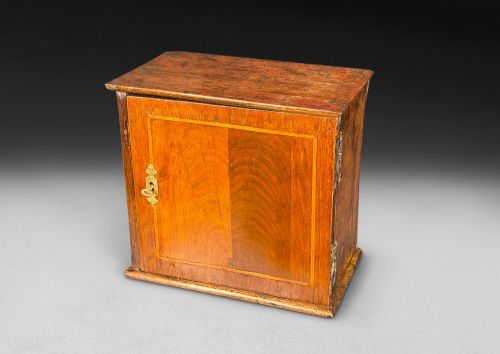
- A specialised tabletop cabinet containing multiple small drawers designed for storing specimens, coins, or jewellery. They typically feature panelled doors enclosing interior banks of drawers.
- Marquetry
- The art of applying decorative veneer pieces to a structure to form geometric or pictorial designs. This technique appears on the drawer fronts and tops of refined miniature cabinets.
- Serpentine front
- A furniture front characterised by a concave central section flanked by two convex curves. This undulating profile requires advanced woodworking skill on miniature proportions.
Brown Miniature Chest: Frequently Asked Questions
What were brown miniature chests used for?
These small pieces served various functions, from storing jewellery, spices, and small valuables to acting as salesman samples or apprentice demonstrations.
Cabinetmakers also produced them as tabletop collectors' cabinets or presentation items for domestic display.
How do you date a brown miniature chest?
Dating relies on identifying the prevailing furniture styles, construction methods, and timber choices relative to specific eras. Georgian examples often display bracket feet and mahogany primary woods, while Victorian pieces incorporate walnut veneers and brass drawer pulls.
Secondary timbers inside the drawers and the style of dovetail joints also provide chronological clues.
Are apprentice pieces genuine antiques?
Many items referred to as apprentice pieces date from the eighteenth and nineteenth centuries, reflecting genuine historical cabinetmaking traditions. They were built by skilled workers or trainees using traditional hardwoods and joinery.
Documentation or maker signatures, such as dated inscriptions, occasionally confirm their exact period of origin.
Where should I place a miniature chest at home?
Their compact size allows them to sit comfortably on side tables, desks, or mantelpieces without dominating a room. Placing them away from direct sunlight and heat sources protects the antique wood and polished finishes.
They function well as display focal points in studies or living areas where visitors can view the fine joinery up close.