
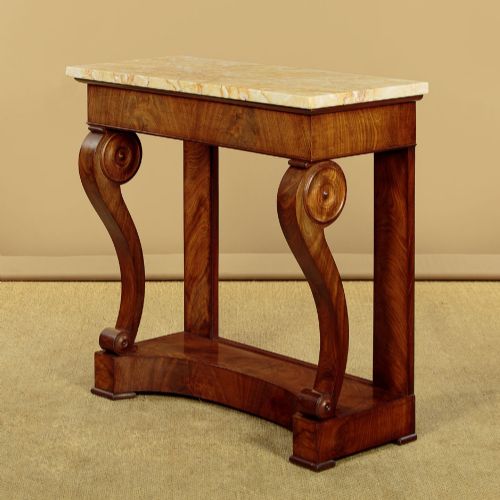
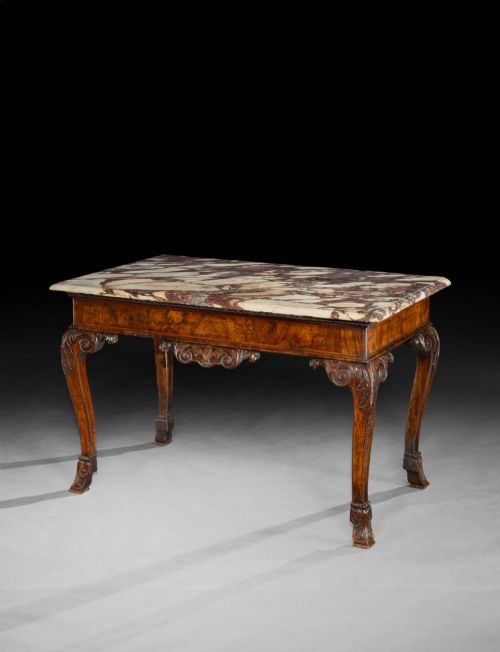
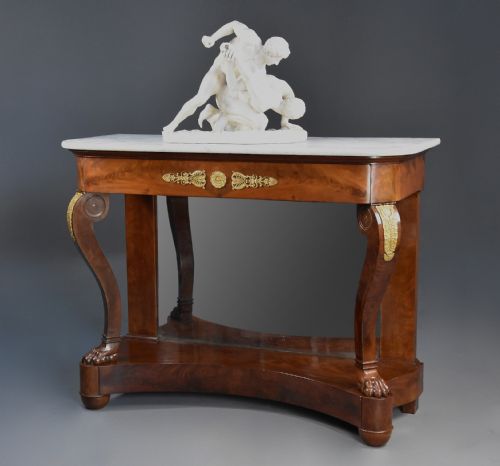
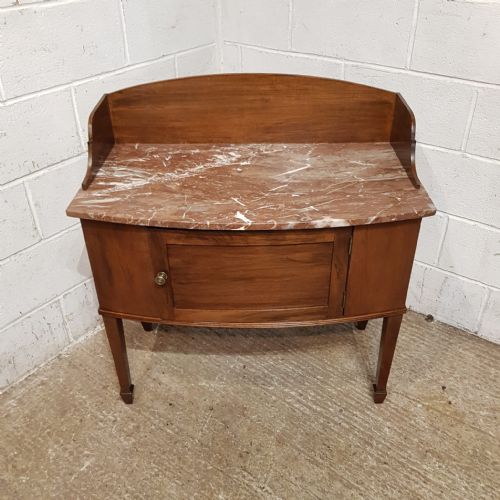

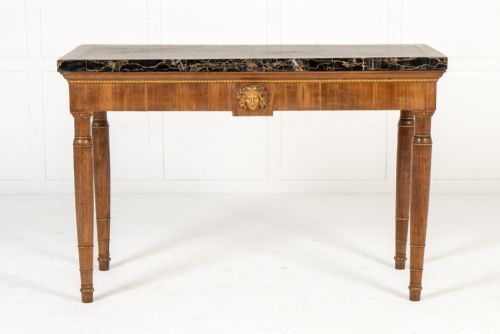


Brown Marble Console
A brown marble console brings weight and polish to a hall or drawing room, combining solid timber with cool stone.
Brown Marble Console
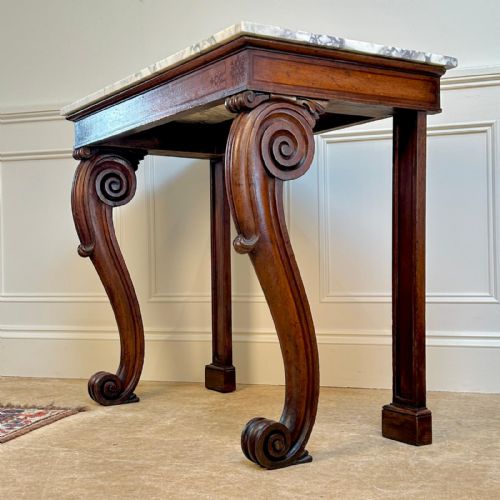
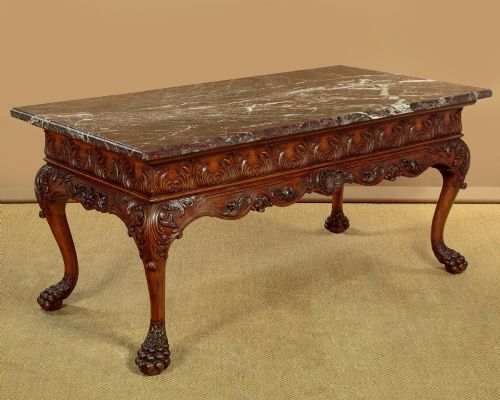
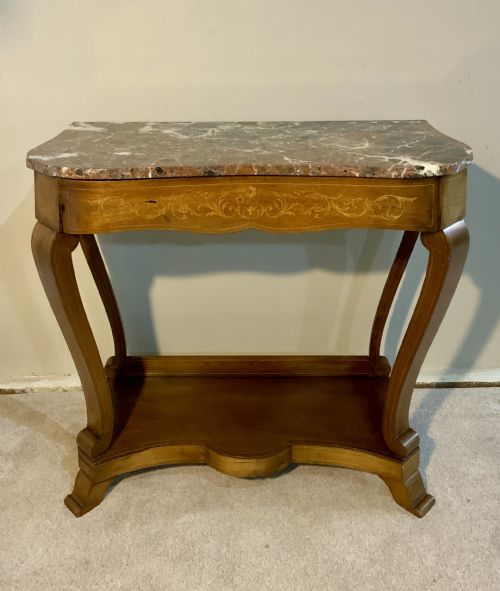
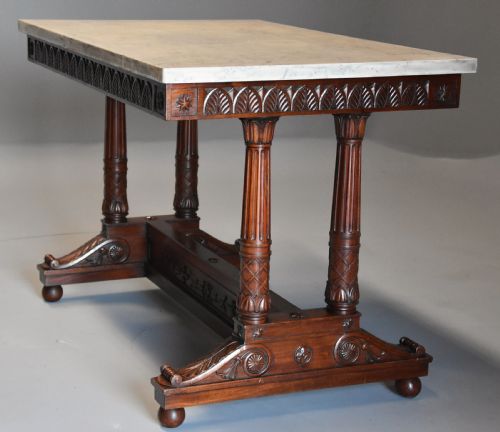
A brown marble console sits flat against a wall or stands central in a room, offering a sturdy stone surface atop a timber base. These pieces draw on eighteenth-century grandeur and nineteenth-century revival styles, serving as both serving surfaces and architectural statements.
Most examples encountered here date from the nineteenth century, with French and English workshops providing the bulk of the stock. Walnut and mahogany form the predominant wooden frames beneath the heavy stone tops.
Makers adapted the form across decades, ranging from restrained George II proportions to ornate French Empire and Rococo Revival designs. Alongside dedicated console tables, the selection includes related side tables, washstands, and pier tables featuring similar stone surfaces.
Judging quality in brown marble consoles
Quality rests in the harmony between the timber base and the marble top, particularly where carvers employed deep, crisp relief rather than shallow moulding. The choice of figured mahogany or burr walnut elevates the presence of the wooden structure.
Construction methods reveal the hand of the maker, from dovetailed framing to the precise fitting of the stone into the wooden rebate. Stamped signatures from established workshops add considerable distinction to surviving nineteenth-century examples.
One towering nineteenth-century walnut piece enlists a carved eagle to hold up the sky, or at least your afternoon tea.
JACOB·Maples
The Brown Marble Console Glossary
- Console table
- A table designed to stand against a wall, traditionally fixed with brackets or resting on front legs. These pieces often feature decorative front supports while relying on the wall for absolute stability.
- Pier table
- A low table specifically placed against the wall between windows, frequently paired with a matching mirror above. They share much of their form with standard console tables.
- Ormolu
- Gilt bronze mounted onto furniture frames, popular in French Empire and revival pieces. It provides bright metallic contrast against dark woods and brown marble.
- Marquetry
- Inlaid patterns of wood veneers applied to furniture surfaces. Craftsmen utilised contrasting timbers to create geometric or floral designs across the apron and legs.
- Serpentine
- A curved furniture front that undulates outward in the centre and inward at the sides. This contour softens the rectangular geometry of heavy stone-topped tables.
Brown Marble Console: Frequently Asked Questions
How do I clean a marble top?
Wipe the surface gently with a damp cloth and mild soap, avoiding acidic cleaning fluids that etch the stone.
Dry the marble thoroughly with a soft cloth to preserve its polished sheen over time.
Were these tables meant for dining?
Console tables served decorative and display purposes in formal rooms rather than active dining use.
Their shallow depth made them ideal for holding lamps, ornaments, and mirrors against a wall.
How can I tell a French console from an English one?
French pieces frequently display richer veneers like burr walnut and flamboyant styling such as curved Rococo legs.
English variants tend toward structured oak, mahogany, and more restrained classical proportions.
Do marble tops lift off easily?
Most marble slabs rest freely within the wooden frame by their own heavy weight, though some secure from underneath.
Lift the stone with care if moving the furniture, as the slabs remain fragile despite their bulk.