


Brown Mahogany Wine Box
A brown mahogany wine box brings substantial period presence to a room, serving wine storage with deep timber character.
Brown Mahogany Wine Box
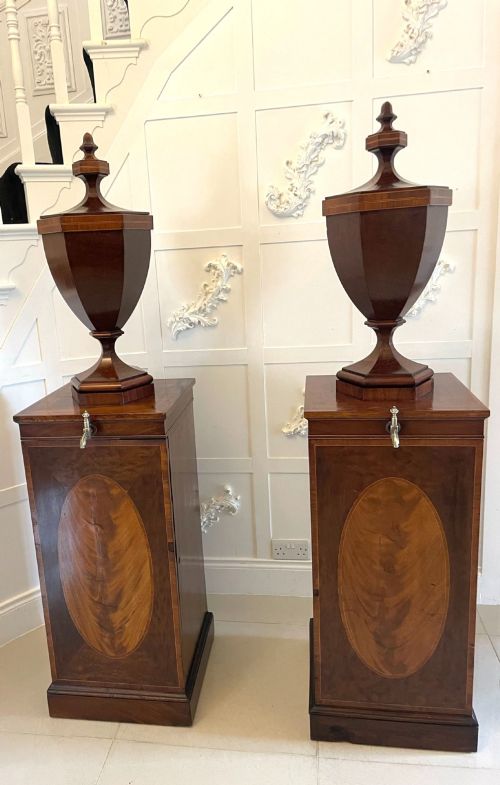
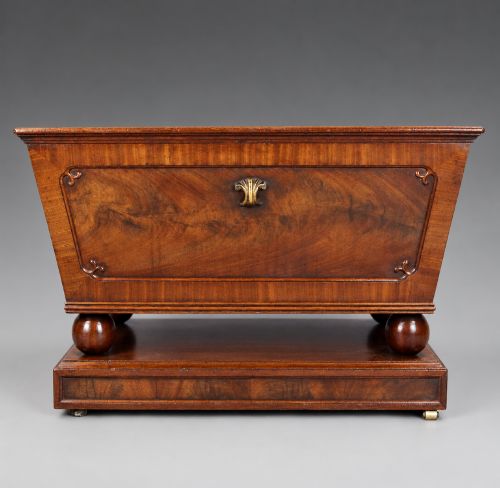
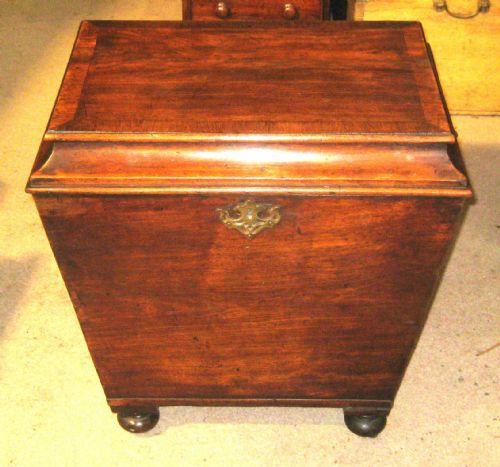
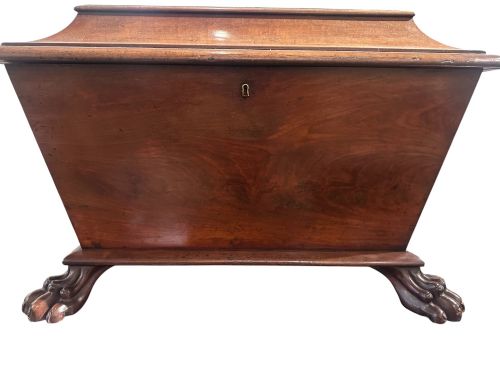
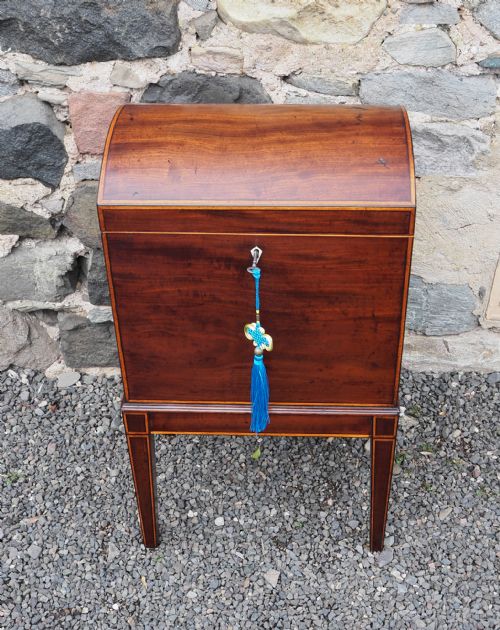
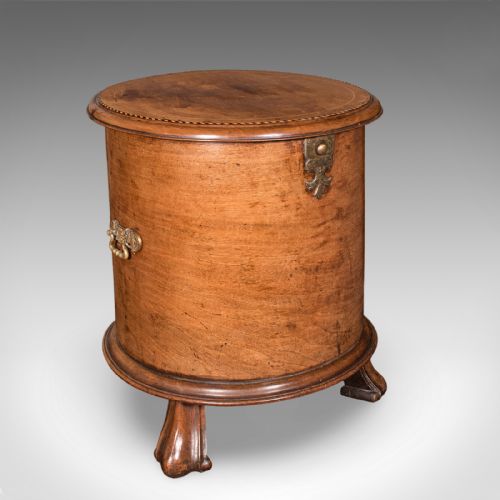
A brown mahogany wine box, frequently termed a cellarette or wine cooler, functions as a secure container for holding bottles during meals. The pieces seen here span the Georgian, Regency, and Victorian eras, taking forms from sarcophagus shapes to pedestals and urns.
The version most commonly encountered on this page is the Regency or Georgian sarcophagus shaped box, often standing upon paw feet or incorporating brass fittings. These range from small boxes to massive carved examples designed to sit beneath a sideboard.
Makers of these pieces constructed them to store and chill wine effectively while harmonising with formal dining room interiors. Their architectural proportions and dense timber grains reflect the social rituals of nineteenth and eighteenth century dining.
How they were made
Cabinetmakers built these pieces primarily from solid mahogany and flame mahogany veneer, selected for rich figuring and deep natural colour. They reinforced structural forms with secondary timbers and applied boxwood inlay for linear contrast.
Metalwork played a structural and decorative role, with brass banding, handles, and mounts securing the heavy timber joints. Workshops also integrated lead linings inside certain coolers to hold ice and bottles safely.
Some nineteenth century guests discovered that a heavy sarcophagus cooler doubled nicely as an impromptu footstool when the wine ran dry.
What varies in quality
The distinction between tiers rests on the choice of timber and the precision of the joinery. Selected flame mahogany veneers and crisp carving elevate an example above plain timber assemblies.
Hardware quality defines the upper range, where heavy cast brass feet, handles, and original bound hoops demonstrate superior craftsmanship. The sophistication of subsidiary details, such as fluted tops or fine boxwood stringing, separates standard boxes from finer commissions.
Gillows of Lancaster and London
The Brown Mahogany Wine Box Glossary
- Cellarette
- A chest or box designed for storing bottles of wine near the dining table. They frequently include internal partitions to separate individual bottles.
- Sarcophagus
- A burial chest shape with a domed lid and panelled sides, adopted by cabinetmakers during the Regency period for large wine coolers. This monumental form rests directly on low feet or castors.
- Flame mahogany
- A veneer cut from the fork of the mahogany tree where branches meet the trunk, producing a rippling flame pattern. Cabinetmakers placed these highly figured sheets symmetrically on primary surfaces.
- Brass bound
- A construction method utilising metal bands encircling the timber body to add structural strength and decorative contrast. These mounts secure the heavy staves of the cooler.
- Boxwood inlay
- A decorative technique inserting pale boxwood into dark mahogany grounds to create contrasting lines and geometric patterns. This detail appears on tops, legs, and borders.
Brown Mahogany Wine Box: Frequently Asked Questions
What is a brown mahogany wine box used for?
These boxes served primarily to store wine bottles and keep them cool during formal dining in eighteenth and nineteenth century households. Interiors often featured lead linings or wooden dividers to hold bottles securely.
Today, collectors utilise them as striking decorative containers, side tables, or period storage chests in living spaces and studies.
How do I tell a Regency wine cooler apart from a Georgian one?
Georgian examples often favour oval shapes with brass banding or simpler box forms with bracket feet. They reflect the restrained neoclassical tastes of the eighteenth century.
Regency coolers frequently adopt the monumental sarcophagus shape with carved paw feet, bold mouldings, and rich flame mahogany veneers characteristic of the early nineteenth century.
Are all these wine boxes lined with lead?
Many period coolers contained fitted lead linings to hold ice and water for chilling bottles safely without damaging the timber. However, interiors vary based on the specific form and intended function of the box.
Some examples feature simple wooden dividers or partitioned storage compartments designed exclusively for dry bottle storage rather than cooling.
How do I clean and maintain a mahogany wine box?
Maintain the timber by applying traditional beeswax periodically to nourish the mahogany grain and preserve its natural sheen. Avoid harsh chemical cleaners and keep the box away from direct heat sources to prevent timber splitting.
Handle brass mounts gently with dry cloths to maintain their patination without stripping the historic finish.