



Brown Mahogany Wellington Chest
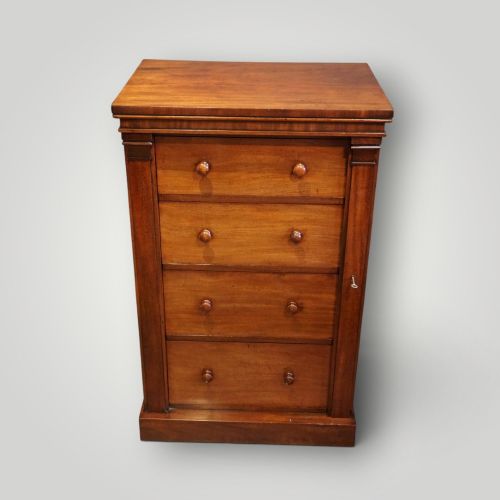
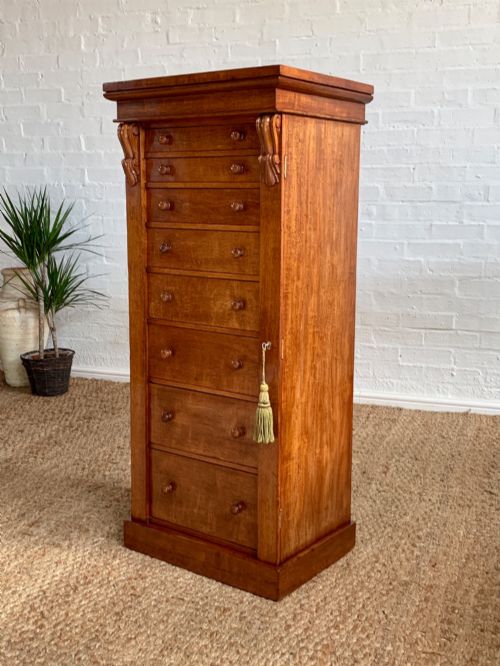
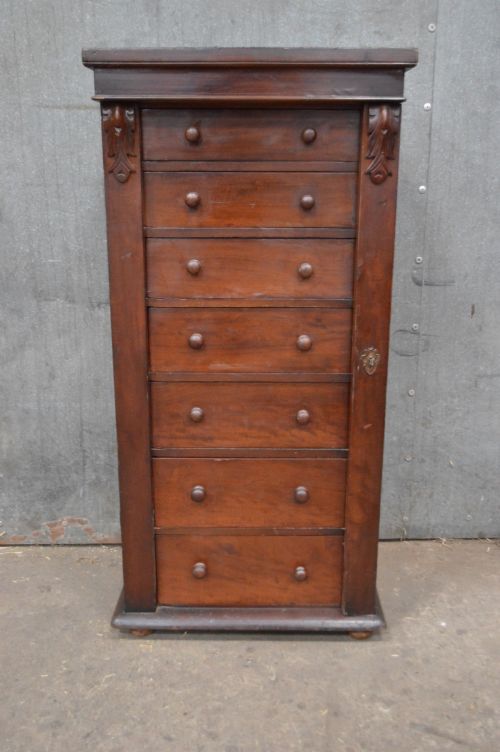
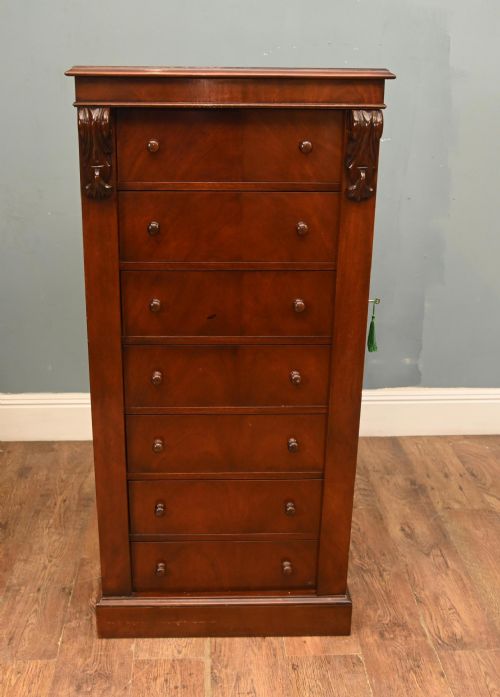
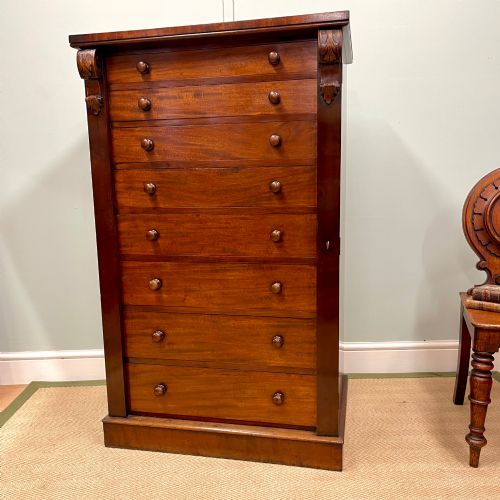
A brown mahogany wellington chest is a tall, slender drawer unit offering secure storage through a hinged locking pilaster.
Brown Mahogany Wellington Chest
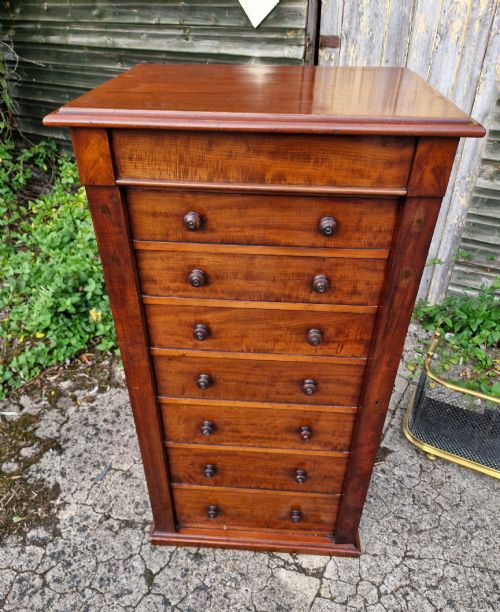
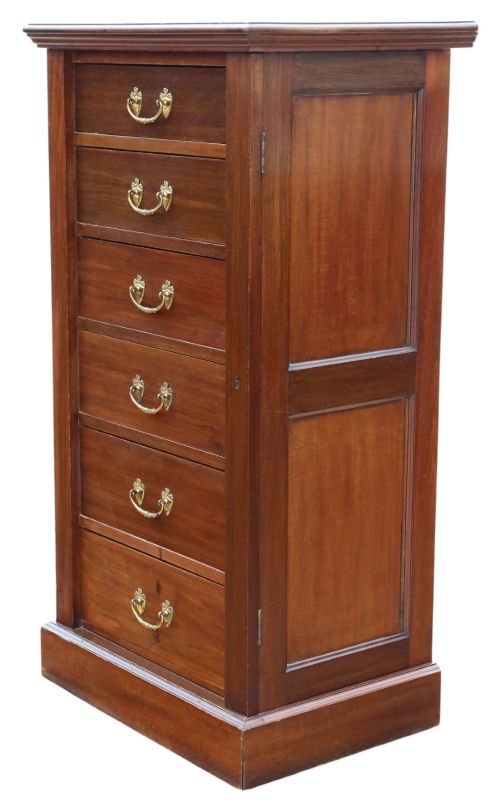
A brown mahogany wellington chest is a distinctive furniture form characterised by a narrow vertical stack of drawers secured by a locking side flap. These pieces appear frequently across Victorian, Edwardian, and nineteenth-century periods, often standing tall with multiple internal drawers.
Buyers encountering this phrase usually find traditional chests of drawers alongside related bedside variants and occasional tall formats. The selection spans standard nineteenth-century examples through to Edwardian inlaid editions, maintaining the characteristic slender proportion.
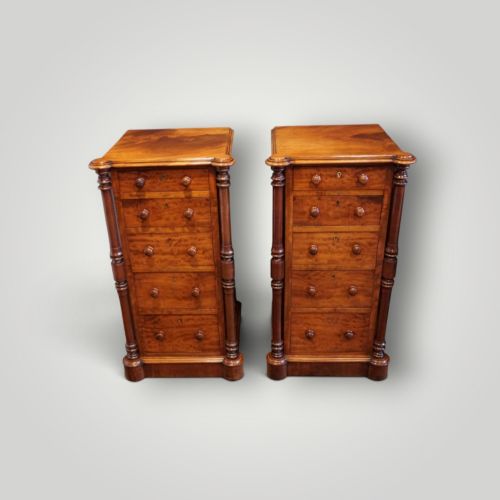
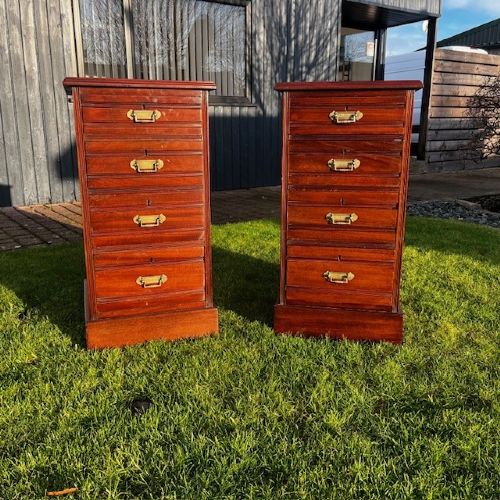
Origins represented in these listings include standard upright drawer chests, paired bedside cabinets, and taller library configurations. The core visual identity remains the deep timber carcase paired with the signature locking bar.
How they were made
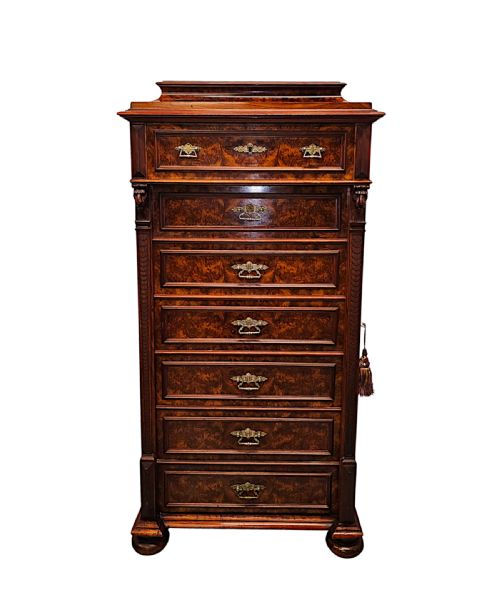
Makers utilised solid timber frames combined with decorative wood veneers such as flame mahogany and figured mahogany to cover the drawer fronts. Brass hardware and turned wooden knobs provide the operational handles across the various periods.
The defining structural mechanism relies on a hinged side locking pilaster or flap that fastens over the drawer edges. This bar is typically secured by a working key lock, holding all internal drawers firmly shut when engaged.
Listings feature mahogany, brass, flame mahogany veneer, burr walnut, and leather materials across Victorian and Edwardian periods.
What varies in quality
Quality differences emerge in the choice of face timber, ranging from plain boards to highly figured flame mahogany veneers. The depth and visual movement of the grain dictate the visual impact of the front elevation.
The integrity of the locking mechanism and the original turning of the knobs distinguish superior examples. Complete locking pilasters with functioning keys represent finer manufacture than altered or adapted pieces.
Warings Liverpool·James Shoolbred
The Brown Mahogany Wellington Chest Glossary
- Wellington chest
- A tall, narrow chest of drawers featuring a hinged locking flap on one side. This design secures the entire column of drawers simultaneously with a single key.
- Flame mahogany
- A decorative wood veneer displaying a distinctive leaping flame pattern. Cabinet makers selected these timbers for prominent drawer fronts.
- Pilaster
- A vertical architectural member projecting from the carcase. In these pieces, it acts as the locking bar that swings or lifts to release the drawers.
- Figured mahogany
- Timber showing varied grain patterns created by branching or growth distortion. It provides rich texture across the visible surfaces of the chest.
- Bedside chest
- A scaled-down version of the standard chest designed to sit beside a bed. These smaller formats share the narrow proportions of the larger tall pieces.
Brown Mahogany Wellington Chest: Frequently Asked Questions
What is a wellington chest?
A brown mahogany wellington chest is a tall, narrow set of drawers featuring a locking side pilaster. This hinged vertical bar secures all the drawers at once.
Originating in the nineteenth century, the design provides generous storage while occupying minimal floor space due to its vertical orientation.
How do you lock the drawers?
The drawers are secured by swinging or turning a hinged locking pilaster located down one side of the chest. When closed against the drawer edges, a key locks this bar in place.
Opening this side flap releases the individual drawers for access while keeping them securely fastened when the furniture is unattended.
Where should I place one?
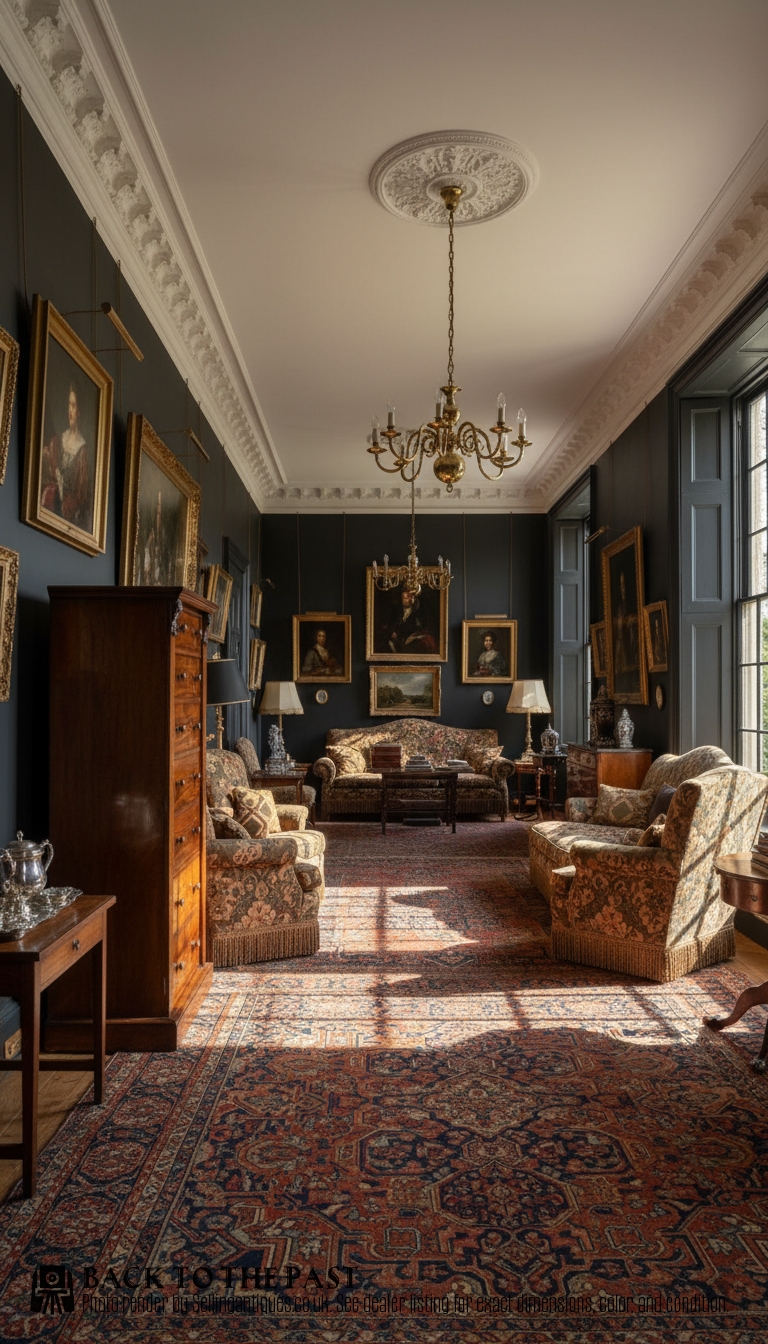
These chests suit bedrooms, studies, or narrow hallways where floor space is limited. Their tall, slender proportions allow them to fit into tight corners.
They function effectively as bedside storage or as compact drawer units for papers and small accessories in a living space.
How do I date these chests?
Dating relies on observing construction methods, timber selection, and overall style characteristics spanning the nineteenth and early twentieth centuries. Victorian and Edwardian examples show distinct handle styles and inlay details.
Earlier nineteenth-century pieces often display deeper, rich flame mahogany veneers, while later Edwardian versions may incorporate subtle stringing and lighter timber tones.