
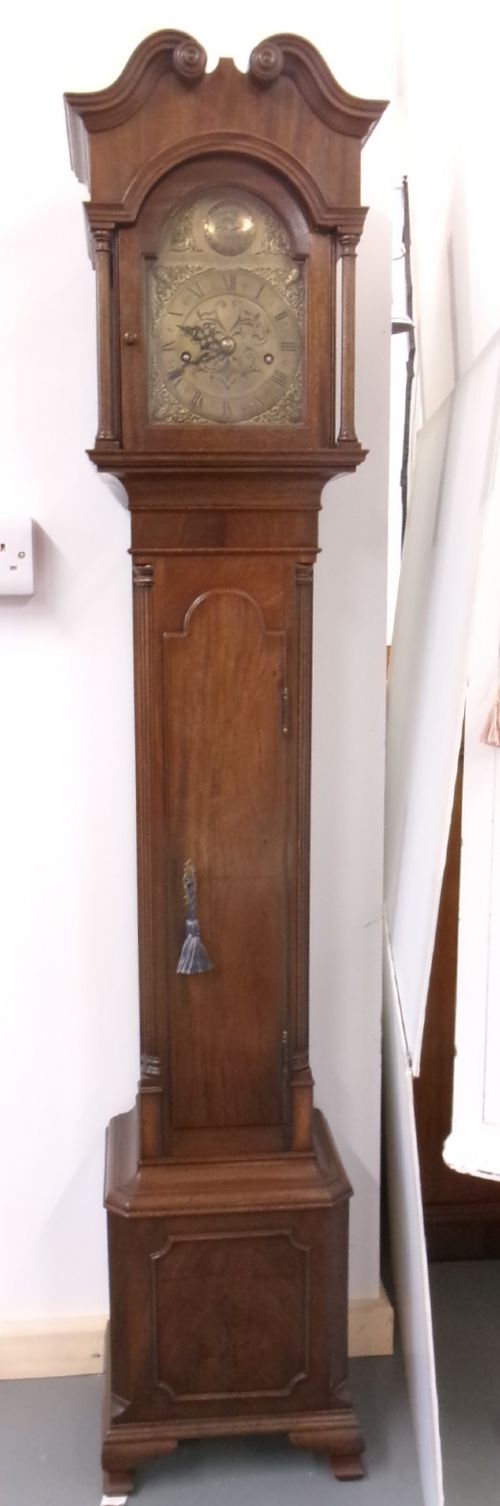
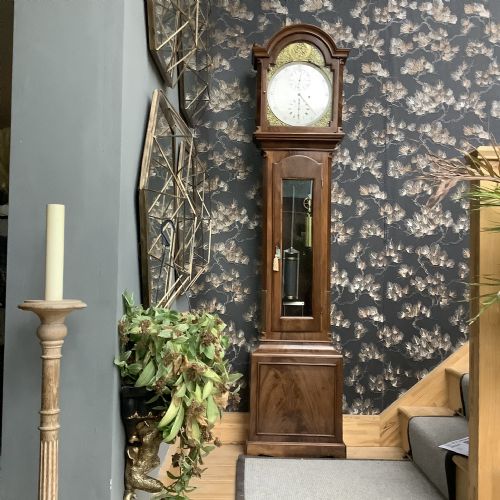
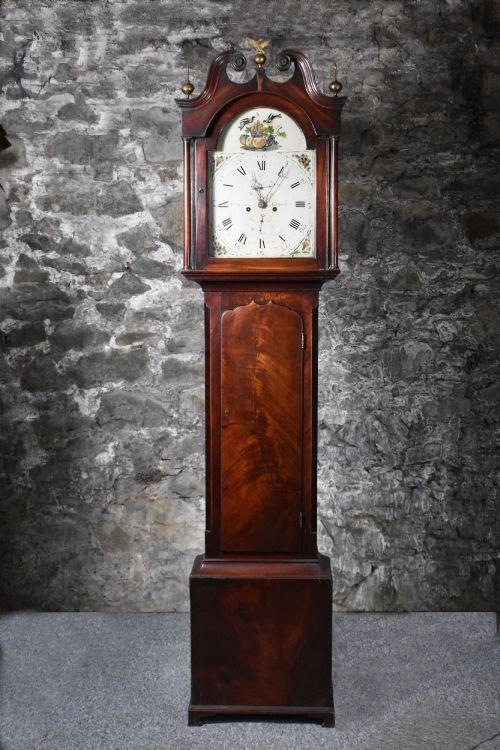

Brown Mahogany Standing Clock
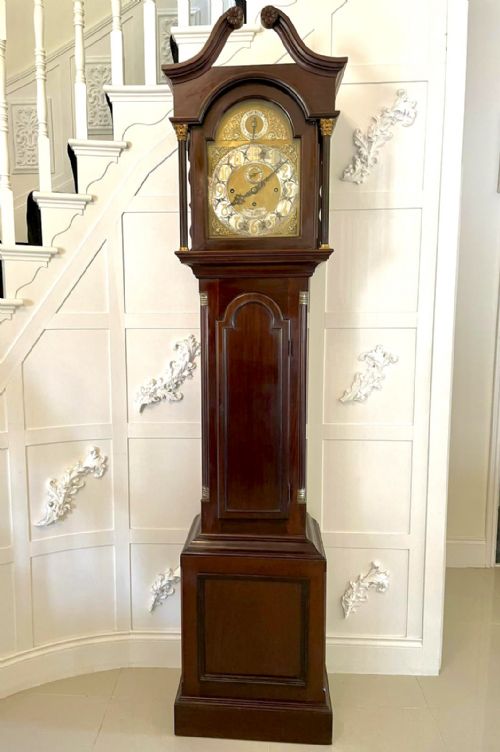
A brown mahogany standing clock anchors a room with its measured tick and tall, architectural presence.
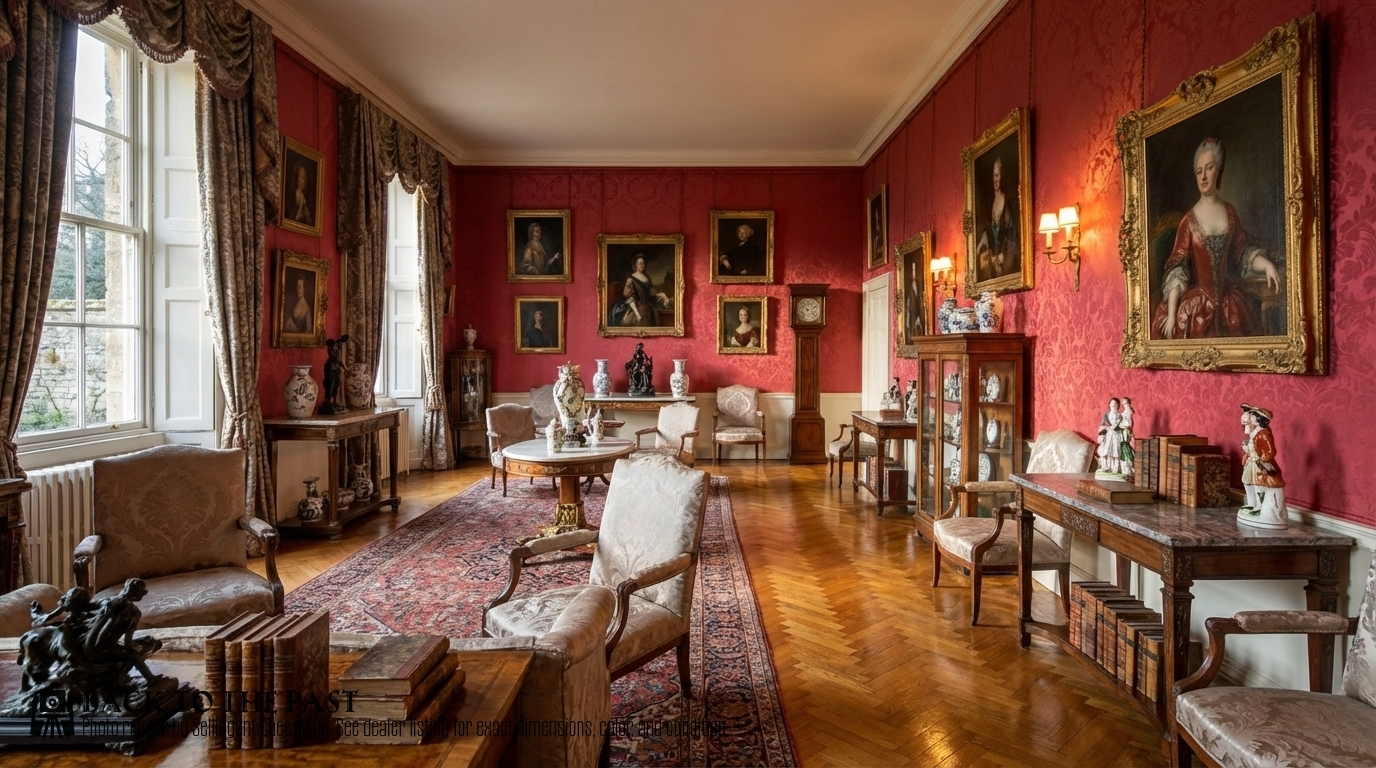
Brown Mahogany Standing Clock
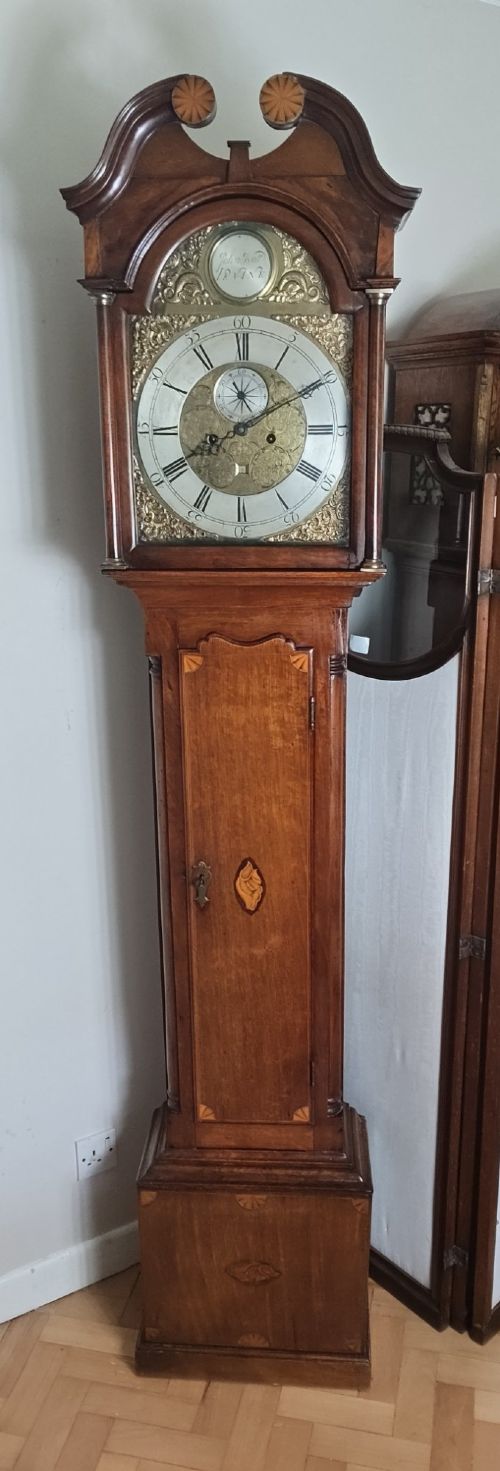
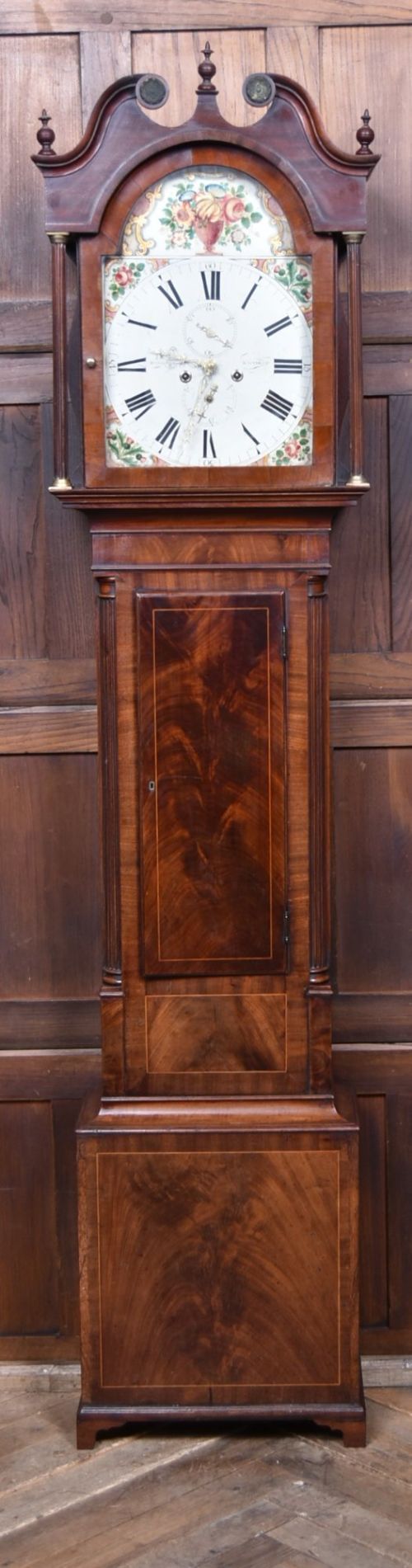
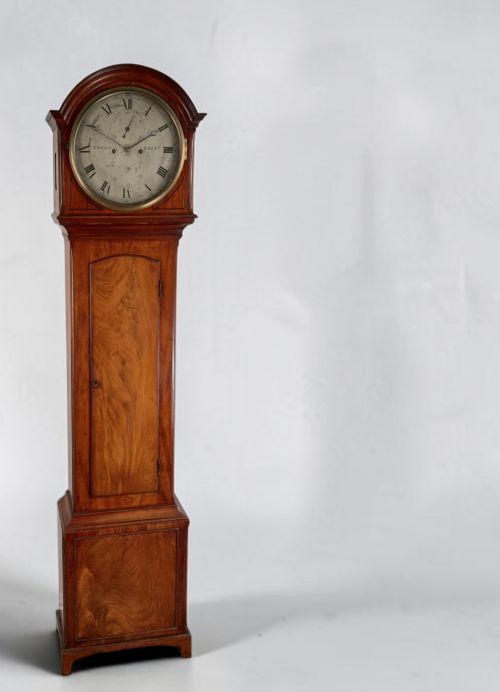
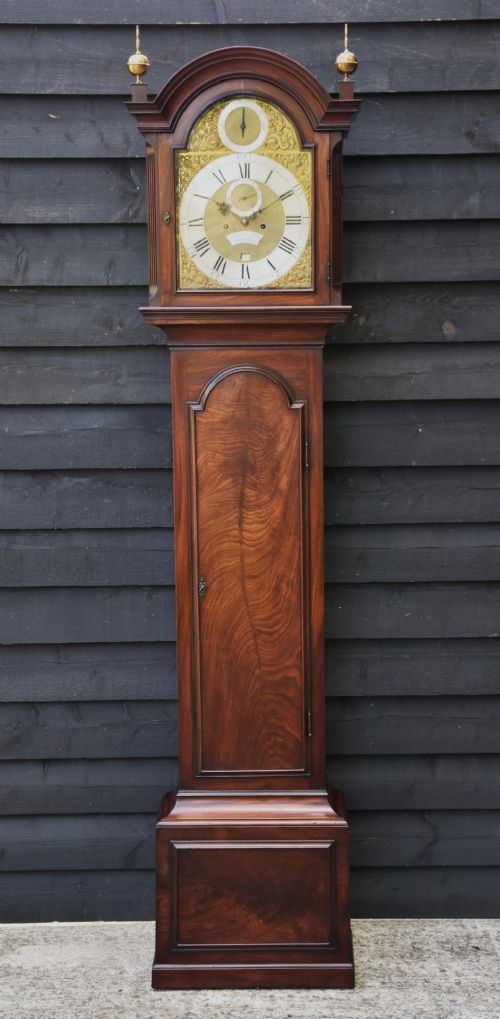
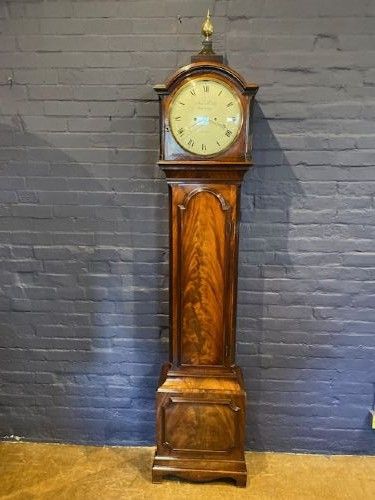
A brown mahogany standing clock appears across several centuries, spanning Georgian, Victorian, and Edwardian periods with tall floor-standing proportions. These pieces operate primarily as longcase clocks, grandfather clocks, and smaller grandmother or granddaughter variants.
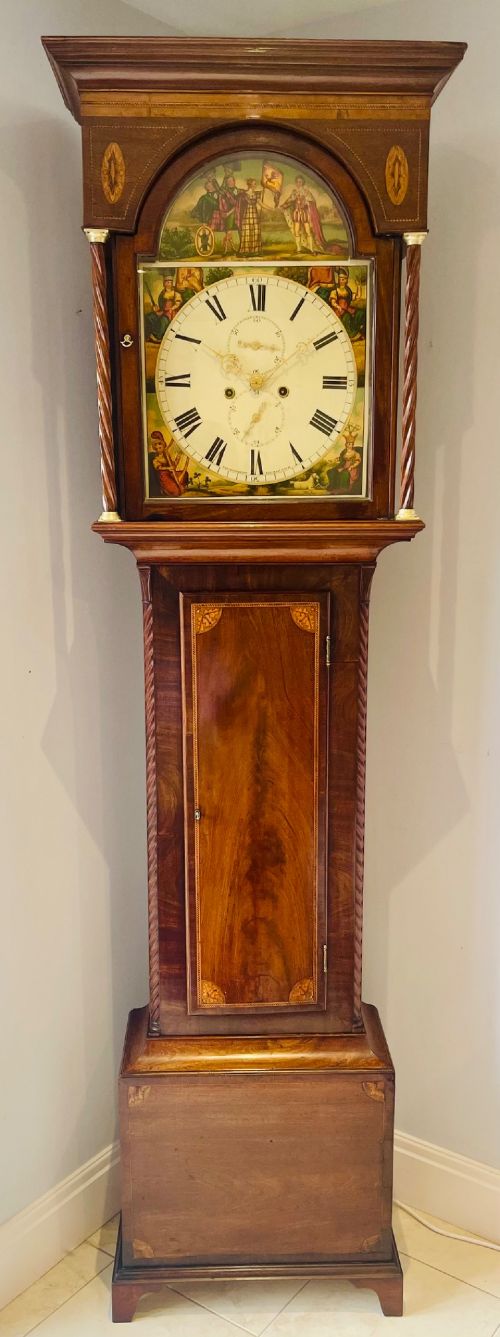
Makers construct these tall cases in regional workshops across England, Scotland, and Wales, utilising local timbers alongside imported mahogany. Regional variations introduce oak banding, painted iron dials, and brass arch faces that distinguish provincial work from metropolitan London production.
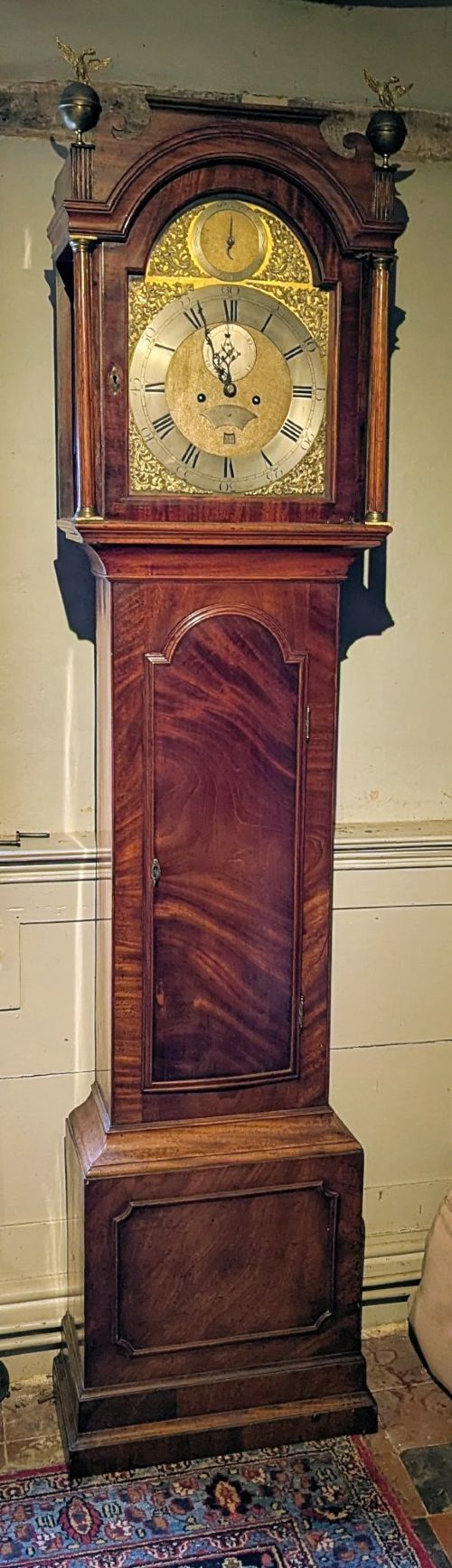
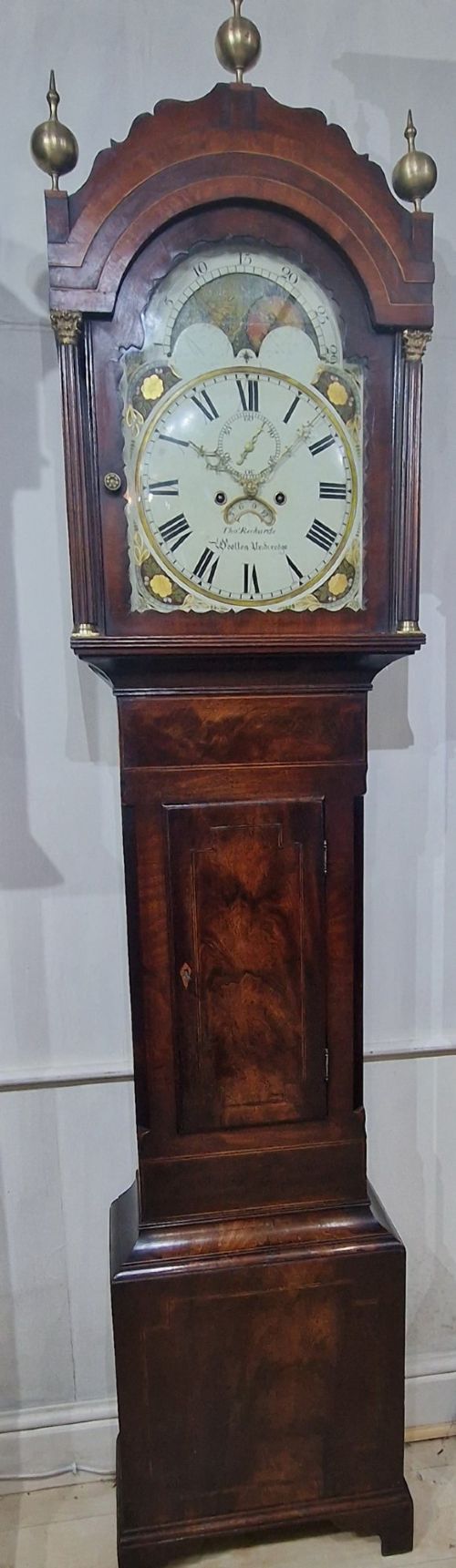
The form houses precision 8-day movements, moon rollers, and musical mechanisms behind glazed doors and arched hoods. Buyers encounter both monumental full-height examples and scaled-down miniature longcase clocks suited to more modest domestic spaces.
Materials and construction methods
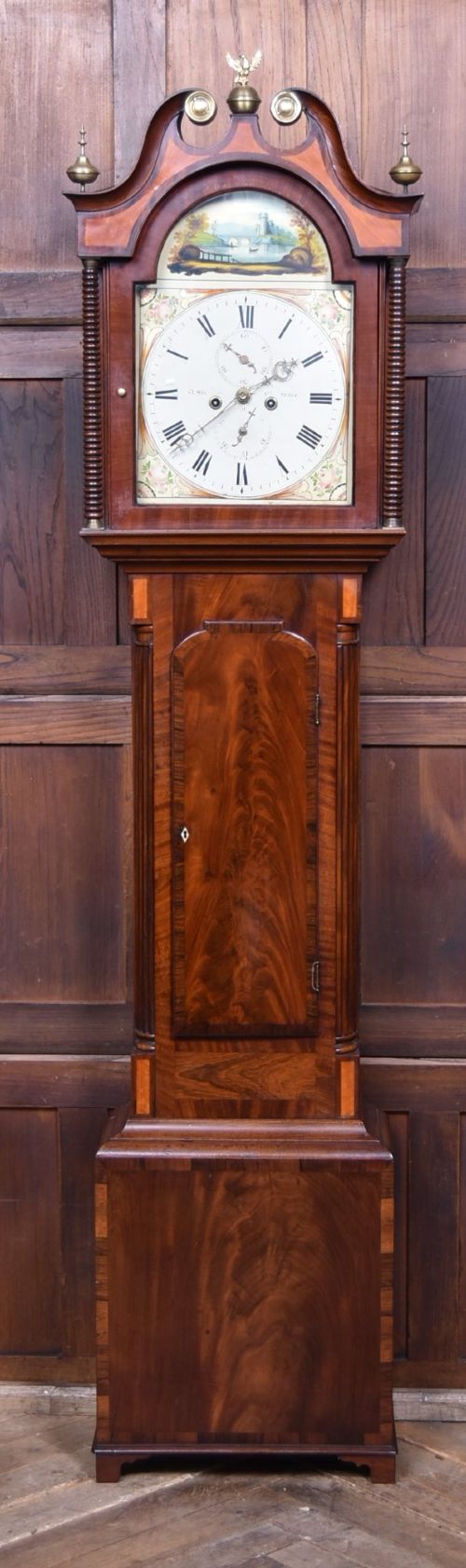
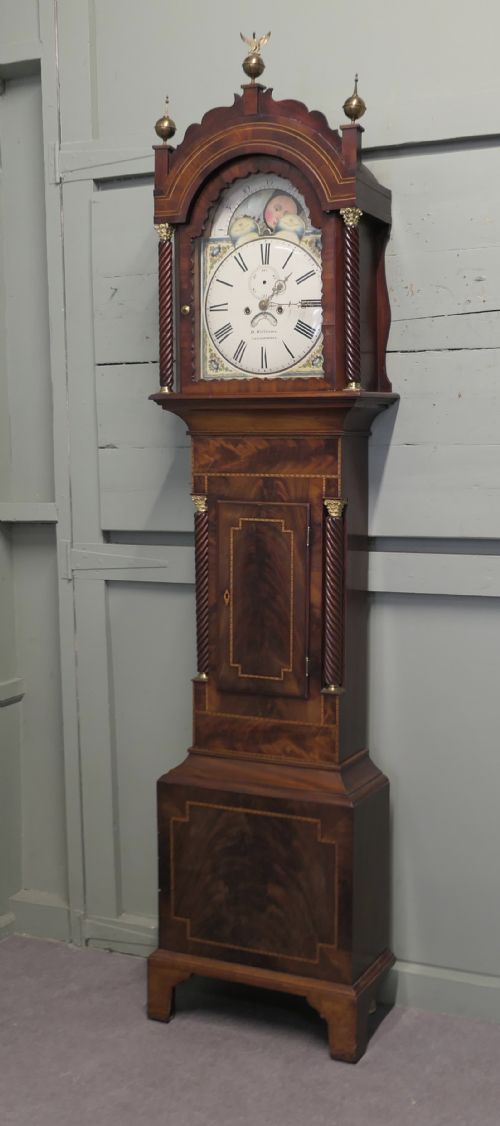
Cabinetmakers select dense solid mahogany and figured flame mahogany veneers for the tall trunk and hood, frequently contrasting the dark timber with lighter oak banding or delicate marquetry inlay. The timber requires careful seasoning to prevent warping along the long vertical door panels.
Horologists mount heavy brass and steel wheel trains within the trunk, driving movements via lead weights suspended on lines or chains. Dials combine painted iron faces with applied brass spandrels, auxiliary second hands, and mechanical moon rollers that track lunar phases.
Glass panels protect the delicate white or silvered chapter rings on the arched dial, while brass bells or gongs chime the hours and quarters. Joinery relies on traditional pegged mortise and tenon frames to support the immense downward weight of the mechanical movement.
Listings feature movements ranging from standard time-and-strike mechanisms to complex musical chimes and rotating moon phases.
Assessing craftsmanship and execution
The depth of figure in the flame mahogany veneer and the crispness of inlaid paterae dictate the visual impact of the case. Superior examples display continuous grain matching across the trunk door and base plinth rather than disjointed patches of timber.
Movement quality separates workshop production from standard output, evident in the weight of the brass plates, hand-cut gear teeth, and the complexity of musical chimes or moon phase mechanisms. Signed dials by known provincial or London makers add significant weight to the piece.
Proportion and architectural balance define the upper tier, where swan neck pediments, fluted hood columns, and integrated brass stop flutes harmonize with the height of the trunk. Lesser pieces rely on plain box construction without secondary decorative detailing.
Hendrie Ogg·Green of Edinburgh·D Straiton·James McCabe·Winsor Bishop Norwich·William McEwan·Matt Wylie·Parkinson and Frodsham·Wm Stanford·Dan Williams
The Brown Mahogany Standing Clock Glossary
- Longcase clock
- A tall pendulum clock enclosed in a wooden case standing directly on the floor. These instruments measure time via weights hung inside the trunk.
- Grandfather clock
- A colloquial term for a full-sized longcase clock, typically exceeding six feet in height. The name derives from a popular nineteenth-century American song.
- Moon roller
- A secondary dial mechanism that rotates to display the phases of the moon through an arched aperture. Clockmakers geared this disc to complete one full revolution every lunar month.
- Grandmother clock
- A scaled-down version of the traditional longcase clock, standing significantly shorter and narrower. These compact variants emerged primarily during the early twentieth century.
- Paterae
- Small circular decorative reliefs carved or inlaid into furniture surfaces, frequently featuring classical rosette or floral motifs. Cabinetmakers use them to accent the corners of clock hoods and friezes.
Brown Mahogany Standing Clock: Frequently Asked Questions
How tall is a standard standing clock?
Most full-size examples stand between six and eight feet tall to accommodate the long vertical drop required by the driving weights.
Compact grandmother variants reduce this overall height to roughly five feet while maintaining the classic proportions of the taller versions.
What is an eight day movement?
An eight day movement requires winding once per week via a crank inserted into holes on the painted dial face.
This system uses heavier hanging weights than thirty-hour clocks, driving a more complex train of brass gears.
How do I date a mahogany longcase?
The architectural style of the hood, the shape of the dial arch, and the treatment of the mahogany veneers provide clear chronological markers.
Georgian examples favor architectural columns and brass spandrels, while later Victorian and Edwardian pieces introduce musical cylinders and inlaid marquetry.
Where were most of these clocks made?
Regional workshops across England, Scotland, and Wales produced the vast majority of these standing clocks, alongside specialist makers operating in London.
Provincial horologists often signed the iron or brass dial face directly, linking the instrument to specific towns like Montrose, Paisley, or Crickhowell.