

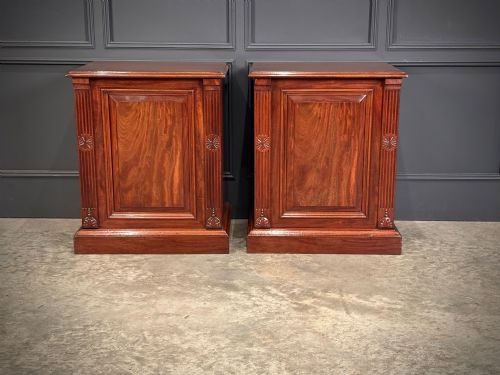
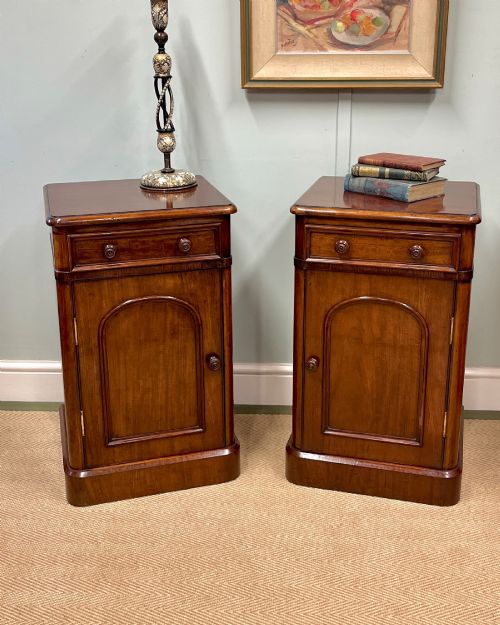
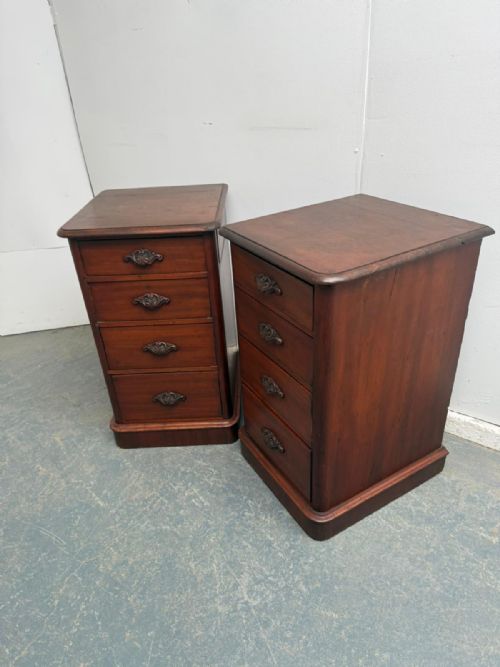
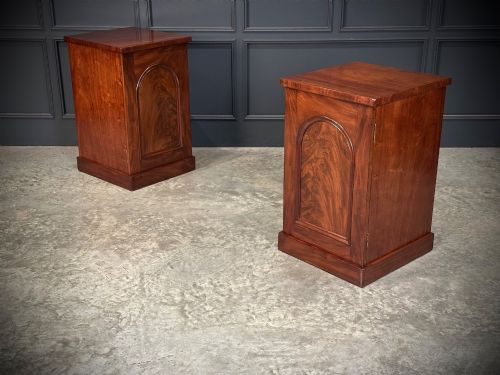
Brown Mahogany Night Table
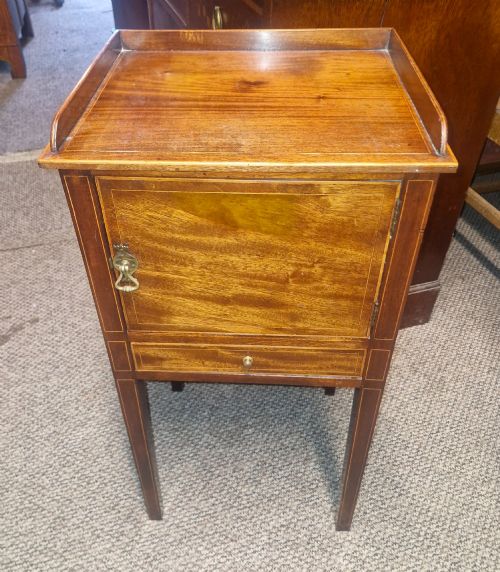
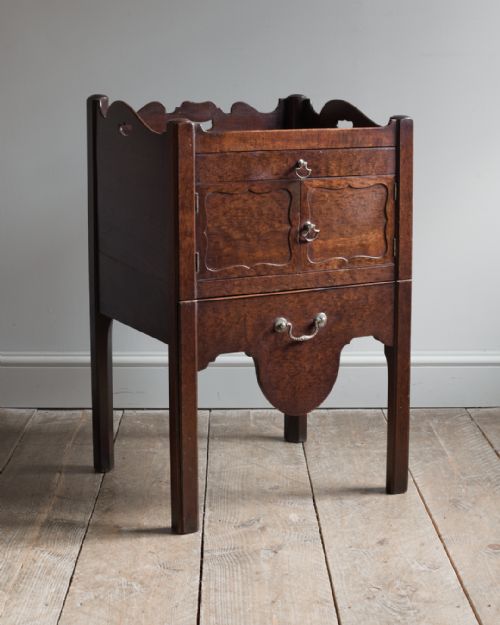
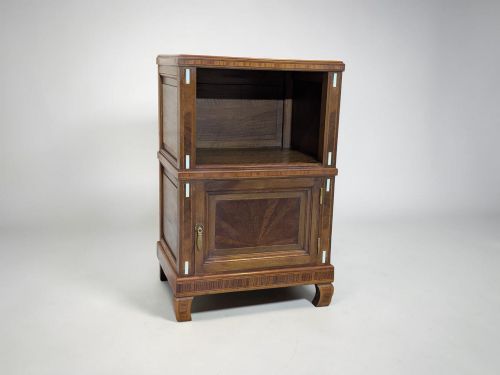
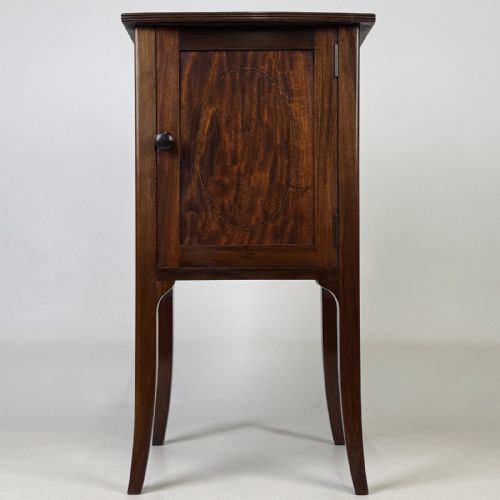
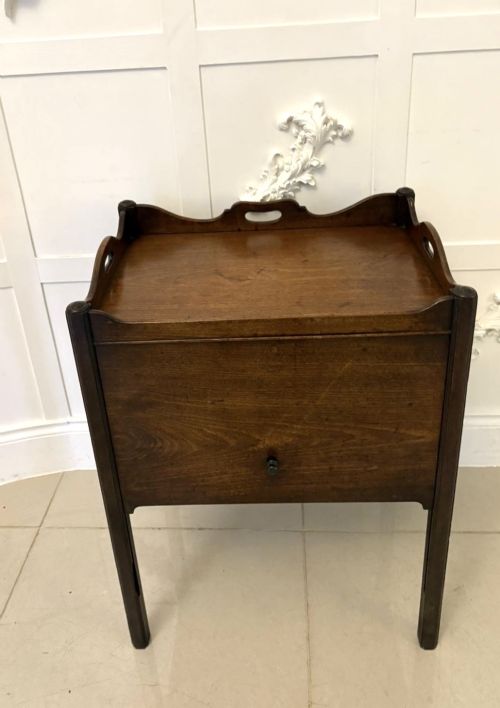
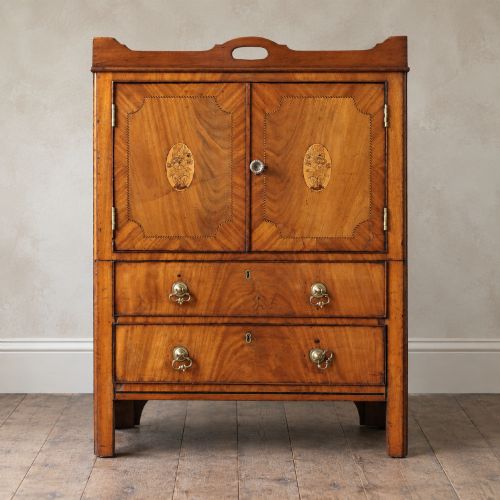
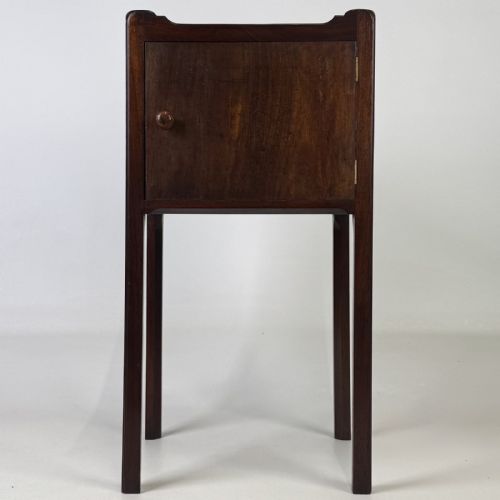
A brown mahogany night table brings rich timber grain and compact utility directly beside the bed.
Brown Mahogany Night Table
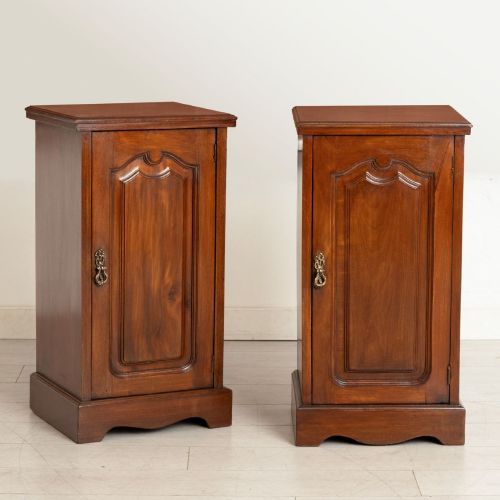
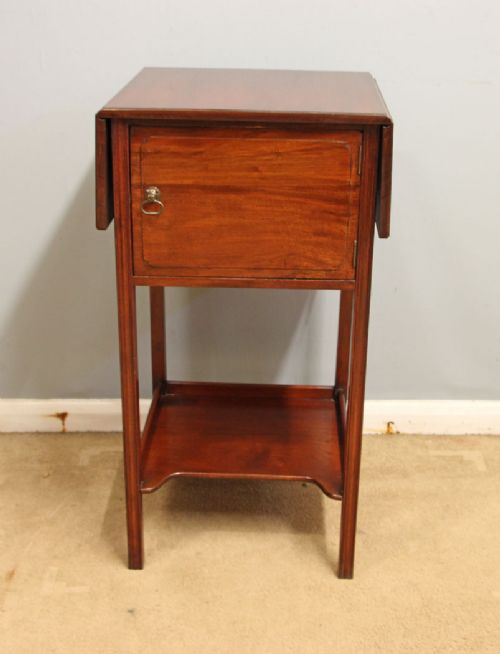
A brown mahogany night table is a small bedside companion designed to hold a lamp and keep private items enclosed out of sight. When searching this phrase, you meet forms that range from simple Georgian pot cupboards to elaborate Victorian cabinets and Sheraton Revival pieces.
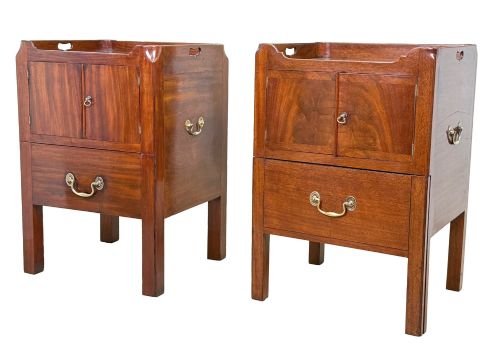
The material dominates the visual weight, showing deep brown tones through solid timber and matched veneers. Pieces appear singly or as matched pairs, spanning the eighteenth, nineteenth, and early twentieth centuries.
Materials and construction methods
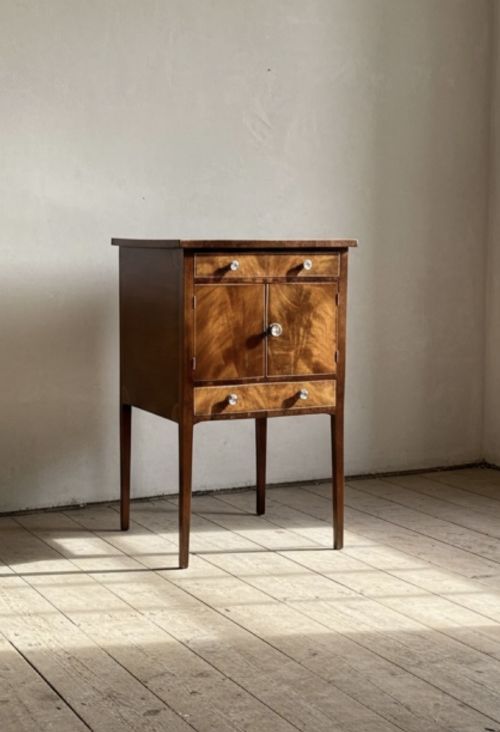
Cabinetmakers built these tables using solid mahogany or applied flame mahogany veneer over secondary woods, often accentuating the primary timber with satinwood and boxwood inlay. Brass handles, hinges, and gallery rails provide functional metallic contrast against the polished dark wood.
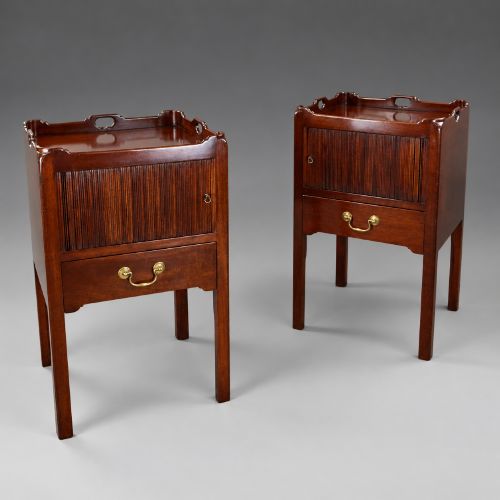
Joinery techniques include enclosed cupboards with tambour shutters, small drawers, and tray tops designed to stop items rolling off the edges. Some later or continental examples incorporate marble tops for added durability and surface coolness.
Brown Mahogany Night Table Retail Price Guide 2026
Typical asking prices for brown mahogany night table among the pieces listed under this phrase on Sellingantiques today, from the lower quarter to the upper quarter. They describe what is for sale here now, not the wider market.
Materials recur across the inventory in mahogany, brass, satinwood, flame mahogany veneer, boxwood inlay, and marble.
Judging the standard of execution
Quality rests in the selection of timber, where matched flame mahogany veneer and crisp boxwood stringing elevate a simple bedside box into a refined piece of furniture. The fluidity of carved serpentine fronts and the tight fit of tambour doors distinguish superior workshop production from standard utility items.
Original hardware, sound structural timber without excessive shrinkage cracks, and carefully proportioned tray tops separate better examples from altered or heavily restored pieces.
The Brown Mahogany Night Table Glossary
- Tambour
- A flexible shutter made of narrow vertical strips of wood glued to canvas, allowing a sliding door to curve around the corner of a cabinet.
- Tray top
- A raised rim edging the upper surface of a bedside table or commode, originally designed to prevent chamber pots or vessels from slipping off.
- Serpentine front
- A furniture front curved with a convex centre flanked by concave wings, demanding high skill from the cabinetmaker.
- Commode
- A term historically used for a low enclosed cabinet or bedside chest, often fitted to house a chamber pot.
- Satinwood
- A lustrous yellowish timber native to India and Ceylon, frequently utilised for contrasting inlay and bandings on mahogany furniture.
Brown Mahogany Night Table: Frequently Asked Questions
How were these tables used originally?
These pieces served primarily as bedside commodes or pot cupboards to house chamber pots and night lamps in sleeping quarters. Their enclosed compartments kept private domestic items concealed while providing a convenient flat surface next to the bed.
Over time, their utility shifted toward general bedside storage for books, glasses, and lighting as domestic plumbing modernised inside the home.
Are these tables usually found in pairs?
Many examples survive as matched pairs, particularly those dating from the Georgian and Victorian periods intended for twin or large double bedrooms. Sourcing balanced pairs requires careful comparison of timber grain and exact dimensions.
Single tables also appear frequently, reflecting rooms where space permitted only one bedside cabinet or where the partner piece did not survive.
How do I distinguish Georgian from Victorian pieces?
Georgian pieces often display restrained lines, bracket feet, and subtle boxwood inlay, relying on the natural grain of the mahogany for visual interest. Tray tops and tambour doors are particularly common in eighteenth-century workshops.
Victorian and later nineteenth-century examples tend to be heavier in proportion, occasionally incorporating bolder carvings, plinth bases, or richer flame mahogany veneers reflecting industrial joinery developments.
Can I use a night commode as a lamp table?
These cabinets adapt readily to modern living rooms or hallways as lamp tables or small side chests. Their compact footprints and enclosed storage make them practical for tucking beside sofas or in narrow entryways.
The flat top safely supports lighting and decorative objects while the interior cupboard conceals modern clutter.