



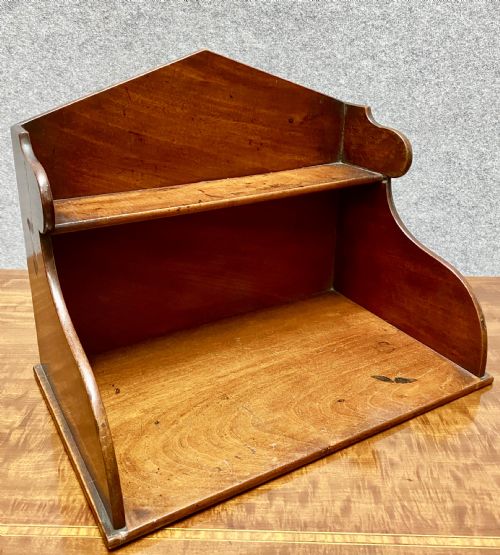


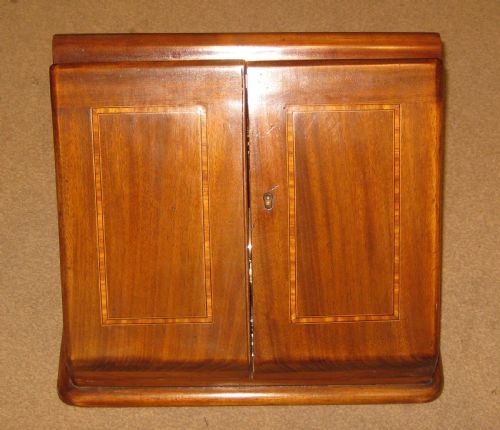

Brown Mahogany Desk Tidy
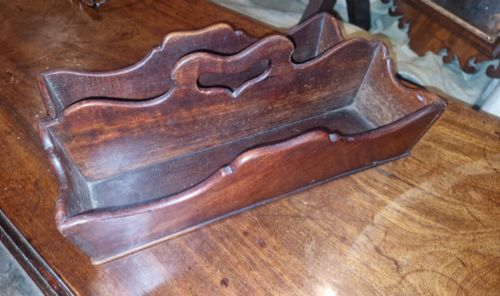
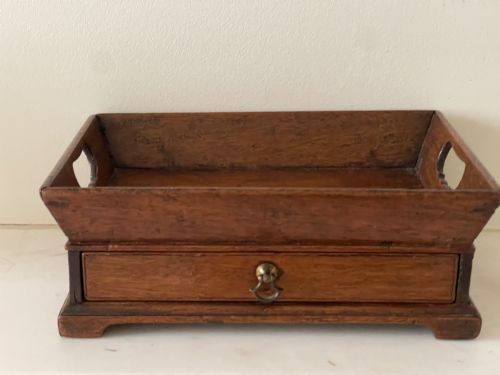
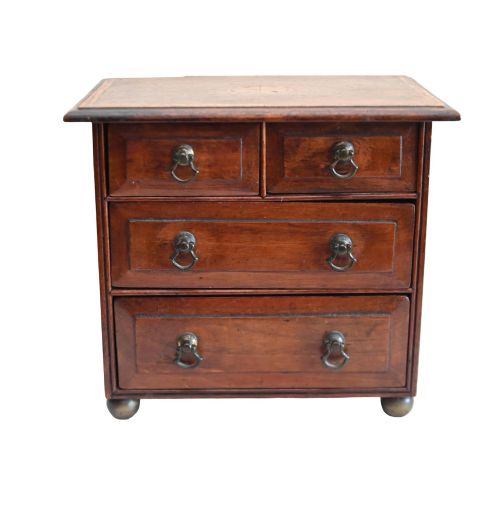
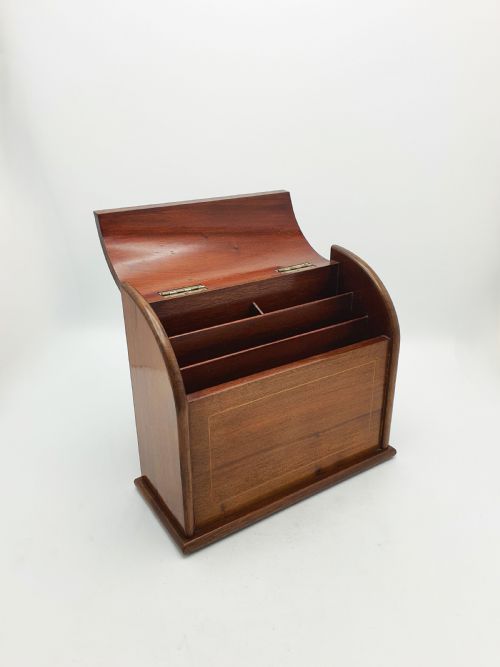
These brown mahogany desk tidy examples organise your papers in style.
Brown Mahogany Desk Tidy
A brown mahogany desk tidy brings order to papers and letters on a working surface. The selection spans the Regency, Georgian, and Victorian eras, along with Edwardian and later reproductions.
Forms vary from simple open trays and letter holders to hinged-lid stationery boxes and small chests of drawers. You encounter pieces intended for naval architects, executive desks, and domestic writing spaces.
Makers utilised mahogany as the primary timber, often enhanced with satinwood inlay or brass fittings. These accessories reflect the changing administrative needs of offices and homes across the centuries.
How they were made
Cabinetmakers constructed these brown mahogany desk tidy pieces using solid timbers and carefully selected veneers. Secondary woods such as oak appear in internal partitions and drawer linings.
Decoration often involved contrasting stringing and banding in boxwood and satinwood. Brass was standard for hinges, carrying handles, and escutcheons on the more substantial stationery cabinets.
Brown Mahogany Desk Tidy Retail Price Guide 2026
Typical asking prices for brown mahogany desk tidy among the pieces listed under this phrase on Sellingantiques today, from the lower quarter to the upper quarter. They describe what is for sale here now, not the wider market.
Listings feature mahogany, brass, oak, and satinwood across periods spanning the eighteenth, nineteenth, and early twentieth centuries.
What varies in quality
Quality rests upon the choice of timber figure and the crispness of any inlaid detail. Finer examples display carefully matched grain patterns across the primary surfaces and tightly fitted joints.
The sophistication of the internal compartments sets simpler letter trays apart from elaborate stationery cabinets. Superior hardware and original brass fittings indicate a higher standard of original manufacture.
The Brown Mahogany Desk Tidy Glossary
- Stationery box
- A standing cabinet with a sloping or hinged lid designed to hold writing paper and envelopes.
- Inlay
- A technique where contrasting woods such as boxwood and satinwood are fitted flush into the mahogany surface to form decorative patterns.
- Escutcheon
- A protective brass plate surrounding a keyhole on a cabinet door or lid.
- Stringing
- Narrow lines of contrasting wood veneer used to outline panels and borders on antique furniture.
Brown Mahogany Desk Tidy: Frequently Asked Questions
What is a brown mahogany desk tidy used for?
These items serve to organise letters, envelopes, and small writing implements on a desk or table. They keep loose papers neatly contained within compartmentalised sections or drawers.
Historically, they were essential accessories for managing correspondence in studies, offices, and drawing rooms. Today, they remain practical for sorting modern mail and stationery.
How do I date a desk tidy?
Dating relies on observing construction methods, timber choices, and stylistic cues from periods such as the Georgian or Victorian eras. Secondary woods and hardware styles also offer clear chronological indicators.
Cabinetry from the eighteenth century differs significantly in construction from later nineteenth-century manufacturing techniques. Comparing these details helps establish the age of the piece.
Where should I place a desk tidy?
These accessories sit comfortably on top of writing desks, sideboards, or bookcases in a study or living area. Their compact footprint allows them to function in both working and decorative settings.
Keep them away from direct heat sources and strong sunlight to protect the mahogany polish and prevent wood shrinkage.
What materials are used in these pieces?
Mahogany serves as the primary structural and decorative timber for these desk accessories. Secondary woods like oak frequently appear in drawer linings and internal divisions.
Decorative elements often incorporate brass hinges, locks, and handles, alongside boxwood or satinwood stringing.