
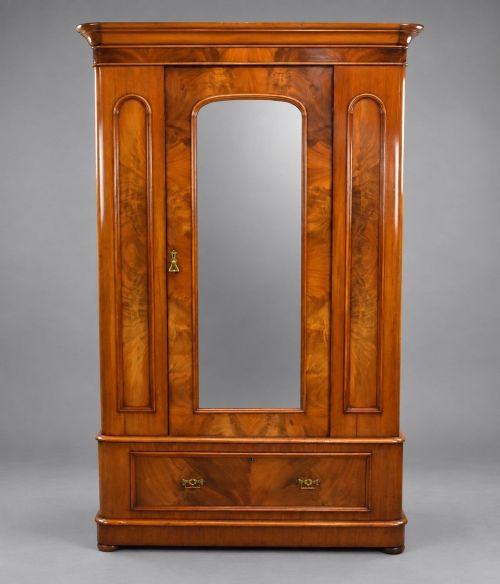
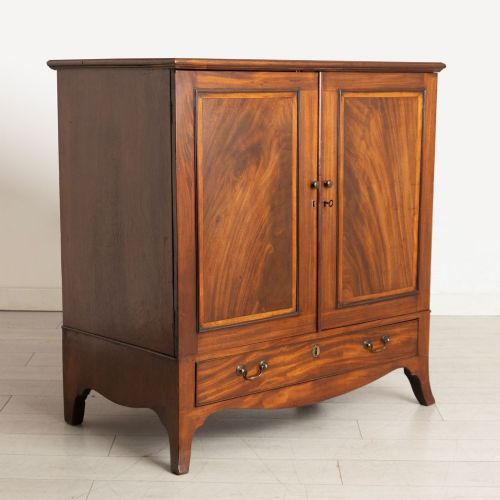
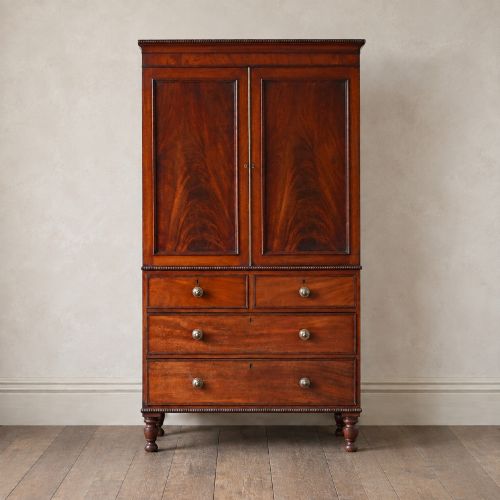
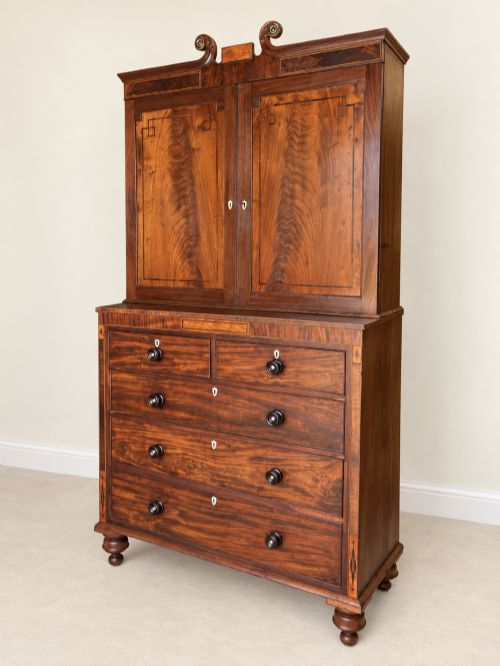
Brown Mahogany Clothes Press
Brown mahogany clothes press pieces offer substantial storage through fine timber and traditional craft, satisfying those who seek functional heritage furniture.
Brown Mahogany Clothes Press
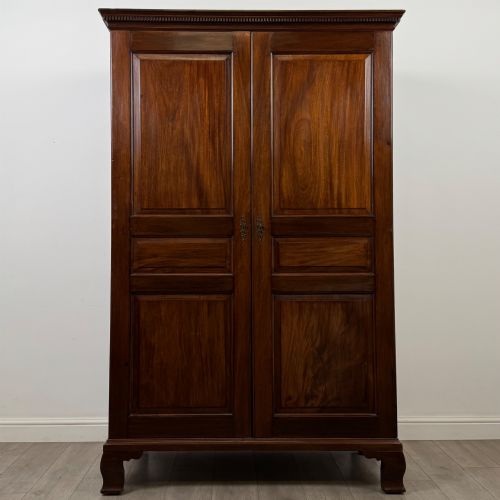
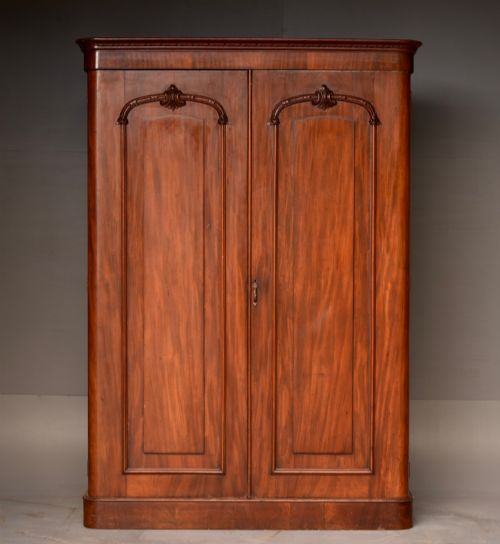
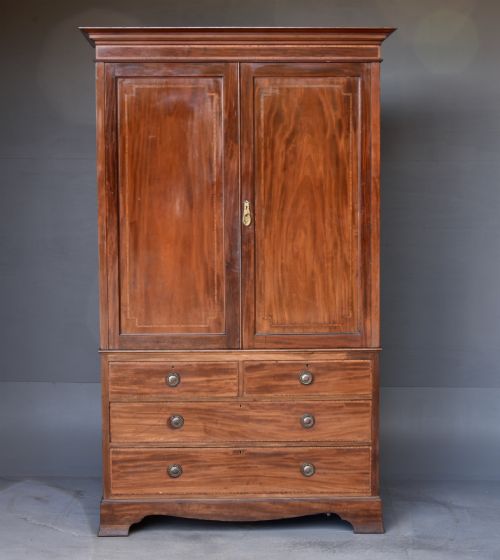
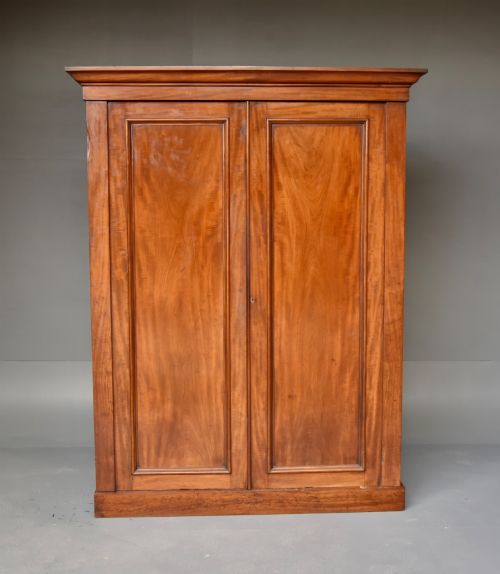
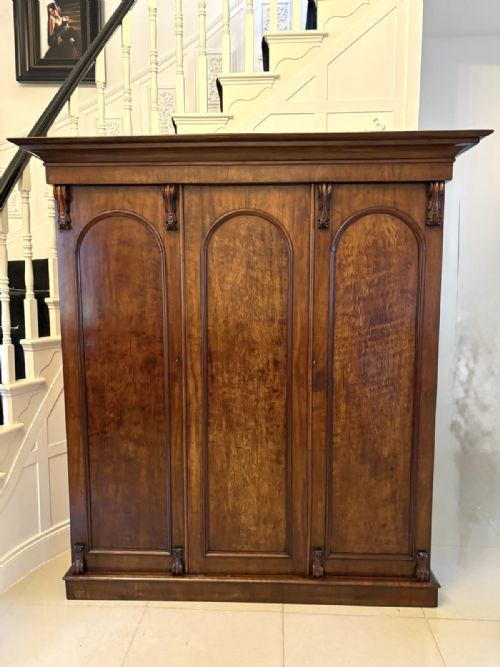
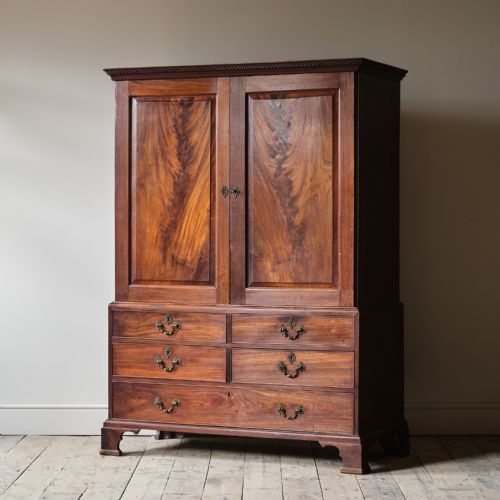
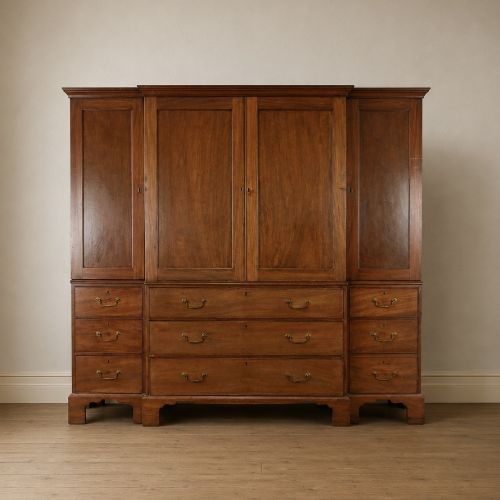
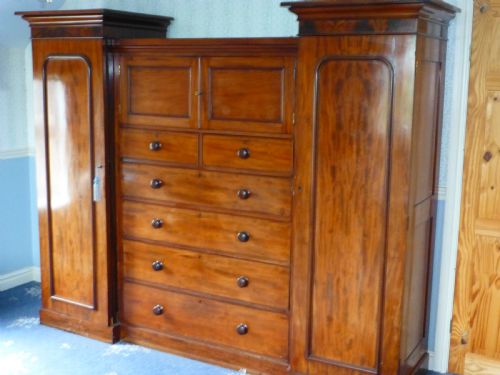
A brown mahogany clothes press provides tall, enclosed storage intended originally for linens and garments, spanning forms from simple cupboards to large breakfront combination compactums. When exploring a brown mahogany clothes press on this page, buyers encounter pieces originating across the Georgian, Victorian, and Edwardian eras, alongside Regency and William IV examples.
The evidence shows these substantial items frequently appear under titles denoting linen presses, housekeepers wardrobes, and armoires. Georgian and George III variants sit alongside later Edwardian and Victorian creations, reflecting enduring domestic requirements for compartmentalised hanging space and sliding shelf storage.
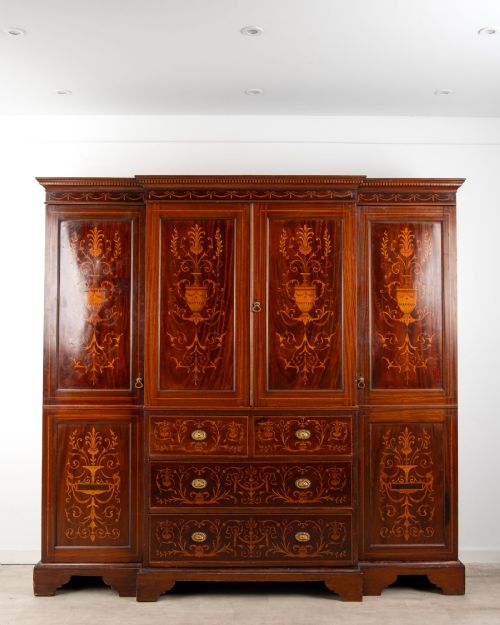
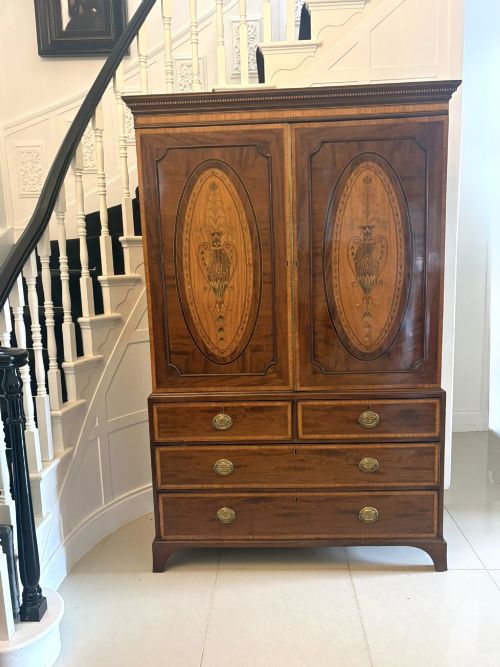
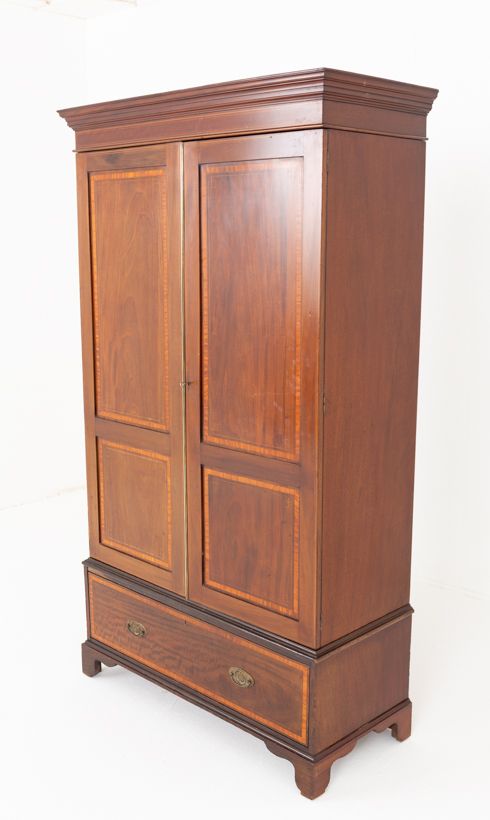
Makers and retail houses such as Gillows, Heals, Maples & Co, and S & H Jewell appear among the listings, alongside numerous unmarked cabinet pieces. Construction ranges from tall two-door cupboards to elaborate breakfront and triple-door configurations incorporating drawers and secretaire sections.
Assessing quality in construction and finish
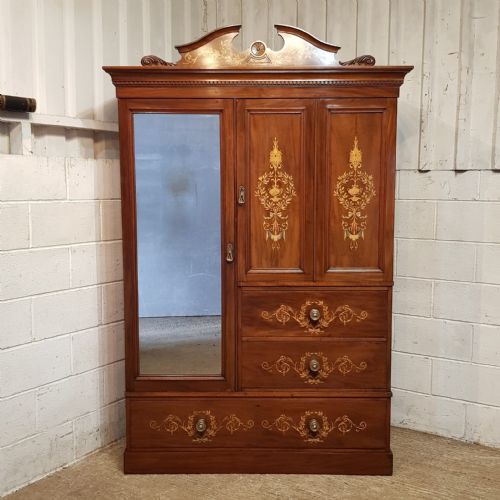
Quality reveals itself in the selection of timber figures, where matched flame mahogany veneer demonstrates superior cabinet work compared to plain planking. The crispness of satinwood inlay and the retention of original brass fittings distinguish high-workshop output from standard production.
Structural integrity depends on the precise fitting of internal linen slides and drawers within the main carcase. Superior examples maintain smooth operation across heavy panelled doors and complex breakfront mouldings without timber distortion.
Materials recorded across current pieces include solid mahogany, flame mahogany veneer, satinwood inlay, oak, brass, and glass.
Gillows·Heals·Maples & Co·S & H Jewell·Druce & Co
The Brown Mahogany Clothes Press Glossary
- Compactum
- A multi-compartment wardrobe combining hanging space, drawers, and linen shelves in a single unit. This form maximises storage efficiency within bedroom interiors.
- Linen press
- A tall piece of furniture featuring upper sliding trays for folded textiles and lower drawers for garments. These items formed an essential component of historic household storage.
- Breakfront
- A cabinet design where the central section projects forward from the flanking wings. This architectural arrangement creates depth and shadow across the facade.
- Secretaire
- A desk component integrated into a larger cabinet, featuring a drop-down writing flap concealing small drawers and pigeonholes. It adds a secondary function to wardrobe storage.
- Flame mahogany
- Timber veneer sliced to capture the fiery, rippling grain pattern radiating outward from the branch junctions. Cabinet makers reserved this material for prominent exterior panels.
Brown Mahogany Clothes Press: Frequently Asked Questions
What is a clothes press?
A clothes press is a tall storage piece traditionally designed to hold folded linens on internal sliding trays alongside hanging garments. They combine upper cupboard doors with lower drawer sections.
Historically, these items served central housekeeping functions in large residences before fitted wardrobes became standard domestic architecture.
How do I date a press?
Dating relies on observing construction methods, timber choices, and stylistic details such as cornice mouldings and foot design. Georgian examples often display cleaner architectural lines, whereas Victorian pieces frequently show heavier proportions.
Hardware styles and secondary timbers like oak also assist in establishing the manufacturing period.
Can these wardrobes be dismantled?
Many larger examples were constructed with modular carcases or removable cornices and bases to facilitate transport through domestic doorways. Knock-down construction became particularly common during the nineteenth century.
Checking the internal joint system reveals whether a specific piece separates into manageable sections.
Where should I place it?
These tall pieces require substantial wall space and adequate clearance for wide opening doors and pull-out drawers or trays. Bedrooms and dressing rooms provide the natural environment for their original purpose.
Positioning them away from direct sunlight and heat sources protects the mahogany timber and veneer surfaces from drying out.