

Brown Library Furniture
Brown library furniture brings together substantial timber and leather forms designed for study and reading spaces, predominantly dating from the nineteenth and early twentieth centuries.
Brown Library Furniture
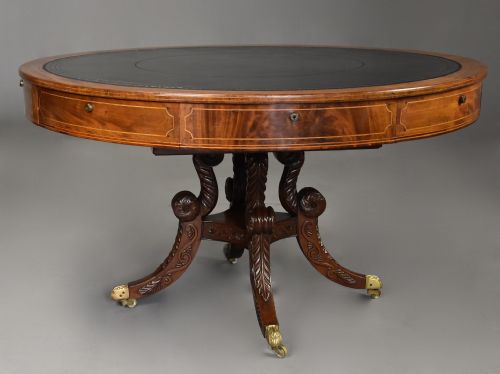
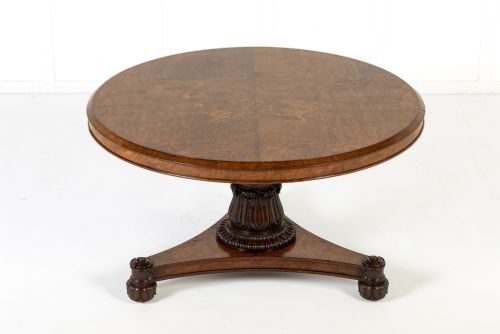
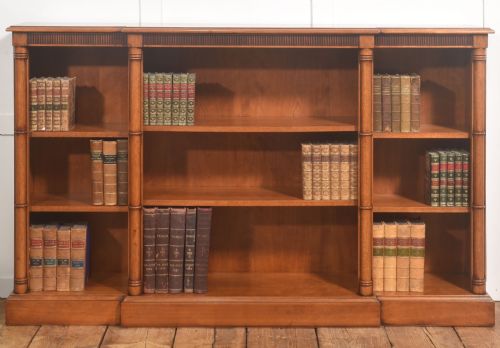
Brown library furniture encompasses the large-scale wooden fixtures and seating created for domestic and institutional study rooms. These pieces include tall bookcases, pedestal desks, writing tables, and revolving bookcases originating across the Victorian, Edwardian, and Georgian periods.
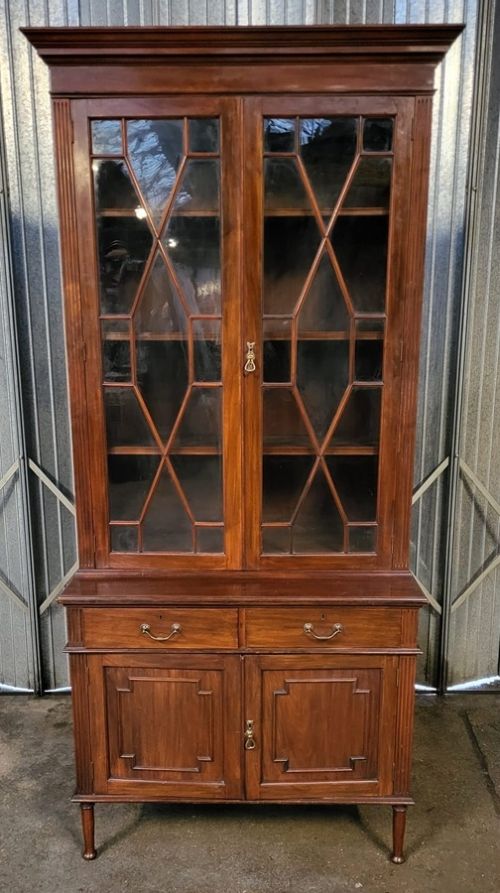
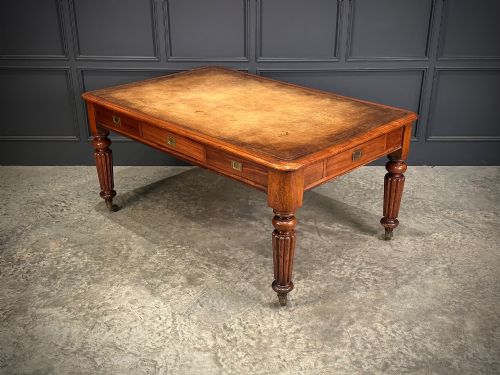
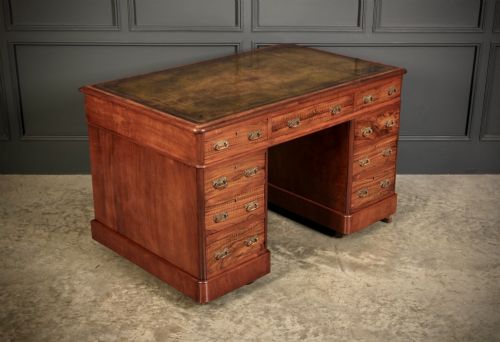
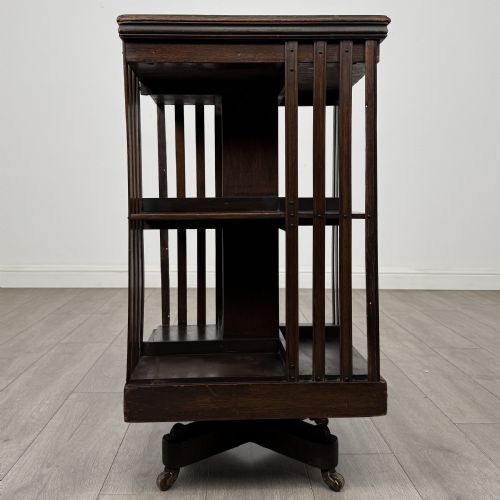
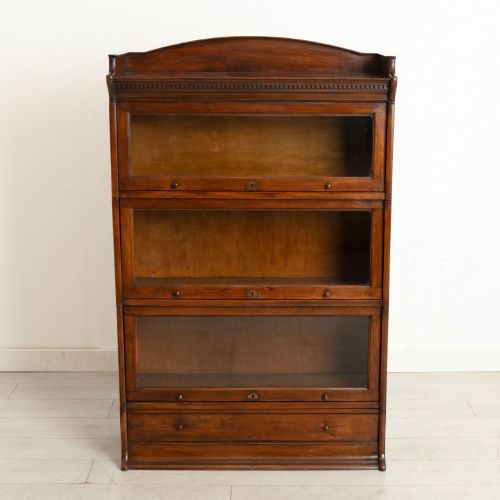
The version most commonly met on this page is the mahogany or oak bookcase and desk, often featuring glazed doors or inset leather writing surfaces. Pieces range from compact four-tier revolving book stands to extensive triple library bookcase cabinets.
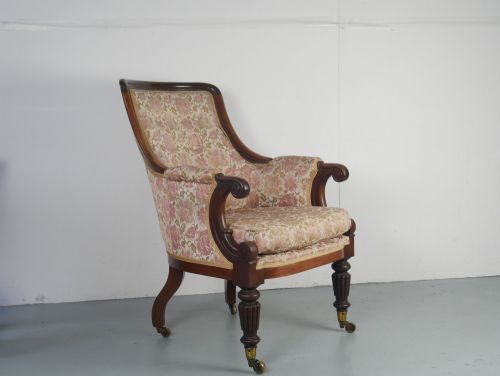
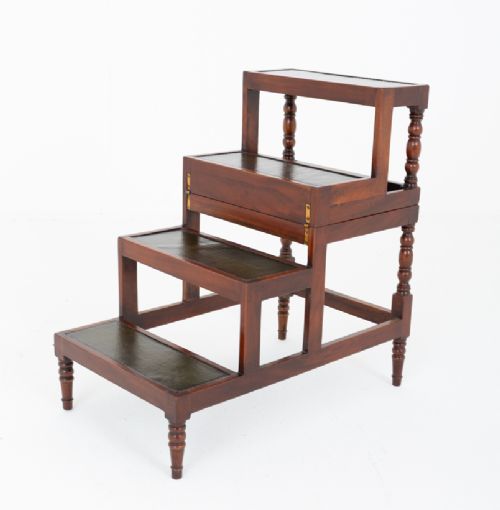
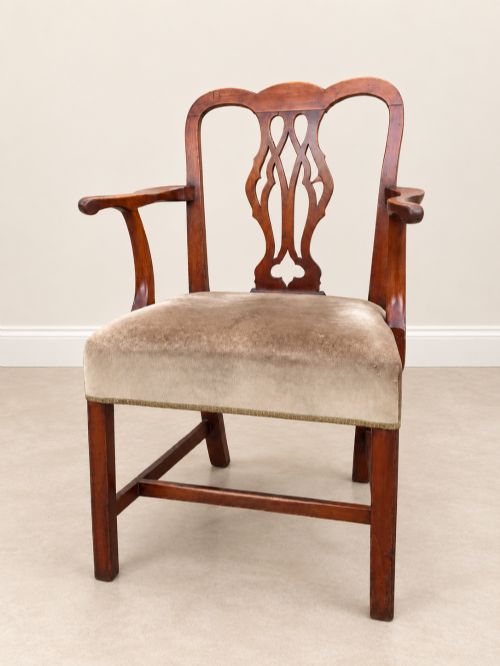
The selection also spans seating options designed for reading and writing, such as library armchairs, caned bergères, and desk chairs. Oak and mahogany dominate the material palette, accompanied by walnut, yew wood, and rosewood across various nineteenth-century forms.
How they were made
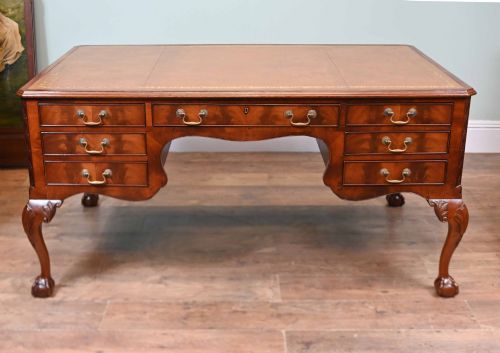
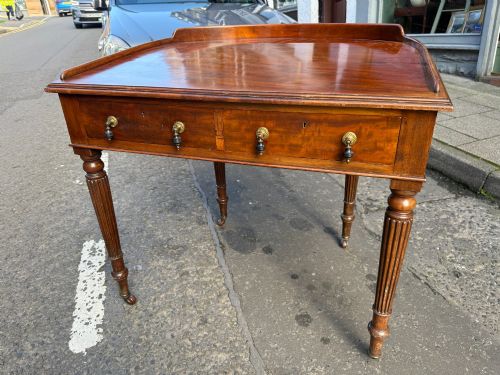
Makers constructed these pieces using solid hardwoods such as mahogany, oak, and walnut, frequently applying flame mahogany veneers to flat surfaces like desk drawers and cabinet doors. Brass handles, hinges, and castor fittings provided functional metallic contrast to the timber.
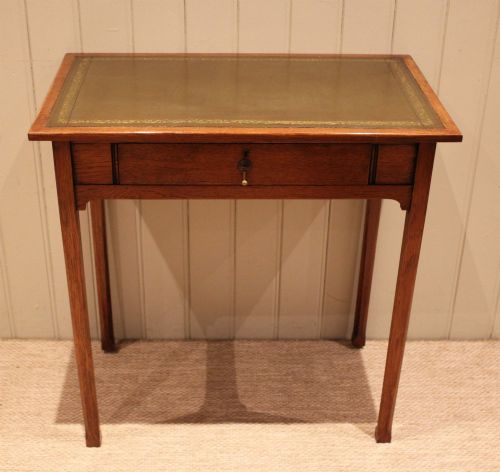
Writing surfaces incorporated inset tooled leather panels, while seating utilised cane work and upholstered padding supported by sturdy wooden frames. Glazed display cabinets employed timber framing with glass panes to protect book collections from dust while maintaining visibility.
Brown Library Furniture Retail Price Guide 2026
Typical asking prices for brown library furniture among the pieces listed under this phrase on Sellingantiques today, from the lower quarter to the upper quarter. They describe what is for sale here now, not the wider market.
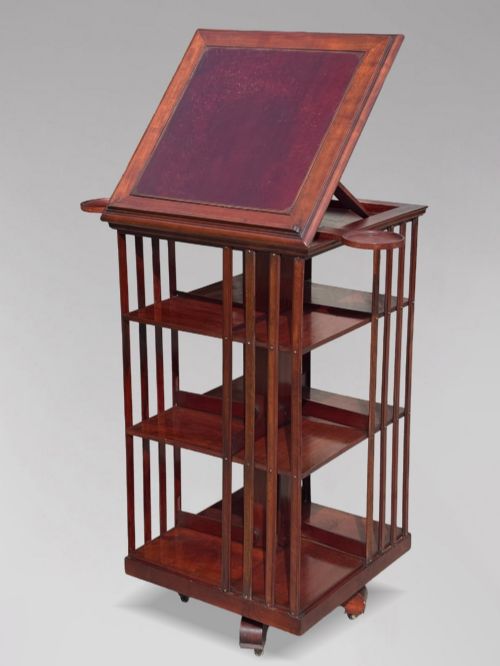
Some revolving bookcases are compact enough to sit neatly beside an armchair for instant access to evening reading.
What varies in quality
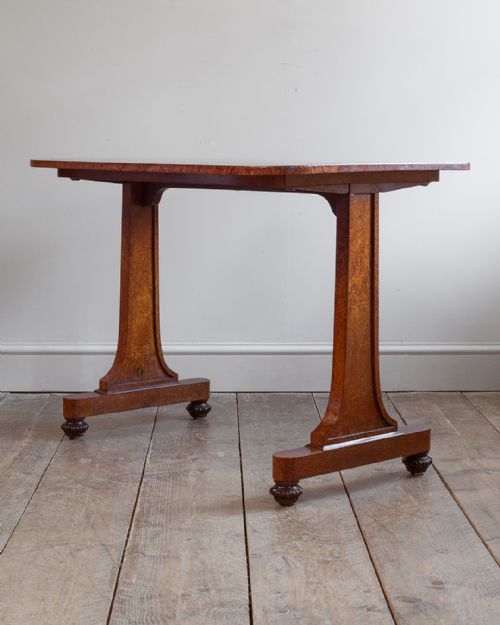
Quality in these pieces rests upon the selection of timber grain, such as figured mahogany or burr walnut, and the precision of the joinery in carcases and drawer construction. Finer examples display thoughtful proportions, integrated adjustable shelving systems, and careful hand-carved detailing.
The integration of maker stamps, specialist brass hardware, and secondary timbers like oak for drawer linings distinguishes workshop production from standard commercial output. Structural integrity in revolving mechanisms and large breakfront bookcases also dictates the standing of individual pieces.
W. Walker and Sons London·Lebus·Bowman Brothers London·Trollope and Sons·Charles Andrea Nosotti·Whytock and Reid of Edinburgh
The Brown Library Furniture Glossary
- Breakfront
- A cabinet design where the central section projects forward from the flanking outer sections. This architectural arrangement creates depth and visual interest in large bookcases.
- Pedestal desk
- A heavy writing desk supported by two matching pedestals of drawers or cupboards flanking a central kneehole. These typically feature an inset leather writing surface.
- Revolving bookcase
- A compact tiered bookcase mounted on a rotating spindle base for easy access to volumes. They appear in oak, mahogany, and walnut across Victorian and Edwardian periods.
- Bergère
- An enclosed upholstered armchair with wooden framing and cane sides or back panels. They frequently appear in mahogany or beech within library settings.
- Partners desk
- A large double-sided desk designed for two people to work opposite one another. Drawers and cupboards are duplicated on both faces.
Brown Library Furniture: Frequently Asked Questions
How do I care for leather desk tops?
Leather surfaces benefit from gentle cleaning and occasional wax conditioning to maintain flexibility and prevent cracking.
Avoid placing hot cups or direct moisture on the hide to preserve the original finish.
What is a sectional bookcase?
A sectional bookcase consists of modular stacked units with glass front doors that lift upwards and slide inside.
This design allows individual tiers to be separated and reassembled when moving the furniture.
How do revolving bookcases work?
Revolving bookcases sit upon a concealed ball-bearing or wooden pivot mechanism housed within a cruciform base.
This allows the entire tiered structure to turn smoothly for book selection in confined spaces.
Can shelves in these bookcases be adjusted?
Many Victorian and Edwardian bookcases feature wooden or metal ratchet tracks that allow shelves to be moved to different heights.
Fixed shelves also appear in simpler utility pieces, particularly in school or institutional library furniture.