
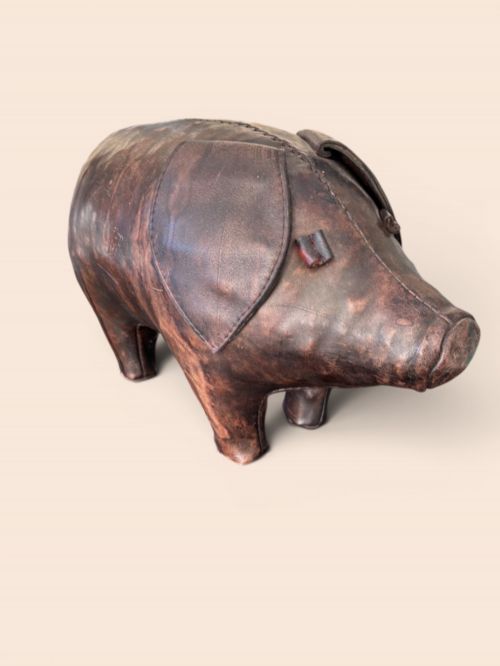
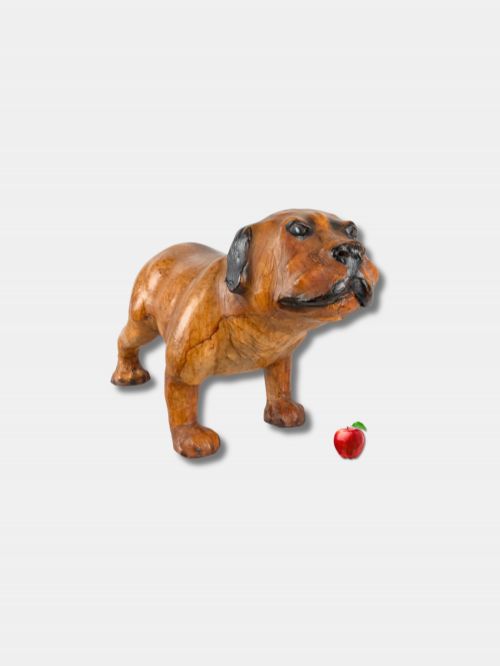
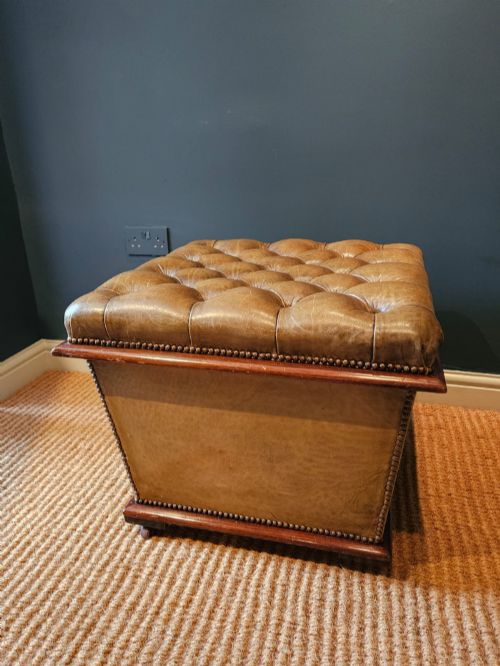


Brown Leather Footrest
These brown leather footrest pieces combine sturdy timber frames with supple hides, offering a practical seat or leg support for any traditional room.
Brown Leather Footrest
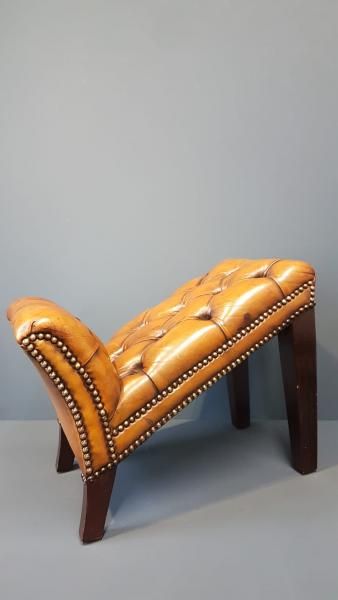
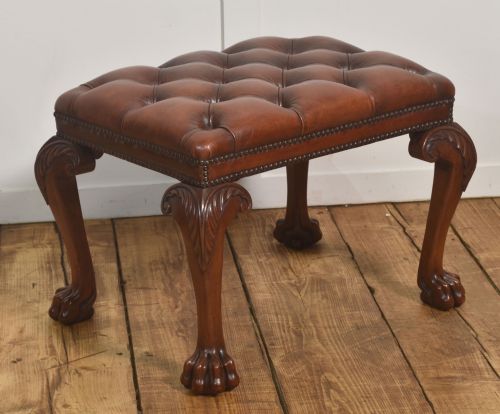
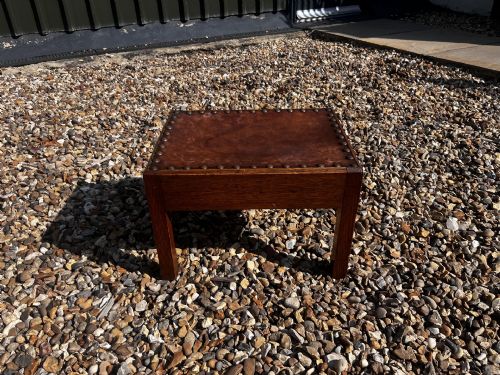
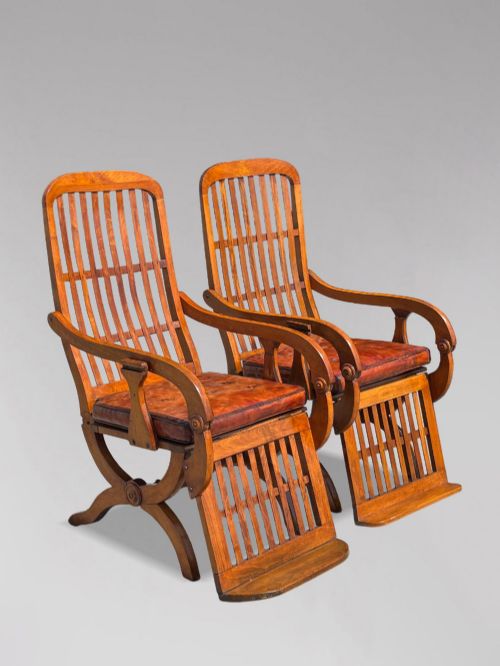
A brown leather footrest brings together centuries of seating design, appearing in forms ranging from simple low stools to parts of reclining library armchairs. When searching for a brown leather footrest, buyers encounter various historical iterations spanning the nineteenth and early twentieth centuries. These items serve primarily as functional furniture pieces designed to elevate the feet or provide auxiliary seating in a study or drawing room.
The selection on this page relies heavily on nineteenth century craftsmanship, including Victorian and Edwardian examples alongside robust Arts and Crafts creations. Many of these pieces integrate wooden frames made from mahogany, oak, walnut, or rosewood to support their leather upholstery. Stools and ottomans dominate the category, often accompanied by convertible library chairs featuring attached or matching footrests.
What varies in quality
The caliber of a brown leather footrest depends heavily on the integrity of its wooden frame and the depth of carving or turning applied to the timber. Superior pieces display dense hardwoods with well-preserved structural joinery, whereas lesser examples might show loose joints or replacement timbers. The quality of the leather upholstery also dictates value, with thicker, supple hides retaining their character better than brittle or heavily patched surfaces.
Attention to detail in hardware and interior stuffing separates standard production from finer workshop output. Original brass castors, precise mechanical adjustments, and traditional stuffing materials like wood wool indicate higher craftsmanship. Consistency in the maker's hand, particularly in attributed Arts and Crafts or specialised workshop pieces, elevates the piece above anonymous utility furniture.
Materials recorded across the inventory include brown leather, brass, mahogany, oak, walnut, steel, and wood wool.
Omersa Workshop·Arthur Simpson Of Kendal·Robert Daws
The Brown Leather Footrest Glossary
- Wood wool
- Fine wood shavings traditionally used as a stuffing material for upholstery and padding in older furniture. This fibrous filling provides firm support beneath the leather surface.
- Metamorphic
- Furniture designed to transform from one form into another, such as an armchair converting into a footrest or lounger. These pieces rely on hidden hinges and adjustable frames.
- Arts and Crafts
- A design movement emphasising handcraftsmanship, simple forms, and local materials over industrial mass production. Pieces from this tradition often feature exposed oak framing and pegged joints.
- Reclining
- A mechanical feature allowing the backrest or seat to adjust angles for comfortable resting. Library chairs often incorporate this system alongside matching footrests.
- Ottoman
- A low, upholstered seat or footstool without a back or arms, often built with internal storage or sturdy wooden legs. Victorian examples frequently paired deep buttoned leather with turned timber supports.
Brown Leather Footrest: Frequently Asked Questions
How do I care for antique leather?
Maintain antique leather by applying suitable nourishing balms periodically to prevent the hide from drying and cracking over time. Keep these pieces away from direct heat sources and strong sunlight.
Dust the surface regularly with a soft, dry cloth. Avoid using harsh chemical cleaners that can strip the original finish from the leather.
Were footrests originally part of armchairs?
Many nineteenth century library chairs and reclining armchairs were built with integrated or matching footrests to provide complete leg support during extended reading sessions.
Some footstools were manufactured as independent pieces, while others formed part of a convertible suite designed to extend outward from the main seat.
What wood types should I expect?
Frames typically utilise sturdy British hardwoods such as mahogany, oak, walnut, and rosewood, selected for their structural strength and aesthetic grain patterns. Cabinet makers matched these timbers to the prevailing style of the period.
Darker polished mahogany and walnut appear frequently in Victorian and Regency designs, while oak dominates the Arts and Crafts pieces.
How do I identify an Edwardian stool?
Edwardian pieces often feature lighter framing, simpler carved motifs, and combination materials like oak paired with brown leather upholstery. They reflect a shift toward domestic comfort and refined proportions.
Look for turned wooden legs and traditional upholstery tacks that secure the leather directly to the structural frame without excessive ornamentation.