



Brown Leather Dining Seats
Brown leather dining seats bring rich texture and solid timber frames to the table, offering sturdy comfort for everyday meals.
Brown Leather Dining Seats
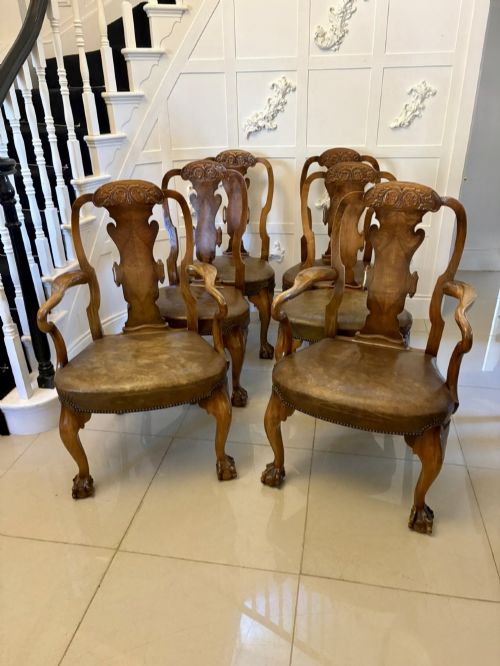
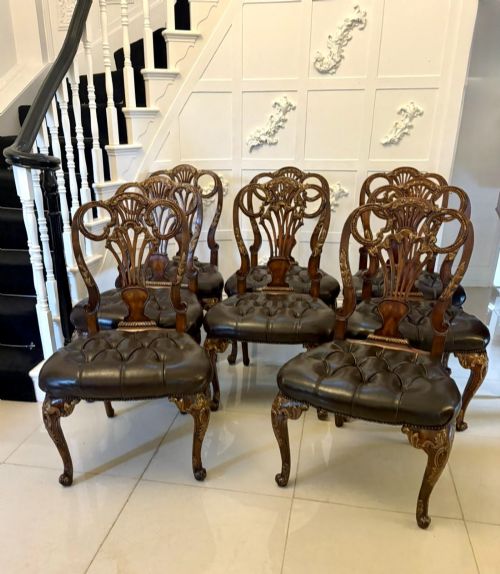
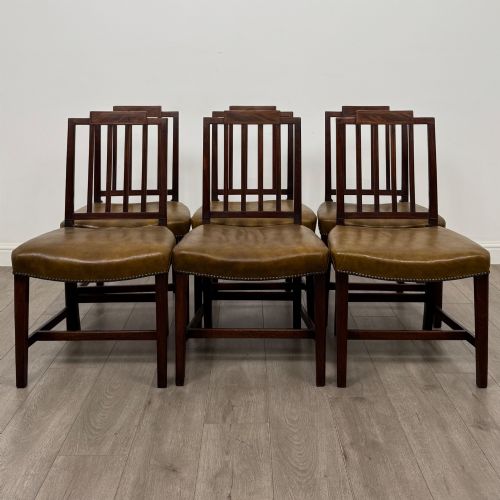
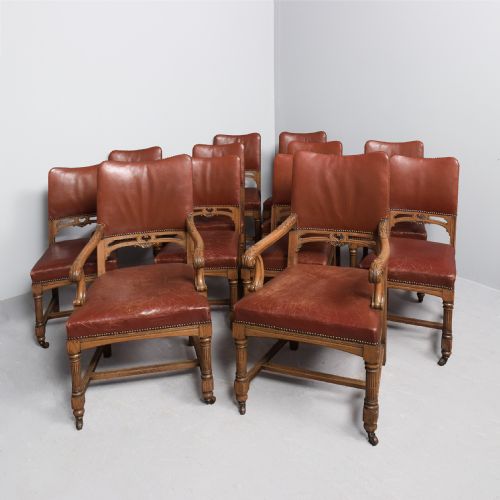
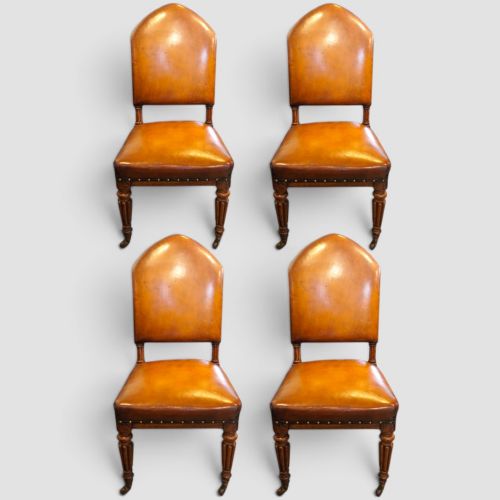
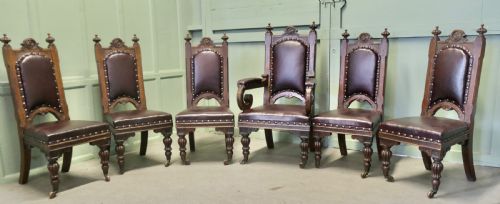
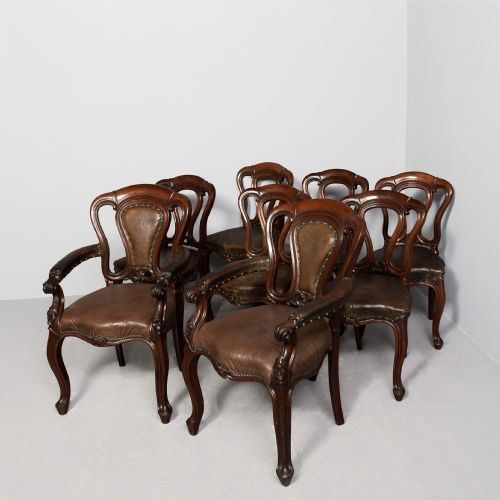
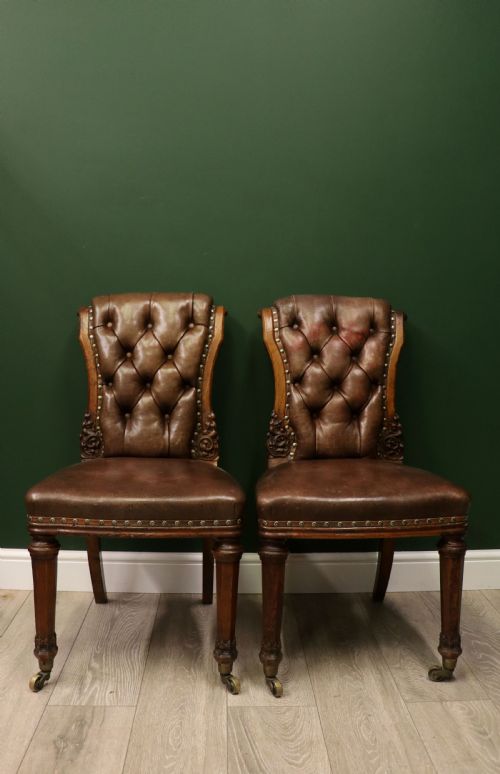
When you search for brown leather dining seats, you encounter sturdy timber frames paired with durable hides designed for regular use around the table. These pieces span multiple periods, with Victorian and Edwardian examples appearing frequently alongside earlier Georgian and William IV designs.
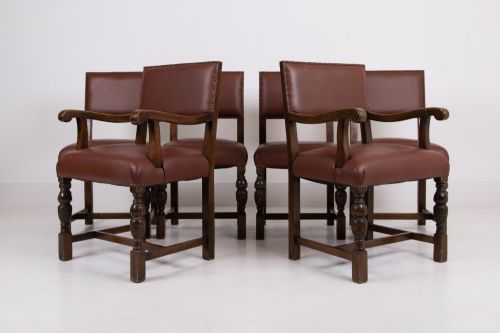
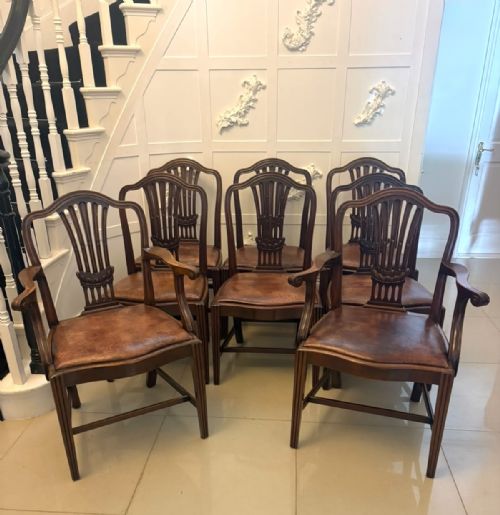
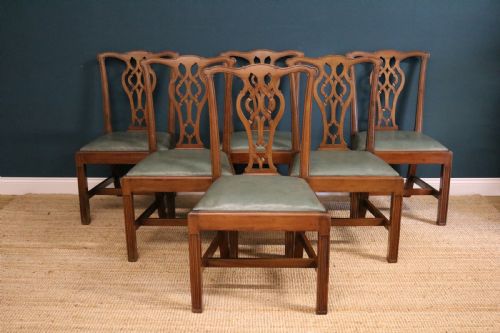
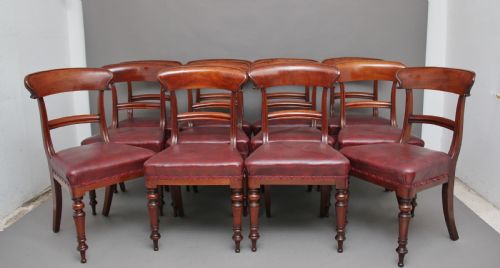
The selection ranges from single side chairs and carvers to large matched sets numbering six, eight, or twelve. Oak, mahogany, and walnut provide the primary framing materials, often shaped in revival styles such as Chippendale, Gothic, and Hepplewhite.
Beyond standard dining chairs, the category includes high back variations, armchairs, and occasional banquette sofas. Most seating relies on straightforward wooden legs, though specific regional or stylistic groups incorporate sabre legs or marquetry details.
Materials and construction methods
Joiners relied on dense hardwoods like mahogany, oak, and walnut to build durable chair frames that endure decades of movement and weight. Carved ornamentation, gilded accents, and turned elements often decorate the stiles and rails of these timber structures.
Upholstery involves fitting cattle hides over padded seat foundations, occasionally accented with brass nails or velvet trim. Leather was selected for its hard-wearing surface, capable of sustaining regular use while developing a rich patina over time.
Measures of quality and craftsmanship
The distinction between ordinary and superior pieces rests in the crispness of the timber carving and the integrity of the frame construction. Heavier oak and walnut frames with deeply carved details or matched sets of significant size demonstrate higher ambition in the workshop.
The condition and treatment of the leather seat insert significantly influence the character of the chair. Original leather surfaces that show natural wear sit differently in the market compared to later replacement hides.
John Taylor & Son·William Walker & Sons·Shoolbred
The Brown Leather Dining Seats Glossary
- Carver
- An armchair, typically designed to sit at the head of a dining table, featuring supportive wooden armrests.
- Shield Back
- A chair back shaped like a heraldic shield, popular in late eighteenth century furniture design.
- Barback
- A horizontal crossbar integrated into the backrest of a chair, common in nineteenth century seating.
- Gothic Revival
- A nineteenth century design movement that reinterprets medieval architectural motifs such as pointed arches and tracery.
- Marquetry
- The art of applying decorative pieces of veneer to a structure to form intricate geometric or floral patterns.
Brown Leather Dining Seats: Frequently Asked Questions
How do I clean antique leather seats?
Wipe the leather gently with a soft, damp cloth to remove surface dust without saturating the material. Avoid harsh chemical detergents that can dry out older hides.
Apply a specialist leather conditioner periodically to keep the surface supple and prevent cracking. Test any product on a hidden underside area first.
Are these chairs suitable for daily use?
Most solid hardwood frames from the Victorian and Edwardian eras were built for robust daily seating. Checking the stability of the joints ensures they withstand regular dining routines.
Heavier oak and mahogany constructions offer reliable structural integrity for modern households. Routine inspection of the leg joints prevents loose connections from worsening.
How do I spot a Georgian style chair?
Georgian style dining seats often feature refined mahogany frames with clean lines and balanced proportions. Details like carved splats and straight or cabriole legs point toward eighteenth century influences.
Many chairs found today are later revival pieces that emulate these classic proportions. Examining the timber age and construction pegging helps distinguish the period.
What is the difference between a side chair and a carver?
Side chairs lack armrests and possess a narrower profile designed to fit compactly around the sides of a dining table. They serve as the primary seating for guests.
Carvers feature integrated arms and wider proportions, traditionally placed at the head and foot of the table. Their robust frames often match the design of the accompanying side chairs.