

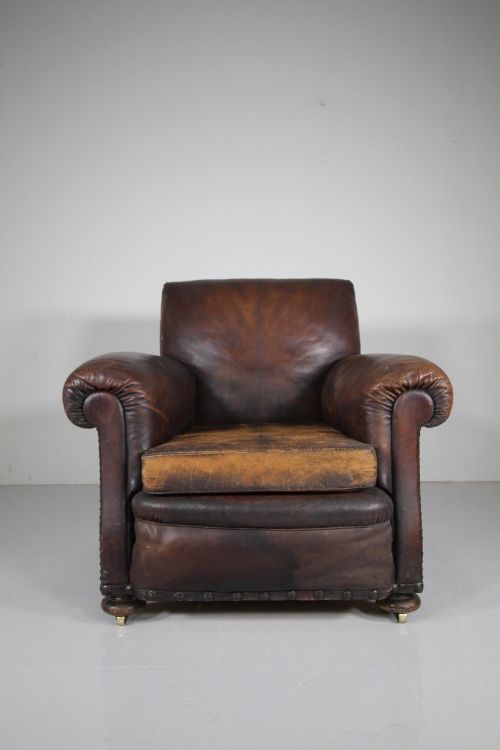


Brown Leather Arm Chair
A brown leather arm chair brings enduring character and practical comfort to a room, spanning library armchairs and sturdy desk seating.
Brown Leather Arm Chair
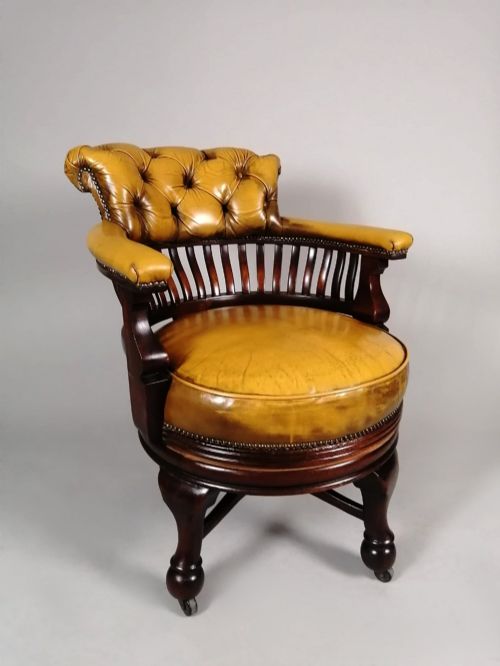
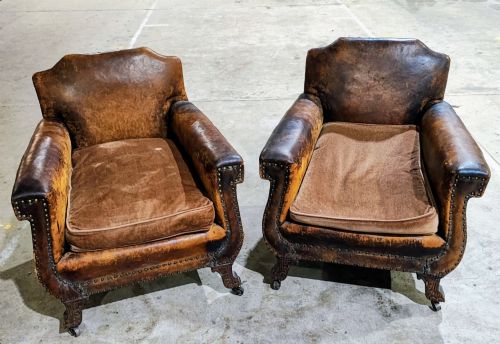
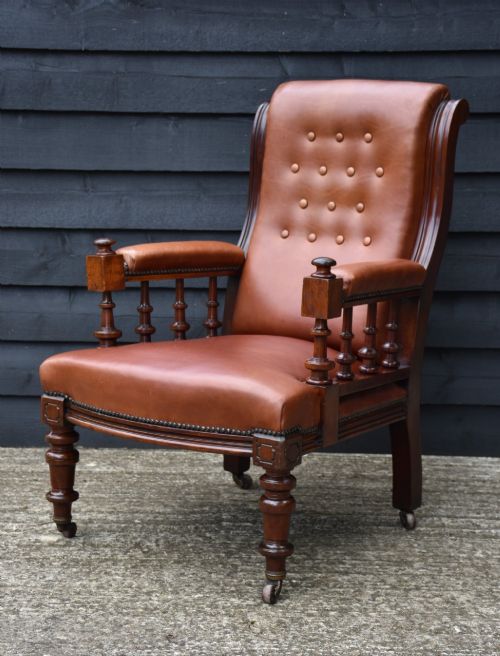
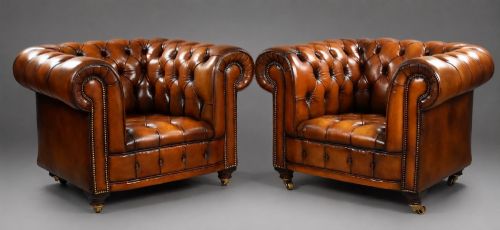
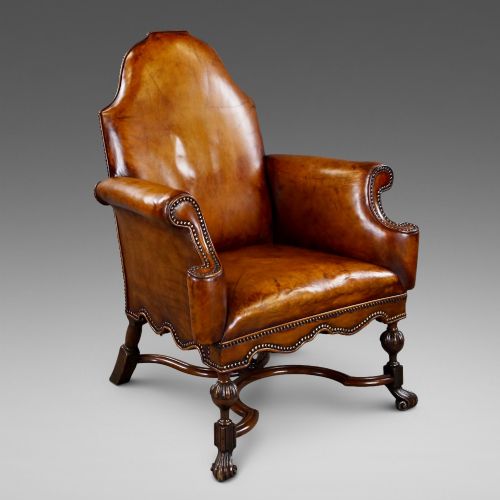
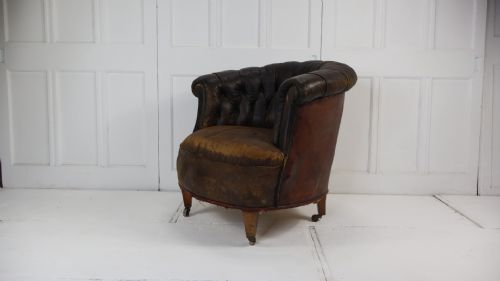
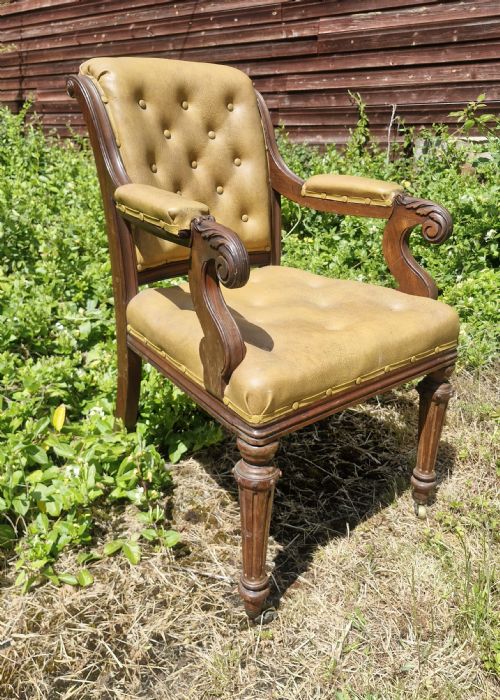
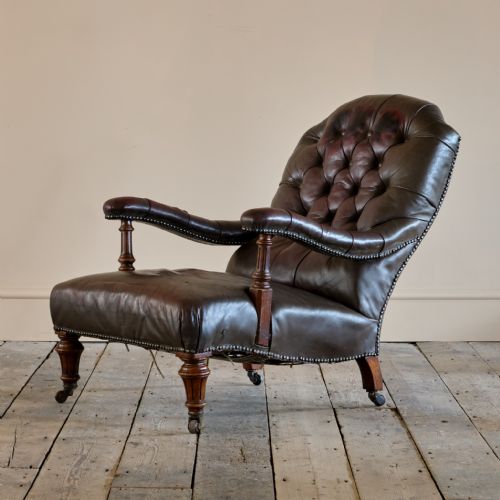
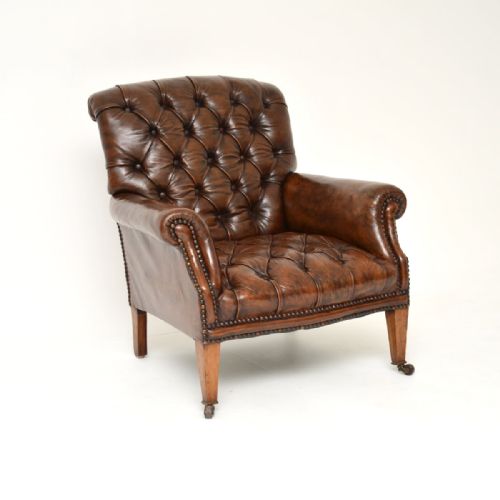
When searching for a brown leather arm chair, buyers encounter a wide variety of seating forms originating from the Victorian, Edwardian, and later twentieth-century periods. These range from heavy library and club armchairs designed for deep lounging to swivelling desk chairs built for studies and offices.
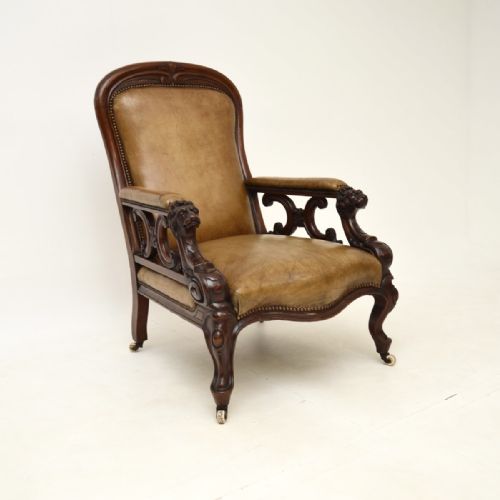
The selections on this page heavily feature mahogany, oak, and walnut timber frames paired with durable leather upholstery. Library and club variations dominate the heavier styles, whilst lighter elbow and desk armchairs represent the more functional workspace seating.
How they were made
Cabinetmakers constructed the supportive frames using hardwoods such as mahogany, oak, walnut, ash, and teak, often employing carved detailing or scroll arms. These wooden structures provided the rigid skeleton necessary to support heavy daily use in studies, libraries, and offices.
Hides were stretched across frames and secured with brass tacks or deep buttoning techniques to create resilient seating surfaces. Revolving desk variants incorporated early mechanical swivel systems and adjustable height mechanisms using iron and brass components.
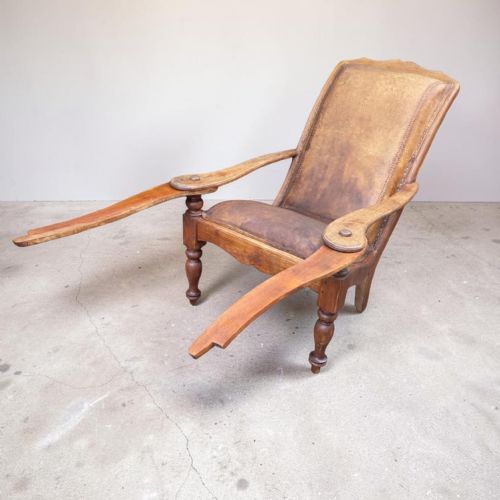
Several planters' chairs include extending arms originally designed for resting tired legs during colonial afternoons.
What varies in quality
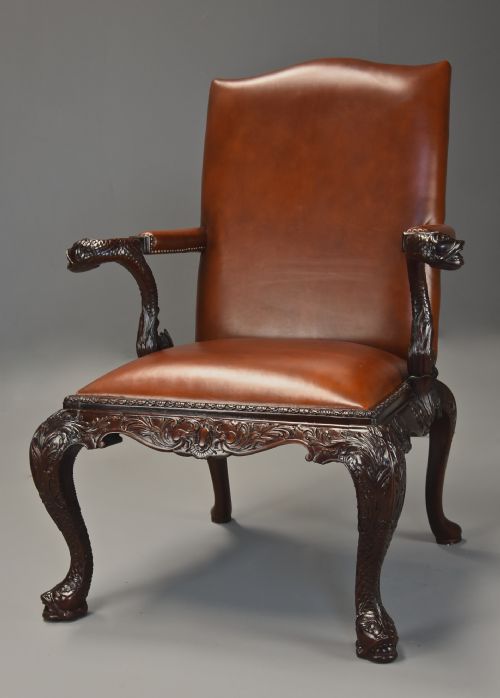
The distinction between ordinary and exceptional pieces lies in the choice of framing timbers, the depth of carving, and the proportion of the frame. Superior examples display dense hardwoods like figured mahogany or walnut alongside finely executed hand-carved woodwork.
The treatment and ageing of the hide significantly dictate the character and desirability of the seating. Rich hand-dyed finishes and deep buttoning reflect a higher standard of original craftsmanship compared to plain or heavily corrected surfaces.
Shoolbred
The Brown Leather Arm Chair Glossary
- Club armchair
- A deep, low-slung upholstered seat designed for relaxation, typically featuring rounded arms and substantial padding.
- Gainsborough chair
- An open-arm desk chair with a wide seat and padded back, popular during the eighteenth century and later revived.
- Bergere
- A closed-arm chair with a wooden frame where the sides are traditionally filled with cane or upholstery.
- Swivel desk chair
- A rotating office seat featuring an adjustable height mechanism, commonly mounted on a central wooden or metal base with castors.
Brown Leather Arm Chair: Frequently Asked Questions
How do I identify a Victorian desk chair?
Victorian desk chairs frequently utilise solid oak or mahogany frames paired with deep buttoned leather upholstery and revolving mechanisms. They often display robust proportions and heavier turned supports compared to lighter Edwardian or Georgian examples.
Many of these office seats include functional adjustments such as swivel actions and brass castors designed for daily workspace utility. Their dark wood patination and utilitarian construction clearly separate them from domestic lounge seating.
What is a club armchair?
A club armchair is a heavily upholstered low-slung seat built for deep comfort, traditionally wrapped in dark brown or cigar-coloured leather. These pieces emphasise relaxation through generous proportions and supportive armrests.
Originating as substantial lounge furniture, they often appear in pairs and feature rich patinated hides that show natural wear over decades of use.
Are revolving desk chairs adjustable?
Many antique revolving desk chairs feature mechanical height adjustment via a threaded spindle or iron screw mechanism beneath the seat. This allows the sitter to alter the vertical position to suit various desk heights.
The inclusion of swivel actions and castors made these chairs highly practical for nineteenth-century offices and libraries, combining mobility with sturdy hardwood frames.
How do I care for antique leather?
Antique leather benefits from regular dusting and occasional treatment with appropriate conservation balms to maintain flexibility. Avoiding direct sunlight and excessive heat prevents the hide from drying out and cracking over time.
Preserving the natural surface patination ensures the historical character of the leather remains intact for future generations to appreciate.