


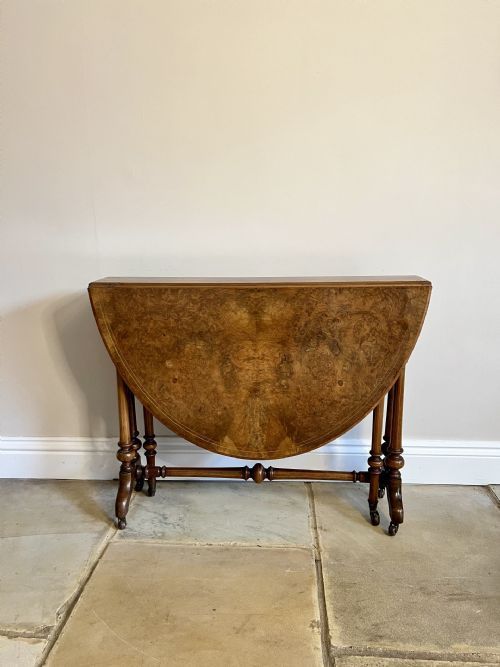
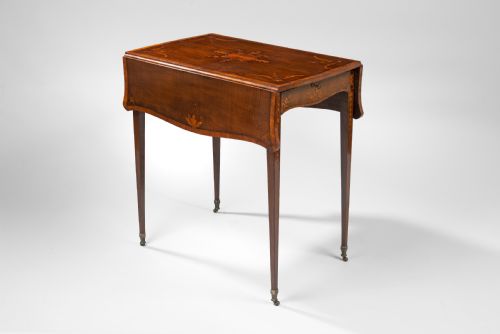
Brown Inlaid Drop Leaf Table
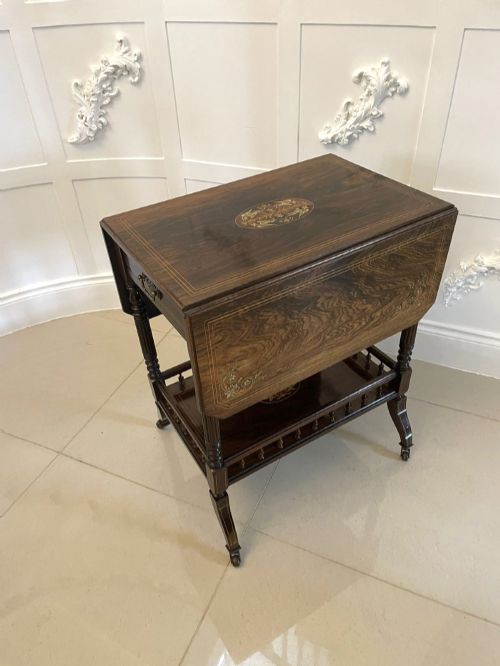
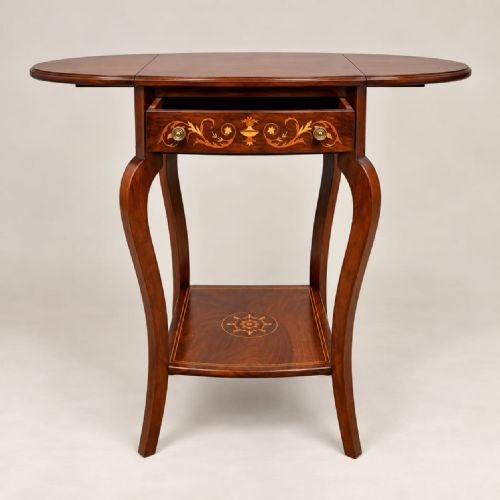
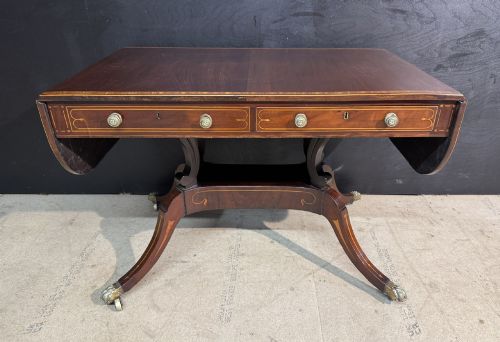
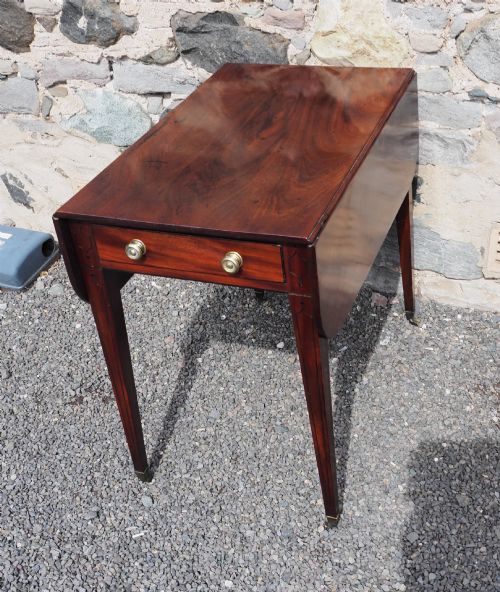
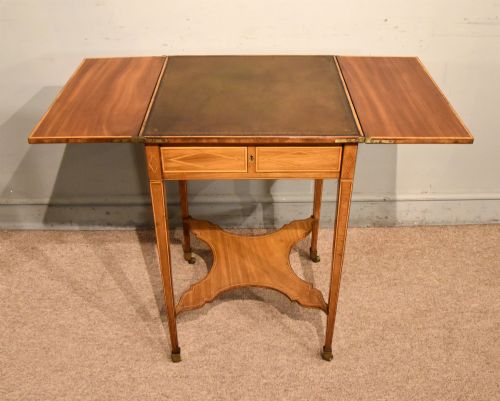
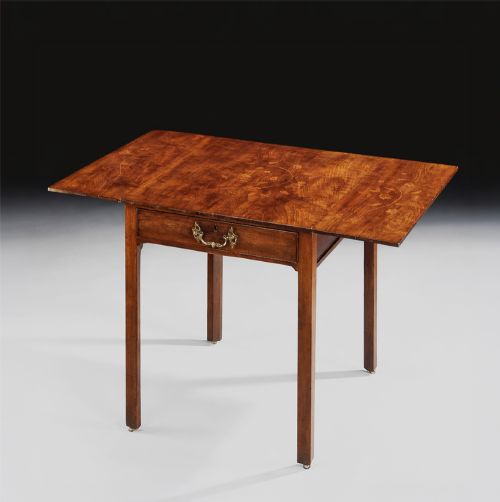
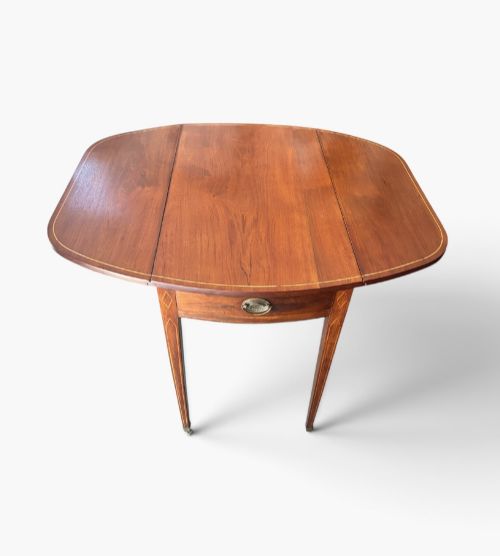
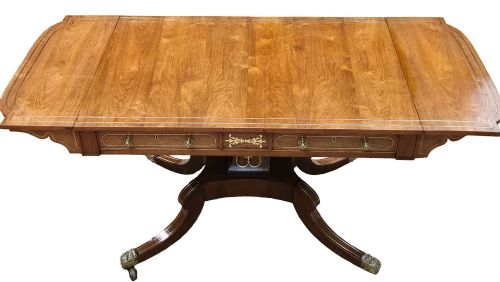
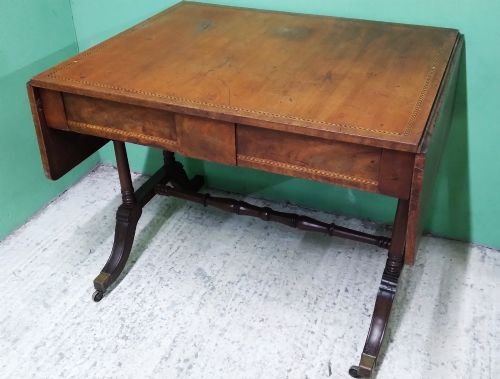
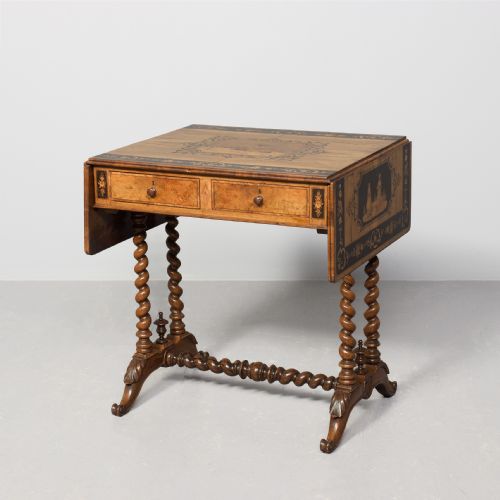
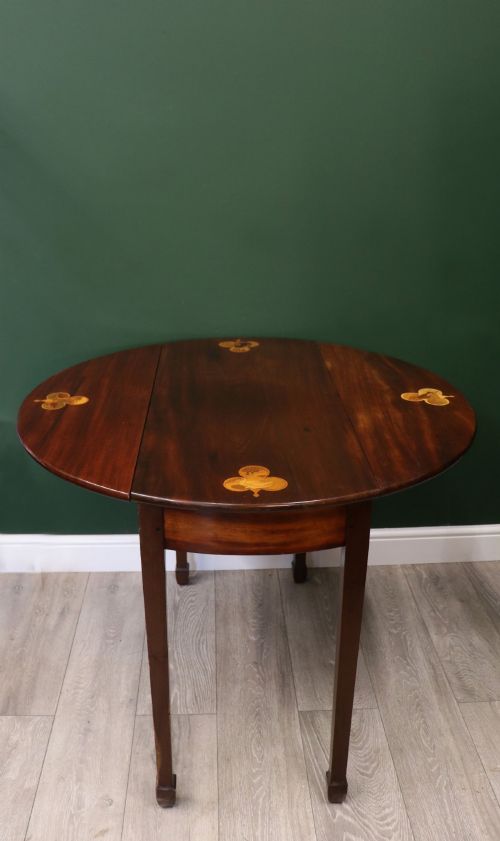
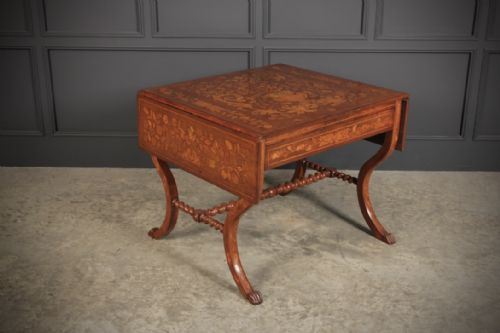
A brown inlaid drop leaf table offers folding flaps and decorative wood contrasting details, providing adaptable surface space with period character.
Brown Inlaid Drop Leaf Table
A brown inlaid drop leaf table combines drop leaves with contrasting timber inlays, appearing primarily in formats such as Pembroke tables, sofa tables, and Sutherland tables. These practical items surface across Georgian, Regency, Victorian, and Edwardian periods.
The materials span mahogany, rosewood, walnut, and burr walnut, accented with lighter contrasting woods. Pembroke tables and sofa tables dominate the selection, offering hinged leaves designed to expand surface area when required.
Construction and materials
Cabinetmakers utilised dense primary hardwoods like mahogany, rosewood, and walnut for the main structural elements and table tops. These timbers provided the stable dark background necessary for precise inlay work.
Inlays incorporated satinwood, boxwood, and harewood, cut into delicate geometric borders or floral marquetry motifs. Drop leaves were secured with brass hinges beneath the timber, allowing the flaps to fold smoothly down.
Some tables include hidden compartments or clever drop flaps designed purely for needlework gear.
Assessing craftsmanship and finish
Quality rests in the precision of the wood inlay and the selection of figured timber veneers. Superior examples display tight, seamless marquetry without gaps between the contrasting woods and the primary body.
The choice of cabinet timber dictates the tier of the piece, with burr walnut, harewood, and figured mahogany marking higher grades of production. Finer versions also feature well-figured grain matching across the drop leaves and stable structural joints.
The Brown Inlaid Drop Leaf Table Glossary
- Pembroke table
- A small table with two hinged leaves on opposite sides, popular during the eighteenth and nineteenth centuries. It usually includes one or more small drawers.
- Sofa table
- A long, narrow table designed to stand in front of a sofa, featuring drop leaves on either side. These tables often possess trestle feet or twin pillar supports.
- Sutherland table
- A narrow drop leaf table where the leaves comprise a large portion of the top, supported by swing-out legs when raised. They fold down extremely flat for storage.
- Marquetry
- Decorative patterns formed by inserting pieces of wood, veneer, or other materials into a wood foundation. This technique creates pictorial or geometric designs across the surface.
Brown Inlaid Drop Leaf Table: Frequently Asked Questions
How do I identify a Georgian drop leaf table?
Georgian examples typically display solid mahogany construction, restrained boxwood or satinwood stringing, and tapered or cabriole legs.
They emphasise structural proportion and understated timber figuring rather than the dense floral marquetry seen on later Victorian iterations.
Where should I place a sofa table?
A sofa table suits placement behind a sofa, against a hallway wall, or as a freestanding centre table in a reception room.
The drop leaves allow you to adjust the surface width depending on the available space in the room.
What woods are used in these tables?
Common primary timbers include mahogany, rosewood, walnut, and burr walnut, providing rich brown tones for the main body.
Inlays utilise lighter contrasting woods such as satinwood and boxwood to define borders, edges, and pictorial marquetry panels.