




Brown Footrest Stool
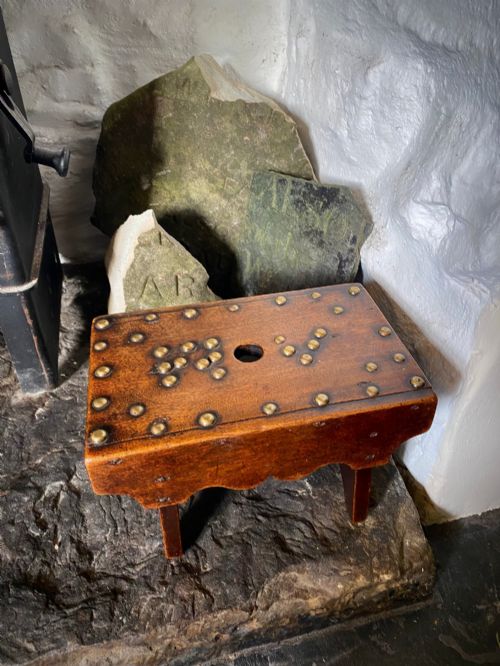
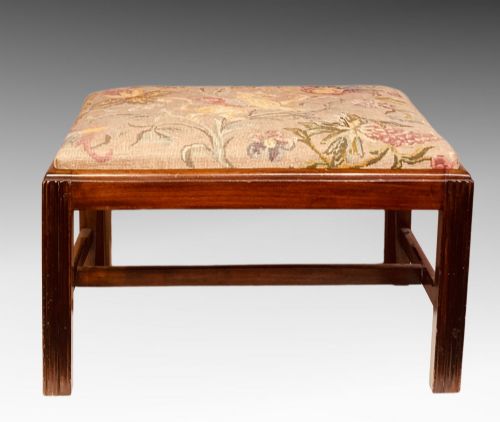
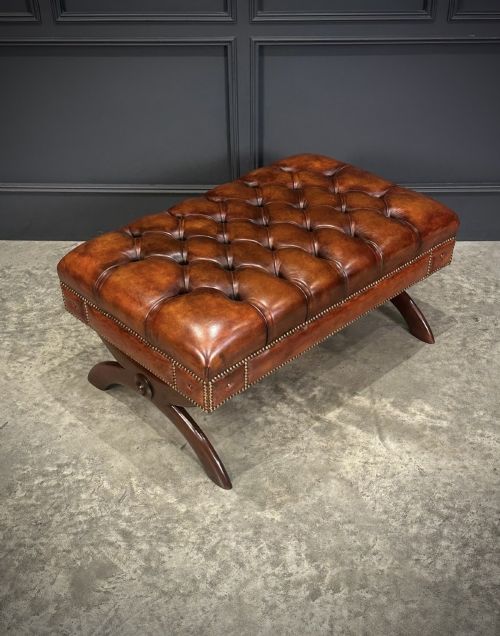
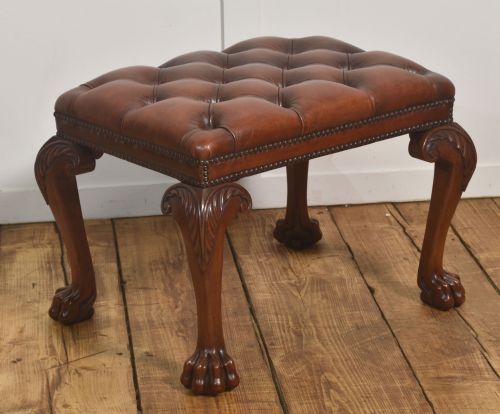
A brown footrest stool brings low-profile comfort and period craft to a room, ranging from buttoned leather to carved oak.
Brown Footrest Stool
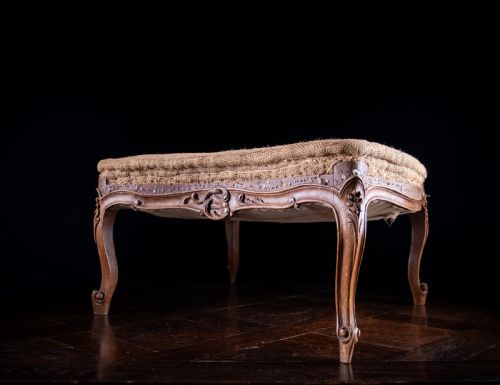
A brown footrest stool serves as a low seat or rest, appearing across periods from the eighteenth century through the Art Deco era. These pieces take the form of compact footstools, long ottomans, and dressing stools designed for fireside use or domestic repose.
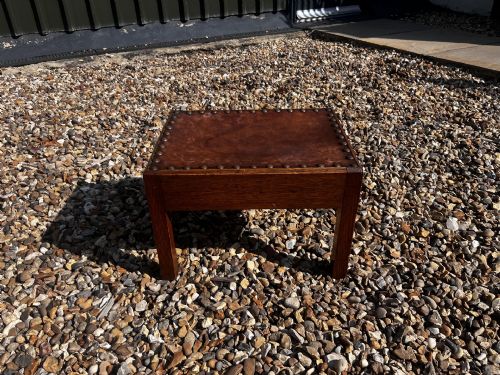
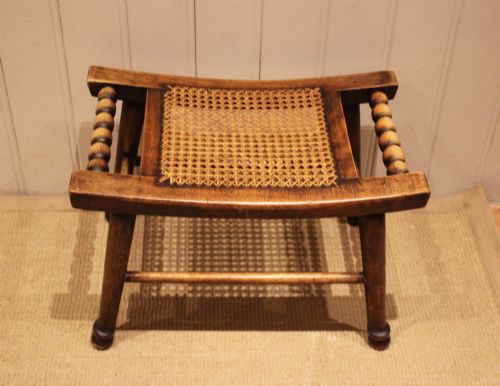
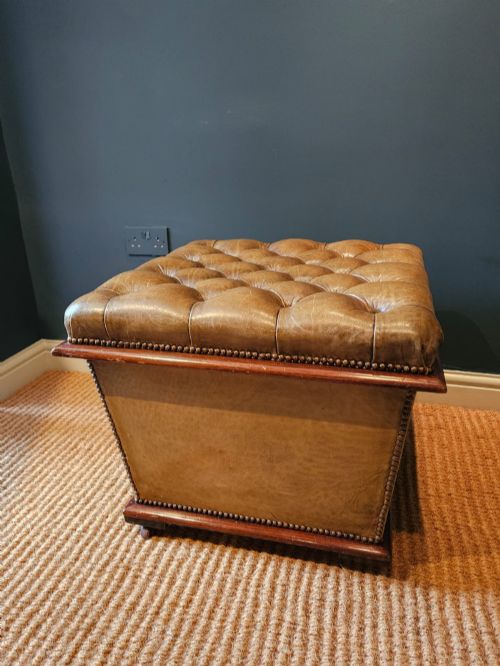
The most common examples encountered on this page date from the Victorian era and the early twentieth century, constructed in rich timbers like mahogany, walnut, and oak. Many incorporate upholstered tops in leather, tapestry, or woven cane.
The selection ranges from simple turned wood country items to polished period styles including Queen Anne, Chippendale, and Arts and Crafts designs. Form follows function closely, resulting in items built for daily utility rather than mere display.
Materials and construction
Cabinetmakers utilised hardwoods such as mahogany, walnut, and oak to build the structural frames, often employing traditional joinery and carved detailing. Beech and rosewood also appear, shaped into turned legs or curved profiles.
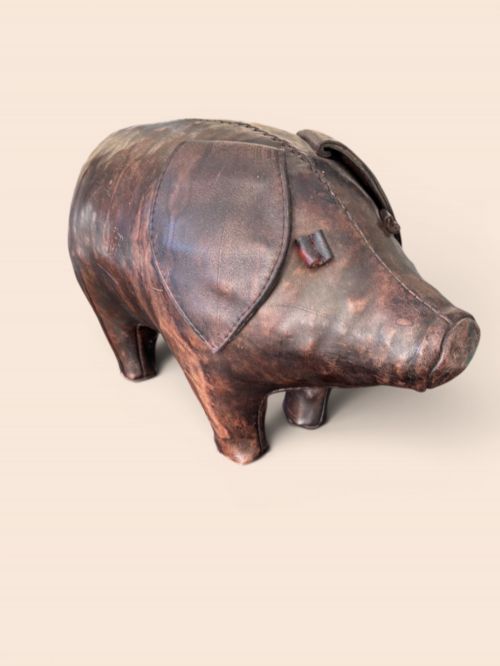
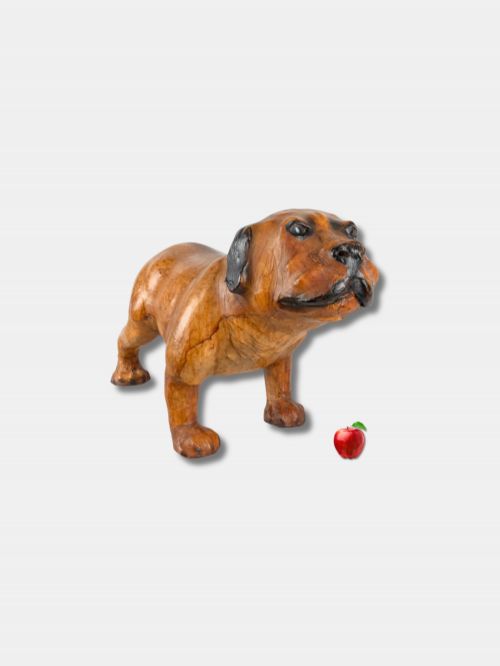
Upholstery methods define the upper surface, utilising hand-dyed leather, wool tapestry, fabric, and cane. Buttoning and animal forms, such as leather pigs and dogs, demonstrate specialised stuffing and stitching techniques.
Brown Footrest Stool Retail Price Guide 2026
Typical asking prices for brown footrest stool among the pieces listed under this phrase on Sellingantiques today, from the lower quarter to the upper quarter. They describe what is for sale here now, not the wider market.
Several leather animals by Omersa wait quietly on this page, serving as sturdy footstools disguised as pigs and dogs.
Assessing quality and execution
Quality rests upon the crispness of the timber carving and the integrity of the underlying frame construction. Superior examples show thoughtful proportion in the turned legs and precise jointing rather than hurried assembly.
The material chosen for the top alters the character of the piece, with hand-dyed leather and original woven cane carrying distinct textural merit. Finer stools retain their structural stability and period upholstery materials without undue compromise.
Arthur Simpson Of Kendal·Omersa Workshop·Liberty's·Arthur W Simpson·Simpson Kendall·Thonet
The Brown Footrest Stool Glossary
- Bergere
- A closed-frame upholstered armchair or stool with a wooden rim, frequently utilising woven cane panels. This technique provides a light, flexible seating surface.
- Ottoman
- A low upholstered seat or footstool lacking a back or arms, sometimes incorporating internal storage beneath the lid. These pieces serve multiple domestic seating and resting functions.
- Turned wood
- Timber shaped by rotation on a lathe to create cylindrical or spindle legs and stretchers. This process allows for decorative profiles on structural supports.
- Tapestry
- A form of heavy hand-woven textile featuring pictorial or geometric designs. It frequently appears as durable period upholstery on nineteenth-century footrests.
- X-frame
- A structural base formed by intersecting diagonal members resembling the letter X. This design provides both geometric stability and visual elegance to formal stools.
Brown Footrest Stool: Frequently Asked Questions
What is a brown footrest stool used for?
These low stools were traditionally placed before chairs and sofas to support the feet during quiet evening hours. They also functioned as movable seating near firesides and dressing tables.
Over time, larger versions evolved into ottomans capable of holding household items inside, combining resting utility with practical storage.
How do I identify the period of a wooden stool?
Dating relies on observing the timber species, leg profiles, and decorative vocabulary linked to specific eras. Eighteenth-century pieces often display walnut frames and subtle carving, while Victorian examples lean toward heavier rosewood and mahogany.
Early twentieth-century items frequently reveal Arts and Crafts simplicity or whimsical leather animal shapes characteristic of specific workshops.
Are leather footstools authentic to older periods?
Leather upholstery appears frequently across nineteenth- and early twentieth-century pieces, particularly in libraries, smoking rooms, and studies. Buttoned leather surfaces were prized for durability and ease of maintenance.
While some older frames received replacement leather during later restorations, period-appropriate hides remain entirely consistent with historical domestic use.
How do I care for a vintage wooden footstool?
Preserving the wood requires maintaining stable indoor humidity and avoiding direct exposure to strong sunlight or heat sources. Occasional application of suitable wax helps protect the finish of walnut and mahogany frames.
Leather tops benefit from gentle cleaning and conditioning to prevent cracking, while woven cane elements should be kept free of heavy pressure.