




Brown Floor Rug
When you search for a brown floor rug, you uncover tribal weaves, village carpets and flatweaves crafted from wool and natural dyes.
Brown Floor Rug
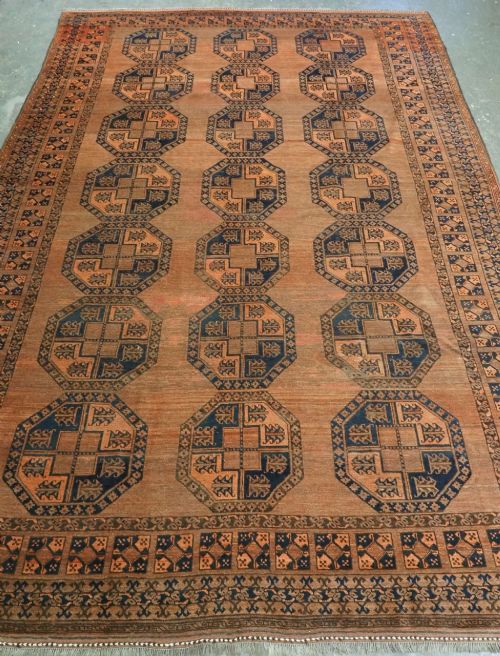
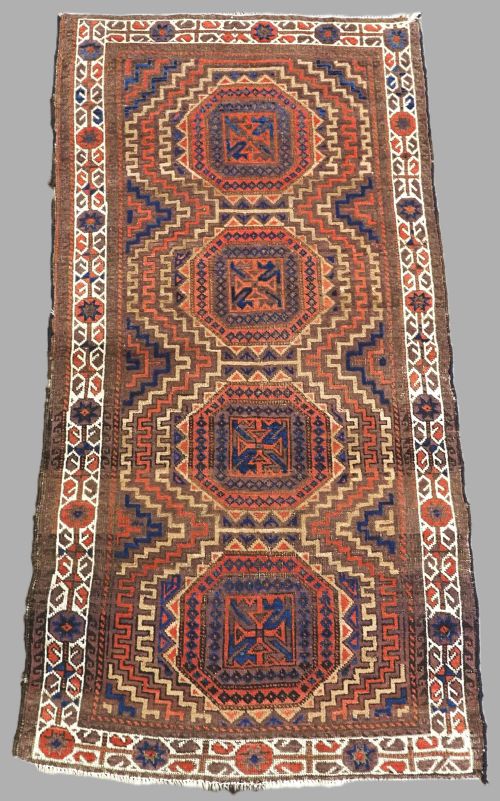
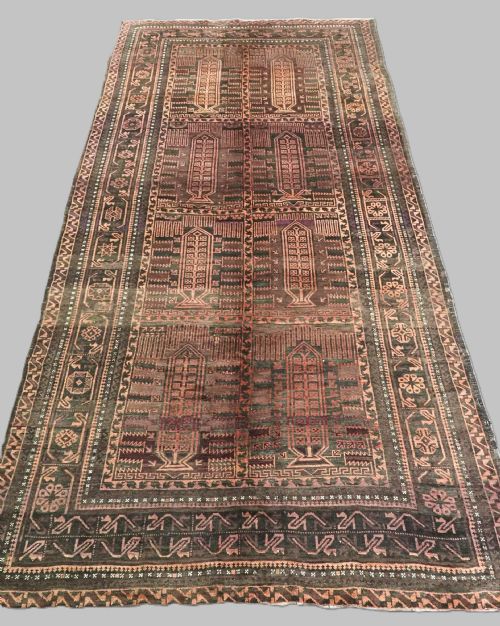
A brown floor rug brings together tribal carpets, village runners and flatweaves originating from Persia, Central Asia, Turkey and Ukraine. These pieces include major carpets, long tribal rugs and prayer formats woven across several decades spanning the late nineteenth and early twentieth centuries.
Buyers most frequently encounter tribal work associated with Baluch, Yomut Turkmen, Kurdish and Afghan weavers. These items often display repeating guls, lattice patterns or geometric motifs rendered in rich earth tones.
Materials and construction
The pieces rely primarily on wool, hand-spun wool, camel wool and cotton foundations, occasionally incorporating art silk or mercerised cotton in later examples. Weavers utilised natural dyes to achieve deep brown, red and ivory colour palettes.
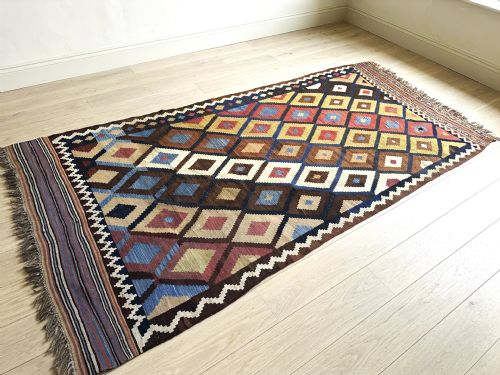
Construction methods range from pile weaving with symmetrical or asymmetrical knots to flatwoven kilim, soumak and palas techniques. Finer examples demonstrate tight structures and carefully beaten-down wool.
Brown Floor Rug Retail Price Guide 2026
Typical asking prices for brown floor rug among the pieces listed under this phrase on Sellingantiques today, from the lower quarter to the upper quarter. They describe what is for sale here now, not the wider market.
Listings span production dates from the 1870s through the 1930s, featuring wool, cotton, camel wool and natural dyes.
Evaluating craftsmanship
Quality rests in the handling of the wool, the clarity of the natural dye palette and the precision of the tribal motifs. Superior examples maintain intact original borders, dense knotting and supple foundations.
Weaker pieces suffer from structural distortion, heavy pile loss or chemical alterations that dull the natural tones. The most successful weaves balance rustic charm with disciplined geometry.
The Brown Floor Rug Glossary
- Gul
- A repeating medallion or octagonal motif characteristic of Turkmen and Central Asian tribal carpets. These motifs often signify specific tribal clans.
- Kilim
- A flatwoven carpet or rug produced without a pile by tightly interweaving warp and weft threads. This technique creates a lightweight textile with identical patterns on both sides.
- Soumak
- A flatweaving technique utilising a wrapping method that leaves coloured threads trailing on the reverse. It provides a thicker and more durable structure than standard kilim weaving.
- Prayer rug
- A small format rug featuring a mihrab or arch design indicating the direction of prayer. These pieces were historically used for daily devotion.
- Main carpet
- A large floor textile woven for domestic use within a tribal tent or household rather than for commercial export. These formats typically display complex repeating field designs.
Brown Floor Rug: Frequently Asked Questions
How do I choose the right size?
Consider the dimensions of your room and the intended placement of the furniture relative to the rug.
Smaller formats suit entryways and hearths, while larger runners and carpets anchor seating areas.
Where were these pieces made?
The inventory originates from regions across Central Asia, Persia, Turkey, the Caucasus and Eastern Europe.
Specific weaving groups include Baluch, Yomut Turkmen, Kurdish, Afghan and Ukrainian makers.
How should I clean my rug?
Vacuum gently without using a rotating brush roll to protect the wool pile and delicate foundation warps.
Professional specialist cleaning is recommended for antique textiles to prevent dye bleeding.
Are natural dyes easy to spot?
Natural dyes display subtle tonal variations and depth that chemical dyes rarely replicate.
Over time, organic colourants age gracefully, developing rich patinas across the wool.