


Brown Fabric Armchair
These brown fabric armchairs span periods from the Georgian era through to the twentieth century, offering comfortable seating with varied revival styles.
Brown Fabric Armchair
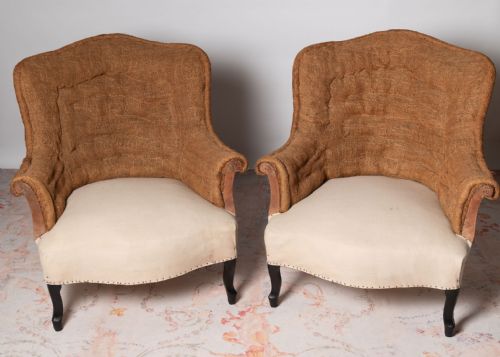
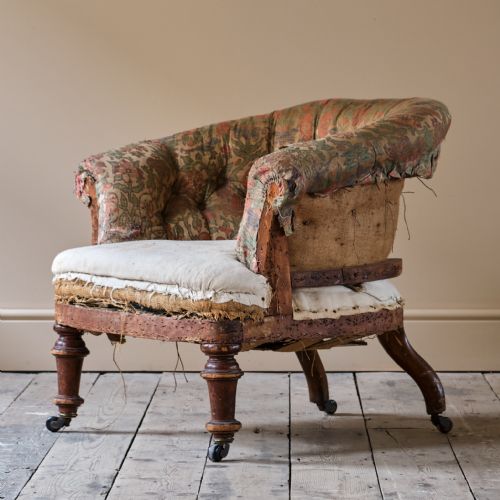
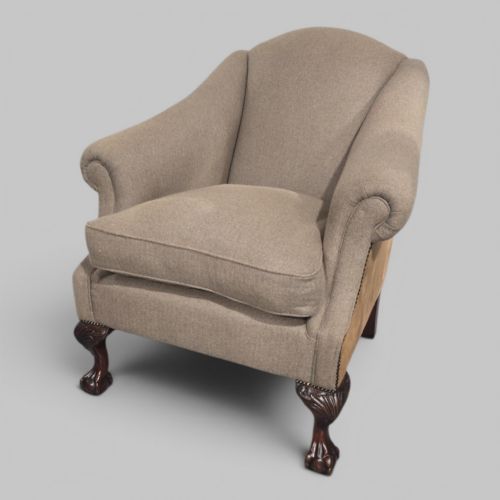
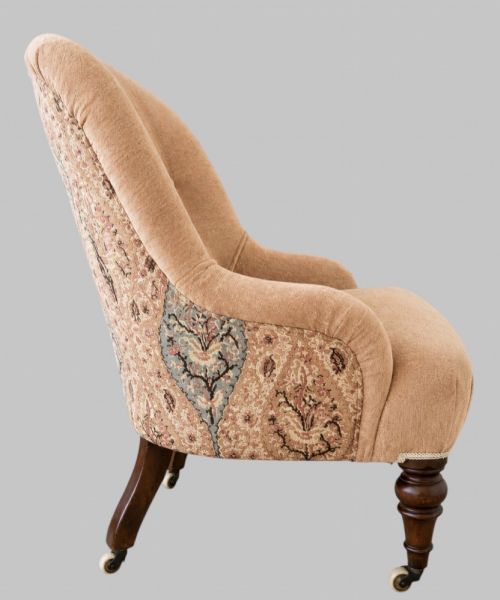
A brown fabric armchair is a seating form appearing across multiple periods including Victorian, Edwardian, and Georgian eras, often upholstered in textiles such as velvet, linen, calico, and hessian. The listings on this page include distinct forms like tub back armchairs, barrel back armchairs, wingbacks, and library desk chairs.
The wooden frames supporting these pieces utilise materials like mahogany, walnut, satinwood, oak, and teak, reflecting styles from Chippendale Revival and Sheraton Revival to Art Deco and French Country. Buyers encounter both single armchairs intended for fireside use and pairs originating from French and English workshops.
Materials and construction
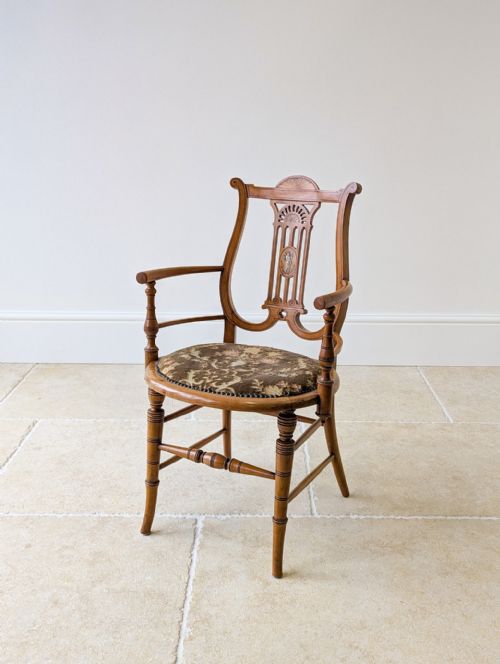
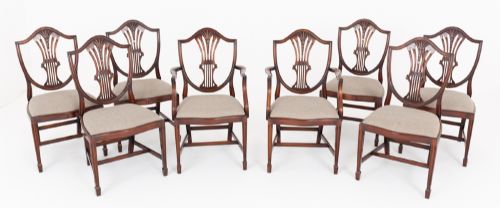
Frames rely on hardwoods such as mahogany, walnut, and oak, shaped into structural elements like shield backs, lyre backs, and tub frames. Joinery and carved details define styles spanning from Hepplewhite and Queen Anne to Carolean Revival and Art Nouveau.
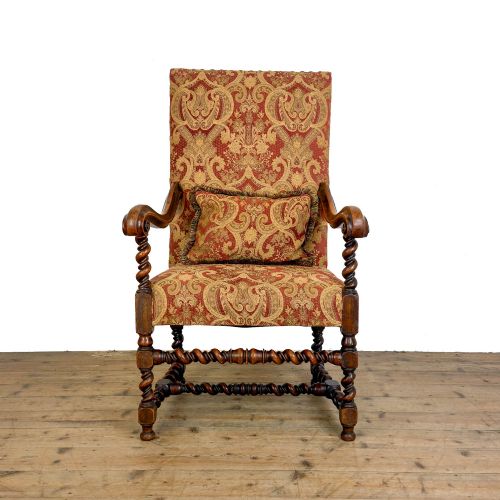
Upholstery relies on traditional fabrics including velvet, linen, calico, and hessian, occasionally paired with interior stuffing or button back tufting. Brass fittings and iron supports appear in specific desk and nursing chair configurations.
Certain Victorian nursing chairs arrived with iron backs specifically designed to keep sitters upright while holding infants.
Assessing quality and execution
Quality rests upon the crispness of the timber carving and the structural integrity of the mahogany, walnut, or oak frame. Finer examples display precise joinery and balanced proportions, particularly within revival pieces referencing earlier Georgian or Chippendale models.
The execution of the upholstery contributes significantly to the overall standard, distinguishing simple utilitarian seating from refined library or fireside armchairs. The integration of specialty fabrics like Robert Kime or Mulberry linen elevates the textile component of the piece.
Heals of London·Thomas Sopwith of Newcastle·Robert Kime·Robert Daws
The Brown Fabric Armchair Glossary
- Tub back armchair
- A chair featuring a continuous curved back and arms forming a rounded enclosure. This form provides enclosed comfort and appears frequently in nineteenth-century examples.
- Shield back
- A chair back shaped in the outline of a heraldic shield, commonly associated with late eighteenth-century designs and later revival pieces. It requires skilled woodworking to achieve the tapered frame.
- Hessian
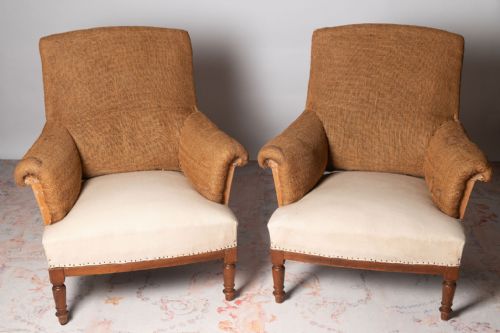
- A coarse woven fabric typically utilised as a foundational upholstery layer beneath outer textiles. It provides structural support within traditional seat construction.
- Gainsborough armchair
- A wide seat with an upholstered back and arms, standing on four legs, often associated with the mid-eighteenth century and later walnut reproductions. These chairs were designed for writing desks.
- Button back
- An upholstery technique where buttons are pulled deep into the padding to create a geometric pattern of diamonds. This method secures the filling while adding texture to the textile surface.
Brown Fabric Armchair: Frequently Asked Questions
How do I identify a library desk chair?
Library desk chairs generally feature sturdy mahogany or walnut frames with upholstered seats and backs designed for extended periods of reading or writing.
Many incorporate swivel mechanisms, brass castors, or low armrests to fit comfortably beneath a desk surface.
What upholstery fabrics are used?
Upholstery materials include velvet, linen, calico, hessian, and cotton, alongside designer textiles like Robert Kime and Mulberry linen.
Underneath the visible fabric, traditional pieces utilise foundational materials like hessian to support the internal padding.
Are these chairs sold in pairs?
While many pieces are available individually for fireside or bedroom use, several listings include pairs originating from French and English workshops.
Dining and desk chairs also appear in larger matched sets of seven or eight pieces.
How do I live with an antique armchair?
These armchairs fit into sitting rooms, studies, and bedrooms as functional seating that brings historical texture to modern interiors.
Placing them away from direct sunlight protects both the wooden frames and the fabric upholstery from fading.