
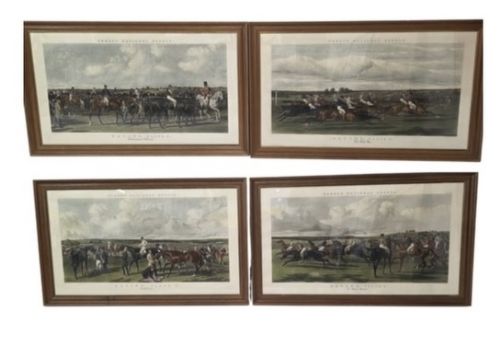
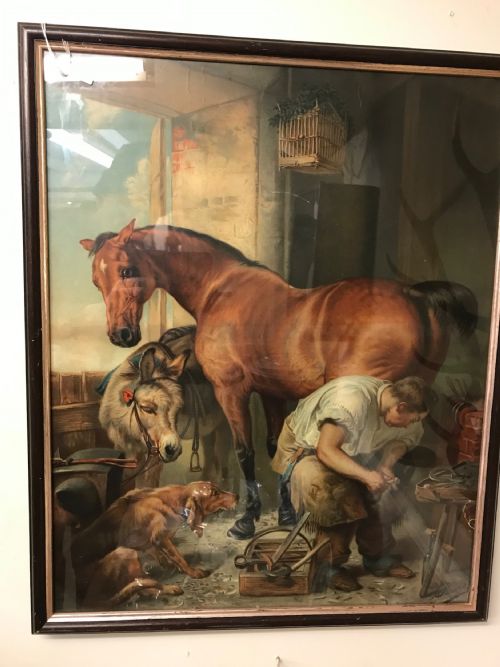
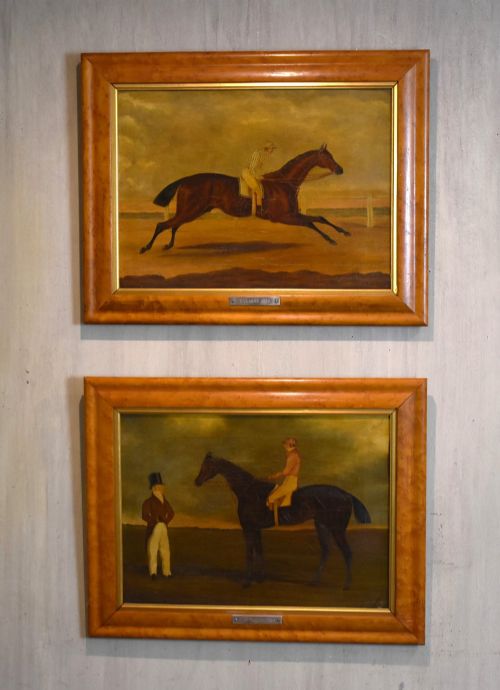


Brown Equestrian Prints
Brown equestrian prints bring the energy of the hunting field and the racecourse into a room through rich monochrome tones and warm washes.
Brown Equestrian Prints
Brown equestrian prints encompass framed works celebrating horses, riders, and rural sporting life through centuries of British tradition. When searching for brown equestrian prints, buyers encounter everything from early copper engravings and hand-coloured lithographs to mid-century watercolours and oils.
The material palette relies heavily on paper, ink, and watercolour, housed within oak, wood, or gilt wood frames under glass. These pieces span periods from the Georgian era through Victorian times into the twentieth century, reflecting shifting tastes in British sporting art.
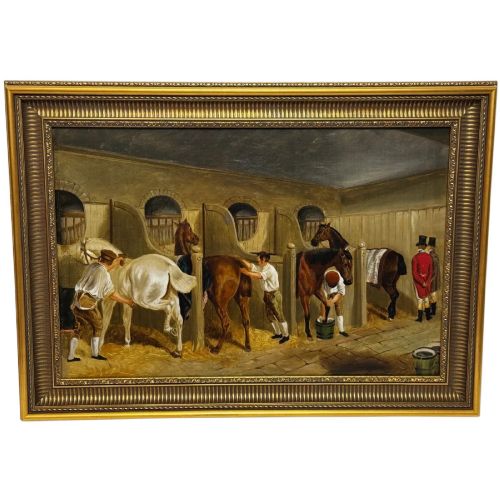
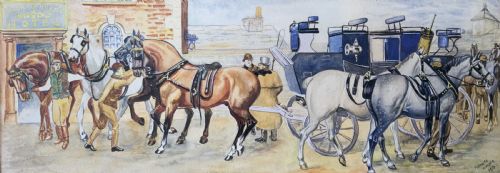
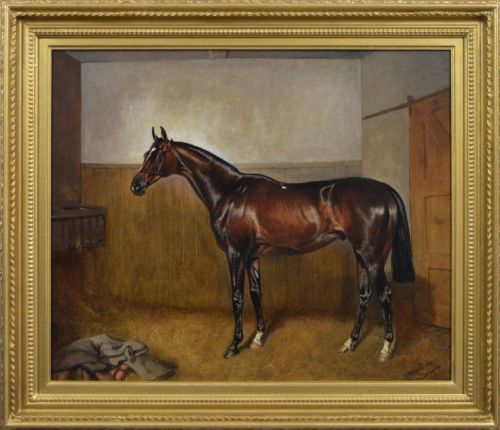
Framed prints and paintings dominate the selection, offering subjects ranging from racehorse portraits and hunting scenes to coaching days and military subjects. Each piece captures a distinct moment in equine history, rendered in sepia, ink, and muted earth pigments.
Materials and Techniques
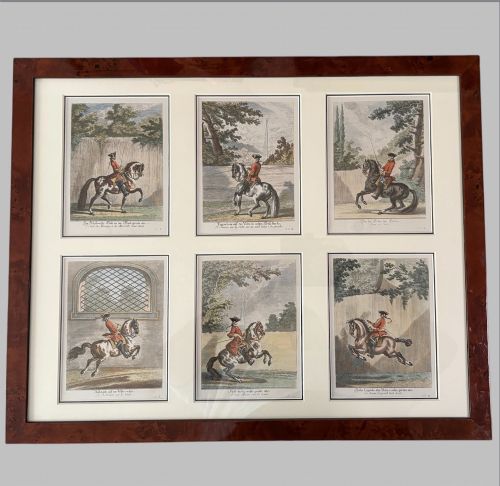
Makers utilised copper plates, lithographic stones, and woodblocks to transfer detailed images onto paper, often finishing plates with hand-applied watercolour washes. Engravers and lithographers worked closely with artists to capture the muscle and movement of galloping horses.
Framing materials traditionally involved solid oak, carved wood, or gilt surrounds, protecting the fragile paper underneath with glass. Ink and watercolour dominate the visual medium, providing the characteristic brown and sepia tones that define the genre.
Materials recorded across the inventory include paper, glass, wood, ink, gilt wood, canvas, and watercolour.
Distinctions in Quality
Quality rests upon the crispness of the plate impression, the fidelity of the hand-colouring, and the original condition of the paper. Early copper engravings by master printmakers show a depth of line that later mechanical reproductions lack.
The integrity of the framing and the presence of signatures or period inscriptions add substantial weight to a piece. Works by recorded sporting artists command attention for their anatomical accuracy and balanced composition.
Ridinger·John Alfred Wheeler·Edwin Henry Landseer·John Frederick Herring Snr·John Rattenbury Skeaping·Alken·Snaffles·Tom Carr·Victor Adam·George Morland·John Atkinson
The Brown Equestrian Prints Glossary
- Aquatint
- An intaglio printmaking technique that produces areas of tone resembling watercolour washes. It allows artists to achieve subtle gradients of brown and grey.
- Mezzotint
- A printmaking process of the dry-point method where the copper plate is roughened to achieve rich dark tones. This technique yields deep, velvety brown impressions.
- Hand-coloured
- A print finished with watercolour or ink applied by hand after the mechanical printing process. This adds individual character and colour variation to each sheet.
- Lithograph
- A planographic printing method using a stone or metal plate on which the image area is greasy. It enables fluid lines suited to capturing horses in motion.
- Sporting Art
- Genre of fine art depicting bloodsports, racing, coaching, and animal portraits. It forms the core context for equestrian imagery.
Brown Equestrian Prints: Frequently Asked Questions
How do I date an old equestrian print?
Dating relies upon paper characteristics, printing techniques, and framing methods typical of specific eras like the Georgian or Victorian periods. Typographical styles in captions and signatures also provide clear chronological markers.
Examining the backboards and fixings often reveals further clues regarding the age of the framing assembly.
Are these prints original or reproductions?
The selection includes original period engravings, lithographs, and unique watercolours or oil paintings created in the eighteenth, nineteenth, and twentieth centuries. Close inspection under magnification reveals the ink penetration and plate marks characteristic of period printing.
Modern mass reproductions lack the paper ageing and impression depth found in genuine antique works.
How should I hang and light these artworks?
Paper works require placement away from direct sunlight to prevent the fading of brown inks and watercolours over time. Consistent indoor humidity protects both the paper substrate and the antique wooden or gilt frames.
Low-heat LED picture lights or ambient room lighting highlight the fine details without damaging the pigments.
What subjects are most common in sporting prints?
Common subjects include racehorse portraits with jockeys, fox hunting scenes, coaching inns, and military subjects involving horses. Artists frequently captured specific named winners and famous sporting characters of the day.
These themes reflect the central role of horses in British rural and social life across past centuries.