
Brown Equestrian Art
Brown equestrian art gathers centuries of oil paintings, watercolours and framed prints celebrating horses, stables and riders.
Brown Equestrian Art
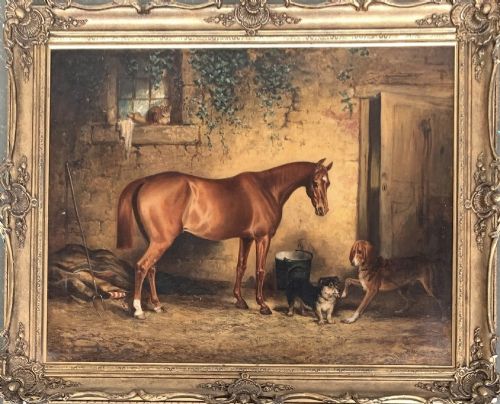
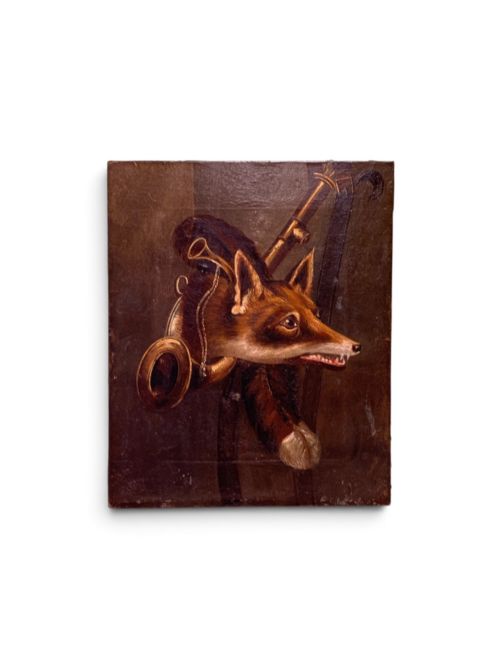
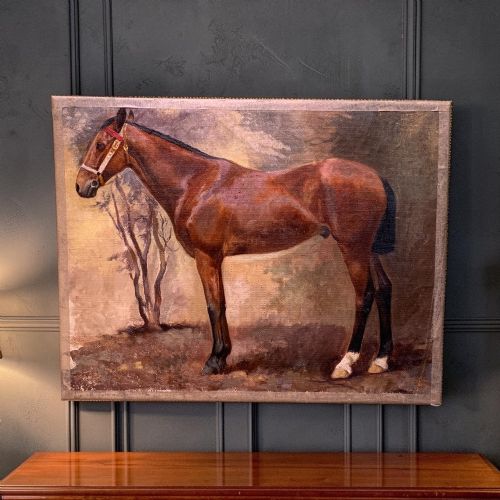
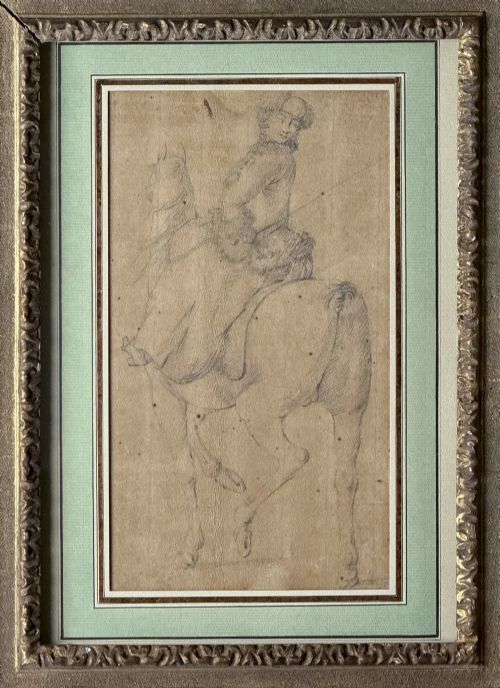
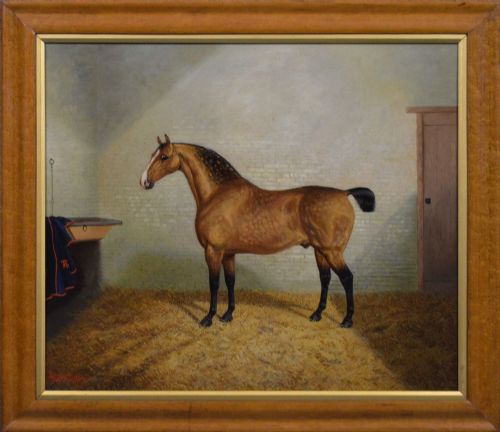
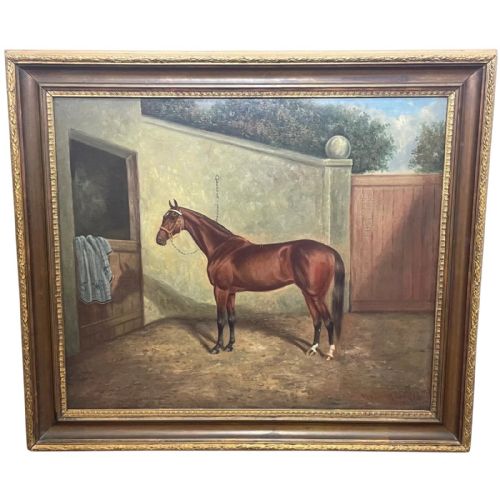
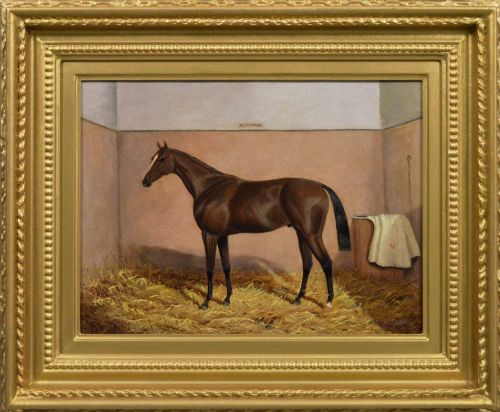
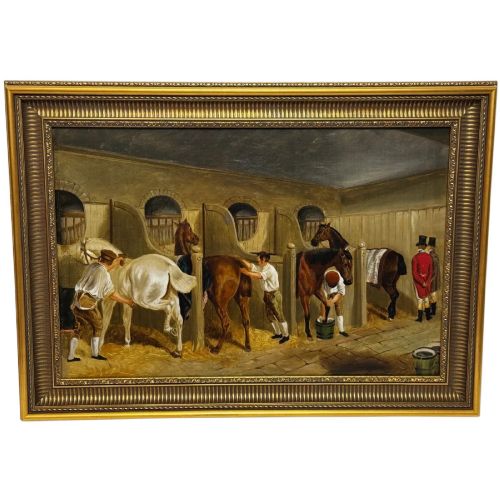
Brown equestrian art encompasses paintings, drawings and prints focusing on horses, racing and hunting scenes. Pieces span from the eighteenth century through the Victorian era into mid-century modern works.
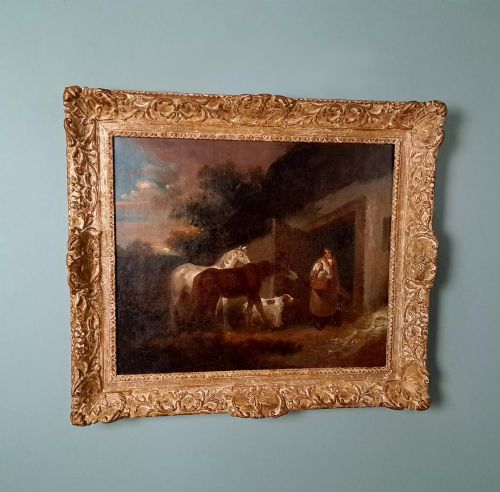
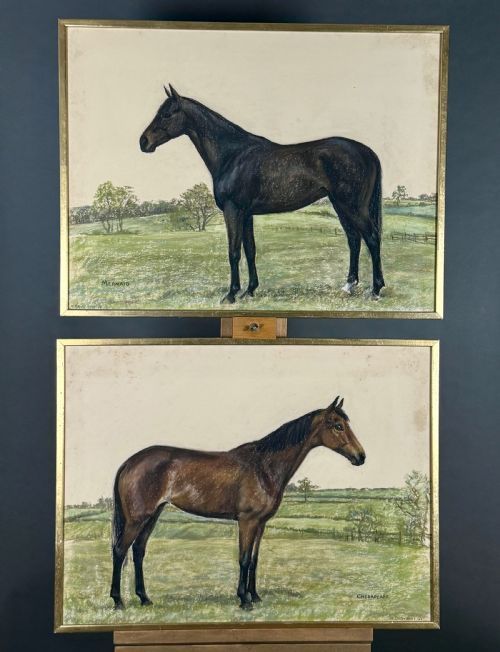
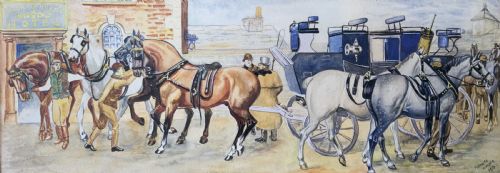
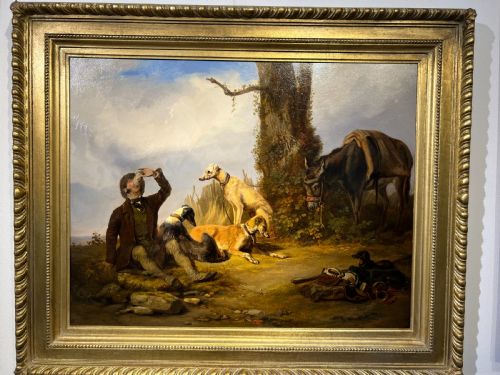
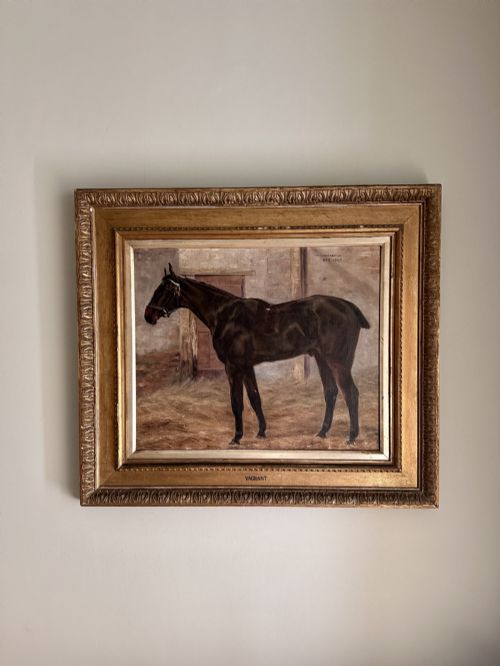
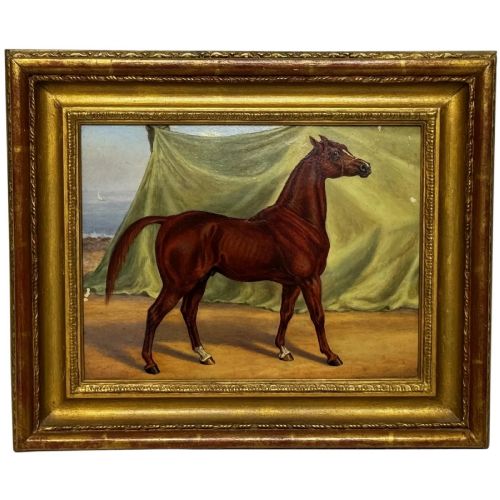
Oil paintings dominate the selection, often presented in gilt wood frames alongside watercolours, pastels and copper engravings. Subject matter ranges from individual portraits of named racehorses in stables to broader coaching and rural scenes.
Materials and methods
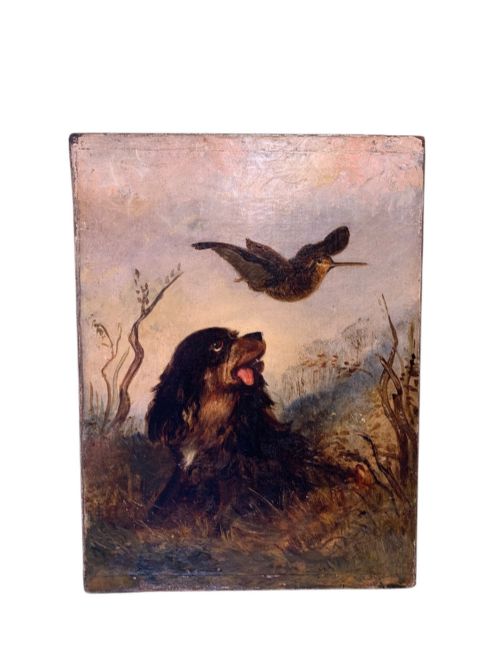
Artists painted primarily in oil on canvas or panel, layering pigment to capture the musculature and coats of horses. Paper supports accommodated watercolours, pastels, chalk drawings and hand-coloured copper engravings.
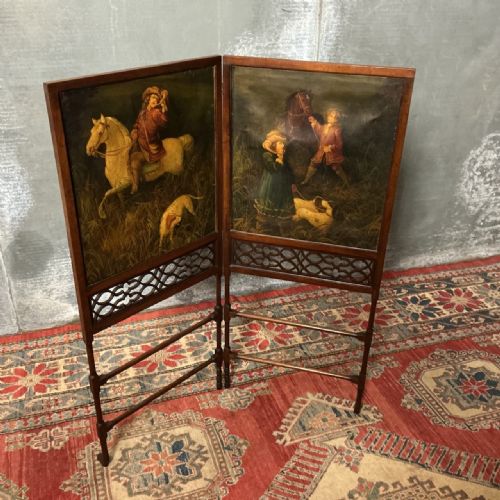
Frames utilise wood, including gilt varieties, walnut and mahogany, sometimes housing set screens or multi-part arrangements.
Listings feature works executed in oil paint, watercolour and pastel on canvas, paper and wood.
Evaluating the pieces
Quality rests upon the artist's ability to render equine anatomy accurately and convey the individual character of the animal. Named makers and documented provenance elevate specific studies above anonymous works.
The condition of the canvas, paper support and original framing elements influences the overall integrity of each piece.
William Joseph Shayer Senior·Albert Clark·Sir Edwin Henry Landseer·Henry Barraud·John Ferneley Senior·John Rattenbury Skeaping
The Brown Equestrian Art Glossary
- Equestrian study
- A preparatory drawing or finished work focusing on the form and movement of horses. These pieces frequently capture animals in stables or during racing.
- Oil on canvas
- Pigment suspended in drying oil applied to stretched woven fabric. This medium allowed artists to achieve rich depth and texture in animal portraits.
- Copper engraving
- A printmaking technique where an image is incised into a copper plate with a burin. Impressions are then transferred onto paper.
- Gilt wood
- Timber treated with gold leaf or metallic paint to create a reflective surface. Frames finished this way were standard for formal nineteenth-century portraits.
Brown Equestrian Art: Frequently Asked Questions
What periods do these pieces cover?
The selection spans from the eighteenth century through the Victorian and Edwardian periods into the mid-twentieth century.
Works reflect changing artistic styles across these centuries while maintaining a central focus on horses and rural sports.
Are these works signed by artists?
Many pieces feature signatures, dates or attribution to specific painters and draughtsmen from British and European schools.
Other works remain anonymous or represent output from specific regional workshops and schools of art.
How should I hang framed oil paintings?
Oil paintings require stable indoor environments away from direct sunlight and excessive moisture fluctuations to protect the canvas and wooden frame.
Secure wall fixings suited to the weight of gilt wood or heavy timber frames ensure safe display.
What mediums are used in these works?
Makers utilised oil paint, watercolour, pastel, chalk and ink across canvas, wood panels and paper supports.
Prints include hand-coloured copper engravings and period photographic processes like Pears prints.