


Traditional Sporting Prints
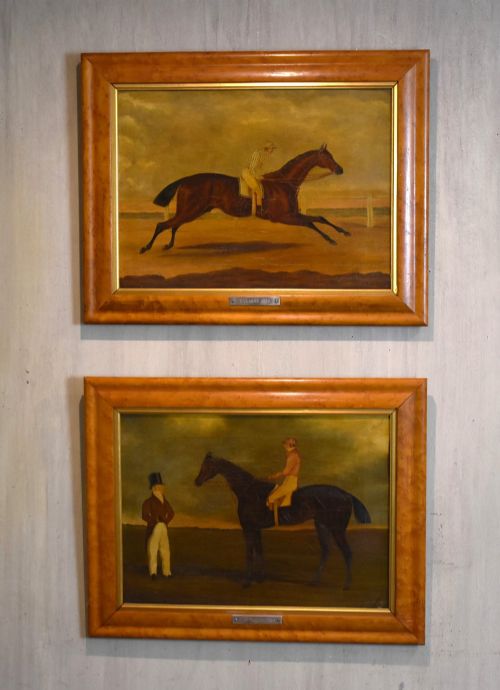
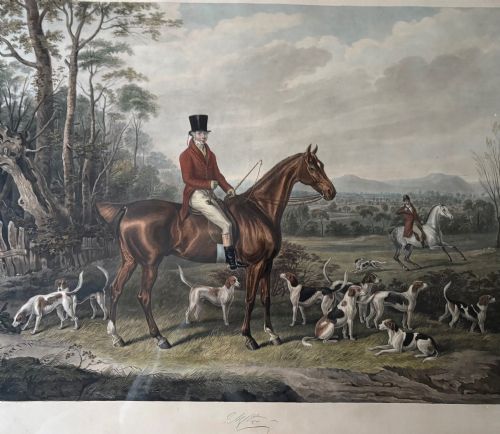
Traditional sporting prints capture the speed of the racecourse and the field, framed for the wall to bring equestrian and hunting history indoors.
Traditional Sporting Prints
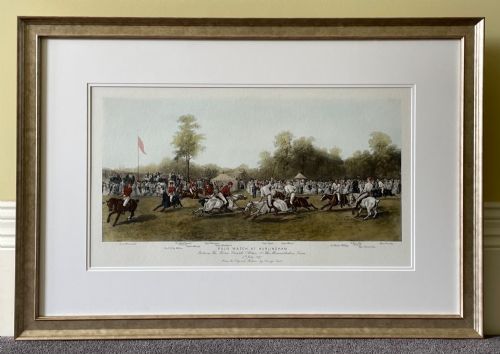
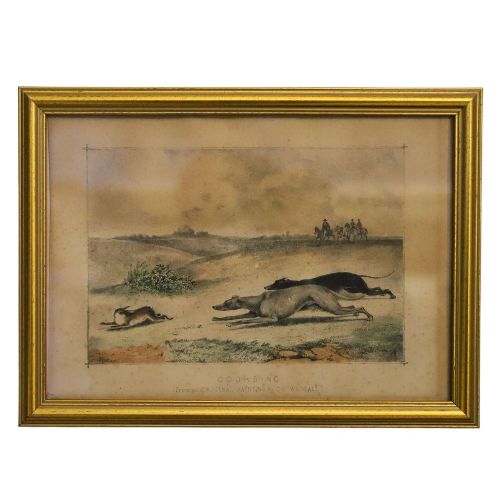
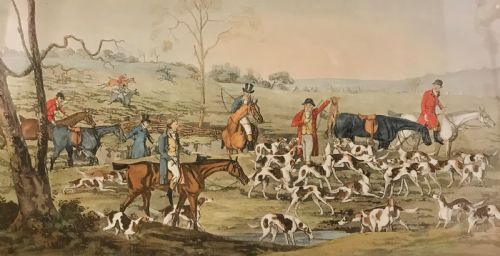
Traditional sporting prints document the heritage of British field sports, racing, and equestrian pursuits across centuries. Buyers encounter framed prints, lithographs, and engravings depicting fox hunting, horse portraits, and polo matches. These works originate from the Georgian, Victorian, and Edwardian periods, reflecting the visual culture of past sporting life.
The selection ranges from single framed works to complete sets of four depicting hunting sequences or shooting scenes. Many pieces translate the work of notable painters through printmaking techniques, whilst others are original watercolours or oils. They serve as historical records of notable horses, jockeys, and hounds.
Materials and techniques
Makers utilised paper as the primary medium for engravings, lithographs, and aquatints, often applying hand colouring with watercolour pigments. Ink transferred the detailed lines of horses and riders from etched plates or lithographic stones onto the sheet. Many examples employ gilt wood frames and glass protection to preserve the delicate paper surfaces.
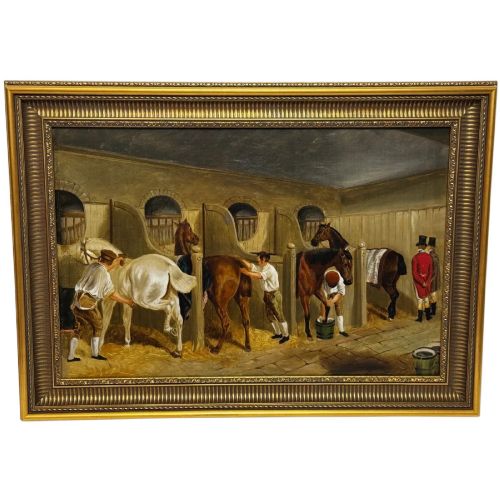
Oil paintings and watercolours on canvas or paper form part of the wider visual record alongside printed works. Publishers issued these plates individually or in sets, sometimes accompanied by eglomise glass decoration or housed in traditional frames.
The inventory records popular subjects including fox hunting, racehorses like Diamond Jubilee, and polo matches at Hurlingham.
Factors that distinguish quality
The clarity of the impression and the precision of the hand colouring separate superior plates from standard examples. Early strikes from plates before wear show sharper lines and greater detail in the figures of horses and riders. The vibrancy of the original ink and the skill of the colourist directly influence the visual impact.
Condition of the paper, absence of heavy foxing, and the presence of period framing contribute to the standing of a piece. Complete sets matched by publisher and date hold greater consistency than assembled collections. The reputation of the artist and the printmaker guides the distinction between common decorative plates and sought-after works.
C. H. Weigall·John Frederick Herring Snr·Charles Faulkner·Alfred Wheeler·John Atkinson·Isaac Cullin·Charles Johnson Payne Snaffles·Francis Calcroft Turner·Sam Howitt·Frank Algernon Stewart
The Traditional Sporting Prints Glossary
- Lithograph
- A planographic printmaking process using a stone or metal plate. This technique allows fine tonal gradations and fluid lines.
- Aquatint
- A intaglio printmaking technique that produces areas of tone resembling watercolour washes. It was frequently used for sporting scenes to create atmospheric backgrounds.
- Engraving
- A method of cutting design lines directly into a metal plate with a burin. The resulting prints exhibit precise, crisp outlines.
- Eglomise
- A process of applying cold gilding and painting to the rear face of glass. This creates a reflective, decorative border often seen on antique frames.
- Chromolithograph
- A colour lithographic technique using multiple stones to build up complex hues. It produced vibrant reproductions of paintings in the later period.
Traditional Sporting Prints: Frequently Asked Questions
What periods do traditional sporting prints cover?
The works span from the Georgian era through the Regency and Victorian periods into the Edwardian age and the mid-twentieth century. Most items date from the nineteenth century when sporting art production reached its peak.
Publishers and artists captured changing fashions in riding attire and the specific bloodlines of famous racehorses across these decades.
How were these prints displayed originally?
Gentlemen hung them in libraries, dining rooms, and hallways of country houses to celebrate victories on the turf and field sports. They often appeared in matched sets of four to tell a sequential story of a hunt.
Framing with glass protected the paper from soot, smoke, and moisture in coal-heated rooms.
Are these pieces original antiques?
The selection includes original nineteenth-century engravings, hand-coloured lithographs, and period watercolours created by contemporary artists. Dates range from the eighteenth century to the mid-twentieth century.
Each listing specifies the period of creation and whether the work is a primary print or a later reproduction.
How do I care for framed paper prints?
Keep paper works out of direct sunlight to prevent the fading of hand-applied watercolours and printing inks. Maintain stable humidity levels to protect the paper substrate and prevent the growth of mould.
Ensure the backing board and framing materials are stable and acid-free where possible.