


Antique Jockey Artwork
These antique jockey artwork pieces capture the history of racing through oils, prints and engravings that bring British turf heritage straight to your wall.
Antique Jockey Artwork
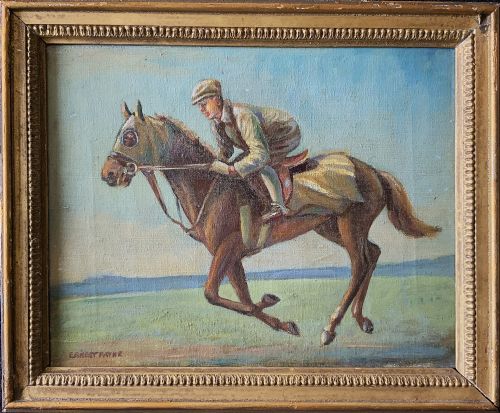
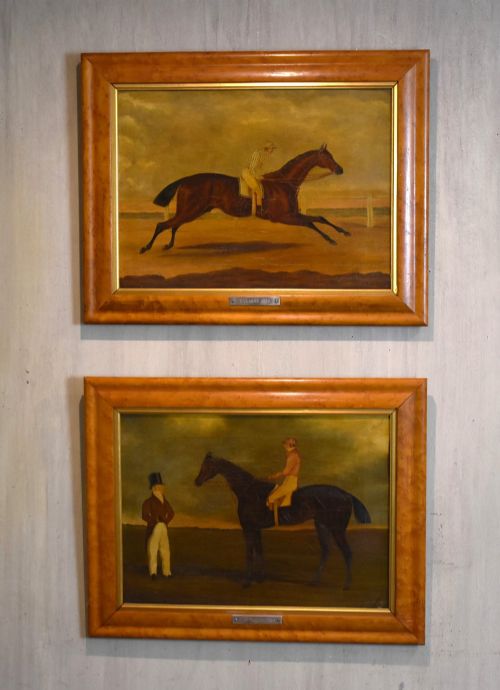
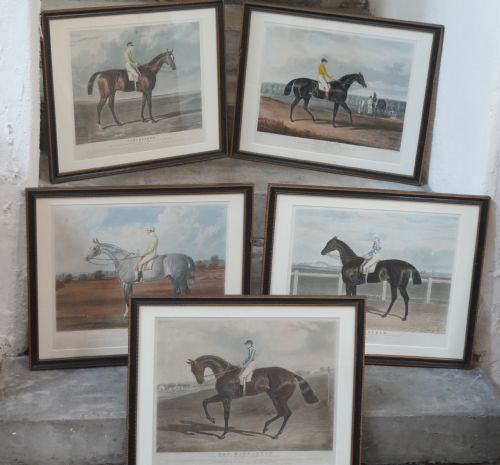
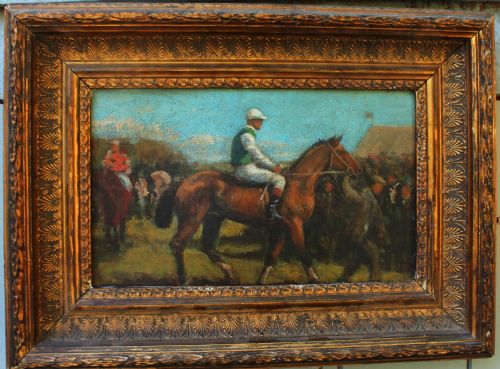
When searching for antique jockey artwork, collectors look for historical depictions of horse racing on paper, canvas and wood. The selection ranges from Georgian prints to Victorian oils and early twentieth-century studies.
Oil paintings and framed prints form the core of this group. Many feature named racehorses and famous jockeys such as Fred Archer or Danny Maher in period colours.
Works span styles from nineteenth-century sporting art and equestrian realism to British impressionism. They record notable runners like Persimmon and Diamond Jubilee alongside everyday racing scenes.
How they were made
Makers utilised oil paint on canvas and wood panels to build rich textures and deep tones. Others applied ink on paper for detailed engravings, aquatints and chromolithographs.
Framed works often utilise gilt mouldings under glass to protect delicate paper prints and water-damaged surfaces. Canvas works display visible brushstrokes from studies and finished portraits alike.
The listings span from Georgian times through the Victorian era into the early twentieth century, utilising oil, canvas, paper and glass.
What varies in quality
The standard of antique jockey artwork rests upon the skill of the artist in capturing the muscle structure of the horse and the posture of the rider. Pieces attributed to accomplished painters command greater attention than anonymous works.
Condition plays a part in the overall merit of each item. Original frames, clean paper without foxing and stable paint layers separate superior examples from worn specimens.
Ernest Payne·John Frederick Herring Snr·Alfred Munnings·Alfred Wheeler·John Atkinson·Isaac Cullin·Snaffles·John Parker Davis·Frank Giggs
The Antique Jockey Artwork Glossary
- Aquatint
- An intaglio printmaking technique that produces tonal areas resembling watercolours. It creates soft gradients often seen in nineteenth-century racing plates.
- Chromolithograph
- A multicoloured planar lithographic print produced without hand colouring. This method allowed vibrant reproduction of racing scenes.
- Engraving
- A print made by cutting lines into a metal plate with a burin. It offers fine, crisp details suitable for early racehorse portraits.
- Oil study
- A preliminary painting executed quickly to capture light and movement before a final canvas. These retain spontaneous brushwork.
- Gilt
- A gold leaf or gold paint finish applied to wooden frames. It adds reflective warmth around the artwork.
Antique Jockey Artwork: Frequently Asked Questions
How do I date antique jockey artwork?
Examine the paper quality, framing style and clothing worn by the jockeys. Inscribed names of horses and riders often point to specific race years.
Primes and prints from the Georgian and Victorian eras carry distinct printing technologies and typography. Comparing the signature to known active dates of the artist also helps fix the timeline.
Were these pieces displayed in homes originally?
Owners of racehorses and turf enthusiasts hung these portraits in country houses and clubs. They commemorated victories and celebrated favourite thoroughbreds.
Print series also circulated widely among the wider public who followed the racing calendar through sporting journals and portfolios.
How should I hang oil paintings on canvas?
Keep canvas works away from direct sunlight and damp walls to protect the oil paint and wooden stretchers. Stable indoor temperatures prevent cracking of the pigment.
Use secure picture hooks rated for the weight of the frame. Ensure the wall brackets anchor firmly into masonry or studs.
What is the difference between an engraving and a painting?
Engravings are printed impressions pulled from a carved metal plate, allowing multiple identical copies. Paintings are unique handmade works created directly with brush and pigment.
Prints often show fine hatched lines under magnification, whilst paintings display layered brushstrokes and varied paint thickness.