

Brown Elm Wood Chairs
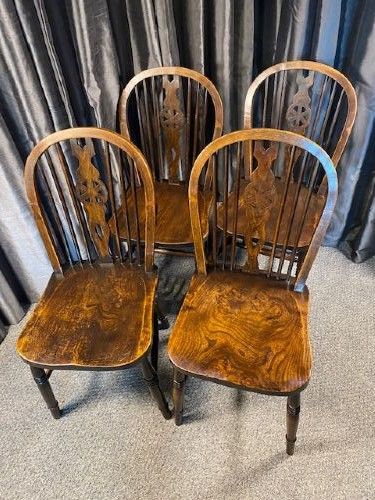
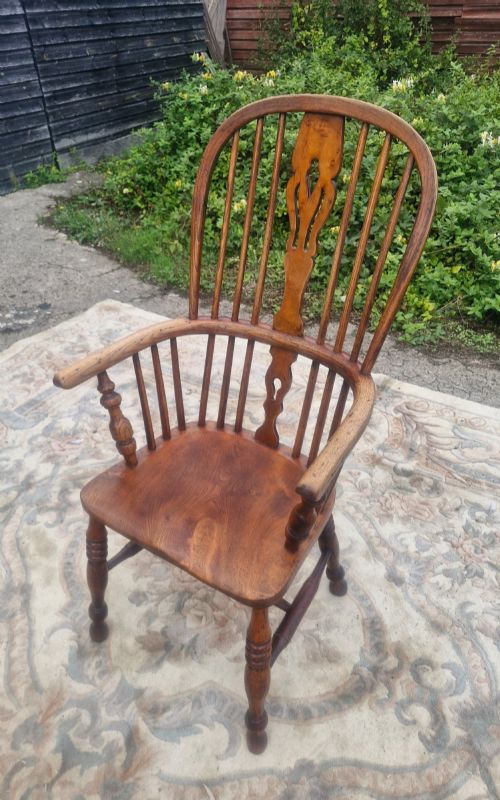
Brown elm wood chairs offer the robust vernacular character of English country houses, shaped by generations of domestic use.
Brown Elm Wood Chairs
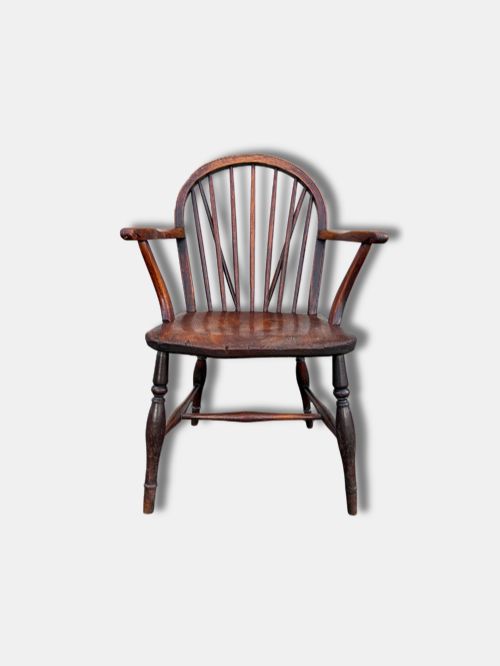
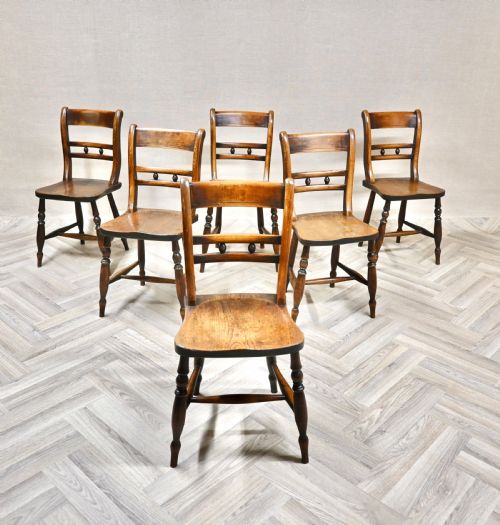
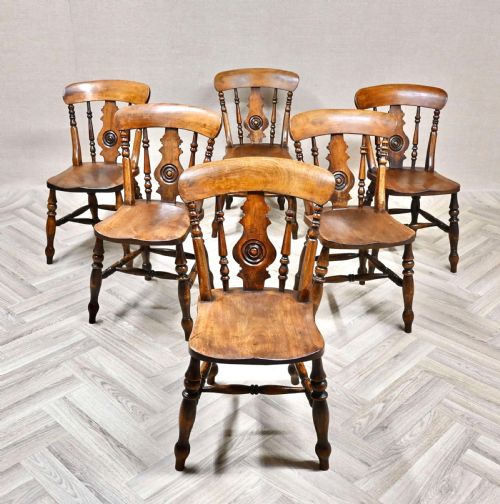
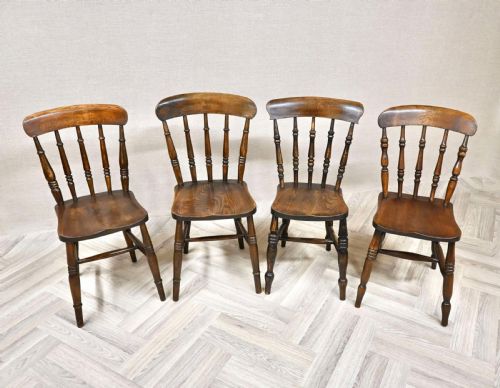
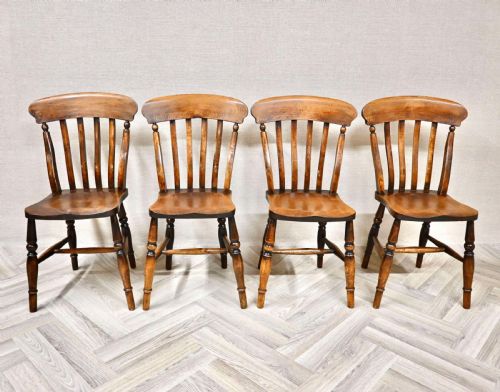
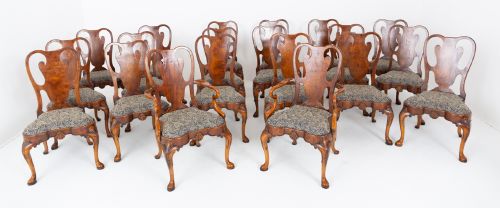
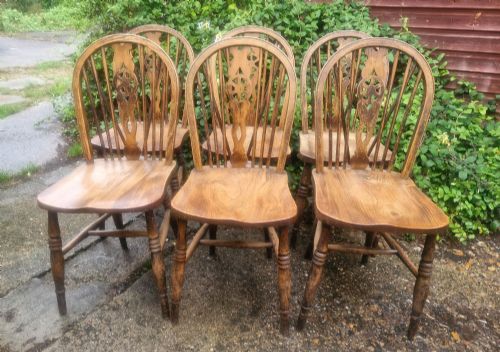
Brown elm wood chairs comprise a diverse range of country seating, spanning formal dining sets to low-backed kitchen armchairs. When exploring brown elm wood chairs, buyers encounter sturdy vernacular forms shaped across the eighteenth, nineteenth, and early twentieth centuries.
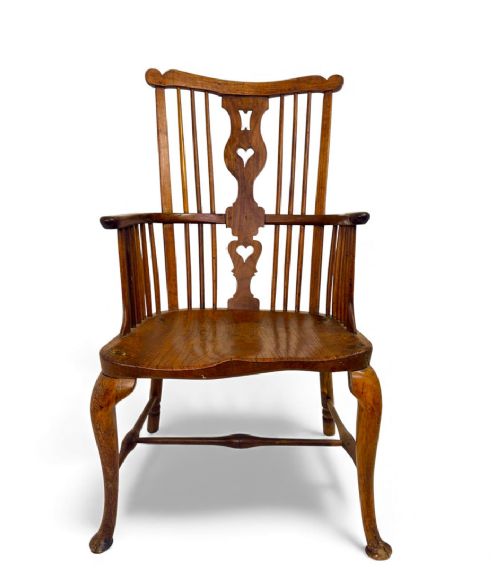
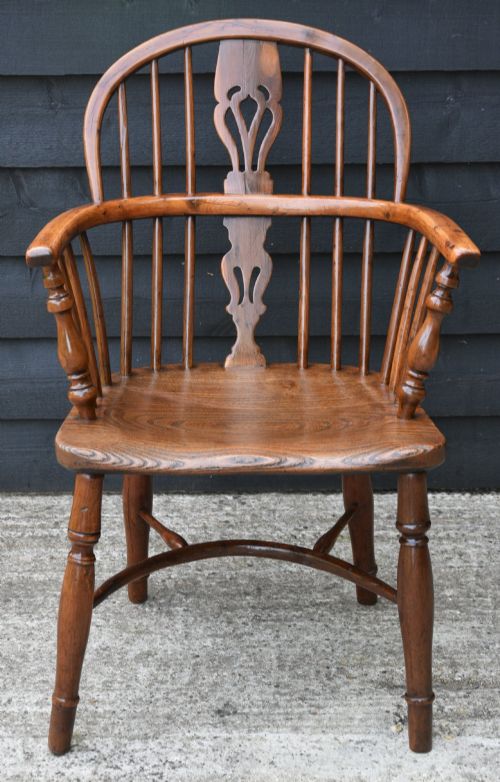
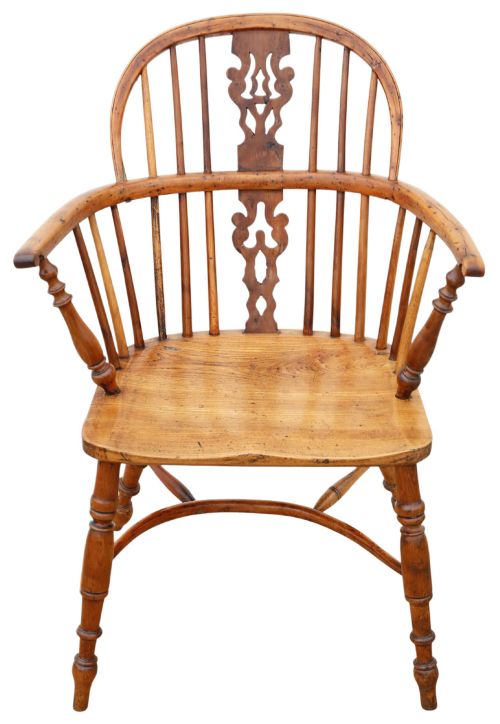
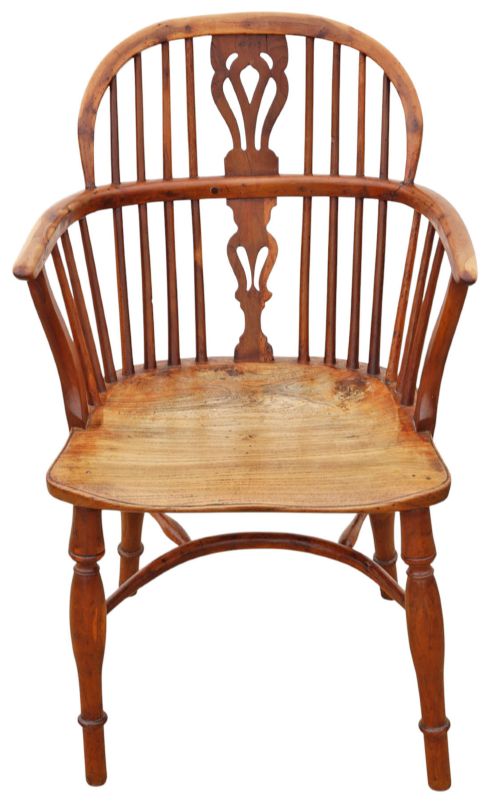
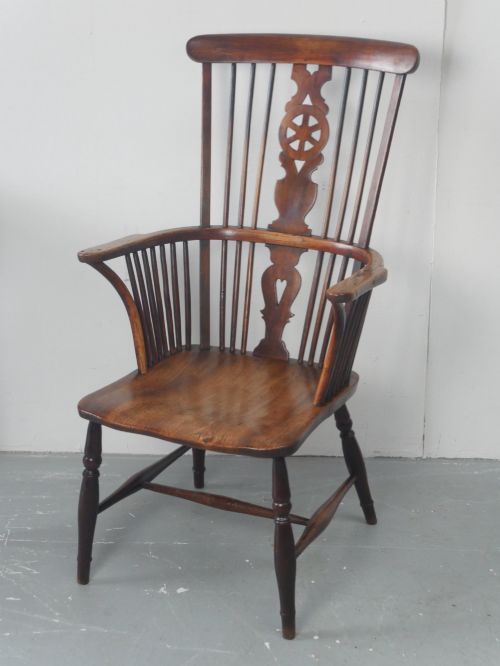
The selection includes Windsor armchairs, lathe back chairs, and substantial dining sets originating from English country traditions. These pieces demonstrate practical seating designs developed for daily household and kitchen use.
How they were made
Craftsmen utilised tough elm timber for seats, taking advantage of its interlocking grain to prevent splitting under heavy pressure. This was combined with ash, beech, or yew for spindles, legs, and bentwood elements.
Makers shaped the components using traditional turning lathes and drawknives, securing joints through pegged mortise and tenon construction. Many examples incorporate saddle seats sculpted by hand to fit the user.
Listings span multiple eras, encompassing Georgian, Victorian, Edwardian, and early twentieth-century periods.
What varies in quality
Quality rests in the harmony of the timber selection and the retention of original surface patina. Pieces featuring well-figured yew wood accents alongside elm show superior workshop selection.
Structural integrity depends on the tightness of the turned spindles and the original thickness remaining in the sculpted seat planks. Matched sets display consistent turning details across every chair in the group.
J SPENCER
The Brown Elm Wood Chairs Glossary
- Windsor chair
- A wooden chair constructed with a solid elm seat into which the legs and back spindles are directly inserted. This design relies on a bow or hoop back to provide structural rigidity.
- Comb back
- A Windsor chair variation where the central vertical spindles extend through a horizontal crest rail, resembling the teeth of a comb. This style dates frequently to the eighteenth century.
- Smokers bow
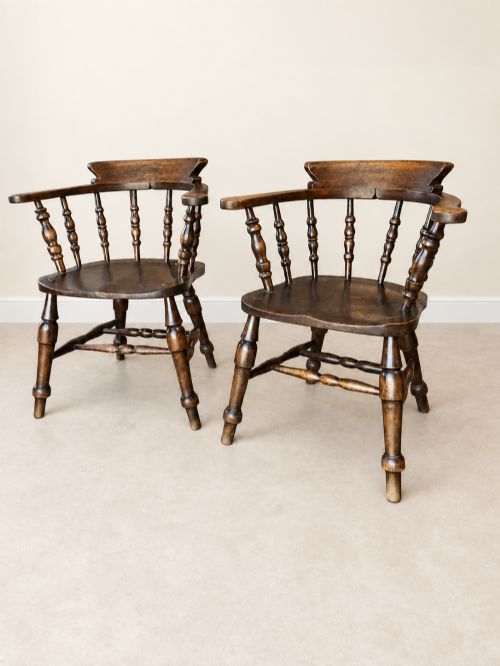
- A low-backed Windsor armchair featuring a continuous curved armrail supported by turned spindles, often utilised in Victorian smoking rooms and offices.
- Lathe back
- A chair design incorporating horizontal wooden slats across the backrest rather than vertical spindles. These slats are typically curved for comfort during dining use.
- Rush seat
- A seating surface woven from dried marsh rushes, fitted into a wooden frame. This method appears on early nineteenth-century country chairs.
Brown Elm Wood Chairs: Frequently Asked Questions
How do I identify a Windsor chair?
A Windsor chair is characterised by a thick wooden seat that acts as the central anchor for all other components. The legs and back pieces are tenoned directly into this solid base rather than forming an integrated frame.
Most examples feature distinct turned spindles and a bentwood bow or hoop forming the upper backrest. This construction method provides exceptional durability for daily seating.
What rooms suit these chairs?
These chairs fit naturally around rustic dining tables, kitchen islands, or executive desks. Their varied timber tones complement both traditional interiors and modern minimalist spaces.
Armchairs work well as standalone reading seats in studies or living areas. Dining sets provide functional seating for everyday meals while adding historical character to a room.
How do I care for elm wood?
Protect the wood by maintaining stable humidity levels away from direct heat sources and radiators. Sudden temperature changes can cause the timber to dry out and split.
Apply natural beeswax periodically to nourish the surface and preserve the historic patina. Avoid using modern chemical polishes that can degrade the original finish over time.
How can I date an old chair?
Dating relies on examining tool marks, construction methods, and timber wear patterns. Eighteenth-century pieces often display hand-carved details and deeper saddle scoops shaped by drawknives.
Victorian and later iterations show more uniform machine turnings and standardised hardware. Comparing the joinery style to known period examples helps narrow the manufacturing decade.