






Brown Doulton Vase
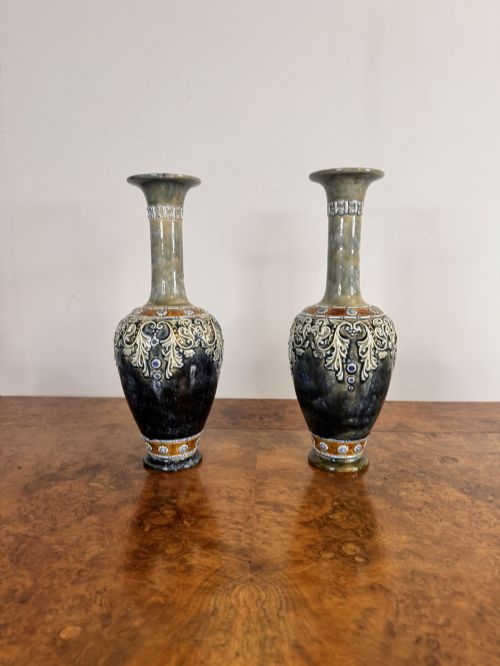
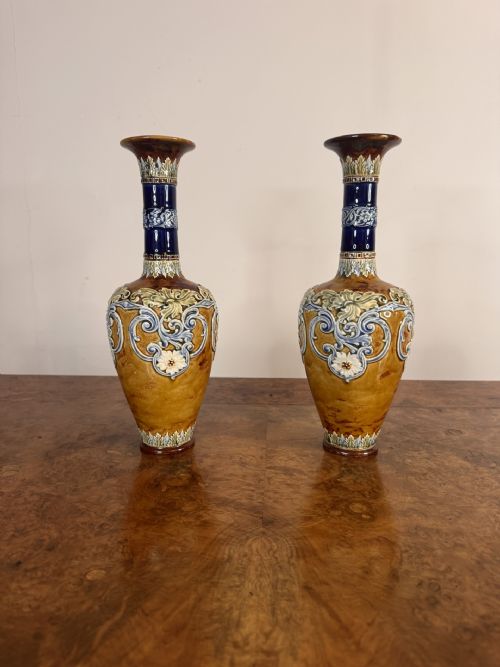
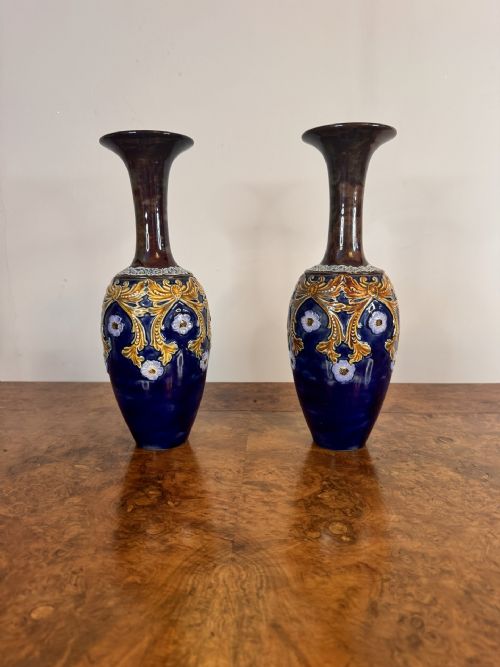
A brown doulton vase brings rich earthy tones and tactile salt-glazed stoneware into a room, made to be displayed for its texture and depth.
Brown Doulton Vase
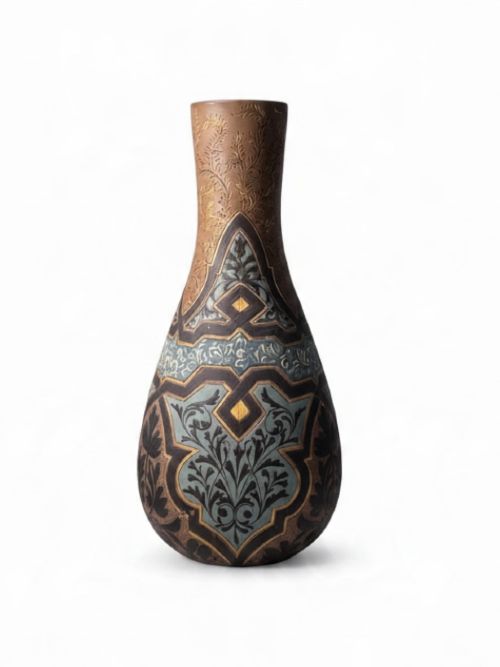
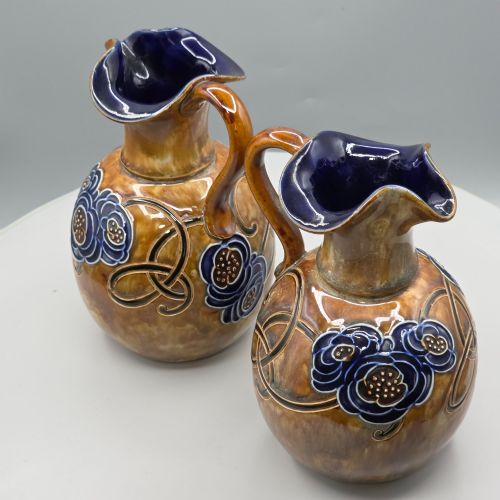
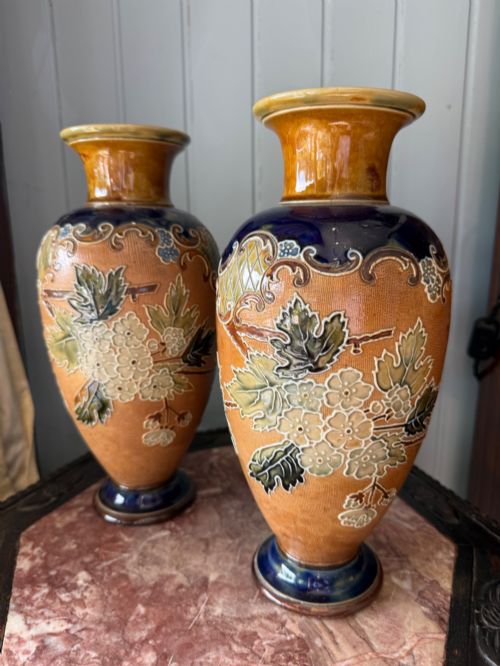
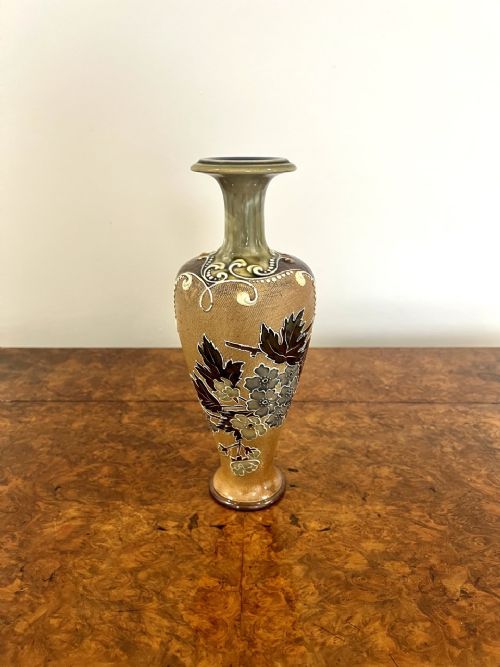
A brown doulton vase is a ceramic vessel shaped by the Lambeth pottery and related studios during the late nineteenth and early twentieth centuries. These pieces encompass decorated ewers, jugs, and vases created across the Victorian, Edwardian, and Art Nouveau eras. The selection frequently includes pairs featuring leaf patterns, autumnal shades, or standard studio forms.
The objects stem from periods including the eighteen-eighties, nineteen-hundred, and nineteen-ten, aligning with the broader Arts and Crafts movement. Buyers encounter both utilitarian jug shapes and purely decorative vases designed to showcase ceramic experimentation. Each piece reflects the output of a major British pottery tradition working in stoneware and glazed bodies.
How they were made
Makers shaped these items from stoneware and ceramic bodies, applying glazes that created deep brown surfaces and varied sheens. Artists worked directly onto the clay using techniques typical of studio art pottery during the Victorian and Edwardian decades. Some items incorporate additional decoration through enamel and gold leaf accents upon the glazed stoneware.
The production relied on kiln firing methods that produced durable bodies capable of holding rich, variable colour tones. Artisans manipulated glazes to achieve textural contrasts between matte areas and glossy highlights across the vessel walls. These material choices ensured the pieces retained their structural integrity and surface depth over time.
Brown Doulton Vase Retail Price Guide 2026
Typical asking prices for brown doulton vase among the pieces listed under this phrase on Sellingantiques today, from the lower quarter to the upper quarter. They describe what is for sale here now, not the wider market.
Some autumn leaves simply refused to drop, ending up permanently glazed onto a nineteenth-century jug instead.
What varies in quality
Quality rests upon the strength of the form, the depth of the glaze, and the intricacy of the surface decoration. Pieces bearing identifiable artist involvement demonstrate a higher level of individual execution than standard factory output. The handling of the stoneware body and the richness of the brown tones distinguish superior examples from simpler ones.
Artisans working during the Arts and Crafts and Art Nouveau periods achieved varying degrees of sculptural definition in their patterns. The crispness of applied motifs and the controlled distribution of enamel or gold leaf separate standard production from exceptional work. Collectors evaluate the harmony between the ceramic shape and its applied finish.
Eliza Simmance·Emma Shute·Emily Stormer·Florence Barlow
The Brown Doulton Vase Glossary
- Stoneware
- A dense, vitreous ceramic fired at high temperatures until non-porous. This material forms the durable foundation for the majority of these vessels.
- Glaze
- A glassy coating fused to the ceramic body through firing. It provides the characteristic brown surface colour and sheen.
- Ewer
- A large jug with a wide spout and handled body. These decorative vessels served both ornamental and functional roles in period interiors.
- Arts and Crafts
- A design movement valuing handcraftsmanship and traditional materials. This style influences the decorative motifs seen on these pieces.
Brown Doulton Vase: Frequently Asked Questions
What periods do these brown doulton vases come from?
The pieces span the Victorian era, the nineteenth century, and the early twentieth century around nineteen-ten. They reflect the design movements active during those decades.
Production dates align with the height of British art pottery manufacturing, encompassing both Victorian experiments and Edwardian studio output.
How were these ceramic pieces decorated?
Decorations include leaf patterns, autumnal colour schemes, and applied enamel or gold leaf details. Artists utilised surface carving and slip techniques on stoneware bodies.
Individual makers signed or marked their work, adding distinctive artistic expression to the standard pottery forms.
Are these items functional or decorative?
The selection includes both decorative vases and jugs or ewers designed for display. Their robust stoneware construction allowed for practical use alongside ornamental purposes.
Collectors generally place them as decorative focal points within period or contemporary interior settings.
What materials did the makers use?
Makers utilised stoneware, ceramic bodies, and specialised glazes to achieve their finished appearance. Additional embellishments sometimes feature enamel and gold leaf.
The combination of dense clay and fired glazes creates the characteristic weight and surface texture of the pieces.