
Brown Document Box
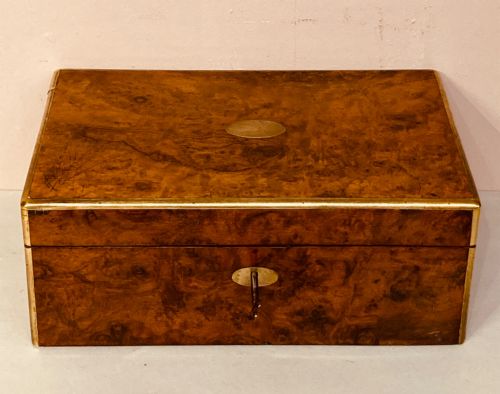
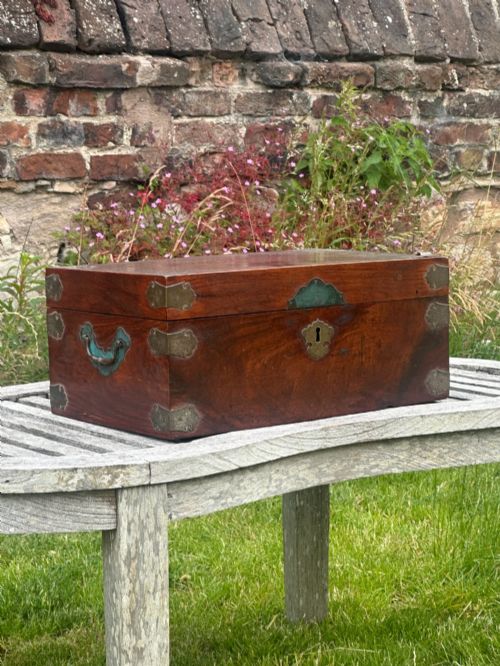
A brown document box is a utilitarian antique designed for securing papers, deeds and correspondence, prized for rich timber tones and period craftsmanship.
Brown Document Box
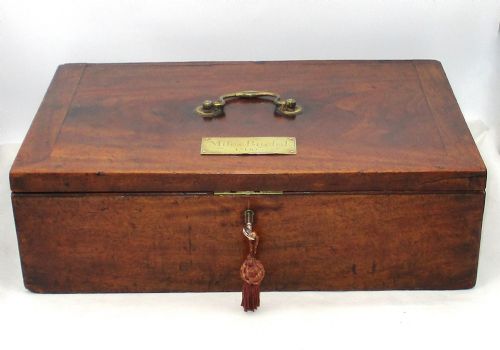
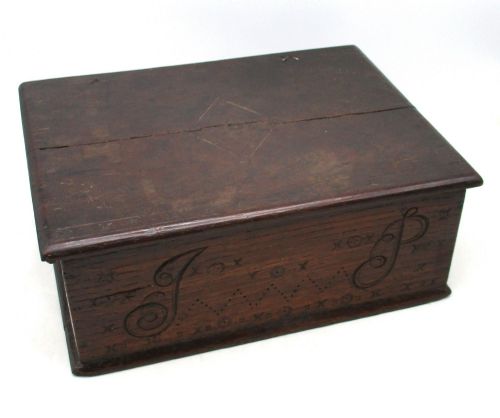
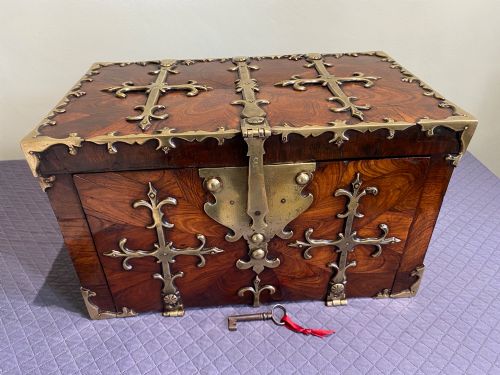
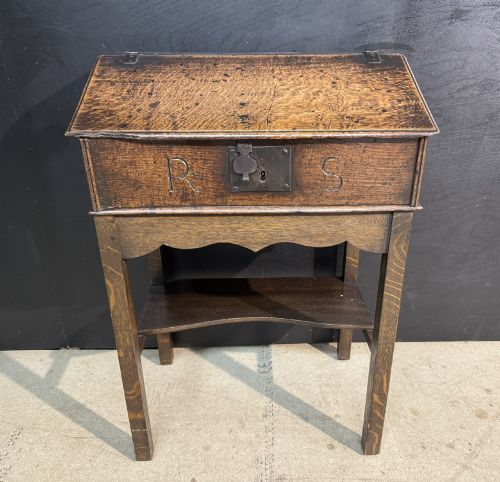
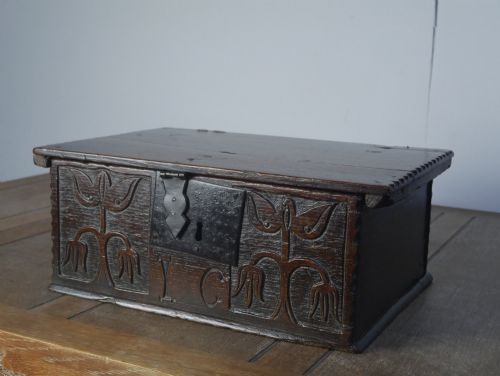
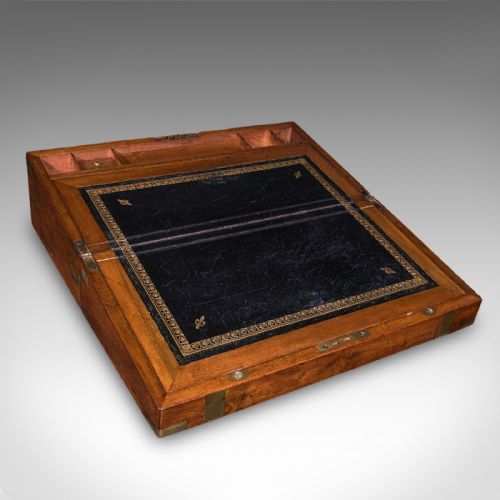
A brown document box spans centuries of domestic and travelling storage, appearing as deed boxes, deed storage boxes, writing slopes, and caskets. These pieces emerge from the seventeenth, eighteenth, and nineteenth centuries, including Georgian, Regency, and Victorian periods.
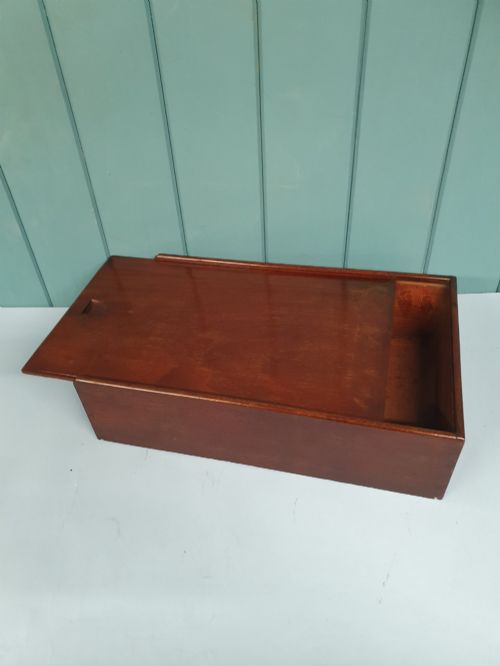
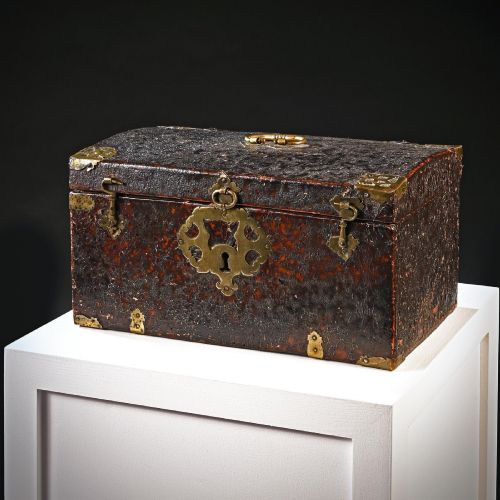
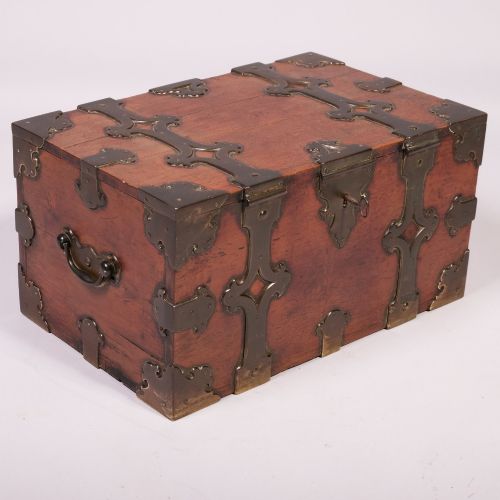
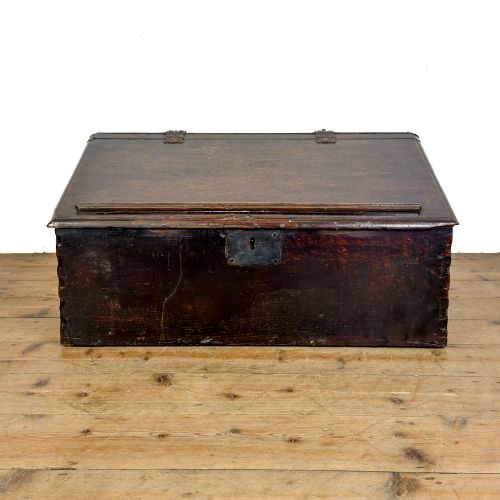
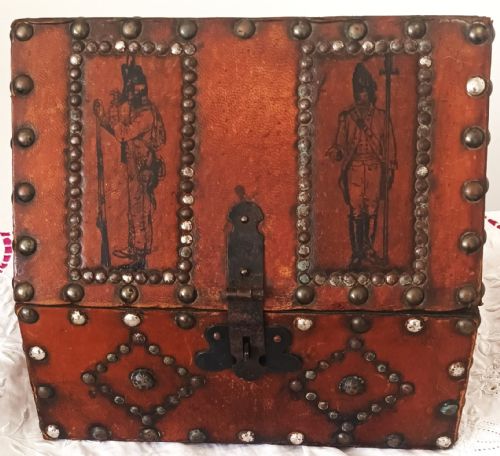
The versions most commonly met on this page include mahogany sliding lid document boxes, oak bible boxes, and leather-bound caskets. Makers from these eras constructed them to house important papers securely, often incorporating fitted interiors, secret compartments, or campaign mounts.
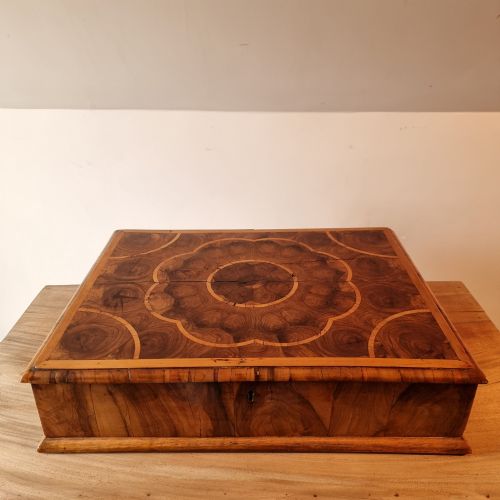
Origins vary from English workshops to continental, Anglo-Indian, and Chinese export ateliers, utilising local timbers such as oak, elm, walnut, and camphor. Their forms range from simple nailed chests to sophisticated veneered writing boxes with brass banding.
Materials and Construction
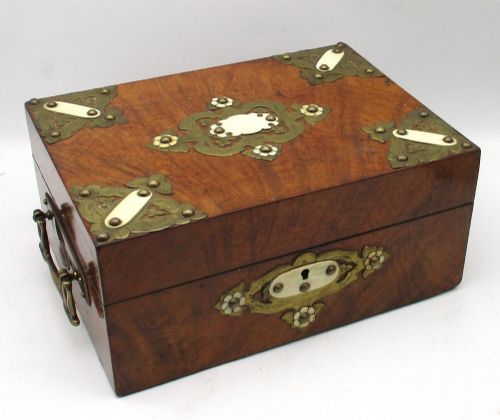
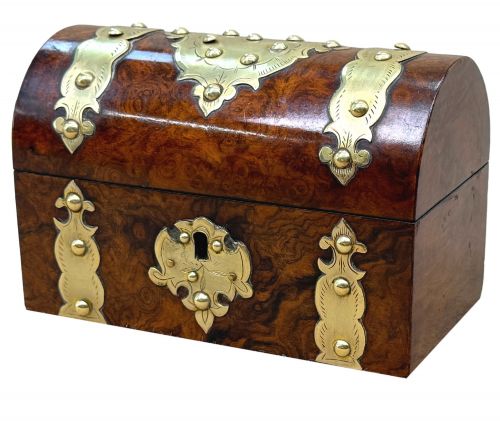
Cabinet makers utilised dense hardwoods such as mahogany, oak, walnut, burr walnut, and padouk, alongside softer timbers like elm and pine. Surfaces were frequently panelled, carved, or finished with fine wood veneers, while travel-focused examples incorporated protective leather bindings.
Joinery techniques relied on dovetailing, pegged joints, and solid timber panels designed to withstand regular movement. Iron, brass, and copper fittings - including hinges, carrying handles, studwork, and locking plates - were applied to reinforce corners and secure lids against heavy use.
Some travel boxes crossed oceans before returning home, carrying the quiet secrets of nineteenth-century colonial officers.
The Measure of Quality
Superior quality in a brown document box rests upon the selection of timber and the precision of its construction. Well-figured grains, tight dovetail joints, and substantial original brass or iron hardware separate finer examples from standard utility pieces.
The integrity of internal fittings - such as functional secret compartments, original writing slopes, and intact leather linings - distinguishes boxes that retained their purpose and status over centuries from those heavily altered or stripped of their interiors.
The Brown Document Box Glossary
- Writing slope
- A portable desk with a hinged, slanted writing surface that opens to reveal compartments for ink, pens, and paper. These boxes were widely used for correspondence during the Georgian and Victorian eras.
- Bible box
- A small, sturdy desk box from the seventeenth or eighteenth century traditionally used to store family bibles and important household documents. They often feature carved oak construction and a sloped lid.
- Campaign case
- A portable chest or box constructed for military officers on active service, featuring recessed brass handles, reinforced corners, and robust leather or hardwood bodies. They are designed for durability during transport.
- Coffre forte
- A French term for a strongbox or heavily secured chest, often iron-bound or constructed from dense hardwood with complex locking mechanisms. These were utilised for storing valuables and bullion.
- Tunbridge ware
- A type of nineteenth-century decorative woodwork produced in Kent, characterised by intricate mosaic patterns assembled from thousands of tiny tinted wood blocks. Such decoration often adorns the lids of stationery boxes.
Brown Document Box: Frequently Asked Questions
What is a brown document box used for?
These boxes were historically built to store legal deeds, personal correspondence, valuable papers, and writing materials securely at home or while travelling.
Today, they serve collectors as decorative storage pieces for modern stationery, photographs, and keepsakes while displaying period cabinet work.
How do I date an antique document box?
Dating relies on examining construction methods, such as hand-cut dovetails, iron forgings, type of hinges, and timber preparation alongside stylistic details like Regency brass mounts or Jacobean carving.
Lock types and key escutcheons also provide reliable chronological markers, as manufacturing techniques evolved significantly between the seventeenth and nineteenth centuries.
Are these boxes waterproof for travel?
Period document boxes were designed to protect contents from dust, light, and casual observation rather than prolonged exposure to water or severe weather.
Even campaign cases with leather bindings and brass hardware were intended for carriage in luggage rather than outdoor storage.