

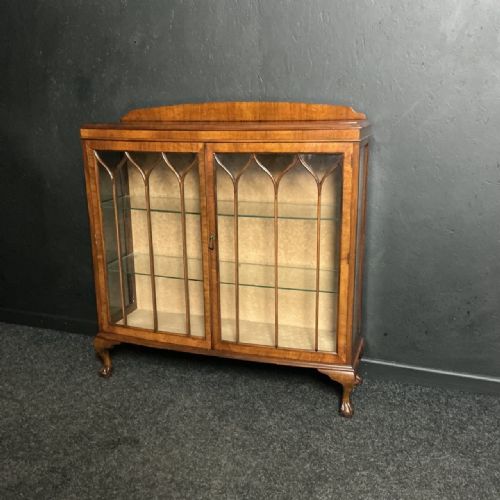
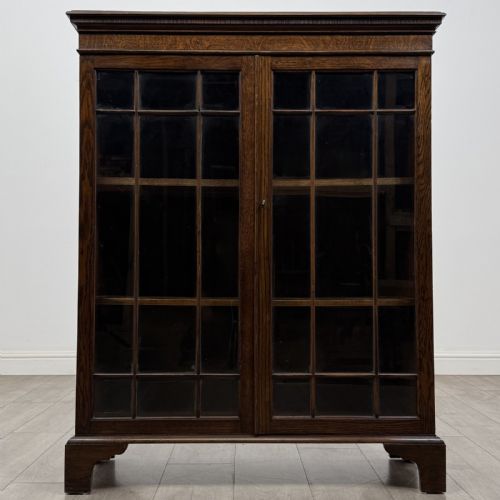
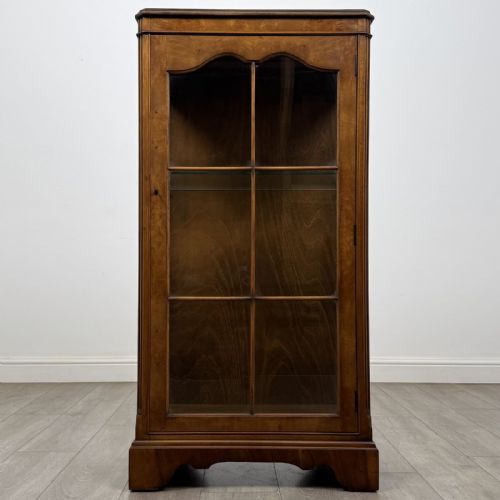
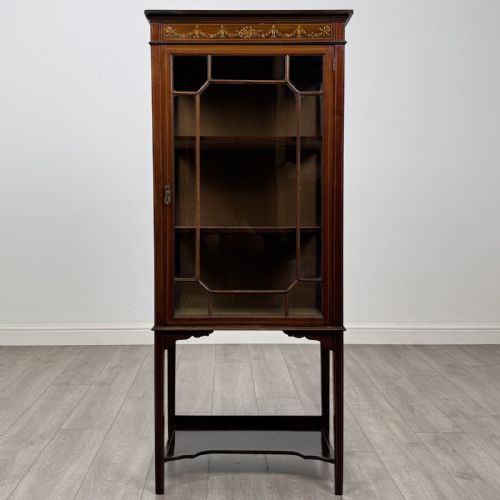
Brown China Cabinet
A brown china cabinet gathers porcelain and glass behind glazed timber doors, offering a formal frame for domestic collections.
Brown China Cabinet
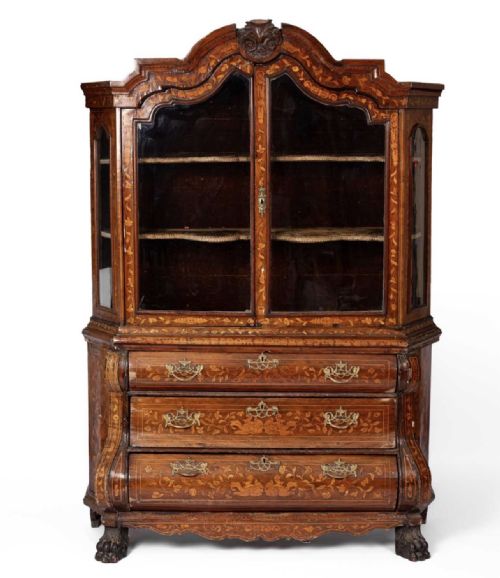
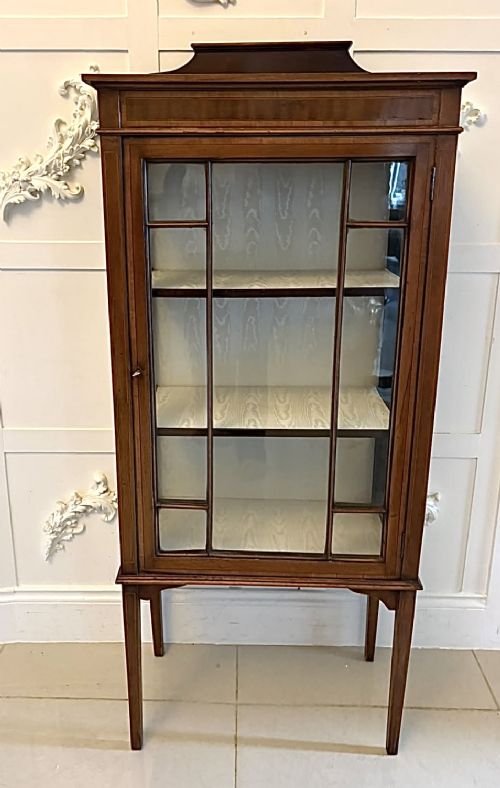
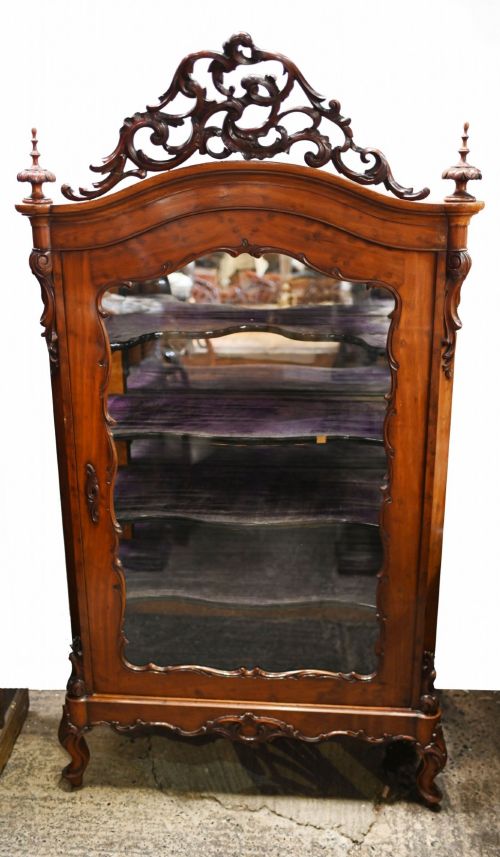
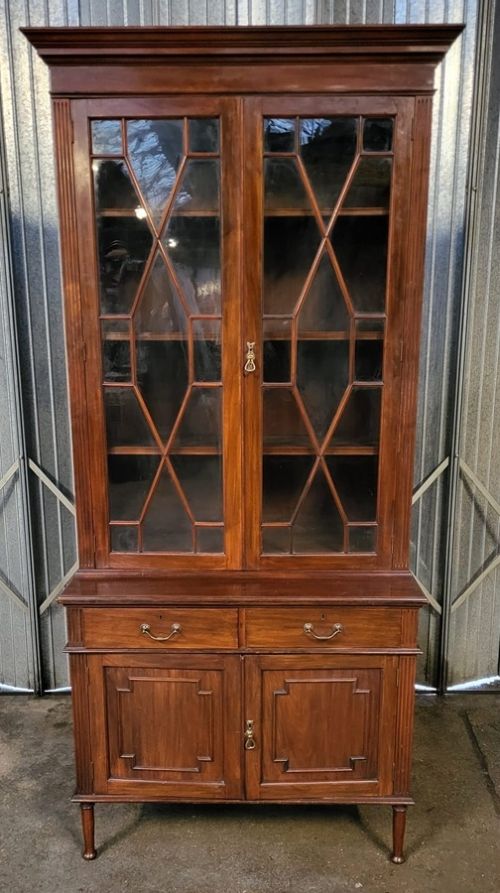
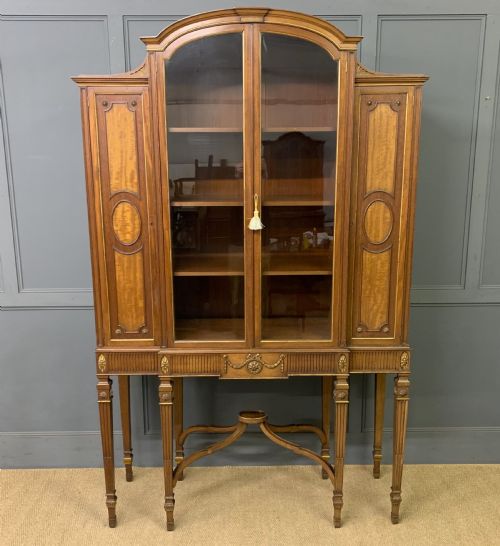
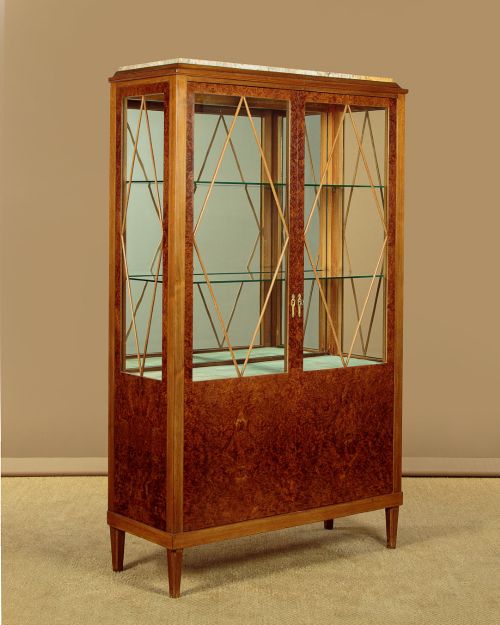
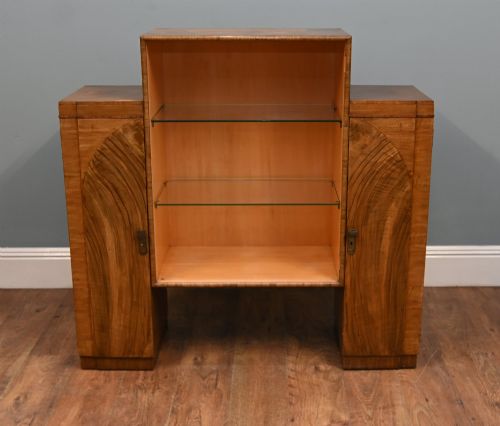
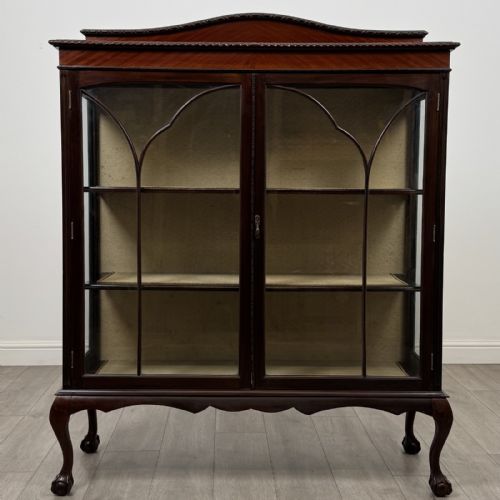
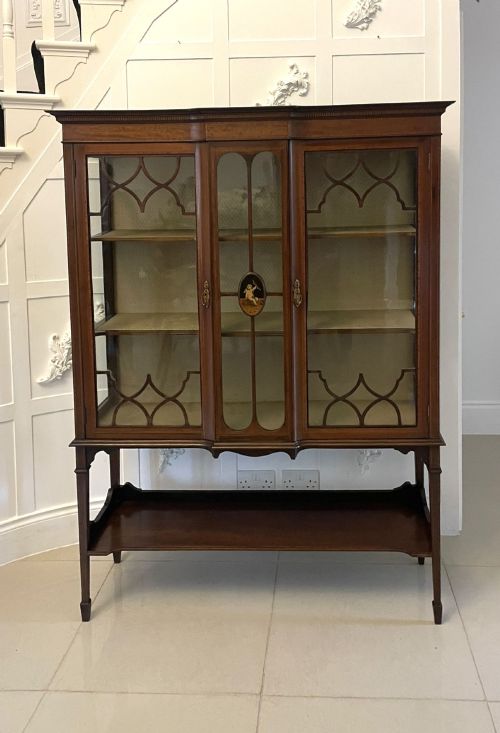
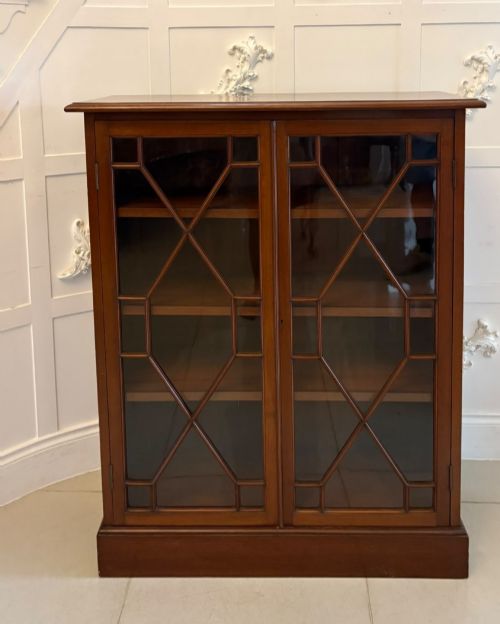
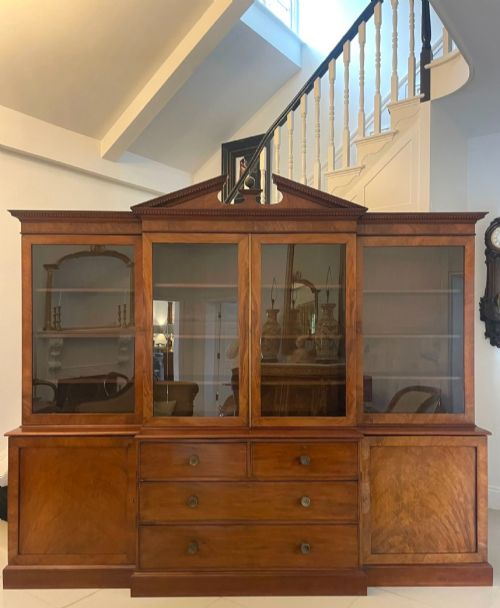
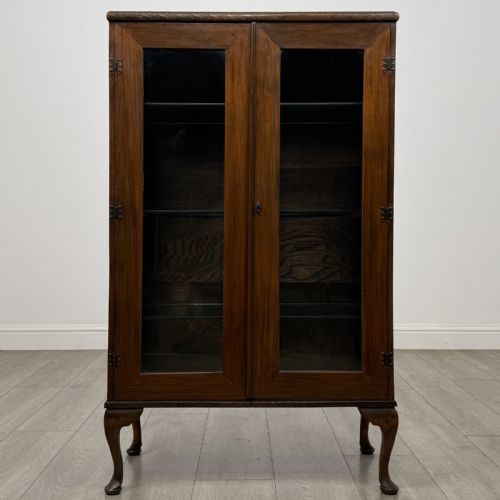
A brown china cabinet spans several centuries of British and continental cabinet-making, with the Edwardian era and Victorian period providing the largest share of examples seen here. These pieces appear as tall breakfront bookcases, slender corner cupboards, bow-ended vitrines and low pier cabinets designed to house ceramic services.
The dominant timber in this selection is mahogany, often enriched with satinwood inlay or arranged with figured walnut and oak. Workshops built these cabinets with glazed upper sections for display and panelled lower doors for concealed storage, using brass fittings to secure the doors.
Makers drew on Georgian, Sheraton Revival, Queen Anne Revival and Chippendale Revival vocabularies alongside Art Deco designs from the nineteen-thirties. Buyers encounter everything from compact single-door corner units to expansive breakfront libraries with adjustable shelving.
Materials and Technique
Cabinet-makers constructed carcass frames in solid mahogany, walnut, oak and kingwood, applying delicate veneers and satinwood bandings to the primary display surfaces. Glass panels were individually glazed into timber or leaded framing bars, whilst mirrors were occasionally set into the interior backs to reflect light through stored ceramics.
Decorative detailing relied on precision craftsmanship, including marquetry panels, carved claw and ball feet, spade feet and raised galleries. Ormolu mounts featured on select continental pieces, anchoring glazed doors fitted with brass locks and hinges.
Brown China Cabinet Retail Price Guide 2026
Typical asking prices for brown china cabinet among the pieces listed under this phrase on Sellingantiques today, from the lower quarter to the upper quarter. They describe what is for sale here now, not the wider market.
Judging the Standard
Quality rests in the selection of the timber grain and the precision of the inlay work, where figured mahogany and symmetrical walnut veneers indicate superior workshop standards. The crispness of carved details, such as claw and ball feet or applied mouldings, separates standard production furniture from masterworks.
Internal execution marks the distinction between grades, visible in the choice of secondary woods for drawer linings, the retention of original glass and painted decorations, and the structural integrity of the glazed framing bars.
Waring and Gillow
The Brown China Cabinet Glossary
- Breakfront
- A cabinet design where the central section projects forward from the flanking wings. This architectural arrangement creates depth and visual balance.
- Vitrines
- Glass-sided display cabinets designed specifically for the exhibition of porcelain and small objects. They maximise light entry from multiple angles.
- Satinwood
- A lustrous, yellow-toned exotic timber utilised extensively for contrasting stringing and marquetry panels on mahogany furniture.
- Ormolu
- Gilt-bronze mounts applied to furniture for decorative enrichment. These metallic ornaments characterise fine continental pieces.
Brown China Cabinet: Frequently Asked Questions
What is a brown china cabinet used for?
These cabinets serve to protect and display delicate porcelain, glassware and decorative objects behind glazed doors.
The enclosed shelving keeps dust away from collections while allowing them to remain visible in principal rooms.
How do I identify an Edwardian china cabinet?
Edwardian cabinets typically feature lighter mahogany timbers decorated with subtle satinwood inlay, bow fronts or raised galleries.
They often incorporate mirror backs and delicate spade feet, reflecting the revived neoclassical tastes of the early twentieth century.
Where should I place a corner cupboard?
Corner cupboards fit directly into ninety-degree wall junctions, making efficient use of unused floor space in dining rooms or drawing rooms.
Their triangular footprint allows larger rooms to retain central floor area while utilising peripheral angles for display.
Are the shelves adjustable?
Many Victorian and Edwardian cabinets utilise traditional fixed wooden shelving integrated into the internal carcass.
Later pieces and larger breakfront bookcases occasionally feature rack-and-pinion or sawtooth supports for repositioning shelves.