



Brown Cattle Painting
A brown cattle painting brings the calm of rural life and open pastures directly into a room through oil and watercolour.
Brown Cattle Painting
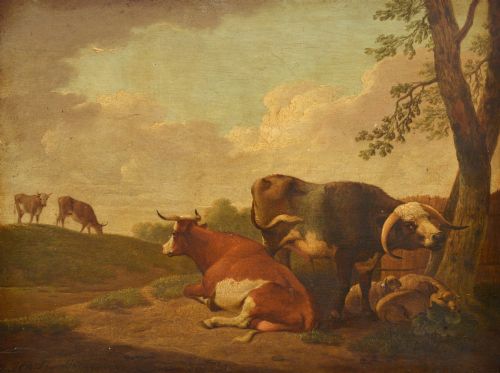
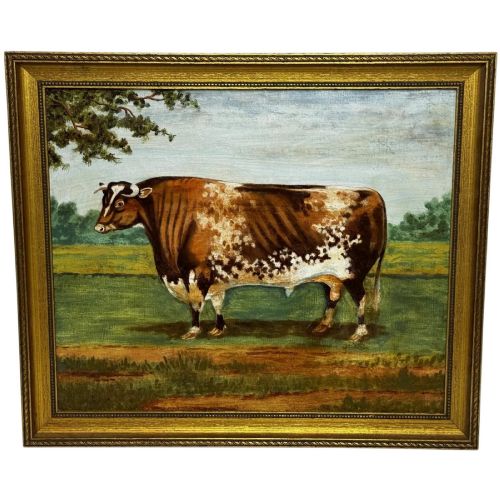
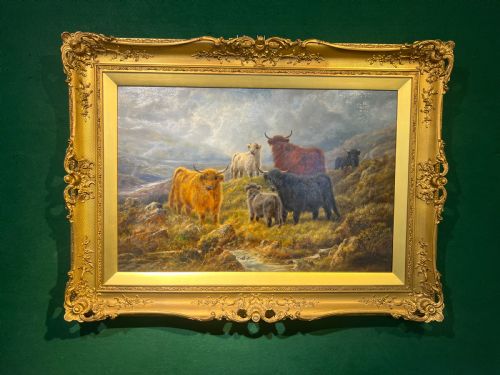
A brown cattle painting depicts pastoral scenes, farmyards, and Highland landscapes populated by cattle, bulls, and cows in natural settings. These works range from detailed depictions of prized Shorthorns and Longhorns to sweeping views of herds watering by rivers or sheltering in barns.
Buyers browsing this selection meet pieces created across the nineteenth and early twentieth centuries, spanning Victorian pastoral works, British Impressionism, and naive or folk art. Canvases and watercolours dominate the offerings, often presented in period wood or giltwood frames.
Materials and techniques
Artists painted these works primarily with oil paint on canvas or watercolour on paper, mounted behind glass in wooden or giltwood frames. The application varies from smooth, academic brushwork capturing the sheen of an animal's coat to looser, impressionistic strokes defining light on water and moorland.
Support materials include traditional stretched canvas and sturdy paper sheets, occasionally housed within ornate burr wood frames that complement the rural subject matter.
A lone porcelain vase sneaks into the pasture alongside dozens of oil and watercolour cows.
Assessing quality
Quality rests upon the artist's ability to render the anatomy, weight, and presence of the animal with conviction, rather than relying on formulaic background scenery. The finest examples demonstrate a confident handling of light across hide and landscape, creating depth and atmosphere.
The strength of the composition and the preservation of the original medium, whether oil or watercolour, dictate the standing of a piece within its period.
Henry Robinson Hall·Ernest Pile Bucknall·Samuel Joseph Clark·William Sydney Cooper·Thomas Sidney Cooper·Arthur Charles Dodd·John W Morris·Gustave De Brianski·Frederick William Jackson·Henry Birtles·Owen Bowen·William Greaves·Sidney Richard Percy·Charles Jones·William Huggins·Louis Bosworth Hurt·Thomas Austen Brown
The Brown Cattle Painting Glossary
- Canvas
- A heavy woven fabric stretched across a wooden frame to form the primary surface for oil painting.
- Giltwood
- Wood carved and covered with a thin layer of gold leaf, commonly used for traditional picture framing.
- Impressionism
- An art style focused on accurate depiction of light and its shifting qualities rather than microscopic detail.
- Watercolour
- A painting method where paints are made of pigments suspended in a water-based solution on paper.
- Pastoral
- A genre of art depicting the rural lives of shepherds, farmers, and livestock in idealized natural landscapes.
Brown Cattle Painting: Frequently Asked Questions
What periods do these paintings come from?
The works span the nineteenth and early twentieth centuries, capturing shifts in British and Irish art from Victorian realism to early modern impressionism.
Most pieces date from the Victorian era up through the Edwardian period, reflecting changing tastes in landscape and animal portraiture.
How should I frame an antique painting?
Many pieces retain their original wood or giltwood frames, which are best preserved alongside the artwork to maintain historical integrity.
If framing an unmounted work, select a period-appropriate moulding that respects the scale and palette of the pastoral scene.
Where were these pastoral scenes usually painted?
Artists sought subjects across the British Isles, finding inspiration in the Scottish Highlands, Welsh valleys, Yorkshire pastures, and English riverbanks.
Herdsmen, drovers, and prize cattle provided authentic focal points for artists recording the rural economy of the countryside.
Are watercolours as durable as oils?
Watercolour paintings require protection behind glass and conservation-grade mounting to prevent fading from direct sunlight over decades.
Oil paintings on canvas offer greater resilience against environmental factors, though both mediums thrive in stable, dry indoor conditions.