


Brown Bentwood Coat Tree
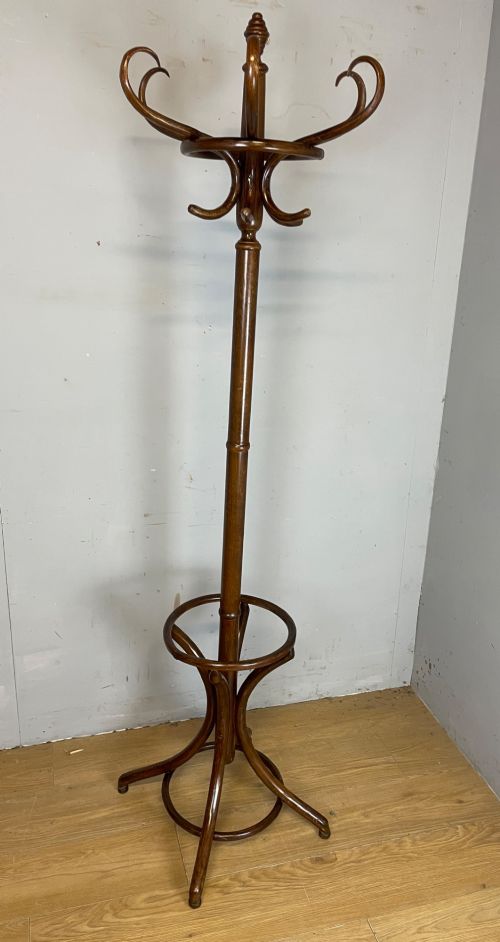
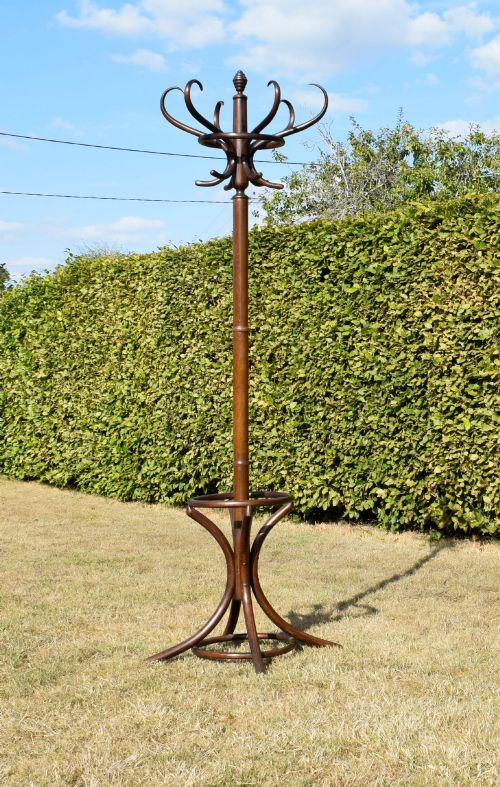
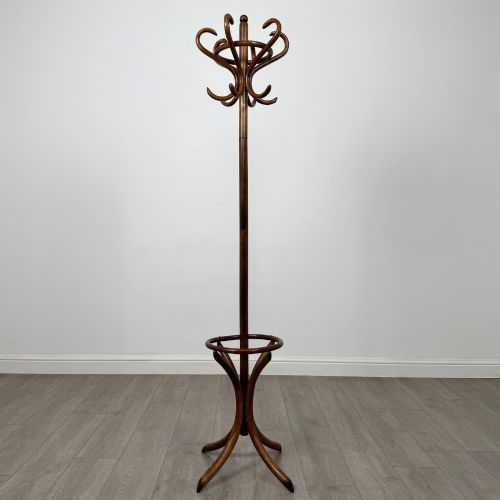
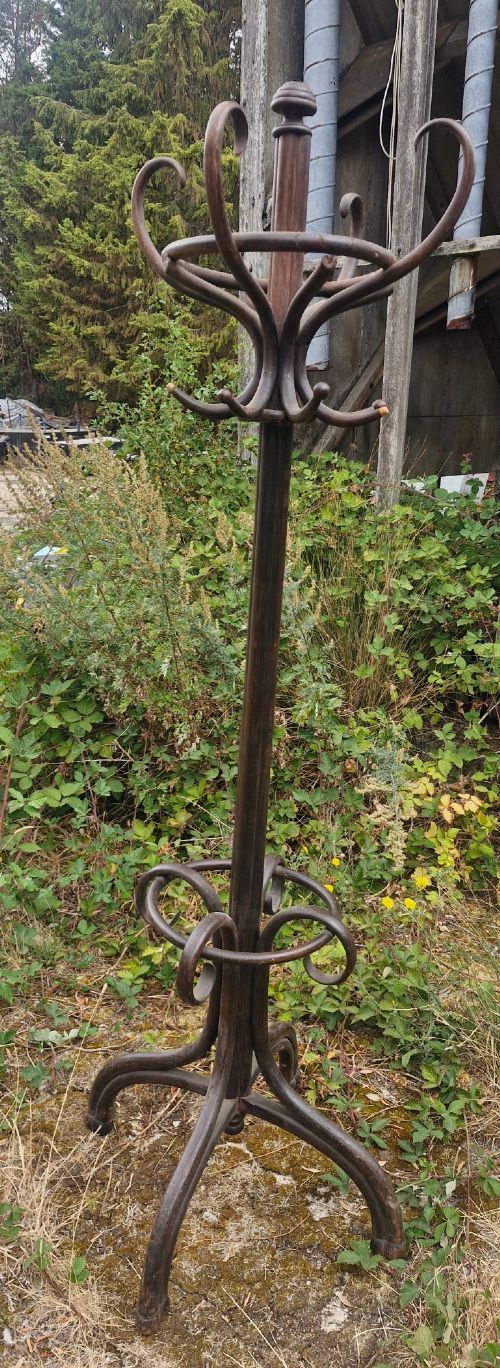
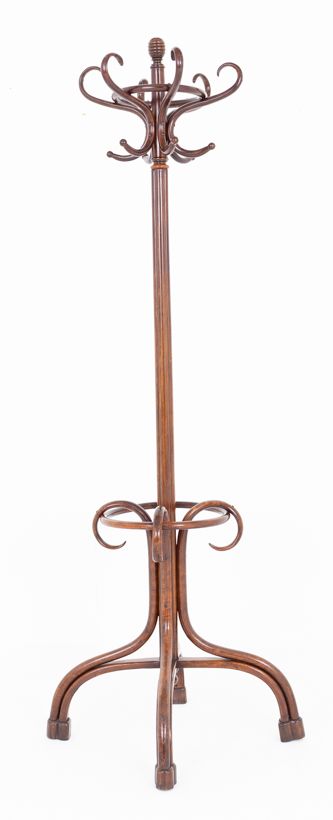
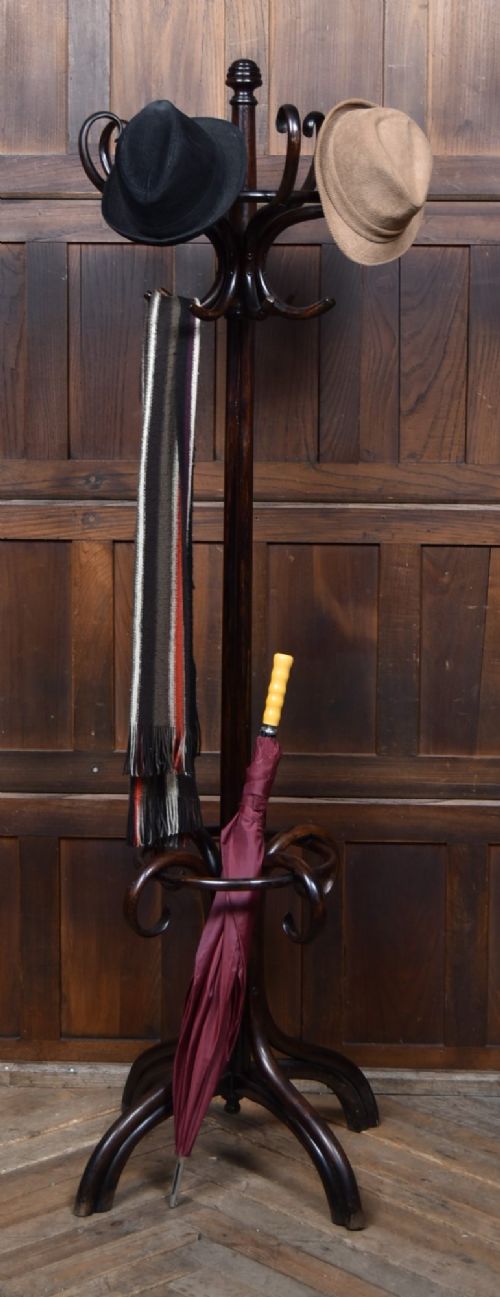
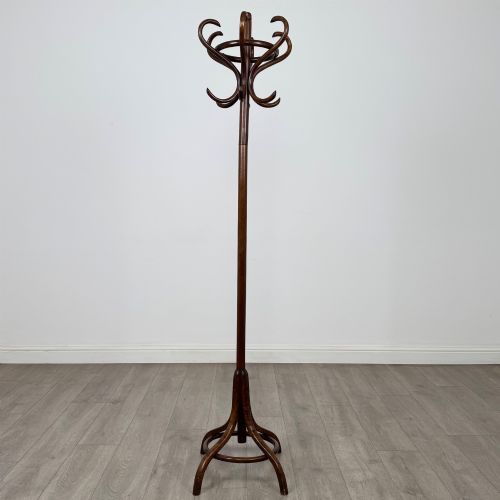
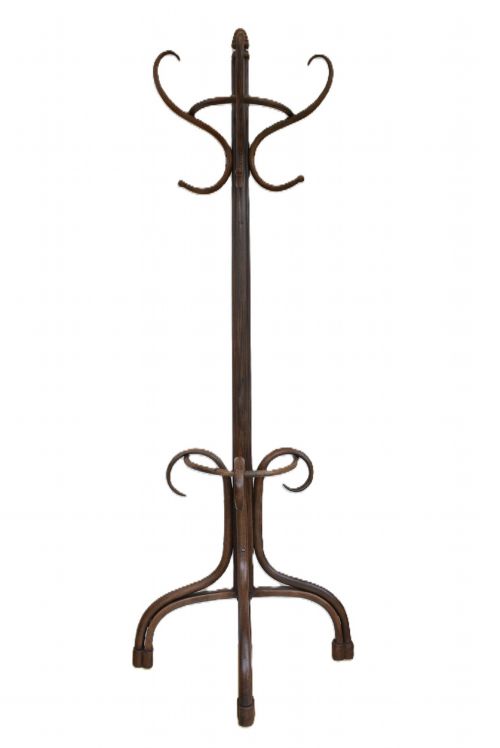
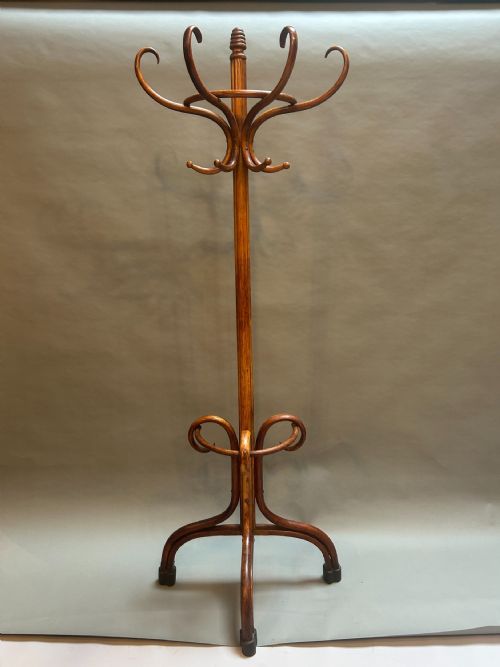
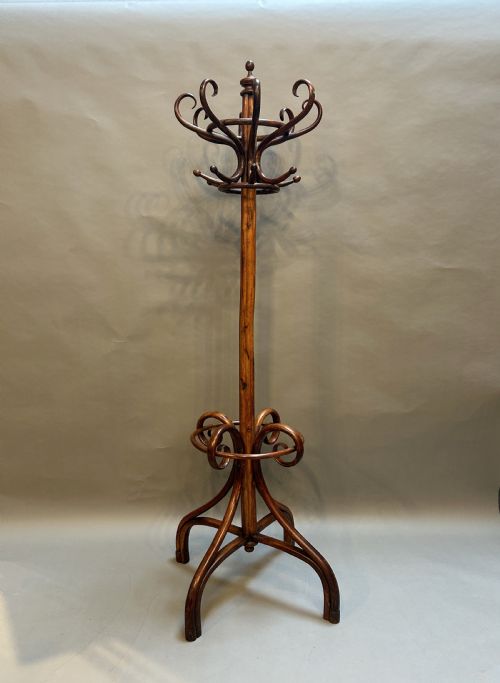
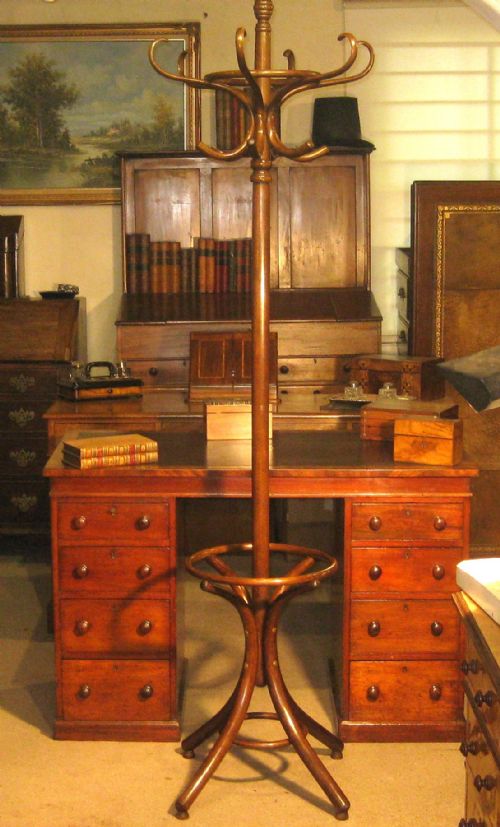
A brown bentwood coat tree provides a sculptural silhouette for hallways, built from steam-bent timber to hold garments with functional grace.
Brown Bentwood Coat Tree
A brown bentwood coat tree is an ingenious piece of hallway furniture designed for hanging hats, coats and walking sticks without occupying excessive floor space. These items appear across several decades, including Edwardian examples alongside pieces from nineteen-hundred, nineteen-ten, nineteen-twenty and nineteen-thirty.
Originating largely from Austrian workshops in the style associated with Thonet and makers such as Fischel, these items combine utilitarian purpose with light-weight structural agility. Their enduring appeal lies in the way continuous wooden curves replace heavy joinery.
How they were made
Solid beech or beechwood is subjected to steam heating until the timber achieves enough plasticity to bend smoothly into continuous curves without fracturing. Once pliable, the wood is clamped into metal forms to set its characteristic arched profiles.
Workers then assemble the bent components using threaded fasteners, internal metal rods and secure wooden sockets to build a rigid upright frame. Finally, a wood stain is applied to enrich the surface grain while retaining the natural warmth of the timber.
Some stands feature revolving tops, offering the quiet satisfaction of spinning your winter garments in a circle before heading out.
What varies in quality
Quality rests in the fluidity of the curves and the overall structural stability of the upright stem under daily weight. Superior examples display precise symmetry in their upper scrolling tiers and retain tight, factory-original joints.
Finer pieces incorporate double top tiers or rotating mechanisms which allow the upper hat section to revolve smoothly. Lesser items show stiffness in movement, coarser grain selection in the beech, or heavier, less graceful proportions.
Fischel
The Brown Bentwood Coat Tree Glossary
- Bentwood
- Wood that has been shaped by steam and pressure into curved structural members. This technique allows for lightweight furniture with remarkable tensile strength.
- Demi Lune
- A half-moon shape used in furniture design. In hall stands, this configuration allows the piece to stand flat against a wall.
- Beech
- A hard, fine-grained timber commonly utilised in bentwood furniture for its ability to accept steam bending without losing structural integrity.
- Thonet Style
- The characteristic aesthetic pioneered by Michael Thonet, defined by minimalist curved wooden loops and functional elegance.
- Stick Stand
- The lower section of a hall stand featuring ring dividers designed to hold umbrellas and walking sticks upright.
Brown Bentwood Coat Tree: Frequently Asked Questions
How do I clean a bentwood coat tree?
Dust the timber regularly with a dry cloth to prevent grime accumulation within the curved joints. Avoid harsh chemical polishes that can degrade the historic wood stain.
Feed the dry beech periodically with a mild beeswax to preserve the lustre of the finish. Keep the piece away from direct heat sources to prevent the steamed wood from warping.
Can these stands support heavy winter coats?
Original bentwood stands are surprisingly robust and designed for daily garment storage. Distributing weight evenly across the upper hooks ensures the balance remains steady.
Avoid overloading a single side of the revolving or static top tier. Placing heavier items lower down or balancing the load maintains the stability of the central stem.
How do I identify an Edwardian bentwood stand?
Edwardian examples usually date from the early twentieth century and display characteristic steam-bent scrolls and deep brown wood stains. Look for traditional assembly methods including threaded wooden screws and metal support collars.
They often feature a central stick ring at the base for umbrellas. The lightweight beech construction remains a hallmark of this period of manufacturing.
What is a revolving hatstand?
A revolving hatstand incorporates a clever mechanical top section that rotates independently from the main upright post. This allows users to access hats and coats hanging on any side without walking around the stand.
Such examples often denote finer manufacturing quality from the Edwardian era. The turning mechanism requires gentle handling to preserve the original internal fittings.