


Brown Bay Horse Artwork
Brown bay horse artwork captures the character and muscle of equine subjects through nineteenth and early twentieth century brushwork.
Brown Bay Horse Artwork
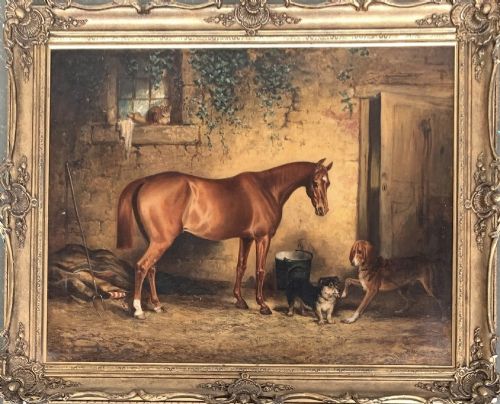
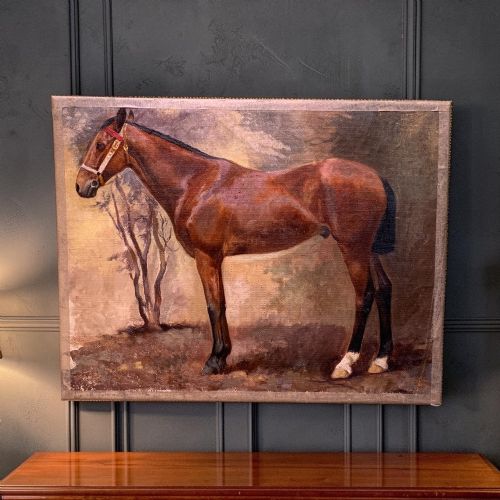
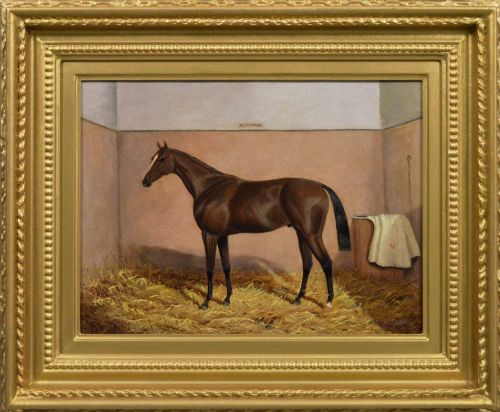
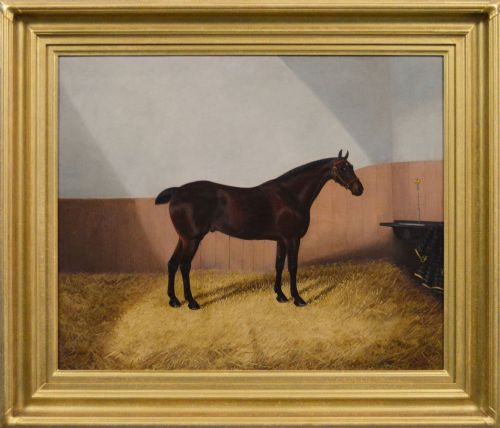
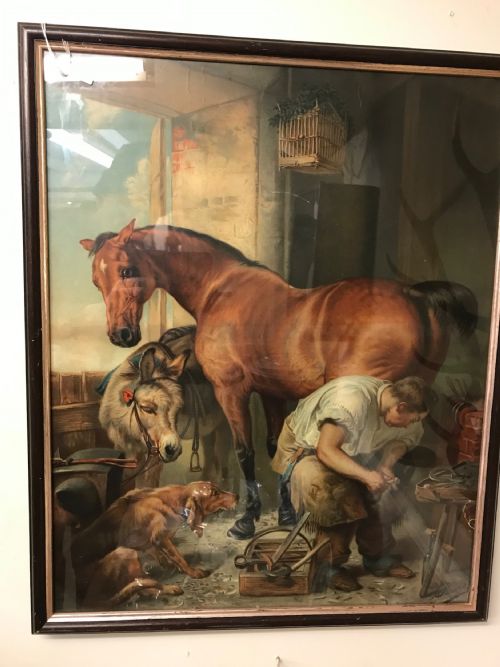
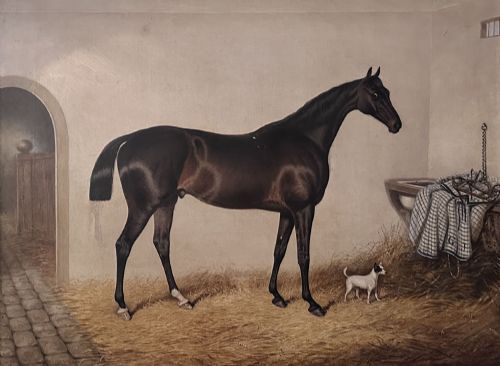
Brown bay horse artwork encompasses painted and printed equine portraits created across the nineteenth and early twentieth centuries. These works celebrate individual hunters, racehorses, and stable scenes recorded during the Victorian and Edwardian eras.
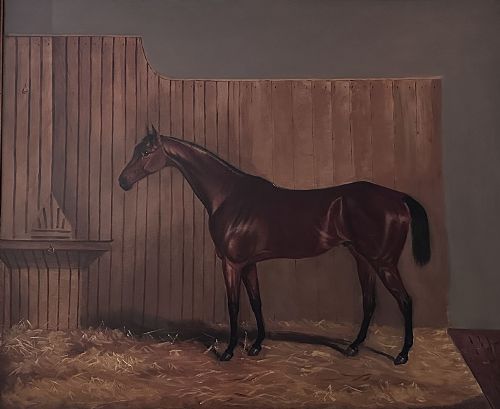
Oil paintings on canvas predominate in this selection, often housed within original giltwood frames. The subjects range from named champions like Flying Fox to anonymous bay hunters standing quietly in their stalls.
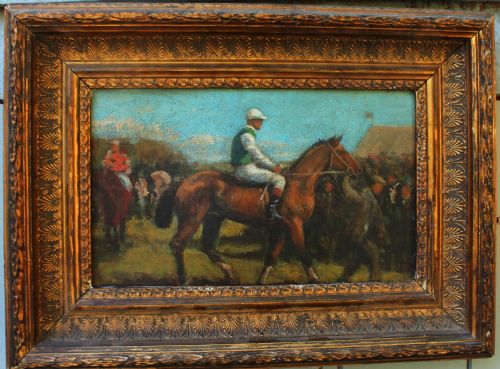
Buyers encounter traditional sporting art alongside British impressionist studies and occasional works on paper. Each piece documents the enduring relationship between humans and horses through distinct period techniques.
How they were made
Painters applied oil paint to stretched canvas or board, building rich layers to render the musculature and glossy coat of a bay horse. Artists used fine brushes to capture the subtle highlights on horsehair and leather tack.
Many works incorporate watercolour and gouache on paper to achieve crisp detail in smaller equestrian studies. These painted surfaces are protected beneath glass and framed in moulded wood or giltwood.
Master Walter earned immortality on canvas after winning the Governor's Cup in Colombo during eighteen ninety-four.
What varies in quality
Anatomical precision and the convincing rendering of equine movement separate accomplished period paintings from simpler decorative studies. Master artists captured the tension in a horse's leg and the liquid depth of the eye with certainty.
The integration of the subject within its environment, whether a sunlit stable or a racing paddock, defines the artistic ambition of the piece. Preservation of the original canvas and the character of the period frame contribute to the overall integrity.
Henry Barraud·Albert Clark·Edwin Henry Landseer·Alfred Munnings·Benjamin Cam Norton·Alfred Grenfell Haigh
The Brown Bay Horse Artwork Glossary
- Bay
- A coat colour of horses characterised by a reddish-brown body with black points on the mane, tail, and lower legs.
- Giltwood
- Wood, typically carved timber, coated with gold leaf or gold paint used extensively for period picture frames.
- Equine
- Pertaining to horses, used to describe art focusing specifically on the form and character of the animal.
- Gouache
- An opaque watercolour paint consisting of pigment combined with a binding agent, yielding solid matte passages.
Brown Bay Horse Artwork: Frequently Asked Questions
What is a bay horse?
A bay horse possesses a reddish-brown coat paired with distinctive black points on its mane, tail, and lower legs. This specific coloration appeared frequently in nineteenth century equine portraiture.
Artists favoured the rich contrast of the bay coat when depicting hunters and racehorses under varied stable and outdoor lighting conditions.
How do I date these paintings?
Dating relies on stylistic evidence, stretcher construction, canvas types, and the framing materials associated with the Victorian and Edwardian periods. Signatures and inscribed titles on the reverse often provide specific provenance.
Many works carry period markers that align with nineteenth and early twentieth century sporting art traditions.
Where were these paintings hung?
Equine portraits traditionally hung in country houses, estate libraries, and tack rooms to commemorate prized hunters and racing victories. Owners commissioned likenesses of specific animals to record their lineage and achievements.
Today, these works suit studies, living rooms, and hallways with traditional or eclectic interior schemes.
What frames are original?
Original frames typically consist of moulded giltwood that shows appropriate age shrinkage and oxidation to the gilding surface. These frames were designed specifically to complement the palette and scale of the oil painting.
Matching the period of the frame to the canvas remains an important consideration for collectors.