


20th Century Equestrian Picture
A 20th century equestrian picture captures the movement and power of horses through various artistic traditions.
20th Century Equestrian Picture
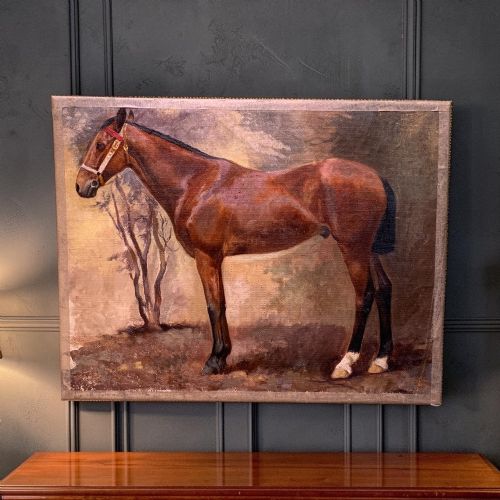
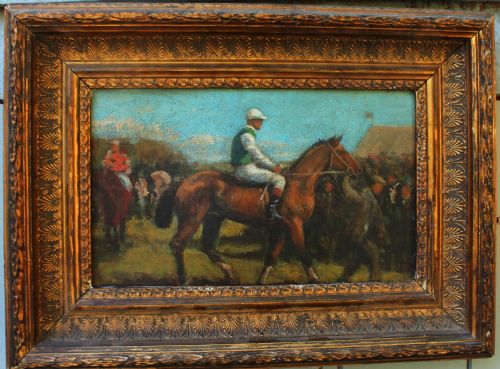
A 20th century equestrian picture brings together works that focus on horses, riders, and rural sporting life created across the decades of that hundred-year span. Buyers searching for this phrase encounter a diverse array of visual records, ranging from formal hunting scenes to dynamic racecourse studies.
The pieces available on this page most frequently reflect traditional British sporting art and Edwardian depictions, alongside mid-century interpretations. Works span from the early decades through to the nineteen-sixties, capturing changing artistic approaches to the subject.
Forms vary considerably, encompassing traditional oil paintings on canvas, delicate watercolours, gouache, ink drawings, and even unconventional mediums such as porcelain wall plaques and brass rubbings. Each format offers a distinct way to bring equine subjects into an interior space.
Materials and Techniques
Artists working on a 20th century equestrian picture utilised traditional pigments such as oil paint and watercolour applied to canvas, paper, or card. These foundational materials dictated the level of detail and fluidity achievable in capturing fast-moving subjects like racehorses and hunting fields.
Draftsmanship plays a central role, with ink and gouache providing sharp definition and opaque highlights in works depicting rodeo riders and racing paddocks. Support media ranges from stretched canvas to framed paper and specialised wall plaques.
Framing and mounting practices from the period often involved wood surrounds and glass protection, particularly for works on paper and delicate watercolours. These enclosures preserved the integrity of the pigments against light and atmospheric exposure.
Listings feature works spanning from nineteen-hundred through to nineteen-sixty, encompassing Edwardian, mid-century, and French school aesthetics.
Distinctions in Quality
Quality in these works rests upon the artist's command of equine anatomy, perspective, and motion. Stronger pieces convey the weight and kinetic energy of a horse in gallop with convincing proportion and anatomical accuracy.
The handling of the medium distinguishes accomplished execution from routine production. In oil paintings and watercolours, confident brushwork and tonal balance separate ambitious artistic studies from mechanical or purely decorative output.
Provenance and association with named artists or recognised sporting traditions elevate certain examples above anonymous decorative items. Works reflecting distinct stylistic movements or skilled draughtsmanship hold greater visual and historical resonance.
John Rattenbury Skeaping·Charles Clifford Turner·Snaffles·Geoffrey Mortimer·George Soper
The 20th Century Equestrian Picture Glossary
- Gouache
- An opaque watercolour paint that dries to a matte finish, allowing artists to build flat areas of dense colour and sharp highlights. It appears frequently in mid-century works depicting racing scenes.
- Brass rubbing
- A technique where paper is placed over an engraved brass surface and rubbed with graphite or wax to transfer the design. The listings include large-scale examples originating from earlier traditions.
- Watercolour
- A paint consisting of pigment suspended in a water-based solution, applied in translucent washes to paper. It demands precise brush control because mistakes cannot easily be painted over.
- Oil study
- A preliminary or spontaneous painting executed in oil on canvas or board, often capturing movement and light quickly before a finished composition is undertaken.
- Sporting art
- Depictions of rural sports, including horse racing, fox hunting, and polo. This genre forms a significant portion of twentieth-century equine imagery.
20th Century Equestrian Picture: Frequently Asked Questions
What subjects appear in these works?
The subjects range from racecourse paddocks and three-horse races to mounted hunting parties in full cry. Rodeo riders and nomadic encampments also feature among the equine scenes.
Artists recorded these moments using different mediums, providing varied perspectives on horses and riders throughout the decades.
How should I hang these pictures?
Works on paper, including watercolours and rubbings, require protection from direct sunlight to prevent fading of the pigments. Framing with conservation-grade materials helps maintain the stability of the paper over time.
Heavier oil paintings on canvas suit traditional wall placements where their structure can be supported securely by appropriate fixings.
How do I identify the period?
Stylistic clues, such as Edwardian costume or mid-century modernist composition, offer initial indicators of a piece's origin date. Signatures, dates inscribed by the artist, and framing materials further assist in dating.
Comparing the handling of the medium with known works from specific decades helps place undated pieces within the broader twentieth-century timeline.
What materials were commonly used?
Artists utilised oil paint on canvas, watercolour on paper, and gouache for finished compositions and rapid studies. Ink and specialised supports such as porcelain wall plaques also appear in the selection.
These varied materials reflect both traditional academic training and experimental approaches adopted across the century.